

Table of Contents
- What Is Mother of Pearl Inlay Furniture
- The Craftsmanship Behind Authentic Mother of Pearl Inlay Techniques
- Types of Inlay Furniture: Tables, Mirrors, Chests, and More
- Mother of Pearl vs Bone Inlay Furniture: Which Is Right for You
- Sourcing Natural Materials and Ethical Considerations
- Authenticity vs. Synthetic Alternatives
- How to Clean Mother of Pearl Furniture and Preserve Its Beauty
- Styling Mother of Pearl Furniture in Modern Interiors
- Customization, Restoration, and Long-Term Investment Value
- Conclusion
- Frequently Asked Questions
Last Updated: September 4, 2026
What Is Mother of Pearl Inlay Furniture
Mother of pearl furniture is furniture decorated with thin pieces of iridescent shell, cut from the inner lining of mollusk shells and set into carved recesses in the wood surface. This inlay technique creates intricate patterns that shift and glow as light moves across them, giving each piece a luminous quality that painted finishes cannot replicate. The craft has roots in Damascus, where master artisans have passed the technique down through generations.
At Justmorocco, we import these handcrafted pieces directly to the United States. The appeal goes beyond aesthetics: these are functional heirlooms built from solid wood and natural shell, not veneer over particleboard. For interior designers and homeowners alike, the question is rarely whether to buy one, but which style and scale suit the space.
If you are searching for handcrafted mother of pearl furniture, you likely want more than a catalog listing. You want to understand what separates an authentic piece from a mass-produced imitation, how to care for it, and whether it will hold its value over time. This guide covers all of that, starting with the craftsmanship that defines the category.
The Craftsmanship Behind Authentic Mother of Pearl Inlay Techniques
Authentic mother of pearl inlay techniques begin with solid hardwood, typically walnut, rosewood, or mahogany, cut and joined before any decoration starts. The artisan then carves shallow recesses into the surface by hand, following a pattern drawn directly onto the wood. Natural shell, harvested from freshwater mussels or saltwater oysters, is cut into small segments, shaped to fit each recess, and set with adhesive before the entire surface is sanded smooth and polished.
The result is a flush, continuous surface where the shell sits level with the wood. This matters because it means the piece will not snag clothing or collect dust in uneven grooves. Hand-polishing, often done with multiple grades of abrasive, brings out the deep luster that synthetic materials struggle to mimic.
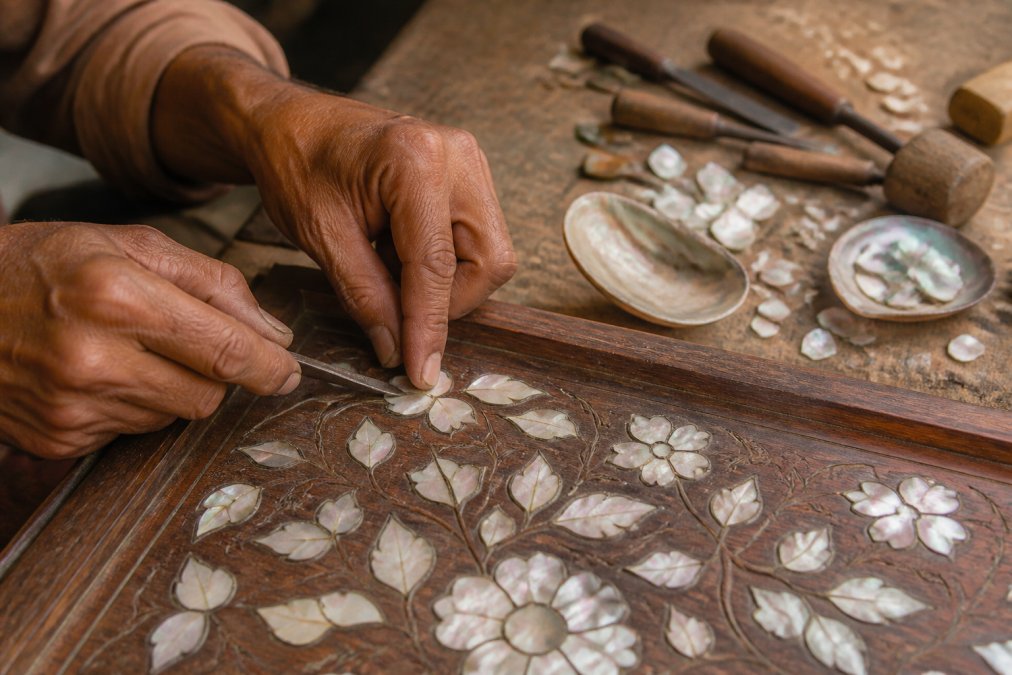
A common mistake buyers make is assuming all inlay is equal. Machine-cut inlay, used in lower-cost imports, produces uniform shapes but lacks the organic variation of hand-cut shell. Look at the edges of the pattern: hand-cut pieces show slight irregularity where the artisan shaped each segment individually. Traditional techniques also avoid resin fills, using shell and wood alone to create the design.
Types of Inlay Furniture: Tables, Mirrors, Chests, and More
The most common mother of pearl furniture pieces fall into a few practical categories. Dining and coffee tables make dramatic centerpieces, with geometric motifs or floral designs covering the tabletop. Mirrors framed in shell inlay add light and texture to entryways and bedrooms. Chests and dressers offer storage while functioning as statement pieces.
For those working with limited square footage, a nightstand or small cabinet introduces the texture without overwhelming the room. Justmorocco carries a Syrian mother of pearl nightstand with two drawers, priced at $1,600, which works well beside a bed in a guest room or as a small accent table in a hallway. At the other end of the scale, the Syrian White Mother of Pearl Inlay Wedding Dresser, at $6,800, provides three drawers of storage topped with a marble surface, suited to a primary bedroom where it becomes the focal point.
Mother of Pearl vs Bone Inlay Furniture: Which Is Right for You
Mother of pearl and bone inlay are often confused, but they differ in material, appearance, and durability. Mother of pearl comes from the iridescent inner layer of mollusk shells, producing a shimmering surface with blue, green, and pink undertones. Bone inlay uses camel or cow bone, which is typically dyed and cut into geometric patterns, offering a matte finish in contrasting colors like black and white.
The choice comes down to the look you want. Bone inlay delivers bold, high-contrast patterns that suit eclectic and contemporary interiors. Mother of pearl offers a softer, more luminous elegance that pairs well with traditional, transitional, and luxury settings. In terms of upkeep, both are durable, but mother of pearl resists scratching slightly better due to its dense, layered structure.
| Feature | Mother of Pearl | Bone Inlay |
|---|---|---|
| Material | Mollusk shell lining | Camel or cow bone |
| Finish | Iridescent, luminous | Matte, often dyed |
| Pattern Style | Floral, organic motifs | Geometric, high contrast |
| Best Interior Match | Traditional, luxury | Eclectic, contemporary |
| Price Range Reference | $1,600 to $6,800 at Justmorocco | Varies by piece and origin |
Sourcing Natural Materials and Ethical Considerations
Natural shell used in authentic mother of pearl inlay comes primarily from freshwater mussels and saltwater oysters harvested across Southeast Asia, the Middle East, and parts of India. In most cases, the shell is a secondary product: artisans source mollusk shells after the meat has been harvested for food or pearls, making the material a form of agricultural byproduct rather than a primary extraction target. This distinction matters for sustainability, but only if the underlying fishery is managed responsibly.
Buyers concerned with ethical sourcing should ask sellers three specific questions:
-
What is the origin country of the shell? Shells from regulated fisheries in countries with environmental oversight (such as those exporting through established trade channels to North America) carry lower risk than shells from unregulated sources. Many reputable importers can trace shell origin to specific regions or suppliers.
-
Is the wood legally harvested? Rosewood, walnut, and mahogany, common choices for mother of pearl inlay furniture, are subject to the Convention on International Trade in Endangered Species (CITES). Legitimate importers maintain documentation proving the wood was legally logged and exported. Request CITES permits or certificates of legal origin before purchase.
-
Does the artisan or importer have a transparency statement? Some producers publish information about their supply chain, including whether they work with fair-trade cooperatives or family workshops. This transparency is not yet an industry standard, but it is becoming a differentiator among premium makers.
Sustainability also extends to the lifespan of the piece. A well-crafted mother of pearl inlay table can function for 40 to 60 years or longer with proper care and occasional restoration. This durability means fewer replacements over a lifetime, reducing the cumulative environmental cost compared to mass-produced furniture replaced every 5 to 10 years. When evaluating the true cost of a handcrafted piece, factor in the decades of use it will provide.
In humid climates or high-traffic homes, longevity depends on construction quality. Solid wood frames, properly sealed joints, and shell set flush into carved recesses (rather than glued on top) all extend the functional life. Pieces built this way can be restored by skilled artisans if damage occurs, whereas veneered or laminated alternatives cannot.
The growing demand for ethically sourced luxury goods means that sellers who can document their supply chain have a competitive advantage. If a seller cannot or will not answer questions about shell origin and wood legality, that is a signal to look elsewhere.
Authenticity vs. Synthetic Alternatives
Synthetic alternatives to mother of pearl exist, including printed laminates and resin casts molded from real shell. These cost less but lack the depth and variation of natural material. Under direct light, real shell shows subtle shifts in color and occasional natural imperfections; synthetic versions look flat and repeat identically across the surface.
The price difference reflects more than material. Handcrafted pieces require hours of labor per square foot of inlay, which is why authentic mother of pearl furniture commands higher prices. For a buyer weighing cost, consider that a synthetic piece will not develop the same patina and cannot be repaired by an artisan if damaged. Restoration is only possible with genuine shell.
How to Clean Mother of Pearl Furniture and Preserve Its Beauty
Cleaning mother of pearl furniture requires gentle methods. Dust regularly with a soft, dry cloth. For deeper cleaning, dampen a microfiber cloth with water and a drop of mild dish soap, wring it out thoroughly, and wipe the surface. Dry immediately with a separate cloth to prevent moisture from seeping around the shell edges.
Avoid ammonia-based cleaners, vinegar, and abrasive pads, which can dull the shell's luster or lift the adhesive. Keep pieces out of direct, prolonged sunlight, which can fade both the shell and the wood over time. In humid climates like Florida's coast, use a dehumidifier in the room to limit wood expansion and shell movement.
Styling Mother of Pearl Furniture in Modern Interiors
Mother of pearl inlay furniture works across multiple design aesthetics, but success depends on how you position it within the overall scheme. The iridescent quality of the shell reads differently depending on surrounding colors, textures, and lighting, so understanding your design direction before purchasing is essential.
Transitional and Traditional Interiors
In transitional spaces, homes that blend classic proportions with modern simplicity, mother of pearl furniture serves as the statement piece. A dresser or cabinet with floral or geometric inlay becomes the focal point of the room, so pair it with neutral walls (warm whites, soft grays, or pale taupe) and simple hardware in brushed brass or matte black. Allow the shell's natural iridescence to catch light without competing elements. A single large inlaid piece works better than clustering multiple inlay items, which can feel visually chaotic. Position the furniture where natural daylight hits the surface during morning or afternoon hours; the shell's color-shifting quality is most apparent in changing light.
Bohemian and Eclectic Interiors
Bohemian spaces embrace layering and pattern, which means mother of pearl inlay can coexist with textured textiles, vintage rugs, and mixed metals. In this context, the shell inlay reads as one element among many rather than the dominant feature. A smaller inlaid nightstand or side table works well beside a bed dressed in patterned linens and layered throws. The key is balance: if the room already contains bold colors or busy patterns, choose a piece with restrained inlay (geometric or minimal floral) rather than dense, ornate designs. Brass or copper accents on the furniture complement the warm, eclectic mood.
Minimalist and Contemporary Interiors
Minimalist spaces require restraint. A single mother of pearl inlay piece, such as a small cabinet or console table, can anchor an otherwise spare room, but the surrounding environment must be very clean. Pair the furniture with monochromatic walls, simple lines, and negative space. Avoid competing textures or patterns. The shell's subtle color shifts become the visual interest in a minimalist setting, so the piece should be positioned where it receives consistent, even light. Contemporary interiors often benefit from pieces with geometric inlay rather than ornate florals, as the structured patterns align with modern aesthetics.
Maximalist Interiors
In maximalist homes, where color, pattern, and collected objects are celebrated, mother of pearl furniture can be one bold element among many. A large dresser or cabinet with vibrant inlay works alongside jewel-tone walls, patterned wallpaper, and an eclectic mix of artwork. The challenge is ensuring the inlay doesn't disappear into visual noise. Choose a piece with high contrast (light shell on dark wood, or vice versa) and position it as a deliberate focal point rather than one item among many. Maximalist spaces often have warm, layered lighting (table lamps, wall sconces), which enhances the shell's iridescence.
Scale and Placement Considerations
Room size dictates which pieces work. In open-plan layouts, a large dresser or dining table with mother of pearl inlay can define a zone without walls. In smaller spaces, a nightstand, console table, or wall-mounted cabinet introduces the material without overwhelming the room. The Antique mother of pearl cabinet, at $5,500, offers vintage character with three drawers and a marble top, making it a strong choice for a living room media console, dining room sideboard, or bedroom focal point. A smaller Syrian mother of pearl nightstand works in guest rooms, entryways, or as a side table beside a reading chair.
Consider traffic patterns and light sources. Pieces placed where they catch morning or afternoon sun will show the shell's color-shifting quality throughout the day. In rooms with primarily artificial lighting, position the furniture near a lamp or under a skylight to ensure the iridescence is visible and not lost in shadow.
Pairing with Other Materials
Mother of pearl inlay pairs well with natural wood, marble, brass, and linen. Avoid pairing with high-gloss finishes or plastic elements, which can cheapen the overall effect. If the piece has a marble top (common on dressers and consoles), the cool tone of marble complements the shell's iridescence. Wooden frames in walnut or rosewood ground the piece and prevent it from feeling too delicate or precious.
Customization, Restoration, and Long-Term Investment Value
Customization options for mother of pearl furniture range from size adjustments to entirely bespoke designs. Many importers work with artisans abroad to commission pieces that match an architect's specifications, including custom cabinetry for kitchens and bathrooms. Timelines for custom work typically run several months, so plan ahead if a project has a fixed completion date.
Restoration is another consideration. Minor scratches on the shell can be polished out, and loose segments can be reset by a skilled restorer. This repairability underpins the long-term value of authentic pieces. Unlike mass-produced furniture that is discarded when damaged, inlaid furniture can be maintained across generations, making it an heirloom purchase rather than a disposable one.
Conclusion
Handcrafted mother of pearl furniture rewards buyers who prioritize quality and longevity over immediate savings. By understanding the craftsmanship, distinguishing authentic shell from synthetic imitations, and committing to proper care, you can own a piece that serves as both functional furniture and lasting art. The initial investment is real, but so is the durability and timeless elegance these pieces bring to a home.
For those ready to explore authentic options, Justmorocco offers a curated selection of mother of pearl inlay furniture, from nightstands to wedding dressers, each handcrafted and shipped directly to US homes. Custom furniture imports and restoration inquiries are handled through our team. Browse the collection or contact us to discuss a piece that fits your space and style.
Frequently Asked Questions
What is the difference between mother of pearl and bone inlay furniture?
Mother of pearl comes from the luminous shell lining of mollusks like oysters, while bone inlay uses carved animal bone. Mother of pearl has a distinctive iridescent, reflective quality that shifts with light, creating a more dramatic visual effect. Bone inlay offers a warmer, creamier appearance. Both are handcrafted using traditional techniques.
How do you clean and maintain mother of pearl furniture?
Dust regularly with a soft, dry cloth to prevent buildup in inlaid patterns. For deeper cleaning, use a slightly damp cloth with mild soap and water, then dry immediately. Avoid harsh chemicals, abrasive scrubbers, and excessive moisture that can damage the resin binding the inlay. Keep pieces away from direct sunlight and extreme humidity. For pieces like the Syrian White Mother of Pearl Inlay Wedding Dresser, professional polishing helps maintain the luminous finish and protects the craftsmanship investment.
Is mother of pearl inlay furniture durable for daily use?
Yes, authentic mother of pearl inlay furniture is durable and suitable for daily use when properly maintained. The natural shell is harder than bone and resists scratching and fading better than synthetic alternatives. However, it requires gentle care, avoid placing hot items directly on surfaces, use coasters and placemats, and protect from impacts. Handcrafted pieces from master artisans, like those offered through custom imports, are built to become heirloom-quality pieces that can be enjoyed and passed down for decades when treated with appropriate respect.
How can you tell if mother of pearl inlay is authentic?
Authentic mother of pearl has a natural iridescence that shifts with viewing angle, showing subtle color variations from white to pink, green, and blue. Synthetic resin alternatives have a flat, uniform appearance. Genuine pieces feature hand-carved details with slight variations and imperfections, marks of artisan work. Ask suppliers about sourcing and craftsmanship origins; authentic pieces come with documentation of their handmade process. Bespoke items from established importers who specialize in traditional techniques offer the highest assurance of authenticity and quality craftsmanship.
Get started with Justmorocco and bring the craftsmanship of authentic mother of pearl furniture into your home.
This article was written using GrandRanker