
Table of Contents
- Understanding Moroccan Design: History and Cultural Influences
- Essential Elements of Moroccan Interior Style
- Authentic Materials: Wood, Metal, Leather, and Zellige Tiles
- Custom Moroccan Cabinetry for Luxury Homes
- Moorish Architectural Design as an Alternative to Standard Cabinetry
- How to Incorporate Moroccan Rugs and Textiles Into Modern Spaces
- Choosing the Right Moroccan Lighting and Lanterns
- Mixing Moroccan Pieces With Contemporary Furniture
- Maintenance and Care of Authentic Moroccan Materials
- Sourcing and Ethical Craftsmanship Verification
- Budget-Friendly vs. Investment-Grade Moroccan Custom Pieces
- Customizing Furniture for Your Specific Room Layout
- Conclusion: Creating Your Moroccan Sanctuary
- Frequently Asked Questions
Last Updated: September 1, 2026
Understanding Moroccan Design: History and Cultural Influences
Moroccan style custom furniture emerges from centuries of cultural layering. Berber craftsmanship, Andalusian architecture, and Islamic geometric principles converged to create a design language that feels both ancient and timelessly relevant. Authentic Moroccan style isn't merely decorative, it's a philosophical approach to space celebrating handwork, pattern, and the marriage of function with artistry.
Moroccan design synthesizes North African, Arab, and European influences. Berber people contributed earth-toned palettes and organic textures. Andalusian settlers brought intricate geometric patterns and sophisticated architecture. Islamic tradition infused the aesthetic with mathematical precision and spiritual symbolism. This vocabulary prioritizes craftsmanship, layered textiles, zellige tiles, and carved wooden elements.
Understanding this history matters because authentic Moroccan style custom furniture demands genuine materials and techniques. Mass-produced imitations strip away the cultural depth that makes these pieces resonate. True Moroccan style tells a story of artisans, tradition, and deliberate design choices made across centuries.
Essential Elements of Moroccan Interior Style
Geometric Detail and Intricate Craftsmanship
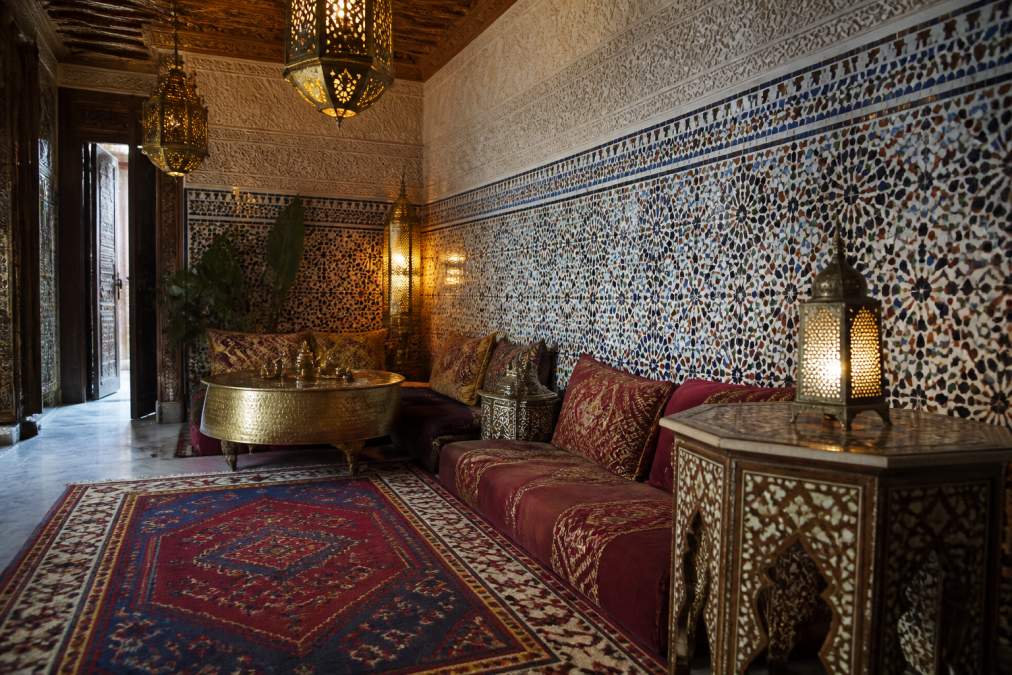
Moroccan style custom furniture centers on geometric detail executed through intricate craftsmanship. Patterns follow mathematical principles rooted in Islamic art. Zellige tilework uses hand-cut ceramic pieces forming repeating tessellations. Carved wooden screens (mashrabiya) feature lattice patterns controlling light while maintaining privacy. These geometric details appear in cabinetry doors, wall panels, and architectural elements.
Hand-carving takes weeks. Zellige tiles are cut individually and set by artisans understanding proportional relationships. This labor-intensive process creates visual depth that photographs cannot capture. When selecting Moroccan style custom furniture, examine geometric pattern precision. Authentic pieces show slight variations proving human handiwork. Perfectly uniform patterns suggest machine production. Look for hand-carved details with visible tool marks and the patina developing only through genuine age or skillful aging.
Vibrant Color Palettes and Textural Interest
Moroccan style custom furniture employs deliberately curated color palettes. Deep jewel tones (sapphire, emerald, ruby) pair with warm earth tones (terracotta, burnt sienna, ochre). Metallic accents in brass, copper, and bronze add richness. The palette evokes Moroccan markets, sunset-lit riads, and natural pigments used in traditional textiles.
Textural interest comes from layering. Smooth zellige tiles contrast with rough-hewn wooden beams. Soft hand-woven textiles drape over carved furniture. Mother-of-pearl inlays catch light against dark wood. Leather upholstery, bone inlay, and metal hardware create visual complexity rewarding close inspection. This approach transforms a room into a cohesive visual narrative where a single carved cabinet becomes part of a larger composition.
Authentic Materials: Wood, Metal, Leather, and Zellige Tiles
Moroccan style custom furniture relies on specific materials chosen for aesthetic and practical reasons. Cedar wood, prized for fragrance and workability, forms the foundation of carved pieces. Walnut and thuya provide darker tones and tighter grain patterns. These hardwoods age gracefully, developing patina over decades.
Metal work includes brass, copper, and wrought iron. Brass hardware features intricate patterns in door handles, hinges, and decorative studs. Copper vessels serve functional and decorative purposes. Wrought iron appears in lantern frames, window grilles, and furniture legs.
Leather, traditionally vegetable-tanned, upholsters seats and covers poufs. Moroccan leather develops rich patina with age, showing full-grain character rather than processed splits.
Zellige tiles represent the apex of Moroccan ceramic tradition. Each tile is hand-cut from glazed ceramic, then set by artisans into complex patterns. Glazes produce jewel-toned colors intensifying under natural light. Mother-of-pearl and bone inlay elevate furniture into fine art, with artisans cutting shell and bone into geometric shapes and inlaying them using traditional adhesives to create luminous surfaces shifting with light.
:::pro Authentic Moroccan materials age visibly. Cedar wood deepens in color. Brass develops patina. Leather softens. This visible aging proves the piece is genuinely handcrafted and lived with, not factory-produced and artificially distressed. :::
Custom Moroccan Cabinetry for Luxury Homes
Kitchen Cabinet Styles and Hand-Carved Details
Customizing a Moroccan-inspired kitchen requires layering rich textures, intricate geometry, and artisanal hardware. In 2026, "Modern Moroccan" blends traditional hand-carved elements with sleek, high-functionality cabinetry. The soul of a Moroccan cabinet lies in its woodwork.
Cabinet doors feature signature styles. Arched doors inspired by Moroccan archways create visual interest. Geometric carved patterns, stars, interlocking diamonds, lattice designs, cover door fronts. Some pieces feature zellige tile inserts within wooden frames. Carved wooden grilles allow glimpses of interior shelving, adding depth.
Hand-forged brass pulls in geometric patterns, leather-wrapped handles, and copper studs transform cabinet appearance. Hinges become visible design elements rather than hidden mechanics. Justmorocco's custom kitchen cabinet options like the Marrakech Riad Kitchen Cabinets demonstrate how traditional hand-carved details integrate with modern kitchen functionality, combining carved cedar doors with stainless steel interiors. Other options like the Darna Kitchen Cabinet and Demna Royal Kitchen Cabinet showcase variations in carved detail complexity and wood selection.
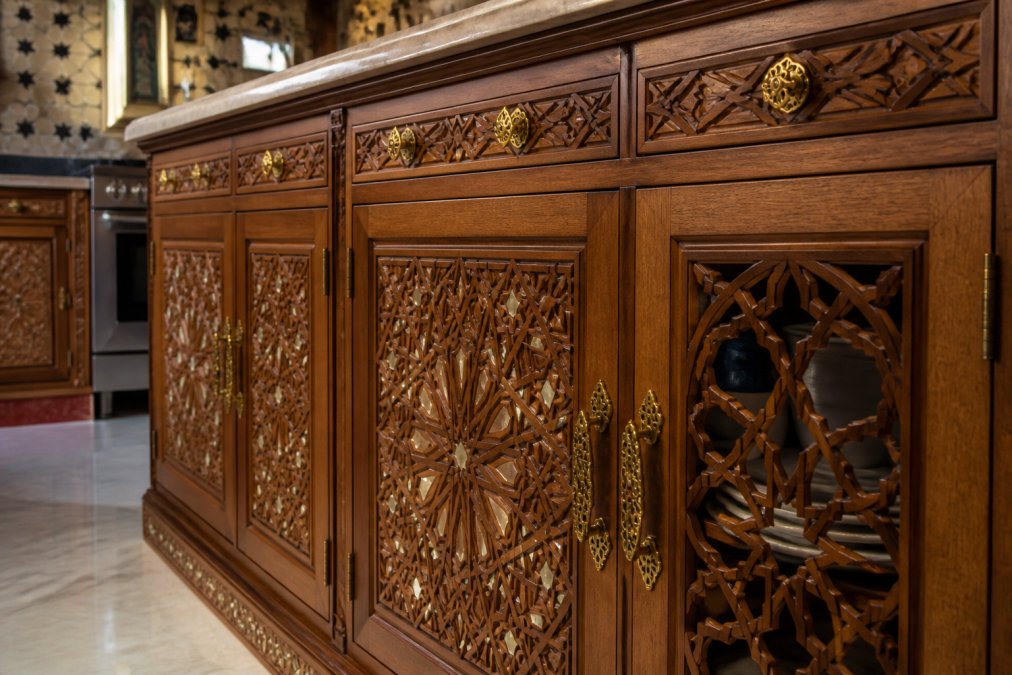
Color selection for Moroccan kitchen cabinetry shifts from deep jewel tones common in living spaces. Warm honey tones, soft terracotta, and weathered walnut allow geometric carving to dominate visually. Backsplash zellige tiles in contrasting colors, sapphire, emerald, or rust, provide color accents while cabinetry maintains visual balance.
Bathroom Vanities and Custom Fixtures
Bathroom design offers opportunities for dramatic Moroccan style custom furniture integration. A custom vanity becomes a sculptural focal point. Arched mirrors framed in carved wood, zellige tile insets, and hand-carved drawer fronts transform utilitarian fixtures into artistic statements.
Moroccan bathroom vanities often feature storage extending below the sink. Carved wooden doors conceal plumbing while creating visual interest. Some designs incorporate built-in benches echoing the majlis tradition of Moroccan gathering spaces. Brass or copper vessel sinks sit atop marble or zellige tile countertops. Hanging lanterns and sconces with punched metal shades become integral to bathroom design, creating atmospheric light patterns on walls.
Moorish Architectural Design as an Alternative to Standard Cabinetry
Moorish architectural design offers a path beyond traditional cabinetry toward integrated spatial transformation. Rather than installing cabinets as discrete objects, Moorish design principles guide the architectural envelope itself. Arched doorways, carved wooden screens, zellige tile work, and built-in niches become storage and design solutions simultaneously.
This approach suits homes with budget and timeline for custom architectural renovation. Carved wooden screens (mashrabiya) provide visual interest while concealing storage or creating room divisions. Zellige tile work covers walls, creating patterns eliminating the need for additional wall decoration. Built-in benches with carved wooden backs and textile cushions combine seating with storage. These spaces become sanctuaries rather than simply rooms with furniture.
How to Incorporate Moroccan Rugs and Textiles Into Modern Spaces
Moroccan rugs bridge traditional and contemporary aesthetics. Hand-woven from wool, these rugs feature geometric patterns, natural dyes, and irregular edges demonstrating authentic production. Vintage Moroccan rugs, Beni Ourain, Azilal, and Taznakht styles, command premium prices because they represent decades of genuine use and patina.
Incorporating Moroccan rugs into modern spaces requires intentional placement. A single large rug anchors a seating area, defining the space without overwhelming it. Layering rugs, a neutral base with a patterned runner, creates visual depth. One or two significant rugs work better than covering every floor. Hand-woven wall hangings, kilim pillows, and embroidered throws add texture and color as accents rather than dominant elements.
Maintenance of Moroccan textiles requires attention. Hand-woven rugs benefit from regular vacuuming and occasional professional cleaning. Avoid direct sunlight exposure, which fades natural dyes. Rotate rugs periodically to ensure even wear. These practices extend the life of authentic pieces and deepen their patina.
Choosing the Right Moroccan Lighting and Lanterns
Moroccan lighting transforms spaces through illumination and visual artistry. Brass lanterns with punched metal designs cast intricate shadow patterns on walls and ceilings. Patterns shift throughout the day as natural light angles change. Hanging lanterns create focal points while providing ambient light.
Selecting authentic Moroccan lighting requires understanding construction methods. Hand-hammered brass shows tool marks and slight irregularities. Seams are visible where sections join. Patina develops naturally over time, not applied artificially. Punched metal patterns vary slightly between lanterns, evidencing individual artisan work.
Placement matters significantly. A large lantern hanging in an entryway creates dramatic effect. Smaller lanterns clustered on a shelf provide intimate lighting. Sconces flanking a mirror add both light and decorative interest. Modern Moroccan spaces often combine traditional lanterns with contemporary lighting solutions. A carved wooden chandelier with LED bulbs provides adequate task lighting while maintaining aesthetic authenticity.
Mixing Moroccan Pieces With Contemporary Furniture
Successful integration of Moroccan style custom furniture and contemporary design depends on respecting both aesthetics rather than creating visual confusion. Start with a clear anchor, a statement Moroccan piece like a carved cabinet, zellige tile feature wall, or hand-woven rug. This establishes design direction. Surrounding elements should complement or intentionally contrast with this anchor.
Contemporary furniture works alongside Moroccan pieces when respecting proportions and materials. A sleek sofa in neutral linen pairs well with a carved wooden coffee table and zellige tile accent wall. The contemporary piece provides visual rest while Moroccan elements create interest. Avoid mixing multiple strong design statements.
Color coordination bridges both aesthetics. If Moroccan pieces feature jewel tones and warm earth tones, contemporary furniture should echo this palette. Neutral contemporary pieces allow Moroccan elements to dominate. Lighting choices unify mixed spaces. Moroccan lanterns work alongside contemporary track lighting or pendant fixtures when selected to respect proportions and avoid competing for visual attention.
Maintenance and Care of Authentic Moroccan Materials
Authentic Moroccan style custom furniture demands specific care protocols preserving craftsmanship and materials. Hand-crafted pieces require material-specific attention based on construction method and regional origin.
Hand-Carved Cedar and Hardwood Cabinetry
Cedar wood naturally repels insects but requires active preservation. Dust carved pieces weekly with soft, lint-free cloths, moving along the grain direction. Monthly, use a slightly damp cloth to remove accumulated dust from intricate carved areas; allow pieces to air-dry completely.
Condition wood surfaces every 6-12 months depending on climate. Apply linseed oil or specialized Moroccan wood conditioners in thin coats, buffing excess away immediately. This replenishes natural oils preventing brittleness or surface cracks. In dry climates (below 35% humidity), condition every 6 months. In humid climates, extend to 12 months.
Watch for specific damage patterns. Hairline cracks in carved details indicate normal wood movement. If cracks widen noticeably (more than 1/16 inch) over a season, adjust indoor humidity. Warping or bowing of cabinet doors suggests structural stress; consult a furniture conservator. Insect damage appears as small exit holes (1-3mm diameter); if holes appear, isolate the piece and contact a professional.
Avoid harsh chemicals, furniture polish containing silicone, and power sanders. Never place hot objects directly on wood surfaces. Cedar darkens naturally over decades; this aging is desirable and proves authenticity.
Zellige Tile Maintenance and Grout Protection
Zellige tiles are hand-cut glazed ceramics set in traditional lime-based mortar. The glazed surface is durable but grout is vulnerable. Clean tiles monthly with warm water and mild pH-neutral soap. Use soft-bristled brushes on tile surfaces and grout lines, never abrasive scrubbers.
Inspect grout lines quarterly, especially in kitchens and bathrooms. Grout should be solid and consistent in color. Discoloration indicates moisture penetration. Crumbling or missing grout requires immediate regrouting to prevent water damage.
Seal grout annually in wet areas. Use penetrating sealers designed for porous grout, allowing 48-72 hours curing before water exposure. Unsealed grout absorbs water, leading to mold growth and tile loosening. In dry areas, seal every 2-3 years.
Prevent standing water on zellige surfaces. Wipe spills immediately and ensure proper drainage. In bathrooms, ensure ventilation fans run during and 30 minutes after showers. If tiles crack or glaze chips, contact a specialist in Moroccan tilework rather than attempting DIY repair.
Mother-of-Pearl and Bone Inlay Preservation
Mother-of-pearl and bone inlay pieces are delicate. Store or display inlaid pieces away from direct sunlight; UV exposure fades materials within months. Maintain indoor humidity between 40-55% year-round. Humidity fluctuations cause underlying wood to expand and contract, potentially loosening inlay.
Dust inlaid pieces gently with soft cloths; never use abrasive materials. If inlay becomes loose, contact a furniture conservator experienced with Islamic or Moroccan furniture rather than attempting DIY repair. Avoid placing inlaid pieces near heating vents, air conditioning units, or radiators. Rapid temperature changes stress adhesive bonds.
Leather Upholstery and Patina Development
Moroccan leather develops character with age. This patina is desirable and indicates authentic material. Dust leather monthly with soft, dry cloths. Avoid furniture polish, which builds up and obscures the natural surface.
Condition leather annually with products formulated for vegetable-tanned leather. Apply thin coats and buff immediately. Over-conditioning traps moisture and can cause mildew. Under-conditioning allows leather to dry and crack. Address spills immediately by blotting with clean, dry cloths. For stubborn stains, consult a leather specialist before attempting cleaning.
Avoid direct sunlight, which fades leather color. Leather exposed to constant sun can fade 20-30% within 2-3 years. Check leather regularly for mold or mildew, especially in humid climates. If mold is present, consult a conservator; DIY cleaning can spread spores and damage leather.
Brass Hardware and Patina Management
Brass hardware develops patina naturally, shifting from bright yellow to deeper golden and eventually dark brown tones. This aging is authentic and desirable. If maintaining shine, polish brass quarterly with brass-specific cleaners using soft cloths and gentle circular motions. After polishing, apply thin clear lacquer to slow future oxidation.
If allowing patina to develop naturally, dust brass monthly with soft cloths. Avoid touching hardware frequently with bare hands; skin oils accelerate patina formation unevenly. Inspect brass for corrosion appearing as green or blue-green deposits. Light corrosion can be cleaned with soft cloth and mild soap. Heavy corrosion requires professional restoration.
Seasonal and Climate-Specific Adjustments
Moroccan furniture originates from semi-arid climates with moderate humidity and stable temperatures. Homes in different climates require adjusted maintenance schedules.
Humid climates (above 55% humidity): Increase inspection frequency to monthly. Check grout in tile work for moisture damage. Inspect wood for mold or mildew. Condition leather every 6 months. Use dehumidifiers in rooms with Moroccan furniture. Seal grout every 6 months rather than annually.
Dry climates (below 35% humidity): Condition wood every 6 months. Increase humidifier use in winter. Inlaid pieces require careful humidity monitoring; wood shrinkage stresses inlay adhesive. Condition leather every 6 months.
Seasonal transitions: Spring and fall humidity swings stress wooden pieces. Inspect carved cabinetry and inlaid furniture for new cracks during these transitions. Adjust humidifiers and dehumidifiers proactively.
Documentation and Professional Conservation
Maintain a care log for significant pieces, recording conditioning dates, repairs, humidity levels, and environmental changes. This documentation helps identify patterns and informs future conservation decisions.
For valuable pieces or those showing deterioration, consult a furniture conservator specializing in Islamic or Moroccan furniture before attempting repairs. Professional conservation preserves authenticity and value. DIY repairs can permanently damage pieces and reduce their value by 30-50%.
Sourcing and Ethical Craftsmanship Verification
The market for Moroccan style custom furniture includes authentic pieces created by traditional artisans and mass-produced imitations manufactured in factories. Distinguishing between them requires understanding production methods, material authenticity markers, and ethical sourcing practices. Authentic hand-carved pieces cost 3-5 times more than machine-made alternatives, making verification essential before purchasing.
Red Flags That Indicate Mass Production
Geometric perfection: Hand-carved patterns contain subtle variations. Perfectly uniform patterns, identical spacing, and mathematically exact proportions indicate CNC machine carving. Machine-carved pieces look "too perfect" when examined closely.
Uniform finish and aging: Authentic aged pieces show patina unevenly. Mass-produced pieces with artificial aging show uniform distressing, scratches in predictable locations, stain applied evenly, patina applied chemically across entire surfaces.
Seams and joinery: Hand-crafted wooden pieces show visible seams where sections join, potentially slightly uneven with evidence of hand-planing. Machine-made pieces have perfectly aligned seams with uniform gaps. Examine undersides and interiors; authentic pieces show hand-tool marks with visible variation.
Hardware consistency: Authentic brass hardware shows variation between pieces. Hand-forged handles differ slightly in weight, thickness, and finish. Mass-produced hardware is identical across all pieces.
Zellige tile uniformity: Hand-cut zellige tiles vary in size by 2-5mm. Machine-cut tiles are uniform within 1mm tolerance. Glazes show color variation in authentic pieces; perfectly consistent in machine-made tiles.
Price point: Authentic hand-carved Moroccan cabinetry can be a significant investment. Significantly lower prices may indicate mass production.
Seller transparency: Legitimate sellers provide detailed production information, naming the artisan or workshop and providing photographs showing creation process. Sellers who cannot answer specific questions about production are likely selling mass-produced pieces.
Verification Methods for Authentic Craftsmanship
Request production documentation: Ask for photographs or video showing the creation process. Legitimate sellers have this documentation showing artisans working on the specific piece you're considering.
Examine tool marks: Hand-carving leaves distinctive marks. Chisels create parallel lines. Planes leave subtle ridges. Saws create kerf marks. These marks vary based on tool sharpness, artisan technique, and wood grain. Examine carved details with magnification. Authentic pieces show varied, organic tool marks. Machine-carved pieces show uniform, repetitive marks.
Test material authenticity: Request material certifications. Cedar wood has distinctive fragrance. Walnut has characteristic grain patterns and color. For brass hardware, ask about composition; authentic hand-forged brass contains 60-70% copper and 30-40% zinc.
Verify artisan relationships: Ask the seller: "Who created this piece?" Legitimate sellers can name the artisan or workshop. Many traditional Moroccan artisans now have Instagram accounts showing their work.
Request provenance information: For vintage pieces, ask about ownership history. Documented provenance indicates authenticity.
Examine construction methods: Ask how the piece was constructed. Authentic Moroccan cabinetry uses traditional joinery, mortise and tenon joints, dovetail joints, hand-fitted panels. Request photographs showing interior construction.
Check for consistency with Moroccan traditions: Authentic pieces follow regional styles and techniques. Research regional styles before purchasing.
Ethical Sourcing Considerations
Artisan compensation: Ask whether artisans receive fair wages. In Morocco, artisans in formal cooperatives typically earn 8,000-15,000 Moroccan Dirhams monthly (approximately $800-$1,500 USD). Pieces priced at $2,000-$5,000 should reflect significant artisan compensation.
Sustainable material sourcing: Ask about wood sourcing. Verify that sources are sustainable. For zellige tiles, ask about clay sourcing and whether production uses traditional methods.
Cultural respect and attribution: Legitimate sellers provide context about design traditions, regional origins, and artisan communities. They credit Moroccan culture rather than appropriating it.
Workshop conditions: Ask about working conditions in producing workshops. Are artisans working in safe environments? Do they have access to proper tools and materials?
Direct relationships: The most ethical sourcing involves direct relationships between buyers and artisans. Justmorocco maintains direct relationships with workshops in Morocco, eliminating middlemen and ensuring artisans receive fair compensation.
Distinguishing Authentic Vintage from Reproduction Aged Pieces
Vintage Moroccan pieces command premium prices because they represent decades of authentic use. Reproduction aged pieces, newly made pieces artificially distressed, flood the market at lower prices.
Patina patterns: Authentic aging creates patina in areas of frequent contact and exposure. Reproduction aging applies distressing uniformly or in predictable patterns.
Wear consistency: Authentic aged pieces show wear proportional to age. Examine high-contact areas; authentic pieces show concentrated wear. Reproduction pieces show scattered or uniform wear.
Material degradation: Authentic aged pieces show material-specific degradation. Reproduction aging cannot replicate these specific degradation patterns.
Inconsistent aging: Reproduction aged pieces often show inconsistent aging across components. Authentic pieces age uniformly across all materials.
Documentation: Authentic vintage pieces often have documentation, receipts, photographs from previous owners, exhibition records. Reproduction aged pieces typically lack documentation.
Red Flags in Online Purchasing
Stock photography: Sellers using generic stock photographs rather than actual inventory photographs are likely selling mass-produced pieces.
Vague descriptions: Descriptions using terms like "handmade," "artisan-inspired," or "Moroccan style" without specifics suggest mass production.
Unrealistic pricing: Prices significantly below market rates indicate mass production.
No return policy: Legitimate sellers offer return policies. Sellers refusing returns suggest they know pieces won't meet expectations.
Lack of customer reviews: Established sellers have customer reviews discussing craftsmanship, authenticity, and durability.
Pressure to purchase: Legitimate sellers allow time for consideration. Sellers using urgency tactics are employing sales pressure common in mass-market retail.
Building Relationships With Reliable Sources
The most reliable way to source authentic Moroccan furniture is developing relationships with sellers maintaining direct connections to artisans. When evaluating a seller, consider their market history. How long have they sourced Moroccan furniture? Can they provide customer references? Do they offer design consultation and custom commissioning? Do they provide care instructions and maintenance support?
Ask about their sourcing process. Do they visit workshops in Morocco? Do they work with the same artisans over years? Sellers with deep knowledge of production methods and artisan communities are more likely to source authentic pieces and support ethical practices.
Consider warranty and support. Does the seller offer post-purchase support? Can they recommend conservators for restoration? Do they stand behind pieces with warranties? These services indicate confidence in authenticity and commitment to customer satisfaction.
Budget-Friendly vs. Investment-Grade Moroccan Custom Pieces
Moroccan style custom furniture exists across a spectrum of price points and quality levels.
Budget-friendly pieces often combine machine-made elements with hand-applied details. These pieces bring Moroccan aesthetics to spaces without significant investment. They suit renters, those testing the style, or those furnishing large spaces.
Mid-range pieces represent genuine handcraft with some production efficiency. Artisans hand-carve primary design elements while using modern joinery for structural integrity. Many of Justmorocco's offerings fall into this range, providing accessible entry to quality Moroccan style custom furniture.
Investment-grade pieces represent museum-quality craftsmanship. Every element receives individual artisan attention. Vintage pieces command premiums because they represent decades of authentic use. Custom commissions justify premium pricing through uniqueness and tailored craftsmanship.
Determining appropriate investment requires considering longevity and use. A budget-friendly rug suits a rental apartment. An investment-grade piece becomes a family heirloom. Budget-friendly pieces may require replacement within years. Investment-grade pieces appreciate in value and improve with age.
| Price Range | Craftsmanship Level | Best For | Longevity |
|---|---|---|---|
| Budget-friendly | Machine-made with hand details | Testing the style, renters, large spaces | 5-10 years |
| Mid-range | Genuine hand-carved elements | Committed buyers, mixed contemporary spaces | 15-30 years |
| Investment-grade | Full artisan production, vintage pieces | Investment collectors, statement pieces | 50+ years |
Customizing Furniture for Your Specific Room Layout
Moroccan style custom furniture reaches its potential when designed specifically for a space. Begin with measurements and architectural documentation. Photograph existing spaces from multiple angles. Note ceiling heights, window placement, doorway dimensions, and architectural features. Provide floor plans showing electrical outlets, plumbing locations, and structural elements.
Consider how light moves through the space. Morning light illuminates different surfaces than evening light. Zellige tile walls catch morning sun differently than afternoon sun. Positioning Moroccan style custom furniture to interact with natural light patterns creates dynamic visual interest throughout the day.
Traffic flow matters practically. A carved wooden screen might create visual interest while dividing a large room, but cannot obstruct movement paths. A custom cabinetry unit must allow comfortable access to all areas. Functional design precedes aesthetic design.
Color coordination with existing architecture prevents visual conflict. If walls are neutral, Moroccan pieces can feature bold jewel tones. If walls feature existing architectural details or color, Moroccan style custom furniture should complement or intentionally contrast, never compete visually.
Custom dimensions ensure proper proportions. A standard-height vanity might appear awkward in a bathroom with unusually high ceilings. Custom height adjustment maintains visual harmony. A cabinet designed for a specific wall width integrates seamlessly rather than appearing undersized or crowded.
Working with designers experienced in Moroccan style custom furniture ensures successful integration. They understand how hand-carved details interact with light, how zellige tiles coordinate with other materials, and how to balance traditional aesthetics with contemporary functionality.
Conclusion: Creating Your Moroccan Sanctuary
Elevating your space with authentic Moroccan style custom furniture means committing to craftsmanship, cultural respect, and intentional design. The journey from inspiration to realization requires understanding design history, material authenticity, and maintenance practices.
Justmorocco specializes in bringing this vision to reality. Our custom kitchen and bathroom remodeling services combine traditional hand-carved cabinetry with modern functionality. We source authentic materials, cedar wood, zellige tiles, mother-of-pearl inlay, and artisanal hardware, and work with experienced craftspeople to create pieces tailored to your specific space. From the Queen Souad Kitchen Cabinet to the Fatima Kitchen Cabinet, our collection demonstrates how Moroccan style custom furniture transforms luxury homes across the United States.
Begin your Moroccan sanctuary with Justmorocco's custom furniture imports and design consultation services. Let authentic craftsmanship and cultural heritage elevate your home into a space that tells a story, your story, infused with the timeless beauty of Morocco.
Frequently Asked Questions
Q: What defines authentic Moroccan style in interior design?
A: Authentic Moroccan style combines hand-crafted artistry with geometric patterns, warm color palettes, and natural materials like carved wood, zellige tiles, and metal. It draws from Berber influences, Andalusian architecture, and centuries of cultural heritage. True Moroccan pieces feature intricate craftsmanship, think hand-woven textiles, bone-inlay details, and ornate metalwork, rather than mass-produced imitations. The aesthetic prioritizes textural interest, layered patterns, and bohemian luxury that transforms a space into an inviting sanctuary.
Q: How can custom Moroccan cabinetry for luxury homes elevate my kitchen or bathroom?
A: Custom Moroccan cabinetry brings bespoke furniture design that fits your exact dimensions and architectural style. Unlike standard options, hand-carved cabinet doors feature geometric detail and artisanal hardware that serve as focal points. Each piece integrates authentic materials, hand-selected wood, mother-of-pearl accents, and zellige tile inlays, creating visual harmony and spatial transformation. Custom dimensions ensure seamless design integration, while the craftsmanship adds both functionality and timeless elegance that standard cabinetry cannot match.
Q: What is the difference between mass-produced and authentic Moroccan furniture?
A: Authentic Moroccan furniture is hand-crafted by artisans using traditional techniques passed down through generations. Mass-produced items mimic the look but lack intricate craftsmanship, genuine materials, and cultural heritage. Real pieces feature hand-woven details, bone-inlay work, and carved wood that show individual variation and superior durability. Authentic items often include documentation of origin and maker information, whereas mass-produced versions use shortcuts like machine-cut patterns and synthetic materials. Investment-grade pieces hold value and age beautifully, while imitations deteriorate quickly.
Q: How do I verify that Moroccan pieces are actually handcrafted and not mass-produced?
A: Examine the piece for hand-carved inconsistencies, authentic work shows slight variations in pattern and depth that machines cannot replicate. Check for artisan signatures, maker marks, or certificates of authenticity from reputable importers. Inspect joints, inlays, and finishes closely; handcrafted items show tool marks and natural aging. Ask suppliers for documentation of origin, artisan information, and production methods. Reputable sources like Justmorocco provide detailed provenance and can connect you with craftspeople. Request photos of the piece being made or ask about the specific artisan workshop, ethical craftsmanship verification builds confidence in your investment.
Q: How should I care for delicate Moroccan pieces like mother-of-pearl inlays and zellige tiles?
A: Mother-of-pearl inlays require gentle cleaning with soft, dry cloths, avoid water and harsh chemicals that cause damage. Zellige tiles should be sealed annually to prevent moisture penetration, especially in humid climates. Hand-woven textiles benefit from regular vacuuming and occasional professional cleaning. Carved wooden pieces need dusting and periodic conditioning with natural oils to maintain finish. Keep pieces away from direct sunlight to prevent fading and material degradation. For high-traffic areas or coastal climates, protective treatments extend lifespan significantly. Always consult care guides specific to each material and consider professional restoration services for valuable pieces.
Q: Can Moroccan custom furniture work in modern homes, or is it too ornate?
A: Moroccan custom furniture integrates beautifully into modern spaces through strategic design. The key is mixing ornate pieces with clean lines and neutral backgrounds, pairing hand-carved cabinetry with minimalist walls creates balance. Contemporary homes benefit from accent pieces rather than filling entire rooms. Geometric patterns and warm tones complement modern aesthetics when layered thoughtfully. Many designers blend Moroccan architectural depth with sleek functionality, creating 'Modern Moroccan' spaces that feel both luxurious and livable. Custom dimensions ensure pieces fit contemporary floor plans, while artisanal details add character without overwhelming minimalist design principles.
Q: What timeline should I expect for custom Moroccan kitchen or bathroom projects?
A: Custom Moroccan projects typically require 12-20 weeks from design consultation to installation, depending on complexity and customization level. Initial design and approval takes 2-4 weeks. Handcrafted production ranges from 6-12 weeks, as artisans create each piece individually. Shipping and installation add 2-4 weeks. High-complexity projects involving zellige tilework, mother-of-pearl inlays, or extensive custom cabinetry may extend timelines. Working with experienced importers like Justmorocco who understand production schedules helps ensure realistic planning. Starting early and maintaining clear communication with your design team prevents delays and ensures your project completes on schedule.
This article was written using GrandRanker