

Table of Contents
- Understanding Mother of Pearl and Bone Inlay Furniture
- Essential Supplies for Maintaining Mother of Pearl Furniture
- Step-by-Step Cleaning Routine for Mother of Pearl Surfaces
- Protecting Mother of Pearl from Environmental Damage
- Best Wax for Mother of Pearl Furniture and Polishing Techniques
- How to Restore Dull Mother of Pearl and Prevent Yellowing
- Handling Spills, Stains, and Chemical Damage
- Repairing Loose Inlay Pieces and Surface Scratches
Last Updated: August 4, 2026
Understanding Mother of Pearl and Bone Inlay Furniture
Mother of pearl, a natural iridescent material harvested from mollusk shells, requires fundamentally different maintenance than standard wood furniture. At Justmorocco, we work with collectors and homeowners who invest in authentic Moroccan mother-of-pearl accents and bone inlay furniture, and the maintenance questions they ask are remarkably consistent.
Mother of pearl is porous and delicate. It can fade, yellow, and crack under the wrong conditions. Bone inlay, often paired with mother of pearl in traditional Moroccan designs, shares similar vulnerabilities. These materials are not forgiving of harsh chemicals, excessive moisture, or temperature swings. The key difference lies in understanding what you're protecting: not just a surface, but the natural iridescence and protective coating that gives these pieces their distinctive character.
Essential Supplies for Maintaining Mother of Pearl Furniture
Using the wrong materials is how most damage happens. You don't need expensive specialty products, just items that won't scratch, strip finishes, or leave residue.
Safe Cleaning Tools and Materials
Gather lint-free microfiber cloths, which trap dust without scratching delicate inlay surfaces. Avoid paper towels and regular cotton cloths, which shed fibers that get trapped in the mother of pearl's porous surface.
You'll need distilled water, as tap water contains minerals that leave spots on the iridescent surface. A spray bottle costs a few dollars and prevents over-wetting your furniture.
For gentle cleaning, use mild dish soap without degreasers or conditioners. A single drop mixed into a cup of distilled water creates an effective cleaning solution that won't strip protective coatings. Never use all-purpose cleaners, which contain surfactants that damage the natural finish.
Mineral oil serves as your polishing agent. Food-grade mineral oil is safe, affordable, and restores the subtle shine that makes mother of pearl distinctive. It's more stable than linseed oil, which oxidizes and can darken the material.
| Supply | Purpose | Why It Matters |
|---|---|---|
| Microfiber cloths | Dusting and drying | Won't scratch or shed fibers |
| Distilled water | Gentle cleaning | No mineral deposits or spots |
| Mild dish soap (drop) | Light grime removal | Effective without stripping finish |
| Mineral oil | Polishing and protection | Restores luster without darkening |
| Soft-bristle brush | Detail work in crevices | Reaches inlay seams safely |
Step-by-Step Cleaning Routine for Mother of Pearl Surfaces
A consistent cleaning rhythm prevents buildup that becomes difficult to remove.
Regular Dusting and Dirt Removal
Dust your mother of pearl furniture weekly or every two weeks depending on your environment. Dust is abrasive when combined with moisture, so regular removal prevents it from becoming embedded in the surface.
Use a dry microfiber cloth with gentle circular motions. Don't press hard; let the cloth's texture do the work. Pay special attention to inlay seams where dust collects. A soft-bristle brush works well for getting into detailed crevices without scratching the delicate mother of pearl.
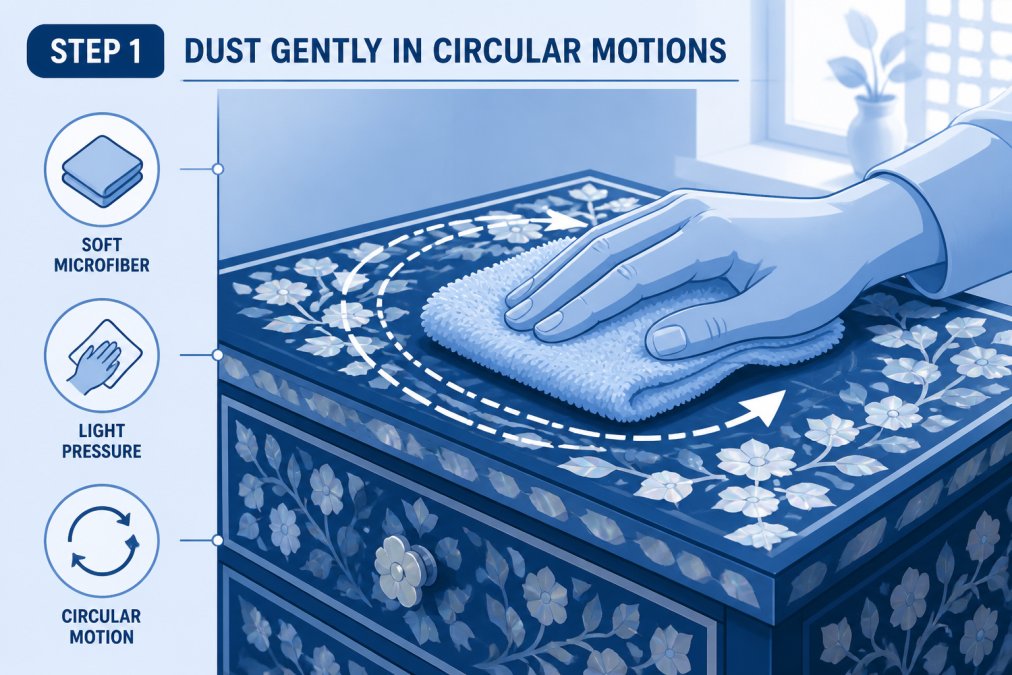
For carved details and bone inlay patterns, dust in the direction of the grain. Moving against the grain can catch fibers and potentially lift small pieces.
Removing Grime and Surface Buildup
When dusting alone isn't enough, use your mild soap solution. Mix one drop of dish soap into a cup of distilled water. The solution should barely feel soapy.
Dampen a microfiber cloth (not soaking wet) and wipe the surface with gentle pressure. Work in small sections, moving with the grain of the wood base. For mother of pearl inlay, wipe parallel to the seams rather than across them.
After wiping with the soap solution, immediately follow with a second cloth dampened only with distilled water to remove any soap residue. Then use a dry cloth to pat the surface completely dry. Moisture sitting on mother of pearl for more than a few minutes can seep into the porous material and cause warping or discoloration.
For stubborn grime, repeat the process rather than scrubbing harder. Two gentle passes work better than one aggressive one.
Protecting Mother of Pearl from Environmental Damage
Where your furniture lives matters as much as how you clean it. Environmental factors, humidity, temperature, and light, cause more damage than regular use.
Managing Humidity and Moisture Exposure
Mother of pearl and bone inlay expand and contract with humidity changes. In dry environments, the material shrinks slightly, which can cause inlay pieces to loosen. In humid environments, it swells, creating stress at the seams.
The ideal humidity range is 40-55%. If you live in a humid climate, a small dehumidifier in the room where your furniture sits can stabilize moisture levels. If you live in a dry climate or use central heating in winter, consider a small humidifier. The goal is preventing dramatic swings that stress the material.
Never place mother of pearl furniture near air conditioning vents, heating registers, or radiators. A piece positioned 6 feet from a heating vent experiences far less stress than one directly below it.
Watch for signs of moisture damage: discoloration in the wood base, separation at inlay seams, or warping of flat surfaces. These indicate humidity has been too high for extended periods.
Avoiding Direct Sunlight and Heat Sources
Sunlight fades mother of pearl over time. The iridescent quality diminishes, and UV rays degrade the protective resin coating that holds inlay pieces in place.
Position your furniture away from windows that receive direct afternoon sun. If your room layout makes this difficult, use UV-blocking curtains or sheer panels. Keep mother of pearl furniture at least 3 feet from fireplaces, wood stoves, or radiators. Even passive heat from a sunny window can raise surface temperature by 15-20 degrees Fahrenheit, enough to stress the material over time.
If you notice your furniture is already showing signs of fading, move it away from light sources immediately. Some fading is permanent, but preventing additional damage stops the decline.
Best Wax for Mother of Pearl Furniture and Polishing Techniques
Polishing restores the subtle luster that makes mother of pearl distinctive.
Applying Mineral Oil for Shine and Protection
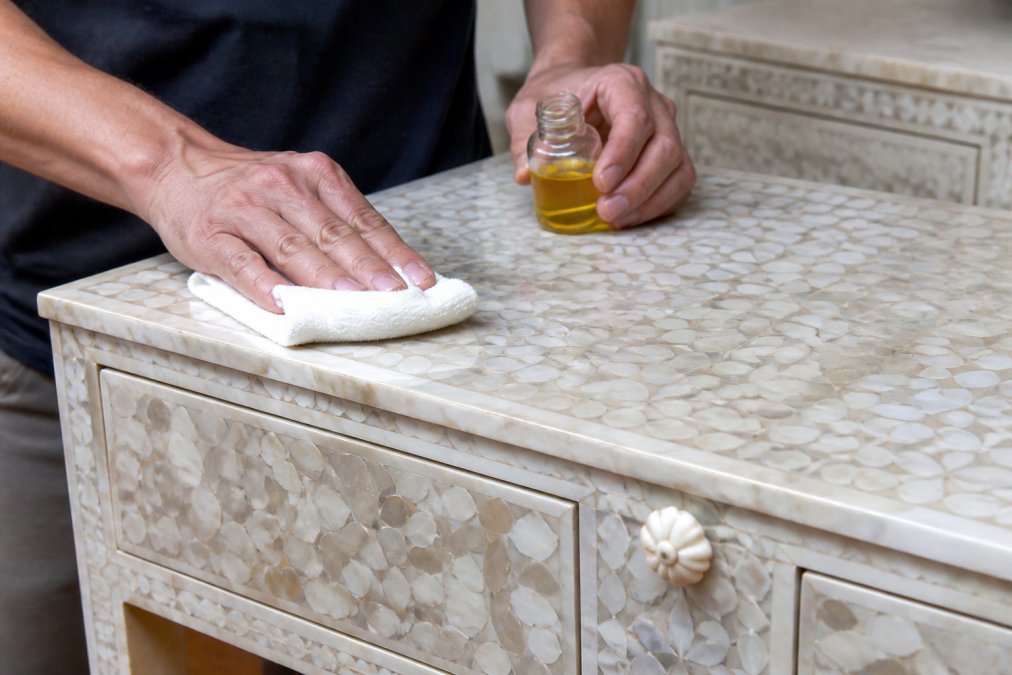
Mineral oil is your best option for maintaining mother of pearl furniture. It's stable, won't oxidize or darken the material, and creates a protective layer that repels dust and minor moisture.
JustMorocco Mother of Pearl FurnitureApply mineral oil every 3-4 months, or twice yearly in dry climates. Use sparingly; a nickel-sized amount on a soft cloth goes a long way. Rub it into the surface using gentle circular motions, working with the grain of the wood base and following the pattern of the inlay.
The application should feel almost dry. If the surface looks wet or glossy, you've used too much. Excess oil attracts dust and creates grimy buildup. The goal is a subtle sheen, not a shine.
After applying mineral oil, wait 15 minutes, then buff the surface with a clean, dry microfiber cloth. This removes any excess and brings out the natural luster.
How to Restore Dull Mother of Pearl and Prevent Yellowing
Yellowing happens from UV exposure and oxidation of the protective resin coating. You can't fully reverse yellowing once it occurs, but you can prevent it from worsening.
The primary defense is limiting sunlight exposure. Move your furniture away from windows or use UV-filtering window treatments. If your piece is already showing yellowing, this step stops additional color shift immediately.
The secondary defense is maintaining humidity and temperature stability. Fluctuations stress the protective coating, causing it to crack and oxidize. A stable environment at 40-55% humidity and 68-72 degrees Fahrenheit preserves the coating much longer.
If yellowing is severe, professional restoration is an option. Conservators can sometimes restore the protective coating or carefully clean the surface to brighten the mother of pearl. Regular mineral oil application also helps. While it won't reverse yellowing, it provides UV protection and slows oxidation.
Handling Spills, Stains, and Chemical Damage
Accidents happen. How you respond in the first few minutes determines whether a spill becomes permanent damage.
Immediate Response to Liquid Spills
The moment liquid touches mother of pearl furniture, blot it with a dry cloth. Don't wipe; blotting lifts the liquid without forcing it deeper into porous areas.
For water or light liquids, blot immediately and allow the surface to air dry. Open windows or use a fan to increase air circulation. If the room is humid, use a dehumidifier to speed evaporation.
For sticky liquids like coffee or juice, blot first, then use a cloth barely dampened with distilled water to gently wipe the area. Follow immediately with a dry cloth. Never use heat to dry spills; patient air drying is always safer.
If a spill has already dried and left a stain, assess whether it's on the wood base or the mother of pearl itself. Stains on the mother of pearl are usually permanent, as the porous material absorbs liquids quickly.
What to Avoid: Harsh Chemicals and Abrasive Cleaners
Never use furniture polish, wood cleaner, glass cleaner, or all-purpose cleaners. These contain solvents and surfactants that strip the protective coating and dull the iridescence.
Avoid bleach, vinegar, and lemon juice, all acidic or oxidizing agents that etch the surface. Abrasive scrubbers, steel wool, and scouring powders scratch the delicate material irreversibly. Never use oil-based products other than mineral oil. Linseed oil, tung oil, and food oils oxidize and darken the material.
Chemical damage is often irreversible. Prevention through careful product selection is far easier than repair.
| Chemical | Why It's Dangerous | What Happens |
|---|---|---|
| Furniture polish | Contains solvents that strip coating | Surface becomes dull and cloudy |
| Bleach or vinegar | Acidic; etches the surface | Permanent pitting and discoloration |
| Steel wool or scouring pads | Abrasive | Visible scratches and gouges |
| Linseed or tung oil | Oxidizes over time | Darkening and sticky buildup |
| All-purpose cleaners | Harsh surfactants | Coating degradation and separation |
Repairing Loose Inlay Pieces and Surface Scratches
Even with excellent maintenance, mother of pearl inlay can loosen or develop scratches.
Loose inlay pieces happen when the resin adhesive weakens, usually from humidity fluctuations or age. You might notice a slight gap between the mother of pearl and the wood base, or hear a faint rattle when you move the furniture.
Minor looseness can sometimes be addressed by stabilizing humidity and allowing the wood to acclimate. However, if the inlay is visibly separated or moves when you touch it, professional repair is necessary. Attempting to glue it yourself risks damaging the mother of pearl or using the wrong adhesive.
Surface scratches are common. Fine scratches that don't go through the protective coating often fade when you apply mineral oil. Deep scratches that expose the mother of pearl beneath are permanent.
For pieces with significant damage, multiple loose pieces, deep gouges, or chemical damage, professional restoration is the right choice.
Mother of pearl furniture represents a significant investment in handcrafted artistry. The maintenance routine outlined here, regular dusting, controlled humidity, protection from sunlight, and occasional mineral oil application, requires minimal effort but delivers maximum preservation. By following these practices, your handcrafted furniture will retain its iridescent beauty and structural integrity for decades.
Frequently Asked Questions
How do I clean mother of pearl furniture without damaging the delicate inlay?
Use a lint-free microfiber cloth slightly dampened with water or a mild detergent solution. Avoid harsh chemicals, abrasive cleaners, and excessive moisture. Pat dry immediately after cleaning. For stubborn grime, gently wipe with a soft cloth and mild soap solution, then buff dry. Never scrub or use scouring pads on mother of pearl surfaces, as the natural material is porous and can scratch easily.
What is the best wax for mother of pearl furniture to restore shine?
Mineral oil is ideal for restoring the natural luster of mother of pearl inlay furniture. Apply sparingly with a soft cloth in circular motions, then buff to a shine. Avoid furniture polish containing silicone or wax buildup, which can dull the delicate surface. Test any product on a hidden area first. For handcrafted pieces with bone inlay, mineral oil enhances the protective coating without leaving residue.
How can I prevent yellowing on my mother of pearl inlay furniture?
Protect furniture from direct sunlight, which causes fading and yellowing over time. Use UV-filtering window treatments or keep pieces away from bright windows. Control humidity levels between 40-50% to prevent moisture damage and discoloration. Dust regularly to prevent dirt buildup, which can trap moisture. Store seasonal items in a cool, dry place. Avoid exposure to heat sources like radiators or vents that can cause the wood base and resin to warp.
What should I do if liquid spills on my mother of pearl furniture?
Act immediately to prevent chemical damage. Blot the spill with a clean, dry cloth without rubbing. Do not allow liquid to sit on the porous mother of pearl surface, as it can seep into the inlay and damage the wood base. Once dry, inspect for stains. If residue remains, use a barely damp cloth with mild detergent, then pat dry thoroughly. For stubborn stains, consult a professional restorer rather than risking further damage with harsh chemicals.