

Table of Contents
- Understanding the Custom Moroccan Kitchen Design Timeline
- Phase 1: Initial Consultation and Site Measurements
- Phase 2: Concept Development and Layout Planning
- Sourcing Zellige Tiles for Kitchens and Material Lead Times
- Phase 3: Demolition and Site Preparation
- Phase 4: Rough-In Plumbing and Electrical Work
- Moroccan Kitchen Remodel Lead Times for Custom Cabinetry
- Custom Kitchen Renovation Phases: Cabinet Installation Through Finishing
- Managing Project Delays and Visual Progress Tracking
- Conclusion
Last Updated: August 15, 2026
Understanding the Custom Moroccan Kitchen Design Timeline
A custom Moroccan kitchen design timeline typically spans 4-6 months from initial consultation to final installation, though projects incorporating authentic zellige tiles and handcrafted cabinetry often extend longer. This extended timeline reflects the reality of sourcing artisan materials, coordinating with specialized craftspeople, and managing the unique structural complexities that come with integrating traditional Moroccan architectural elements into modern kitchens.
Most homeowners underestimate how much time goes into sourcing zellige tiles and coordinating with artisans who hand-craft custom cabinetry. The difference between a standard kitchen remodel and a custom Moroccan kitchen remodel is logistical: you're commissioning pieces, waiting for lead times, and orchestrating the installation of materials that require specialized knowledge.
Phase 1: Initial Consultation and Site Measurements
The initial consultation phase typically takes 2-4 weeks and involves far more than picking colors. For a custom Moroccan kitchen, the consultation must address structural, functional, and aesthetic factors that standard kitchen remodels don't encounter.
What Happens During the Initial Consultation
Your designer visits your home to take precise site measurements, assess structural elements, and document existing plumbing and electrical locations. This detailed survey informs every decision downstream. The designer photographs your space, measures ceiling heights, notes load-bearing walls, and identifies architectural features that will influence the layout.
For a Moroccan kitchen specifically, the consultation includes additional assessments:
Structural Load Assessment for Zellige Tiles
Zellige tiles are heavier than standard ceramic tiles due to their hand-cut thickness (typically 0.5-0.75 inches) and dense clay composition. A full backsplash of zellige tiles can add 15-25 pounds per square foot of wall surface. Your designer must verify that your kitchen walls can support this weight. If your backsplash area is 40 square feet, you're adding 600-1000 pounds of tile weight to the wall. If structural reinforcement is necessary, it can be scheduled during the demolition phase.
Ventilation and Cooking Method Assessment
Traditional Moroccan kitchens often feature open cooking methods that generate more smoke and steam than standard American kitchens. Your designer must assess your current ventilation capacity and recommend upgrades if needed. Ventilation upgrades can add 2-4 weeks to your timeline if ductwork relocation is required.
Electrical Capacity and Specialized Lighting
Moroccan kitchen designs often feature specialized lighting: brass lanterns, pierced metal sconces, or recessed lighting that highlights zellige tile patterns. During the consultation, your designer identifies existing electrical outlets, assesses panel capacity for new circuits, and plans for specialized lighting needs.
Budget and Timeline Expectations
Establish your budget and realistic timeline expectations early. Designers experienced with Moroccan kitchens know which compromises work visually and which ones undermine the aesthetic. For example, authentic hand-painted zellige tiles cost $15-25 per square foot; machine-made reproductions cost $5-10 per square foot. Hand-carved cabinetry costs 30-50% more than semi-custom cabinetry but justifies the investment in a Moroccan design.
Deliverables from the Initial Consultation
The consultation should produce a detailed site plan with all measurements, photographs of your current kitchen, notes on structural conditions, a preliminary budget range, a realistic timeline estimate (typically 24-30 weeks for a full custom Moroccan kitchen), and a list of next steps.
Phase 2: Concept Development and Layout Planning
Concept development and layout planning typically takes 3-6 weeks and is where your vision begins taking concrete form. Your designer creates 2-3 different kitchen layouts with varying approaches to the work triangle, storage, and how Moroccan design elements integrate into your space.
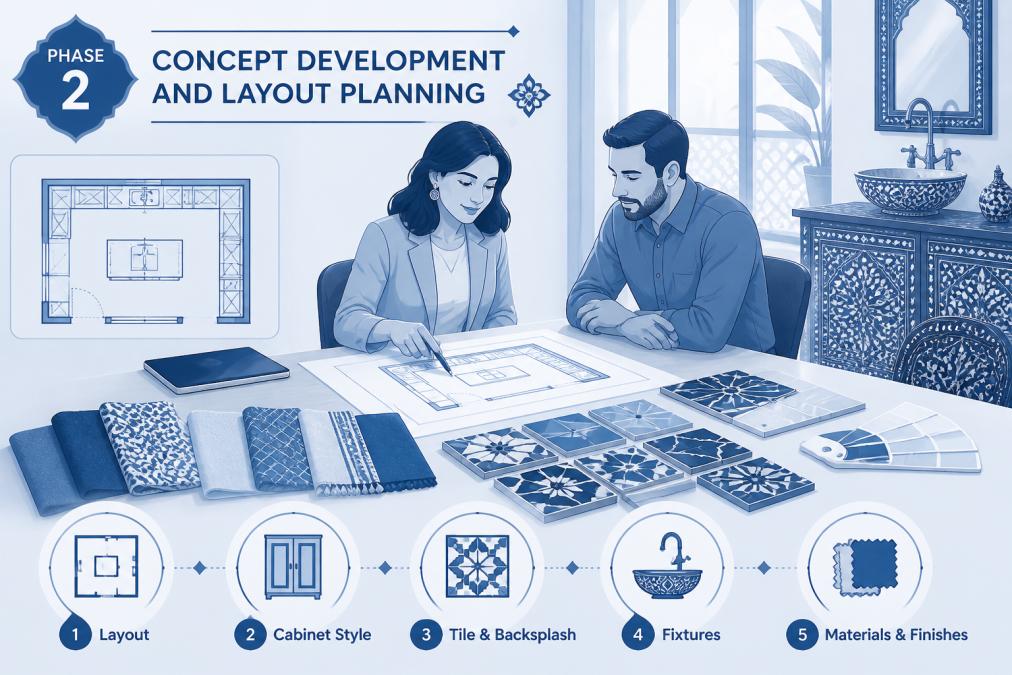
Material selection happens in parallel. Your designer sources samples of zellige tiles, presents cabinetry options, and discusses countertop materials. You decide between authentic hand-painted tiles versus machine-made reproductions, custom-built cabinetry and semi-custom options, and finishes that prioritize aesthetics versus durability. Once you've approved a layout and selected core materials, your designer prepares detailed specifications and material lists that drive the next phase.
Sourcing Zellige Tiles for Kitchens and Material Lead Times
Sourcing zellige tiles for kitchens is often the longest single component of a custom Moroccan kitchen design timeline. Authentic zellige tiles have lead times ranging from 8-16 weeks depending on pattern complexity, color availability, and artisan capacity.
Understanding Zellige Tile Production Timelines
Zellige tiles are produced by hand in Morocco by artisans who work on multiple commissions simultaneously. A simple geometric pattern in a standard color typically requires 8-10 weeks. Complex multi-color patterns or custom sizing extend the timeline to 12-16 weeks or longer.
The production timeline breaks down as follows: design approval and color matching (1-2 weeks), clay preparation and initial shaping (2-3 weeks), hand-cutting and glazing (3-5 weeks), kiln firing and quality inspection (2-3 weeks), and packing and international shipping (1-2 weeks).
Sequencing Material Orders to Avoid Installation Delays
The critical mistake is ordering zellige tiles at the same time as cabinetry or countertops. The correct sequence is: place the tile order immediately upon design approval (weeks 1-4), place custom cabinetry orders once tiles are confirmed in production (weeks 1-6), and order countertops and finishing materials last (weeks 6-10). This staggered approach ensures materials arrive in the correct sequence for installation.
Verifying Artisan Capacity and Confirming Lead Times in Writing
Before committing to a tile order, confirm with your sourcing partner that the artisan has capacity for your timeline. Get answers in writing regarding the confirmed start date, guaranteed completion and shipping date, contingency plans for production issues, and what happens if tiles are delayed.
Other Materials with Extended Lead Times
- Custom cabinetry with hand-carved details: 10-14 weeks
- Hand-forged hardware: 6-10 weeks if custom-made
- Specialty ceiling panels or carved wood beams: 8-12 weeks
- Custom plaster finishes or tadelakt: 4-6 weeks for material sourcing plus 2-3 weeks for application
- Specialty lighting fixtures: 6-8 weeks if custom
Managing Material Delays and Building Contingency
Order materials within 4 weeks of design approval, build a 2-3 week contingency into your timeline, request weekly production updates, and confirm shipping dates 4 weeks before expected arrival.
Phase 3: Demolition and Site Preparation
Demolition and site preparation typically takes 1-2 weeks, though the timeline can extend if structural issues emerge during the process. This phase involves removing existing cabinetry, countertops, backsplash, flooring, and fixtures. Demolition sometimes reveals surprises like water damage or outdated wiring that can add 1-2 weeks if significant repairs are needed.
During site preparation, your contractor assesses the subfloor condition, checks for level surfaces, and identifies any structural modifications needed. The site is then prepped for rough-in work with protective coverings and dust containment.
Phase 4: Rough-In Plumbing and Electrical Work
Rough-in plumbing and electrical work typically takes 1-2 weeks and must be completed before cabinetry installation begins. This phase involves running new water lines, drain lines, gas lines, and electrical circuits to their final locations. All rough-in work is inspected and approved by local building departments before the next phase begins.
The timeline for this phase can extend if your local building department is slow to inspect or if code compliance issues emerge.
Moroccan Kitchen Remodel Lead Times for Custom Cabinetry
Moroccan kitchen remodel lead times are heavily influenced by custom cabinetry production. Hand-crafted cabinetry with traditional joinery, inlaid details, or carved embellishments requires 10-14 weeks from order to delivery. Custom cabinetry is the centerpiece of most Moroccan kitchen designs and guarantees uniqueness but requires patience.
Once cabinetry is in production, changes become expensive and time-consuming. This is why finalizing your design before materials are ordered is critical.
Custom Kitchen Renovation Phases: Cabinet Installation Through Finishing
Once rough-in work is complete and materials begin arriving, the installation phase begins. This phase spans 4-8 weeks depending on complexity.
Cabinet Installation
Cabinet installation typically takes 2-3 weeks. Custom cabinetry arrives in sections and is assembled on-site. Installation begins with base cabinets, which are leveled, secured, and checked for alignment. Wall cabinets follow, with careful attention to height and spacing.
Countertop Fabrication and Installation
Countertop fabrication and installation typically takes 3-4 weeks total: 2 weeks for fabrication after template measurements, plus 1-2 weeks for installation and sealing. Once cabinetry is installed, countertop templates are taken and sent to the fabricator. For natural stone countertops, fabrication includes edge finishing, sealing, and quality inspection.
Backsplash and Tile Installation
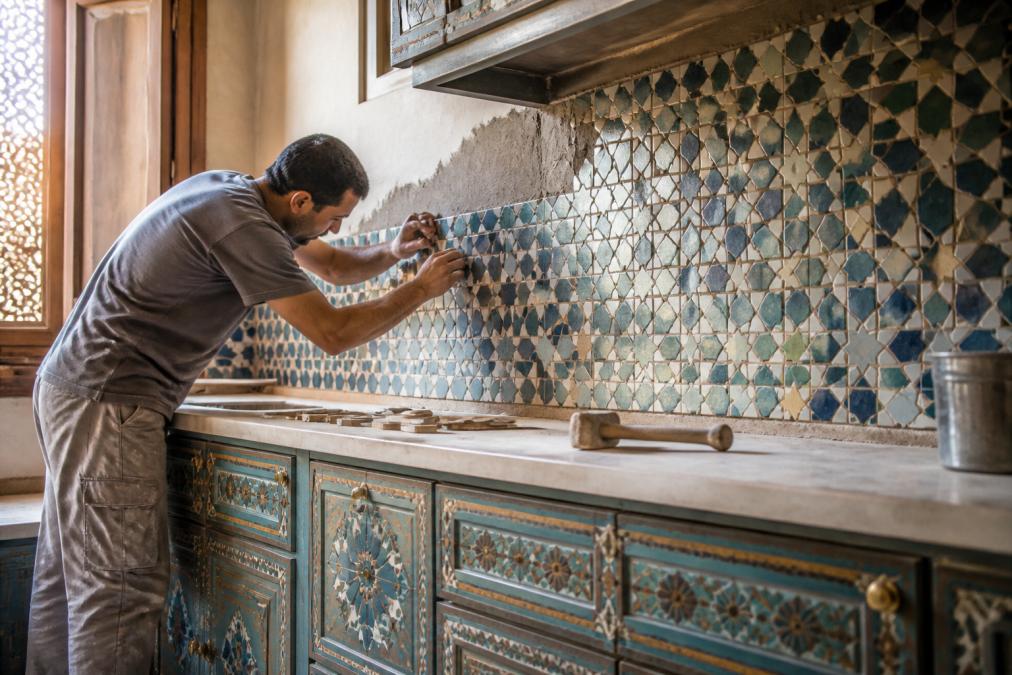
Backsplash and tile installation typically takes 2-3 weeks. Your zellige tiles go into the wall with skill and patience. Each hand-cut tile is slightly different, so the installer must account for variation and create a visually balanced pattern. Grout color, grout joint width, and sealing are critical decisions that affect the final appearance.
Finish Carpentry and Hardware Selection
Finish carpentry and hardware selection typically takes 1-2 weeks and includes details that transform the space. Finish carpentry includes trim work, crown molding, custom shelving, and any architectural details like exposed wood beams. Hardware installation, cabinet pulls, hinges, and door handles happen now. If your design includes custom lighting fixtures or ceiling panels, those are installed during this phase.
Managing Project Delays and Visual Progress Tracking
Project delays are inevitable in custom renovations. Material delays, inspection hold-ups, and unexpected structural issues all happen. Build a 10-15% contingency buffer into your timeline. If your total timeline is 24 weeks, add 2-3 weeks of buffer.
Request weekly photos from your contractor showing the state of demolition, rough-in work, cabinetry installation, and tile work. These photos become a record of progress and help you understand where delays are occurring.
Common delay sources include material lead time extensions, building permit delays, structural surprises discovered during demolition, weather delays, and coordination challenges when multiple trades work simultaneously.
A custom Moroccan kitchen design timeline is longer than a standard renovation, but the result justifies the wait. Authentic zellige tiles, hand-crafted cabinetry, and artisan details create a space that reflects genuine Moroccan craftsmanship rather than mass-produced imitation.
Justmorocco specializes in guiding homeowners through this timeline. We source authentic materials, coordinate with master craftspeople, and manage the logistics so you can focus on enjoying the design process. Our custom cabinetry, zellige tile selections, and architectural details, like the Berber Zawaka tile and Zawaka Targa, are chosen to work seamlessly in your space. Get started with a detailed consultation, and we'll create a realistic timeline for your Moroccan kitchen transformation.
Frequently Asked Questions
How long does a custom Moroccan kitchen design timeline typically take from start to finish?
A complete custom Moroccan kitchen remodel typically spans 4-6 months. This includes 2-3 weeks for initial consultation and design, 4-8 weeks for material sourcing (especially zellige tiles and custom cabinetry), 2-3 weeks for demolition and prep, 3-4 weeks for rough-in work, 4-6 weeks for cabinet and countertop installation, and 2-3 weeks for finishing touches. Authentic handcrafted pieces and artisan coordination often extend timelines beyond standard kitchen remodels.
What causes the longest delays when sourcing zellige tiles for kitchens?
Zellige tiles are hand-cut and hand-glazed, making lead times 6-12 weeks typical. Authentic pieces from specialized artisans require custom orders, kiln firing, and quality inspection before shipment. International sourcing adds transit time, and custom color or pattern requests extend timelines further. Planning ahead and ordering early prevents project delays during the backsplash and tile installation phase.
Are Moroccan kitchen remodel lead times really longer than standard kitchen renovations?
Yes, Moroccan kitchen remodel lead times are typically 30-50% longer than standard renovations. Custom cabinetry with hand-carved details, mother-of-pearl inlays, and architectural elements require artisan craftsmanship rather than mass production. Material sourcing alone adds 4-8 weeks. Coordinating multiple artisans across different phases and ensuring authentic finishes requires careful project management and advance planning.
Can I speed up my custom kitchen renovation phases without compromising quality?
Partially. You can compress timelines by ordering materials immediately after design approval, running concurrent phases where possible (rough-in work while cabinetry is being crafted), and having a dedicated project manager. However, rushing artisan work, custom cabinetry, zellige tile cutting, or hand-finished details, sacrifices the authenticity and craftsmanship that define a Moroccan kitchen. Budget realistic timelines to preserve the quality you're investing in.