
Table of Contents
- Understanding Moroccan Tile Porosity and Moisture Absorption
- Why Humidity Damages Flooring Materials: The Science Behind Moisture Ingress
- Pros and Cons of Zellige Tile in High-Humidity Environments
- Sealing Zellige Tile for Showers and Wet Spaces
- How to Clean Moroccan Terracotta Tiles and Prevent Mold
- Installation Best Practices for Moroccan Tile in Humid Zones
- Choosing Between Glazed, Unglazed, and Vitrified Moroccan Tiles
- Conclusion
Last Updated: August 8, 2026
Understanding Moroccan Tile Porosity and Moisture Absorption
The durability of moroccan tile in humid climates depends almost entirely on how much water the tile absorbs. Traditional cement-based zellige and modern vitrified porcelain alternatives perform dramatically differently when humidity is present.
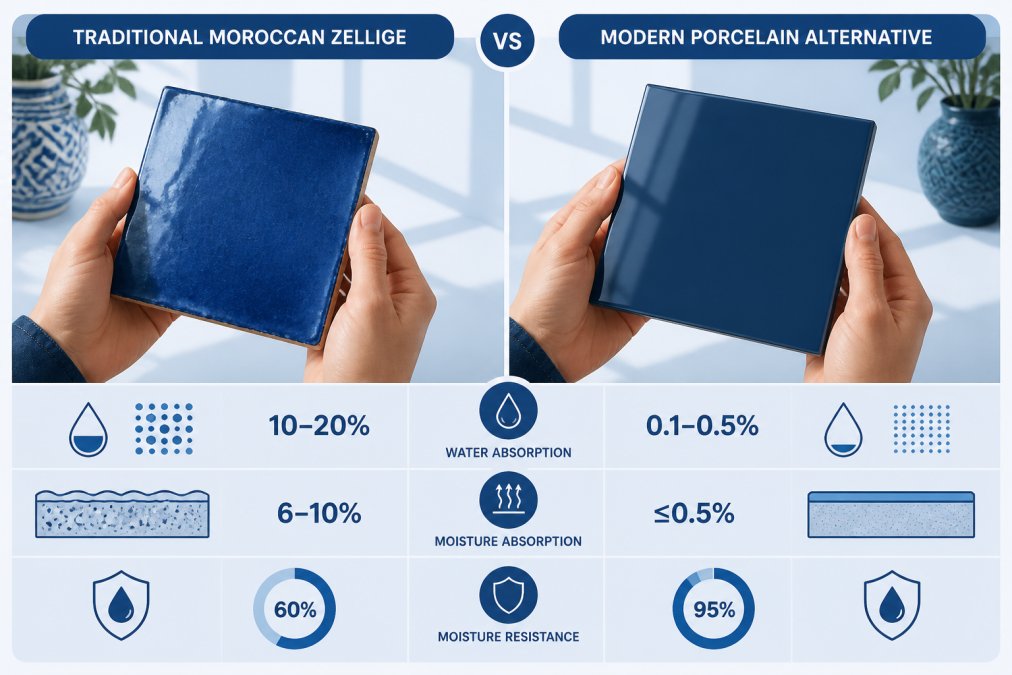
Traditional Cement-Based Tiles vs. Modern Porcelain Alternatives
Traditional Moroccan zellige tiles are handcrafted from clay and glazed on the surface, but the body remains porous. The tiny air pockets within the tile create a critical vulnerability in humid environments. Moisture penetrates the unglazed edges and back, traveling through these pockets like a sponge. Over time, this causes the tile to swell, grout to weaken, and mold to flourish.
Modern porcelain alternatives solve this through vitrification. During firing, clay is heated to temperatures that fuse the pores closed, creating a non-porous surface that absorbs virtually no moisture.
In practice: traditional Moroccan tiles in bathrooms, showers, or spaces with humidity above 60% require extensive sealing, grout selection, and subfloor preparation. It can be done, but demands more work than most homeowners anticipate.
PEI Rating and Durability Standards
The Porcelain Enamel Institute (PEI) rating measures wear and scratch resistance, not moisture resistance. A tile with a PEI rating of 4 or 5 might still absorb 3-5% of its weight in water. These are separate concerns.
Traditional zellige rarely carries a PEI rating. Modern Moroccan-style porcelain tiles typically rate PEI 3-4, handling residential foot traffic while offering superior moisture resistance. You need both durability against wear and protection against humidity.
Why Humidity Damages Flooring Materials: The Science Behind Moisture Ingress
Humidity migrates through grout, into the porous substrate, and behind tiles, a process called moisture ingress. This is the primary cause of tile failure in humid climates.
When moisture reaches the subfloor, mold and mildew thrive. Cement-based grout absorbs moisture and weakens. Thermal expansion from temperature and humidity fluctuations causes tiles to expand and contract, breaking the bond between tile and substrate. Tiles crack, pop, or shift.
In coastal environments, salt air accelerates the problem. Salt crystals (efflorescence) form on and beneath tiles, creating white deposits that indicate deeper moisture problems. The combination of high humidity, temperature swings, and salt exposure demands serious attention to installation.
Damage happens invisibly. By the time a tile cracks or grout crumbles, moisture has already compromised the subfloor, multiplying repair costs.
Pros and Cons of Zellige Tile in High-Humidity Environments
Zellige carries genuine aesthetic and cultural value, but in humid climates, benefits come with real trade-offs.
Pros:
- Authentic artisanal character that modern porcelain cannot replicate
- Unique color variation and glaze effects create visual richness
- Handmade quality appeals to homeowners seeking genuine craftsmanship
- Works exceptionally well in dry climates and decorative applications
Cons:
- High porosity makes moisture ingress inevitable without extensive sealing
- Glazed surface can chip or craze, exposing porous body underneath
- Grout joints require frequent resealing in humid spaces
- Mold and mildew develop readily in grout lines and behind tiles
- Repair and replacement are difficult due to handmade variation
- Installation costs increase significantly due to complexity and sealing requirements
When Zellige Works Well and When It Struggles
Zellige performs beautifully in accent walls, kitchen backsplacks in dry climates, decorative borders, and feature areas with minimal moisture exposure. In these contexts, visual appeal justifies the maintenance burden.
Zellige struggles in bathrooms, showers, laundry rooms, and spaces with water splashing or sustained humidity. The tile might survive, but grout fails, mold develops, and maintenance becomes a nightmare. A powder room accent wall? Zellige shines. A primary bathroom floor? A vitrified porcelain alternative makes far more sense.
Sealing Zellige Tile for Showers and Wet Spaces
If committed to traditional zellige in a shower or wet area, sealing is mandatory. The goal is to prevent moisture from penetrating the tile body and grout joints.
Sealing involves two steps. First, apply a penetrating sealer to the tile surface and edges, blocking moisture entry. Quality matters: cheap sealers wash away within months. Second, seal grout joints with a membrane sealer designed for wet areas. Standard grout sealer isn't sufficient.
Sealers must be reapplied every 1-2 years in high-moisture areas. When water beads up less effectively on the tile surface, resealing is overdue. Many homeowners underestimate this maintenance burden.
Grout Selection for High-Humidity Installations
Standard cement-based grout absorbs water like a sponge, a critical mistake in humid climates.
Epoxy grout is superior for high-humidity applications. It's non-porous, requires no sealing, and resists mold growth far better than cement-based alternatives. The trade-off: epoxy is harder to install (sets quickly, demands skill), more expensive, and difficult to repair if a tile cracks.
Urethane-based grout offers a middle ground with better water resistance than cement-based grout but easier installation than epoxy. It still requires sealing, but less frequently.
For traditional zellige in wet spaces, epoxy grout is the only choice that makes sense.
Vapor Barriers and Subfloor Preparation in Humid Climates
Subfloor preparation determines whether your installation survives humidity or fails. A vapor barrier, typically plastic sheeting or a specialized membrane, must be installed between the subfloor and tile substrate. This prevents moisture from rising through the subfloor and accumulating beneath tiles. In humid climates, this step is non-negotiable.
Consider waterproof backer board or liquid-applied waterproofing membrane in high-humidity areas. These cost more but eliminate substrate failure risk.
Proper slope is critical in showers. The floor should slope slightly toward the drain so water doesn't pool. Even a 1/4-inch slope per foot prevents water from seeping into grout joints.
A bathroom exhaust fan running during and 30 minutes after showers removes moisture before it settles on tiles and grout. Poor ventilation undermines even the best installation.
How to Clean Moroccan Terracotta Tiles and Prevent Mold
Moroccan terracotta tiles are even more porous than glazed zellige, making them vulnerable in humid climates. Regular cleaning and maintenance prevent mold and preserve appearance.
Clean terracotta tiles with a pH-neutral cleaner designed for natural stone. Avoid acidic cleaners (vinegar, lemon juice), which etch the surface, and bleach-based cleaners, which damage color and weaken grout.
For mold prevention, control moisture. Wipe down tiles after showers, run ventilation fans, and keep humidity below 60% if possible. If mold appears, a 1:1 water and white vinegar solution kills surface mold without damage. For stubborn mold in grout lines, use a soft brush with the vinegar solution.
Seal terracotta tiles every 6-12 months with a penetrating sealer. This reduces water absorption and makes cleaning easier.
Maintenance Routines for Coastal and Tropical Environments
Coastal and tropical climates demand aggressive maintenance. Salt air, high humidity, and temperature swings create perfect conditions for tile failure.
In coastal regions, rinse tiles monthly with fresh water to remove salt deposits. Salt crystals (efflorescence) indicate moisture traveling through the tile, a warning sign that sealing or grout is failing.
Inspect grout lines every 3 months. Crumbling, cracking, or discolored grout needs immediate attention. Delaying repair allows moisture to penetrate deeper, eventually reaching the subfloor.
In tropical environments with constant high humidity, consider installing a dehumidifier in bathrooms if air conditioning doesn't maintain humidity below 60%. The upfront cost is small compared to replacing failed tiles and subfloors.
Apply fresh sealer to tiles and grout every 12 months in coastal areas, every 18 months in tropical inland areas. This is not optional, it's the difference between a 20-year installation and one that fails in 5 years.
Installation Best Practices for Moroccan Tile in Humid Zones
Installation technique determines whether tiles survive humidity or fail prematurely. Experienced installers are critical.
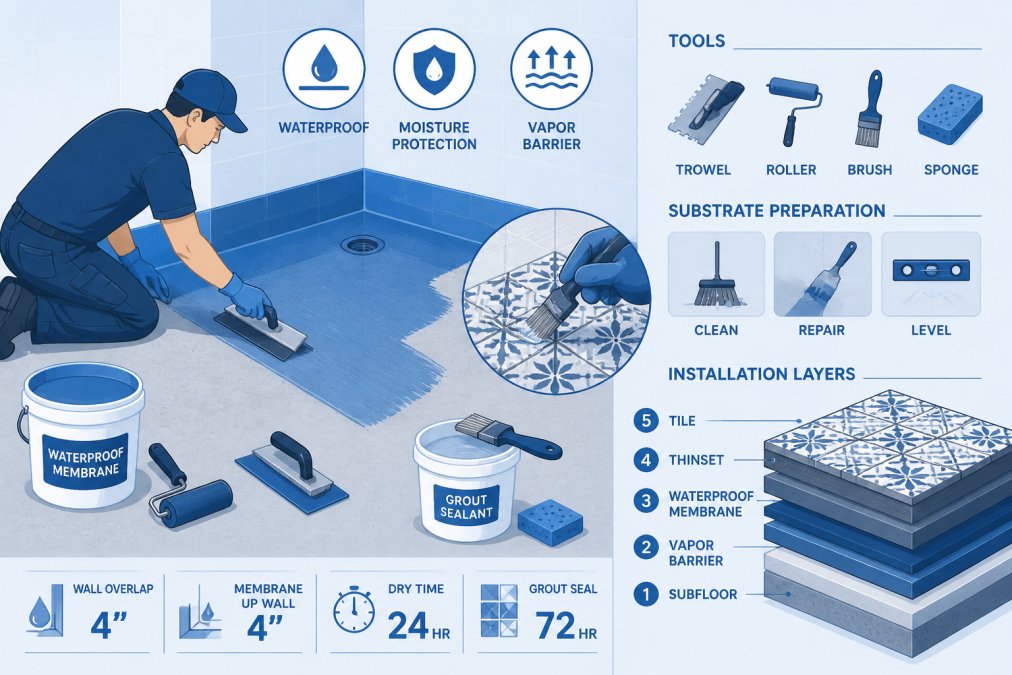
Start with a moisture test. Before tiling, test the subfloor for existing moisture. If damp, address the source (leaks, poor drainage, rising damp) before tiling.
Use a waterproof membrane over the entire floor or wall area, not just the wettest spots. Moisture finds unprotected edges and penetrates anyway.
Thin-set mortar (not mastic) is essential in humid areas. Thin-set allows moisture to migrate predictably; mastic can trap moisture and cause failure. Use a thin-set rated for wet areas.
Install tiles with proper trowel notch size. Insufficient coverage means tiles sit on islands of mortar with air pockets underneath that trap moisture. Tiles should contact mortar across at least 95% of their back surface.
Grout joints should be consistent, typically 1/8 to 1/4 inch wide. Wider joints trap more water and require more frequent resealing.
Allow proper curing time before moisture exposure. Standard thin-set requires 24-48 hours; grout requires 48-72 hours. Rushing this timeline is the fastest way to fail an installation.
Choosing Between Glazed, Unglazed, and Vitrified Moroccan Tiles
Surface treatment determines performance in humid climates.
Glazed tiles have a glass-like waterproof coating, but it's only as thick as paint. If the glaze cracks or chips, the porous body underneath is exposed. Glazed zellige works for decorative applications but is risky for floors and wet areas in humid climates.
Unglazed tiles are raw clay, fired but not coated. They're porous throughout and absorb water readily. Unglazed Moroccan terracotta is beautiful and authentic but demands serious sealing and maintenance in humid climates.
Vitrified tiles are fired at temperatures that make the clay body glass-like and non-porous. The entire tile is waterproof. Vitrified porcelain alternatives to traditional zellige offer Moroccan aesthetics with durability needed for humid climates. They're the practical choice for bathrooms and wet areas in high-humidity, salt-air, or tropical regions.
For most homeowners in humid climates, vitrified tiles are the best choice. They deliver authentic Moroccan style without the vulnerability of traditional porous materials. The trade-off is that they're manufactured rather than handcrafted. But functionality matters more than aesthetics when your installation is at risk of failure.
Conclusion
Moroccan tile brings unparalleled beauty and cultural richness to any home, but humidity is its enemy. Traditional zellige and terracotta tiles are vulnerable in high-moisture environments unless you commit to rigorous sealing, maintenance, and proper installation. Vitrified porcelain alternatives solve this problem while preserving the visual appeal that makes Moroccan design compelling.
If you're undertaking a kitchen or bathroom remodel in a humid climate, coastal Florida, humid Texas, or tropical zones, the choice between authenticity and durability doesn't have to be either-or. At Justmorocco, we help clients navigate this decision by offering both traditional handcrafted zellige for appropriate applications and modern vitrified alternatives for wet spaces. Our custom kitchen and bathroom remodeling services include expert guidance on material selection, proper installation techniques, and maintenance routines tailored to your climate. Work with us to create a Moroccan-inspired space that's as durable as it is beautiful.
Frequently Asked Questions
Are Moroccan tiles porous and prone to water damage in humid climates?
Traditional cement-based Moroccan tiles are hygroscopic, meaning they absorb moisture from the air and can warp or develop mold in high-humidity environments. Porosity varies significantly: unglazed terracotta tiles absorb 6-10% of their weight in water, while glazed and vitrified options absorb less than 1%. In coastal or tropical climates, proper sealing and vapor barriers are essential to prevent moisture ingress and long-term damage.
What is the best way to seal zellige tile for showers and wet spaces?
Zellige tile requires both grout sealing and topical sealant application. Use epoxy or urethane-based grout instead of cement-based options, as these resist moisture better. Apply a penetrating sealer to unglazed zellige surfaces before grouting, then seal the grout lines after curing. For shower installations, a vapor barrier beneath the subfloor prevents moisture from accumulating behind the tile, which is critical in humid climates.
How long do Moroccan tiles typically last in a bathroom with high humidity?
Properly sealed and installed Moroccan tiles can last 20-30 years in humid bathrooms. Lifespan depends on tile type, glazing quality, and maintenance consistency. Glazed porcelain-based Moroccan tiles perform better than traditional unglazed terracotta in moisture-heavy environments. Regular cleaning, prompt mold prevention, and resealing grout every 3-5 years extend durability significantly.
What are the disadvantages of Moroccan tiles in humid coastal climates?
Traditional Moroccan tiles struggle with moisture absorption, thermal expansion, and efflorescence (salt deposits) in coastal humidity. Unglazed zellige tiles are particularly vulnerable to warping and mold growth. Salt air accelerates deterioration of cement-based grout. Installation costs are higher due to subfloor preparation and vapor barriers required in humid zones. Modern porcelain alternatives with Moroccan aesthetics mitigate these issues but may lack authentic handcrafted character.
This article was written using GrandRanker