
Table of Contents
- What Defines Moroccan Kitchen Cabinet Style
- Moroccan Kitchen Tile Ideas for Backsplashes and Accents
- Hand-Carved Woodwork and Cabinetry Details
- Moroccan Cabinet Hardware and Brass Fixtures
- Color Palettes: Jewel Tones and Earthy Warmth
- Textural Elements and Natural Materials
- Rustic vs. Modern Moroccan Cabinet Design
- Budget-Friendly DIY Moroccan Cabinet Hacks
Last Updated: August 9, 2026
What Defines Moroccan Kitchen Cabinet Style
Moroccan style kitchen cabinet ideas blend centuries of North African craftsmanship with bold aesthetic choices that transform kitchens into luxurious spaces. At Justmorocco, we specialize in authentic Moroccan design elements featuring handcrafted details, vibrant color palettes, and intricate architectural features. This approach combines hand-carved woodwork, geometric patterns, warm jewel tones, and natural materials to create timeless, deeply personal kitchens.
Traditional Moroccan design prioritizes craftsmanship over mass production, drawing from Berber heritage, Islamic geometric principles, and centuries of trade route influences. Core elements include hand-carved wooden doors with arabesque and geometric patterns, zellige tile accents, brass hardware with intricate detailing, and a color palette of jewel tones like emerald green, royal blue, and ruby red mixed with earthy neutrals.
Moroccan Kitchen Tile Ideas for Backsplashes and Accents
Zellige Tile Applications
Zellige tiles represent the heart of Moroccan kitchen design, with irregular, hand-glazed surfaces creating visual interest that mass-produced tiles cannot replicate. These handcrafted tiles feature slightly uneven edges, varying glaze depths, and light-reflecting surfaces that shift appearance with lighting and viewing angle.
For kitchen backsplashes, zellige tiles work best in concentrated accent areas. A backsplash behind your range becomes a dramatic focal point, especially in complementary jewel tones. Many homeowners choose solid-color zellige tiles arranged in geometric patterns, hexagons, diamonds, or interlocking stars, that reference traditional Islamic design principles.
Installation of zellige tiles requires care due to their uneven surfaces. According to tile installation best practices from the Tile Council of North America, irregular tiles demand skilled installation to ensure proper grout lines and structural integrity. Budget for professional installation from contractors experienced with specialty tiles.
Beyond backsplashes, zellige tiles work beautifully as accents around kitchen islands, decorative borders framing cabinetry, or inset panels within cabinet doors.
Hand-Painted and Geometric Patterns
Hand-painted zellige tiles and custom geometric patterns elevate Moroccan kitchen design to distinctive levels. These tiles feature painted designs, traditional arabesque motifs, floral elements, or geometric tessellations, applied by hand before firing, creating a bespoke quality where no two tiles are identical.
Geometric patterns draw from Islamic design traditions, which developed extraordinarily sophisticated mathematical patterns. Stars, hexagons, and interlocking geometric shapes create visual rhythm and movement across kitchen surfaces.
For kitchens wanting hand-painted detail without full zellige installation, consider smaller applications: a hand-painted tile border framing your backsplash, custom tiles inset into cabinet door panels, or a decorative tile strip along open shelving. For budget-conscious homeowners, wall stencils offer an alternative, reusable Moroccan pattern stencils allow you to paint geometric designs directly onto cabinet surfaces or walls.
Hand-Carved Woodwork and Cabinetry Details
Hand-carved wooden cabinetry forms the structural and visual foundation of authentic Moroccan kitchen design. Artisans hand-carve intricate patterns directly into cabinet doors, drawer fronts, and trim, typically featuring arabesque designs, geometric tessellations, or floral motifs reflecting traditional Moroccan artistic vocabulary.
The depth and quality of carving varies enormously. Shallow carving creates subtle texture visible in raking light, while deep relief carving produces dramatic shadow patterns that change throughout the day.
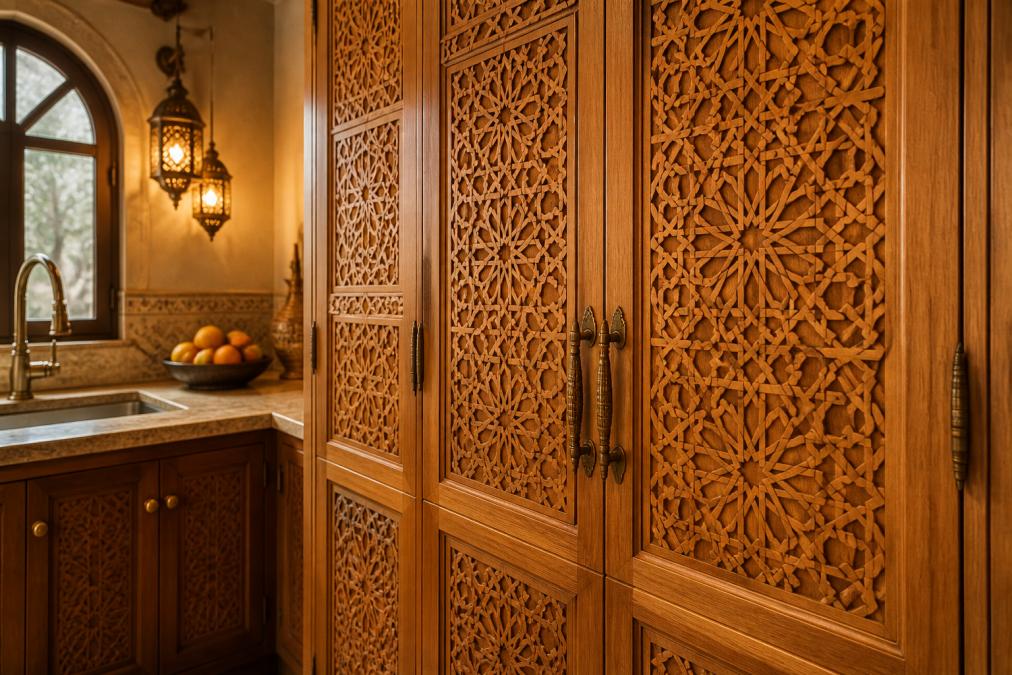
Traditional Moroccan cabinetry uses solid wood, cedar, walnut, oak, or fruitwoods, rather than veneered particleboard. This commitment means pieces develop patina and character over decades, actually improving with age. When sourcing hand-carved cabinetry, expect custom timelines and pricing. Justmorocco specializes in custom kitchen and bathroom remodeling projects where hand-carved elements are designed specifically for your space, dimensions, and aesthetic preferences. For homeowners unable to commit to full custom cabinetry, hand-carved elements can be incorporated selectively: carved panels inset into cabinet doors, carved trim along cabinet edges, or carved wooden shelving supports.
Moroccan Cabinet Hardware and Brass Fixtures
Cabinet hardware becomes jewelry in Moroccan kitchen design, with visible details that catch eyes and hands repeatedly. Moroccan brass hardware features hand-hammered surfaces, intricate etched patterns, and deliberately distressed finishes suggesting age and authenticity.
Brass naturally develops patina over time, shifting from bright gold toward deeper bronze and brown hues. This aging process is intentional in Moroccan design, with patina signaling authenticity rather than deterioration.
Moroccan brass knobs typically feature geometric or arabesque patterns etched into the surface, measuring approximately 1.5 inches in diameter with 1-inch projection for comfortable grip. For a quick Moroccan cabinet refresh without full cabinetry replacement, brass hardware upgrades deliver immediate impact. According to Brook And Birch's handmade Moroccan hardware collection, quality brass knobs begin around $12.99 per piece, making hardware replacement an accessible entry point.
Beyond knobs, consider brass drawer pulls with geometric cutout designs, brass hinges featuring arabesque patterns, or custom brass fixtures coordinating with your tile and cabinetry selections.
Color Palettes: Jewel Tones and Earthy Warmth
Moroccan color palettes embrace bold jewel tones, emerald green, sapphire blue, ruby red, amethyst purple, balanced against warm earthy neutrals like terracotta, ochre, warm sand, and cream. This combination creates visual richness without feeling chaotic.
The key to successful Moroccan color application lies in strategic concentration rather than uniform saturation. Reserve rich colors for statement pieces: a kitchen island in deep emerald, upper cabinets in royal blue, or accent panels in ruby red. Pair these with neutral cabinetry in cream, soft taupe, or natural wood tones.
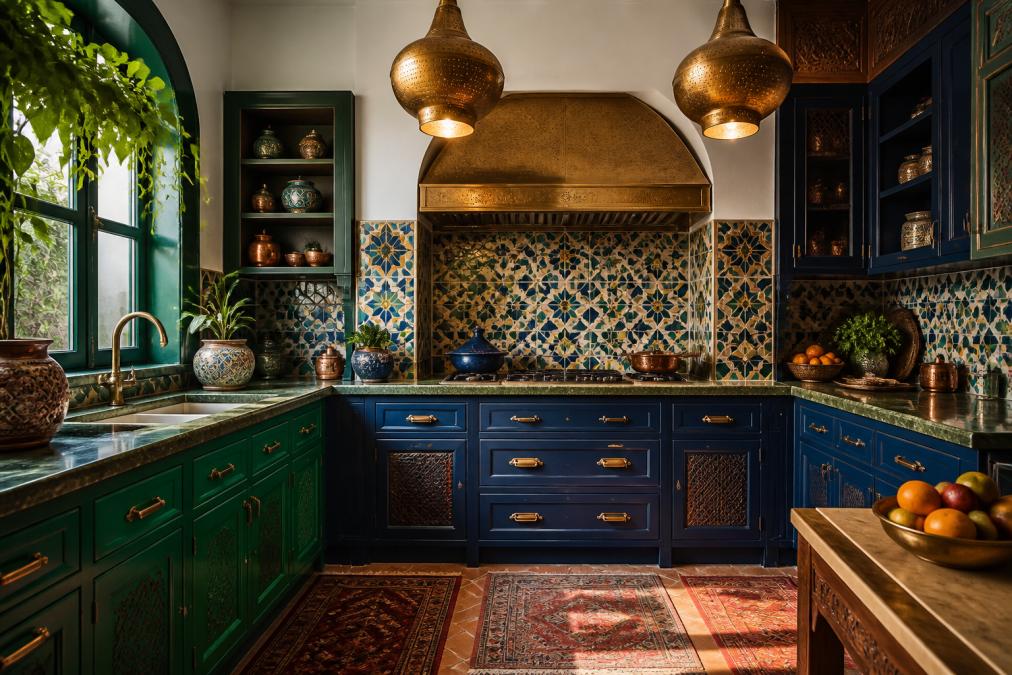
Lighting dramatically affects how Moroccan colors read in your kitchen. Warm-toned lighting (2700K-3000K color temperature) enhances jewel tones and earthy colors, creating the luxurious ambiance associated with Moroccan design. If your kitchen has cool lighting, changing to warm-toned bulbs should be a priority.
Textural Elements and Natural Materials
Moroccan design celebrates texture as intensely as color. The interplay of smooth glazed zellige tiles against rough stucco walls, polished brass against carved wood, and hand-woven textiles against stone creates sensory richness. In kitchen design, texture prevents surfaces from feeling flat or corporate.
Natural materials form the foundation of authentic Moroccan style. Beyond hand-carved wood and handcrafted tiles, consider incorporating natural stone accents, woven elements in open shelving styling, and textured plaster finishes on walls. Stucco or textured plaster finishes, particularly around backsplash areas, echo traditional Moroccan architecture and provide visual interest without adding pattern.
Natural materials also address practical kitchen concerns. Solid wood cabinetry withstands daily wear better than veneered alternatives. Zellige tiles, despite their handmade irregularity, prove extremely durable when properly installed. Brass hardware develops patina that conceals fingerprints and wear marks better than polished chrome.
Rustic vs. Modern Moroccan Cabinet Design
Moroccan style exists on a spectrum from rustic-traditional to contemporary-modern. Rustic Moroccan design emphasizes old-world craftsmanship, visible wear, and historical authenticity, with deep hand-carved details and deliberately distressed finishes. Colors skew toward earthy tones, terracotta, warm ochre, deep browns, with jewel tones appearing as accents.
Modern Moroccan design extracts geometric and color elements from traditional style while applying contemporary design principles. Cabinetry features cleaner lines, subtle rather than dramatic carved details, and hardware echoing Moroccan patterns without overwhelming surfaces. Colors remain bold, but application is more restrained.
Most successful Moroccan kitchens blend both approaches. Full-height cabinetry might feature clean modern lines with subtle carved details on upper cabinet doors, while a kitchen island incorporates more dramatic hand-carved elements and deeper color. Open shelving displays handcrafted ceramics and woven textiles against modern stainless steel appliances, intentionally mixing styles.
Budget-Friendly DIY Moroccan Cabinet Hacks
Authentic Moroccan kitchen cabinet ideas don't require custom cabinetry or expensive zellige tile. Strategic DIY applications introduce Moroccan character incrementally, testing aesthetic choices before committing to major renovations.
Moroccan Pattern Stencils: Reusable stencils featuring geometric Moroccan patterns allow you to paint designs directly onto existing cabinet surfaces. The Chez Ali Moroccan Wall Stencil by Royal Design Studio provides detailed geometric patterns suitable for cabinet doors and works on wood, painted surfaces, and fabric.
Peel-and-Stick Zellige Tiles: Smart Tiles offers Morocco Peel and Stick Backsplash Tiles featuring Zellige-style design. These adhesive-backed tiles install without grout, special tools, or professional installation. While they lack the authentic texture of handcrafted zellige, they deliver visual Moroccan character at a fraction of the cost.
Hardware Upgrades: Replacing cabinet knobs with handmade Moroccan brass hardware transforms cabinetry instantly. This single change costs far less than new cabinetry while completely shifting the kitchen's aesthetic.
Stenciled Accent Walls: Paint kitchen walls with Moroccan geometric patterns using reusable stencils and quality paint. A single accent wall in emerald or sapphire blue with geometric stenciling creates a focal point without overwhelming the space.
Textural Styling: Rearrange existing open shelving or install floating shelves specifically for displaying handcrafted Moroccan ceramics, woven baskets, and textiles. Group items by color and layer different textures.
Brass Fixture Updates: Replace standard kitchen lighting with Moroccan brass flush-mount fixtures or pendant lights. Handcrafted brass ceiling lights create dramatic ambiance and serve as functional art.
| DIY Approach | Cost Range | Impact Level | Reversibility |
|---|---|---|---|
| Pattern Stencils | $25-50 | High | Fully reversible |
| Peel-and-Stick Tiles | $200-400 | Medium-High | Removable |
| Hardware Replacement | $150-400 | High | Fully reversible |
| Accent Wall Stenciling | $50-150 | Medium-High | Fully reversible |
| Shelf Styling | $0-200 | Medium | Fully reversible |
| Brass Lighting | $200-400 | High | Reversible |
Creating Moroccan style kitchen cabinet ideas that feel authentic requires balancing bold aesthetic choices with practical functionality. Whether you're investing in custom hand-carved cabinetry from Justmorocco or testing Moroccan character through budget-friendly DIY applications, the key lies in intentional design decisions reflecting your personal aesthetic while respecting the craftsmanship traditions underlying this distinctive style.
The most successful Moroccan kitchens evolve over time, incorporating pieces and details as they're sourced and resources allow. This gradual approach honors the collected, authentic aesthetic that defines Moroccan design. Whether you're drawn to deep emerald cabinetry with hand-carved details, zellige tile backsplashes catching warm light, or simply upgrading hardware to brass fixtures with geometric etching, each choice moves your kitchen toward the luxurious, artisan-crafted sanctuary that Moroccan style promises.
For homeowners committed to authentic materials and custom craftsmanship, Justmorocco offers specialized expertise in Moroccan kitchen and bathroom remodeling. The team works directly with clients across California, Texas, New York, and Florida to design custom cabinetry, select authentic materials, and execute installations that blend traditional artistry with modern functionality. Contact Justmorocco to discuss how authentic Moroccan cabinetry can transform your kitchen into a distinctive, luxurious space reflecting your design vision and appreciation for handcrafted excellence.
Frequently Asked Questions
What are the signature colors for a Moroccan-style kitchen cabinet?
Moroccan kitchen cabinets typically feature jewel tones like emerald green, royal blue, and ruby red paired with earthy tones such as terracotta, ochre, and warm sand. These colors reflect traditional Moroccan craftsmanship and create a rich, inviting atmosphere. Many homeowners layer these hues across cabinetry, zellige tile backsplashes, and accents to build visual depth while maintaining authenticity.
How do I incorporate authentic Moroccan cabinet hardware into my kitchen?
Moroccan cabinet hardware typically features handmade brass knobs and pulls with etched geometric designs and distressed finishes. Look for pieces with arabesque patterns, ornate detailing, or traditional Berber-inspired motifs. Authentic hardware should feel substantial and show signs of old world craftsmanship. Pairing these with hand-carved cabinetry or zellige tile accents amplifies the Moroccan aesthetic while maintaining functional kitchen design.
Are Moroccan-style kitchen cabinets suitable for modern kitchens?
Yes, Moroccan style works beautifully in modern kitchens when balanced thoughtfully. The key is mixing rustic Moroccan elements like hand-carved woodwork and zellige tiles with clean lines and contemporary appliances. Consider using Moroccan patterns as a focal point on a kitchen island or backsplash while keeping surrounding cabinetry more neutral. This approach creates visual interest without overwhelming the space, especially in smaller kitchens where bold patterns need careful placement.
What's the difference between authentic zellige tiles and mass-produced Moroccan tile alternatives?
Authentic zellige tiles are handcrafted in Morocco with irregular surfaces that reflect light uniquely, creating depth and character. Mass-produced alternatives, including peel-and-stick options, offer uniform sizing and easier installation but lack the textural variation and old world craftsmanship of genuine zellige. Authentic tiles cost more and may require specialized installation due to their irregular nature, but they provide unmatched authenticity and durability for high-end kitchen projects.
This article was written using GrandRanker