
Table of Contents
- What Is a Genuine Moroccan Leather Pouf?
- Hand-Stitching vs. Machine Stitching: The Construction Difference
- Identifying Authentic Goat Leather and Vegetable Tanning
- The Aging Process: Patina and Character Development
- Common Signs of Faux Leather and Synthetic Imitations
- How to Stuff a Moroccan Pouf: Filling and Density Benchmarks
- Moroccan Leather Pouf Care and Maintenance for Longevity
- Pricing Guide: What to Expect to Pay for Authentic Pieces
- Where to Find Authentic Moroccan Home Decor Online
- Frequently Asked Questions
Last Updated: September 25, 2026
What Is a Genuine Moroccan Leather Pouf?
A genuine moroccan leather pouf is a handcrafted seat or ottoman made from natural goat leather, traditionally produced by artisans using centuries-old techniques. These pieces combine supple, vegetable-tanned leather with hand-stitched seams and natural stuffing materials like poly-fil or wool. The defining characteristic of an authentic moroccan leather pouf lies in its construction: each one is made individually, often featuring visible artisan marks, natural color variation, and the ability to develop a rich patina over time.
At Justmorocco, we recognize that authentic poufs serve as functional art, they're not just seating, but investment pieces that reflect genuine craftsmanship. The leather should feel substantial to the touch, with a supple texture that improves with age. Unlike mass-produced imitations, a real moroccan leather pouf will show individual character through its stitching patterns, leather grain, and the way it wears.
The construction process, from leather selection through final hand-stitching, can take weeks, which directly impacts the final price and quality you receive.
Hand-Stitching vs. Machine Stitching: The Construction Difference
Hand-stitched construction is the hallmark of authentic moroccan leather poufs. When artisans stitch by hand, each stitch varies slightly in tension and spacing, creating an irregular but intentional pattern that's impossible to replicate with machines. This variation isn't a flaw, it's evidence of human craftsmanship and the mark of a genuine piece.
Machine stitching, by contrast, produces perfectly uniform, evenly-spaced seams. While this consistency might seem desirable, it's actually a red flag for authenticity. Real moroccan leather poufs feature stitching that shows natural variation in depth, angle, and spacing. Run your finger along the seams: authentic hand-stitching feels slightly uneven, with visible needle marks that create a subtle texture.
The practical difference matters for durability. Hand-stitched seams distribute stress more organically across the leather, often lasting longer than machine-stitched alternatives.
Examine the corners and edges carefully. Authentic poufs show slightly irregular stitching patterns at stress points like corners and where handles attach. If every seam looks like it came from a factory template, you're looking at a synthetic imitation.
Identifying Authentic Goat Leather and Vegetable Tanning
Genuine moroccan leather poufs use goat leather, specifically selected for its durability and supple texture. Goat leather is thinner than cow leather but far more flexible, making it ideal for the curved, cushioned form of a pouf. The leather should feel soft and pliable from the moment you touch it, not stiff or plastic-like.
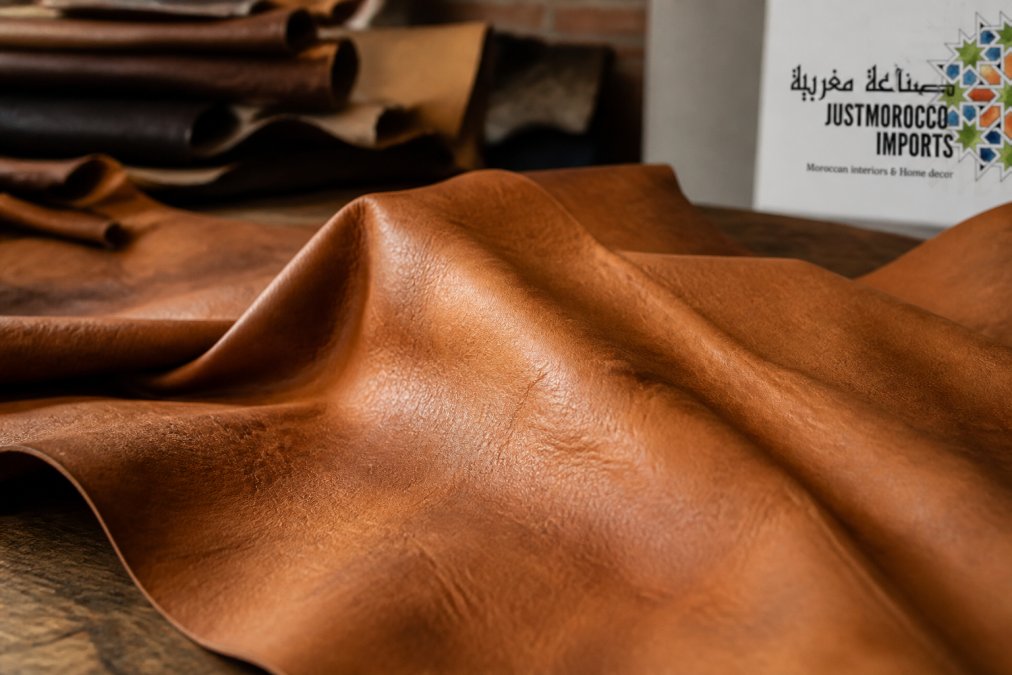
Vegetable tanning is the traditional process used by authentic moroccan artisans. This method uses tannins from tree bark, typically from oak, chestnut, or hemlock, rather than synthetic chemicals, resulting in leather that ages beautifully and develops a deeper color over time. The distinction matters not only for aesthetics but for health and safety.
Vegetable-tanned leather is biodegradable, non-toxic, and safe for prolonged skin contact, important if you're using your pouf as seating for children or spending extended time on it.
Vegetable-tanned leather feels warm to the touch and has a natural, slightly matte finish. It may also have a subtle earthy smell, not chemical or artificial. This scent comes from the tannins themselves and fades over time as the leather cures. Synthetic leather and faux alternatives feel cool and plastic-like. They often have a uniform, glossy surface that never changes and typically emit a strong chemical odor.
Genuine goat leather shows natural variation in color and tone. Small imperfections, slight scars or marks on the hide, are normal and actually indicate authenticity. These marks tell the story of the animal and the artisan's selection process. The leather's natural oils create a subtle patina that develops over time, a process that's impossible to replicate in synthetic materials.
The aging process of vegetable-tanned leather is irreversible and beautiful. After months of use, the leather deepens in color, developing a patina that's unique to each pouf. Synthetic materials don't age, they simply fade, crack, or peel. If a seller claims their pouf will look the same in five years, it's not genuine.
The Aging Process: Patina and Character Development
One of the most distinctive features of authentic moroccan leather poufs is their ability to develop patina, a deepening of color and character that happens naturally over years of use. This transformation is what separates genuine pieces from fakes. The patina tells a story: it shows where the pouf has been sat on most, how it's been cared for, and how much it's been loved.
Vegetable-tanned leather darkens gradually, typically shifting from lighter honey or tan tones toward deeper browns and ambers. This change is not uniform, areas of heavier use develop richer color faster than less-touched sections. This natural variation is beautiful and intentional. It's the reason collectors prize older, well-used moroccan poufs over new ones.
The aging process also affects texture. Over time, the leather becomes even more supple and develops a subtle sheen from natural oils and handling. Creases and folds deepen, adding character and visual interest.
Synthetic materials cannot age this way. Faux leather may darken slightly from dust or staining, but it never develops the rich, complex patina of genuine leather. In fact, synthetic materials often crack, peel, or fade, signs of deterioration, not maturation. If a pouf looks exactly the same after three years of use, it's not genuine.
Common Signs of Faux Leather and Synthetic Imitations
Faux leather is designed to mimic genuine leather but falls short in multiple ways. The most obvious sign is the surface finish. Synthetic leather has a uniform, plastic-like sheen that doesn't vary across the material. Real leather has natural variation in finish, some areas slightly matte, others with subtle highlights depending on light and angle.
Smell is another reliable indicator. Genuine vegetable-tanned goat leather has a distinctive, pleasant earthy scent that some describe as slightly sweet or herbaceous. Synthetic leather smells chemical or plasticky. If you notice a strong chemical odor, the pouf is likely made from polyurethane or PVC-based materials.
Peeling and cracking are telltale signs of poor-quality imitations. Genuine leather doesn't peel, it may crack slightly if exposed to extreme dryness, but this is rare and fixable.
Flattening is another problem specific to synthetic poufs. The stuffing inside compresses over time, this is normal. But with cheap synthetic leather, the outer shell doesn't flex naturally with the compressed interior. Instead, it wrinkles, bunches, and loses its shape. Genuine leather adapts to the changing interior, maintaining a smooth, intentional appearance even as the pouf settles.
Check the edges and seams carefully. Faux leather often shows a darker, plastic-like backing material at cut edges. Real leather edges should look continuous with the surface, sometimes with a slightly different texture but no obvious plastic layer underneath. Authentic poufs also feature finished edges, they're either folded under, stitched, or bound with decorative trim.
How to Stuff a Moroccan Pouf: Filling and Density Benchmarks
Proper stuffing is essential for both comfort and longevity. A moroccan leather pouf should feel firm but yielding, not rock-hard, not squishy. The ideal pouf maintains its shape under body weight while still providing cushioning. This balance depends on the type and amount of filling used, and understanding these benchmarks helps you verify authenticity before purchasing.
Poly-fil is a common stuffing material in authentic moroccan poufs. It's durable, holds its shape well, and resists moisture. A properly stuffed pouf typically contains 8 to 12 pounds of poly-fil, depending on size. For a standard 19-inch diameter by 15-inch height pouf, expect approximately 10 to 11 pounds of fill. This creates a density that feels substantial, when you sit on it, there's clear resistance, but your weight doesn't compress it completely.
Handmade Moroccan Silver Metal Coffee →
Some artisans use wool or cotton blends for a softer feel. These natural materials are breathable and environmentally friendly but require careful maintenance to prevent moisture absorption. If you choose a wool-stuffed pouf, ensure it's stored in a dry environment and protected from humidity.
Weight benchmarks are a practical authentication tool. An empty genuine moroccan leather pouf shell (leather only, no stuffing) typically weighs 3 to 4 pounds for a standard 19-inch model. When properly stuffed, the total weight should be 13 to 15 pounds.
The stuffing should be evenly distributed throughout the pouf's interior. Press different areas, the center, edges, and corners should all feel similarly firm. Uneven stuffing indicates poor craftsmanship or settling over time. A quality pouf should compress uniformly when you apply pressure; if one side feels significantly softer than another, the fill has shifted or was unevenly distributed during construction.
Over time, all poufs settle slightly as the filling compresses. This is normal and typically requires restuffing after 5 to 10 years of regular use.
If your pouf develops soft spots, lumps, or uneven compression after several years, it may be time for restuffing. This process involves carefully opening a seam, removing the old fill, and replacing it with fresh material. This is a worthwhile investment for a genuine pouf, as restuffing can extend its life by another 5 to 10 years.
Moroccan Leather Pouf Care and Maintenance for Longevity
Proper care extends the life of your moroccan leather pouf significantly. The first rule is protection from direct sunlight. Prolonged exposure to UV light fades leather and can cause cracking. Place your pouf away from windows or use curtains to filter harsh afternoon light. This is especially important in climates with intense sun exposure.
Moisture is the enemy of genuine leather. Keep your pouf away from humidity sources like bathrooms, kitchens, and damp basements. If you live in a humid climate, consider using a dehumidifier in the room where your pouf is stored. Spills should be cleaned immediately with a soft, dry cloth. For liquid spills, blot gently, don't rub, which can push moisture deeper into the leather.
Regular cleaning maintains the leather's appearance and health. Dust your pouf weekly with a soft brush or cloth. For deeper cleaning, use a leather-specific cleaner designed for vegetable-tanned leather. Apply it sparingly with a soft cloth, working in circular motions. Avoid harsh chemicals or acetone-based products, which can strip the leather's natural oils.
Conditioning is optional but beneficial. Every 12 to 18 months, apply a leather conditioner formulated for vegetable-tanned materials. This replenishes natural oils and helps the leather age beautifully. Use sparingly, too much conditioner makes the leather greasy and attracts dust. A light application every year is ideal.
Pricing Guide: What to Expect to Pay for Authentic Pieces
Authentic moroccan leather poufs are not budget items. The handcrafted nature, quality materials, and time investment required make them premium pieces. Understanding pricing helps you distinguish genuine articles from cheap imitations.
Justmorocco's Moroccan leather bench options range from $1,600 to $3,600, depending on size and complexity. These prices include the artisan's expertise, material sourcing, and the guarantee of authenticity.
Larger poufs or those with additional embellishments, like the Handmade Moroccan Silver Metal Coffee Table & Leather Pouf Seating at $3,430, command higher prices. This particular set includes four leather and metal poufs measuring 19" x 19" x 15" high, plus a handmade wooden silver table with metal inlay. The price reflects the complexity of combining multiple pieces and the quality of materials involved.
| Price Range | Authenticity Indicator | Typical Features |
|---|---|---|
| Authentic | ||
| $2,500+ | Premium authentic | Large size, complex design, rare materials |
Shipping costs should also be factored in. Authentic poufs are heavy, typically 20 to 30 pounds, and require careful handling. Freight and crating can add $200 to $500 to your total cost, depending on distance and the carrier's requirements. Justmorocco handles shipping to clients across the United States, with costs varying by location and item size.
Where to Find Authentic Moroccan Home Decor Online
Finding genuinely authentic moroccan leather poufs requires research and careful vendor selection. Not all online retailers prioritize authenticity or quality. The best sources are importers with direct relationships to artisans and a track record of transparency.
Justmorocco specializes in authentic moroccan furniture and home decor, offering pieces handmade by master artisans. Their collection includes vintage and newly handmade poufs, benches, and complementary furniture pieces. Each item is sourced directly from craftspeople, ensuring authenticity and quality. Justmorocco serves clients across the United States and provides detailed product information about materials, construction, and origins.
When shopping online, look for sellers who provide detailed product descriptions including materials, dimensions, construction methods, and origin information. Authentic importers are transparent about where pieces come from and who made them. They often include photographs showing stitching detail, leather texture, and craftsmanship. Ask questions about the artisan, the tanning process, and the stuffing materials used.
Avoid generic marketplaces where sellers list mass-produced imitations alongside genuine pieces. These platforms make it difficult to verify authenticity and offer limited recourse if you receive a fake.
Verify return policies and guarantees. Reputable sellers stand behind their products and offer returns or exchanges if items don't match descriptions. Be wary of sellers with no return policy or unclear authenticity guarantees.
Choosing an authentic moroccan leather pouf means investing in a piece that will improve with age and provide decades of beauty and function. The craftsmanship, materials, and care that go into each genuine pouf justify the premium price. At Justmorocco, we source directly from master artisans to bring you pieces that embody the true spirit of moroccan craftsmanship. Our collection includes handcrafted leather benches and poufs that transform any space with authentic elegance. Explore our custom furniture imports to discover pieces that elevate your home with genuine moroccan style.
Frequently Asked Questions
How can you tell if a Moroccan leather pouf is genuine?
Genuine Moroccan leather poufs display hand-stitching with visible irregularities, supple vegetable-tanned goat leather that develops patina over time, and substantial weight from quality poly-fil or natural stuffing. Examine the stitching closely, authentic pieces show uneven thread spacing and hand-tied knots. Real leather feels warm to the touch and develops a deeper, richer color as it ages. Faux leather feels cold, plastic-like, and shows uniform machine stitching with consistent thread tension throughout.
What are Moroccan poufs filled with?
Authentic Moroccan poufs are typically filled with poly-fil (polyester fiberfill) or natural stuffing materials that provide substantial density and support. Quality pieces use enough filling to maintain shape without flattening over time. The weight should feel significant when you lift it. Lower-quality imitations use minimal, low-density filling that compresses quickly, causing the pouf to flatten and lose its cushioning within months of regular use.
What is the price difference between authentic and mass-produced Moroccan poufs?
Authentic handmade Moroccan leather poufs range from $1,600 to $3,600 for artisan-crafted pieces, reflecting hand-stitching, vegetable-tanned leather, and individual artisan production. The price gap reflects genuine materials, labor-intensive hand-craftsmanship, and durability, authentic poufs develop character and improve with age, while fakes peel, crack, and lose shape within 2-3 years.
How does authentic Moroccan leather develop patina, and why does this matter?
Vegetable-tanned goat leather develops a natural patina as it ages, deepening in color and gaining a soft sheen from exposure to light and handling. This aging process is a hallmark of genuine leather, the surface becomes more supple and gains character marks that tell the story of use. Synthetic faux leather cannot develop patina; it remains flat and uniform or begins peeling and cracking. The ability to age gracefully is a key differentiator between authentic, hand-crafted pieces and mass-produced imitations.
Are there sustainability and ethical certifications to look for when buying genuine Moroccan leather?
Authentic Moroccan leather poufs from reputable artisan importers are handmade by master craftspeople using traditional vegetable-tanning methods that are more sustainable than synthetic alternatives. Ethical sourcing means fair labor practices and support for traditional craftsmanship. Justmorocco specializes in direct imports from master artisans, ensuring authentic production methods and fair compensation for the skilled labor behind each handmade piece.