
Table of Contents
- 7 Ways to Style Moroccan Furniture in Modern Homes
- 1. Balance Moroccan Textiles with Neutral Foundations
- 2. Incorporate a Moroccan Style Lamp as Your Statement Piece
- 3. Select Strategic Accent Furniture Pieces
- 4. Use Color Theory to Create Modern Moroccan Living Room Ideas
- 5. Mix Geometric Patterns with Minimalist Decor
- 6. Blend Ornate Metalwork with Modern Minimalism
- 7. Curate Authentic Craftsmanship Without Visual Clutter
- Budget-Friendly DIY Moroccan Hacks for Apartments
- Conclusion
- Frequently Asked Questions
Last Updated: September 23, 2026
7 Ways to Style Moroccan Furniture in Modern Homes
Moroccan design doesn't belong in a museum. When done right, it transforms contemporary spaces into sanctuaries of warmth and character without feeling dated or overwrought. The challenge most homeowners face isn't finding authentic pieces, it's integrating them into homes built on minimalist principles and neutral palettes.
We understand that 7 ways to style moroccan furniture in modern homes requires strategic placement, thoughtful color choices, and honest restraint. This guide breaks down the exact methods that work, the common mistakes to avoid, and how to build a cohesive aesthetic that feels intentional rather than cluttered.
1. Balance Moroccan Textiles with Neutral Foundations
The biggest mistake homeowners make is layering Moroccan textiles onto already-busy interiors. Hand-woven rugs and decorative pillows demand visual breathing room to shine. Start with a neutral foundation, then let the textiles do the talking.
Choosing Hand-Woven Rugs as Anchors
Hand-woven Moroccan rugs function as the visual anchor of any room. Unlike mass-produced alternatives, authentic pieces like the Moroccan Berber Wool Carpet feature semi-abstract patterns and color combinations that tell a story. These rugs work best when they're the loudest element in the space.
Place your rug first. Build everything else around it. If your rug features vibrant teals, oranges, and reds against a pink base, your furniture should retreat into calm tones. Cream linen sofas, light oak tables, and white shelving create the contrast these pieces need to breathe.
Layering Decorative Pillows Without Overdoing It
Decorative pillows are where restraint matters most. The instinct is to layer many cushions across a sofa, resist it. Instead, choose a few pillows that echo colors from your central rug or textile piece.
If your rug features geometric patterns in indigo and cream, select pillows in solid indigo, solid cream, and one geometric accent. This creates visual rhythm without chaos. Mixing patterns works only when the color palette stays tight and the scale of patterns differs dramatically.
Texture matters more than quantity. A plush velvet pillow next to a linen one next to a wool-blend creates tactile interest that compensates for fewer pieces. Modern minimalism appreciates quality over abundance.
2. Incorporate a Moroccan Style Lamp as Your Statement Piece
A moroccan style lamp isn't functional lighting, it's sculpture. In contemporary homes, this distinction is crucial. Your lamp should be the second-most dominant visual element after your rug or textile anchor.
Positioning Lantern-Style Lighting for Maximum Impact
Lantern-style fixtures cast intricate shadows that soften hard architectural lines in modern spaces. Place your lamp where it creates visual drama: beside a reading chair, on a console table opposite a sofa, or in a corner where shadows play against white walls.
The Antique Marrakesh Pottery Vase Floor Lamp exemplifies this principle. Hand-painted ceramic with cobalt blue and saffron yellow accents, it functions as both light source and art object. Position it where people see it before sitting, not hidden in a corner.
Avoid clustering multiple lantern fixtures. One statement piece is more powerful than competing for attention. Modern spaces benefit from intentional focal points, not scattered decorative elements.
Warm Ambient Lighting in Contemporary Spaces
The color temperature of your bulb matters as much as the fixture itself. Moroccan design thrives in warm, diffused light. Use bulbs rated 2700K or lower to mimic candlelight and create the intimate atmosphere these pieces evoke.
Brass and copper finishes in lantern fixtures reflect warm light beautifully. They anchor the aesthetic without requiring additional decor. In a minimalist room with white walls and light wood, a single brass lantern becomes the entire story.
3. Select Strategic Accent Furniture Pieces
Not every room needs Moroccan furniture. The rooms that do need pieces chosen with surgical precision. One statement table beats three mediocre ones. One ottoman serves better than scattered floor cushions.
Bone Inlay Tables and Geometric Patterning
Bone inlay represents the height of Moroccan craftsmanship. Hand-carved individual pieces of ethically sourced buffalo bone are affixed to wooden frames in geometric brick-lay patterns. The result is a table that works as both functional surface and sculptural art.
The Eclectic Moroccan Bone Inlay Table features a recessed top and scalloped base, details that prevent it from feeling heavy despite its architectural presence. Place this piece where it's visible but not in the main traffic flow. A corner beside a reading chair, a console behind a sofa, or an entryway accent table works better than a coffee table position where it competes with seating.
Pair bone inlay with minimalist seating. If your table features intricate geometric patterns in cream and natural wood, your surrounding furniture should be simple: a low-profile linen sofa, metal side chairs, or a clean-lined console.
Plush Ottomans and Floor Cushions for Texture
Floor cushions and ottomans introduce tactile variety without visual clutter. They're also practical, they serve as seating, footrests, or informal side tables. A single oversized ottoman in jewel-toned leather or wool creates more impact than scattered floor pillows.
The Leather Moroccan Couch demonstrates how leather upholstery grounds a space. The room uses a base of earthy, warm tones, specifically the terracotta/dusty rose walls, which creates an immediate sense of intimacy. The addition of deep blue and teal cushions provides a necessary high-contrast 'pop' that prevents the monochromatic wall color from feeling flat. Low-Profile Furniture: The choice of a leather chaise lounge and floor cushions is very intentional. This encourages a slower pace of life and conversation, which is central to the cultural heritage these spaces often emulate. Texture and Craftsmanship: The room relies heavily on tactile variety. You have the smooth leather of the chaise, the intricate carvings on the side table, and the shaggy, high-pile rug that grounds the seating area.
Choose one statement ottoman in a color that complements your central rug. Terracotta, deep teal, or rich burgundy all work. Avoid matching your rug exactly, contrast creates visual interest.
Eclectic Moroccan Bone Inlay Table →
4. Use Color Theory to Create Modern Moroccan Living Room Ideas
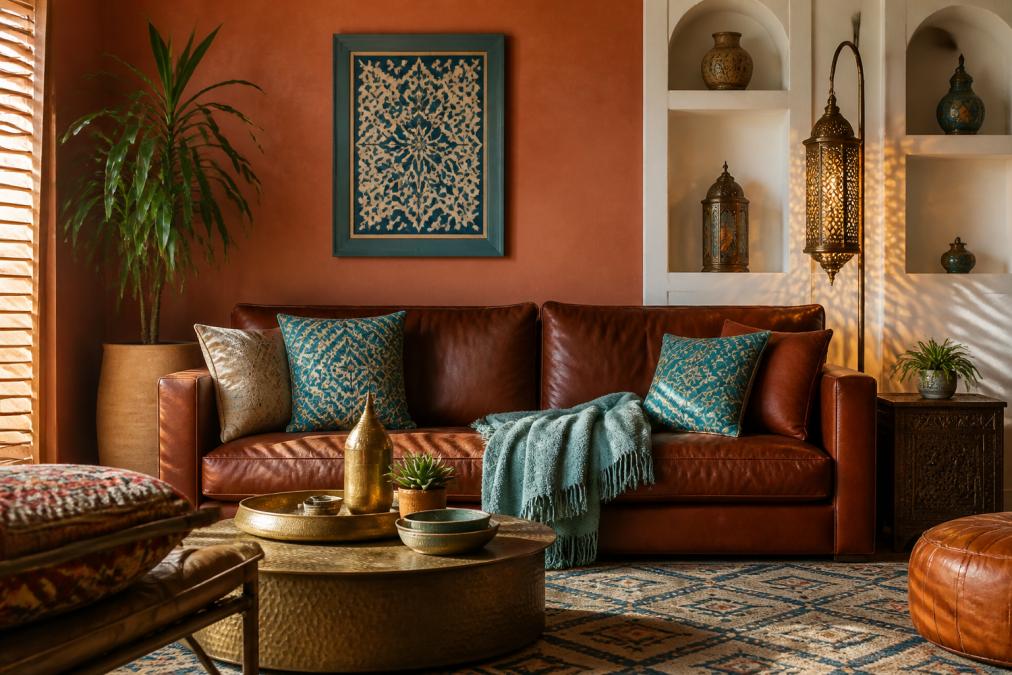
Modern moroccan living room ideas succeed when they balance warm earth tones with strategic pops of jewel tones. The color palette is the skeleton of the entire design. Get it wrong and even authentic pieces feel chaotic.
Warm Earth Tones as Your Base
Terracotta, dusty rose, warm ochre, and sandy beige form the foundation of Moroccan color theory. These warm earth tones create intimacy and visual cohesion. In modern homes, they work best as accent walls or in textiles rather than as all-over wall color.
A single terracotta accent wall behind a seating area anchors the space. Pair it with three walls in soft white or warm cream. This prevents the room from feeling cave-like while maintaining the warmth Moroccan design requires.
Alternatively, introduce warm tones through large textiles. A rug in rust and cream, a throw blanket in dusty rose, or cushions in warm ochre achieve the same effect without permanent commitment. This approach works better in rental spaces or homes where flexibility matters.
Adding Vibrant Accent Colors Strategically
Moroccan design traditionally features jewel tones, deep teals, rich indigos, vibrant oranges, and emerald greens. In modern spaces, these colors work best as accents, not as dominant elements. A single teal cushion, a deep blue throw, or emerald-toned floor cushions provide visual pop without overwhelming.
Use vibrant colors in textiles rather than large furniture pieces. A teal ottoman is harder to swap out than teal pillows. Textiles offer flexibility as your taste evolves.
5. Mix Geometric Patterns with Minimalist Decor
Moroccan design is pattern-heavy. Geometric shapes, intricate carvings, and mosaic arrangements dominate traditional interiors. Modern homes can't sustain that density. The solution is strategic pattern placement combined with large areas of visual calm.
Mosaic Tiles and Intricate Carvings as Focal Points
Mosaic tiles work best as contained focal points, a fireplace surround, a kitchen backsplash, or a bathroom accent wall. The Vintage Moroccan Zellige Tile Fireplace Surround demonstrates this principle. Hand-chiseled tiles create architectural drama without requiring pattern throughout the space.
Zellige tilework involves hand-painting and firing individual clay tiles, then hand-chiseling geometric patterns. The precision required takes years of training. These pieces deserve to be the singular focus of a room, not one element among many.
Frame your mosaic focal point with calm surroundings. White walls, simple shelving, and minimal additional decor let the tilework breathe. This is restraint in service of authenticity.
Intricate carvings follow the same principle. The Hand Carved Moroccan Vintage Wooden Moorish Arch requires years of artisanal work. When you invest in a piece this significant, everything else recedes. Simple furnishings, neutral walls, and minimal accessories honor the craftsmanship.
Creating Spatial Balance in Smaller Spaces
Apartments and smaller homes require different strategies than sprawling houses. Dense pattern and dark colors make spaces feel cramped. Instead, choose one patterned textile piece and keep everything else light and simple.
A single hand-woven Berber rug becomes the entire pattern story. Walls stay white or cream. Furniture is minimal and light-colored. Accessories are sparse. This approach makes small spaces feel intentional rather than cluttered.
Vertical elements help. Hanging a Moroccan textile as wall art instead of placing it on the floor preserves floor space. A tall lantern fixture draws the eye upward. These choices maximize the feeling of openness while maintaining Moroccan character.
6. Blend Ornate Metalwork with Modern Minimalism
Brass, copper, and hand-hammered silver represent Moroccan metalwork tradition. In modern homes, these finishes work best as accent details rather than dominant elements. A single brass mirror, copper light fixture, or silver-inlaid piece creates elegance without excess.
Brass and Copper Finishes in Contemporary Settings
Warm metal finishes complement contemporary minimalism beautifully. They introduce richness without pattern or color saturation. A brass-framed mirror, copper door knocker, or silver-inlaid side table adds sophistication to simple spaces.
The Hand Tooled Moroccan Silver Mirror features hand-chased metal overlays and solid hardwood construction. Position it where it reflects light and becomes a functional art piece. Above a console table, opposite a window, or in an entryway, anywhere it serves practical purpose while adding visual interest.
Mixing metal finishes works in modern spaces more than traditional ones. Brass, copper, and silver together feel eclectic and intentional.
Architectural Arches and Statement Doors
Horseshoe arches and ornate doors represent Moroccan architectural tradition. In modern homes, these elements work best as singular focal points, not repeated throughout.
The Handmade Vintage Moroccan Painted Double Door features traditional Zouaq artistry with hand-painted geometric and floral patterns. Use it as a functional door, wall-mounted headboard, or room divider. Its presence requires that everything else in the space recede visually.
This is where "less is more" becomes non-negotiable. A statement door means white walls, simple furniture, and minimal accessories. The door tells the entire design story.
7. Curate Authentic Craftsmanship Without Visual Clutter
The difference between a well-designed Moroccan-inspired modern home and a cluttered one comes down to curation. Authentic pieces deserve space and respect. Overcrowding them diminishes their impact.
Eclectic Moroccan Bone Inlay Table →
Sourcing Ethically Made Pieces
Authentic Moroccan furniture comes from artisans who've spent years perfecting their craft. Hand-carved bone inlay, hand-woven textiles, hand-painted ceramics, these pieces represent cultural heritage and individual skill. Sourcing matters.
The subtle variations in hand-woven rugs, the organic imperfections in hand-painted tiles, the weight of bone inlay, these details signal authenticity. When you invest in genuine pieces, you're supporting artisans and bringing real craftsmanship into your home.
Custom furniture imports from Justmorocco ensure every piece in your collection is individually made and ethically sourced. No two pieces are identical. This authenticity matters when you're building a space that feels intentional rather than trend-chasing.
Spacing and Arrangement for Modern Homes
The final principle is spacing. Modern minimalism values negative space, the empty areas that let individual pieces breathe. Moroccan maximalism traditionally fills every surface. Modern Moroccan design finds the middle ground.
Arrange pieces with intention. If you have a statement table, leave the wall behind it empty. If you hang a painted door, keep the surrounding walls simple. If you place a lantern fixture, don't add additional lighting nearby.
This spacing creates visual rest. Your eye moves from one curated piece to another, with calm areas in between. The result feels sophisticated and intentional rather than chaotic or overwhelming.
Budget-Friendly DIY Moroccan Hacks for Apartments
Not every piece needs to be a museum-quality investment. Several approaches bring Moroccan character without premium price tags.
Textile layering: Hand-woven rugs from Justmorocco represent significant investment, but one quality rug anchors an entire room. Layer it with affordable throw blankets and pillows in complementary colors. The rug becomes the hero; supporting textiles cost less.
DIY tile accents: Peel-and-stick mosaic tiles work on bathroom backsplashes and kitchen walls. They won't match the authenticity of hand-chiseled Zellige, but they introduce geometric pattern without renovation costs. Remove them when you move, rentals stay renter-friendly.
Thrifted brass and copper: Vintage brass fixtures appear regularly at thrift stores and estate sales. Polish them with lemon juice and baking soda. A $20 brass candlestick or mirror becomes a design element that reads as intentional curation.
Painted accent walls: A single terracotta or dusty rose wall costs under $100 in paint. Pair it with white walls and minimal furniture. The color creates warmth without permanent commitment.
Statement lighting: A moroccan style lamp doesn't need to be antique. Affordable brass lanterns introduce the aesthetic without museum-quality pricing. Focus on warm color temperature, 2700K bulbs matter more than fixture cost.
DIY door art: Thrift stores occasionally carry wooden doors or panels. Paint them with geometric patterns using stencils and acrylic paint. It's not hand-painted Zouaq, but it introduces architectural interest at DIY pricing.
The principle remains: one quality piece beats five mediocre ones. Invest in your anchor item, rug, lamp, or table. Fill around it with affordable supporting elements.
Conclusion
Styling Moroccan furniture in modern homes requires restraint, intentionality, and respect for craftsmanship. One authentic hand-woven textile, one statement lamp, one bone inlay table, these pieces transform a space when paired with calm, minimalist surroundings.
Justmorocco offers the authentic, handcrafted pieces that anchor these designs. From vintage bone inlay tables to hand-painted architectural doors to hand-woven Berber rugs, our collection brings genuine Moroccan artistry into contemporary homes. Our custom furniture imports help ensure each piece fits your specific space and vision, whether you're remodeling a kitchen, designing a living room, or creating a sanctuary that feels intentional and luxurious.
| Element | Best Placement | Visual Role | Color Approach |
|---|---|---|---|
| Hand-woven rug | Room center or wall hanging | Primary anchor | Let it dominate; build around it |
| Moroccan lamp | Beside seating or console | Secondary focal point | Warm metal finish; 2700K bulb |
| Bone inlay table | Corner or entryway | Accent statement | Pair with neutral furniture |
| Painted door | Wall-mounted or functional | Singular focal point | Requires calm surroundings |
| Mosaic tiles | Fireplace or backsplash | Contained detail | One room feature only |
| Metal accents | Mirrors, knockers, fixtures | Finishing details | Mix brass, copper, silver sparingly |
Frequently Asked Questions
How do I incorporate Moroccan furniture into a minimalist modern home without it looking cluttered?
Start with a neutral base of whites, grays, or soft beiges for walls and large furniture pieces. Choose one or two statement Moroccan pieces, like a hand-woven rug or bone inlay table, and let them anchor the room. Use negative space intentionally; avoid filling every surface. Layer textiles thoughtfully rather than all at once. This approach respects minimalist principles while showcasing authentic craftsmanship and geometric patterns that define Moroccan style.
What role does a Moroccan style lamp play in modern interior design?
A Moroccan style lamp serves as both functional and sculptural lighting. Lantern-style fixtures with intricate metalwork cast warm ambient light and create shadow patterns that add visual interest without requiring permanent architectural changes. Position it as a focal point, above a seating area or entryway, to draw the eye and establish the room's aesthetic. The hand-painted ceramic or brass construction provides authentic craftsmanship that bridges traditional and contemporary design.
What color palettes work best when mixing Moroccan furniture with modern decor?
Use warm earth tones, terracotta, ochre, and dusty rose, as your foundation. Layer in jewel tones like deep blues, teals, and emerald greens as accents through pillows or textiles. Keep walls neutral (whites, soft grays, or warm beiges) to prevent visual overwhelm. This approach respects the vibrant color palettes found in traditional Moroccan design while maintaining the clean lines and restraint that modern homes require. The contrast between warm and cool tones creates depth without chaos.
Are hand-woven Moroccan rugs suitable for modern apartments with limited space?
Yes, but scale matters. Choose smaller hand-woven rugs or runners that anchor a seating area without dominating the room. The Moroccan Berber Wool Carpet ($850) at 80 inches by 61 inches works well as a wall hanging in compact spaces, doubling as art while preserving floor area. Alternatively, use a single larger rug under your main furniture grouping rather than layering multiple rugs. Hand-woven textiles add authentic craftsmanship and geometric patterns that enhance modern minimalist interiors without requiring square footage.
How can I ensure the Moroccan pieces I buy are actually handcrafted and authentic?
Look for pieces that show evidence of hand-carving, hand-painting, or hand-weaving, visible variations in color, slight asymmetries, and natural material patina indicate authentic craftsmanship. Bone inlay tables should have individual hand-carved pieces of camel or buffalo bone. Ask suppliers about origin, artisan details, and care requirements specific to the material. Authentic pieces often come with information about traditional techniques like Zouaq painting or Zellige tile work, reflecting generational artisan knowledge rather than mass production.