

Table of Contents
- Why a Real Cost Comparison of Bathroom Wall Tile Alternatives Matters
- Shower Wall Panels vs Tile Cost: Upfront Material and Labor
- Bathroom Wall Panels Cost: Acrylic, Solid-Surface, and Laminate
- Solid Surface Shower Walls vs Tile: Installed Cost and Long-Term Value
- Waterproof Bathroom Wall Materials: Hidden Costs and Prerequisites
- Tile Alternatives by Project Size and Finish Level: Three Cost Scenarios
- Maintenance, Durability, and Lifespan: The Costs After Installation
- How to Choose: A Decision Framework for Your Bathroom Remodel
- Conclusion: Balancing Beauty, Budget, and Long-Term Performance
- Frequently Asked Questions
Last Updated: October 12, 2026
Why a Real Cost Comparison of Bathroom Wall Tile Alternatives Matters
Most cost comparisons of bathroom wall tile alternatives stop at the price of a single square foot, which tells you almost nothing about what you will actually spend. The pattern is consistent: the sticker price of the tile is rarely the number that blows the budget. Labor, waterproofing, grout, and long-term upkeep decide the real figure.
This guide breaks down the full installed cost of each major option, from ceramic and porcelain tile to acrylic, solid-surface, and laminate panels. We will show you where the money actually goes, which choices save on installation instead of materials, and how to compare quotes on equal footing. According to U.S. Census Bureau data on residential remodeling, bathroom projects remain one of the most common home renovations, which makes getting the cost math right worth the effort.
The core problem is that most guides compare materials, not installed systems. A cheap tile with expensive waterproofing can cost more than a premium panel that installs in a day.
Shower Wall Panels vs Tile Cost: Upfront Material and Labor
Shower wall panels usually cost less to install than tile, but the material price alone can go either way. The savings come from labor, not the panels themselves. A tiled shower wall requires setting each piece individually, cutting around fixtures, and grouting. A panel system goes up in large sheets.
To make the comparison honest, we have to fix the assumptions. The numbers below describe a typical 3-foot by 5-foot tub-and-shower surround, about 60 square feet of finished wall surface, installed over a prepared substrate in a mid-cost U.S. metro. Labor is billed at a common range of $45 to $85 per hour for tile setters, and panel installers often bill $50 to $90 per hour because the work is faster but more specialized. Material prices are stated per square foot of finished wall, not per box or per sheet, so the line items add up to the same wall.
| Cost Factor | Ceramic/Porcelain Tile | Acrylic Panel Kit | Solid-Surface Panel |
|---|---|---|---|
| Material, per sq ft of wall | $2-$15 (basic porcelain to premium ceramic) | $8-$20 | $25-$60 |
| Material, 60 sq ft | $120-$900 | $480-$1,200 | $1,500-$3,600 |
| Waterproofing (membrane or backer) | $3-$7 per sq ft, separate line | Often built into panel | Often built into panel |
| Setting materials (thinset, grout, sealant) | $2-$5 per sq ft | Caulk and trim only | Caulk and trim only |
| Labor hours | 16-30 hours | 4-8 hours | 6-12 hours |
| Labor cost at $60/hr | $960-$1,800 | $240-$480 | $360-$720 |
| Typical installed total, 60 sq ft | $1,500-$3,500 | $900-$1,900 | $2,200-$4,800 |
Three things fall out of that table. First, the labor spread is bigger than the material spread for tile versus acrylic, a tile job can burn 30 hours where a panel kit takes 6. Second, waterproofing is a separate line item for tile and is the single most common omission in homeowner estimates. Third, solid-surface panels can cost more installed than mid-grade tile even though they install faster, because the sheet price is high.
Material cost for tile depends heavily on what you choose. A handcrafted Moroccan ceramic runs more per square foot than a basic porcelain, but both need the same labor to install. Panels shift the spend from labor to material.
Regional variation matters. In high-cost metros, labor can run 40-60% above the national midpoint, which widens the panel advantage. In lower-cost markets, the gap narrows and a mid-grade porcelain tile can land close to an acrylic kit once you account for the shorter lifespan of the panel. Always ask for the labor rate in writing before comparing totals.
Bathroom Wall Panels Cost: Acrylic, Solid-Surface, and Laminate
Bathroom wall panels cost depends on the material, and the three common types sit at very different price points. Acrylic is the budget option, laminate sits in the middle, and solid-surface panels are the premium choice. Each has a different trade-off between price, look, and how long it lasts.
Acrylic panels are the least expensive and the easiest to clean. They come in molded sheets that fit standard tub and shower surrounds. The drawback is appearance: acrylic looks like plastic up close, and it can flex or crack under impact.
Laminate panels cost more than acrylic but offer a wider range of finishes, including embossed tile-effect patterns that mimic grout lines. They resist moisture well when installed correctly, though the seams need proper sealing.
Solid-surface panels are the most expensive. They are dense, stone-like sheets that can be sanded and repaired. For a high-end bathroom, they hold up better and look more like real stone.
For a small bathroom, acrylic often makes sense because the savings stretch further in a tight space. For a large shower or a design-forward remodel, solid-surface earns its price.
Solid Surface Shower Walls vs Tile: Installed Cost and Long-Term Value
Solid surface shower walls vs tile comes down to a simple trade: you pay more upfront for panels and less over time in maintenance and repair. Tile costs less per square foot in materials but adds labor, grout, and sealing to the total. Solid-surface panels cost more per sheet but install faster and need almost no upkeep.
The installed cost gap narrows once you add everything tile requires. A tiled shower needs a waterproof membrane, thinset, grout, and sealant, plus the labor for each step. Solid-surface panels often arrive ready to install over a prepared substrate.
Long-term value favors panels in wet areas. Grout lines in a tiled shower collect soap scum and can crack, and cracked grout lets water behind the wall. Solid-surface panels have few or no seams, so there is less to fail.
Tile still wins on design. Nothing matches the look of handcrafted Moroccan ceramic, and for a feature wall or a powder room, tile is the right call. For a daily-use shower, panels reduce the long-term cost of ownership.
Waterproof Bathroom Wall Materials: Hidden Costs and Prerequisites
Waterproof bathroom wall materials carry hidden costs that rarely show up in a basic price-per-foot comparison. Waterproofing is the step most homeowners underestimate. Whether you choose tile or panels, the wall behind it has to keep water out, and that work costs money.
The prerequisites that add to a real budget:
- Substrate repair. Old drywall or damaged backer board often needs replacement before anything goes up.
- Waterproof membrane. Tiled showers need a membrane or a waterproof backer board, a separate material and labor line.
- Grout and sealant. Tile needs grout, and grout joints need sealing. Panels need caulk at seams and edges.
- Fixture rough-in. Moving a shower valve or drain adds plumbing cost regardless of wall material.
- Permits and inspection. Many jurisdictions require a permit for plumbing changes, which adds a fee and time.
The material you choose changes how much waterproofing you need, but none of it is optional in a wet area.
Tile Alternatives by Project Size and Finish Level: Three Cost Scenarios
Cost scenarios by project size and finish level show why a single price-per-foot number misleads. The same material can land in a very different budget depending on how much wall you are covering and how high-end the finish is. Here are three realistic scenarios, each with a stated wall area, finish level, and installed-cost range so you can map your own project onto them.
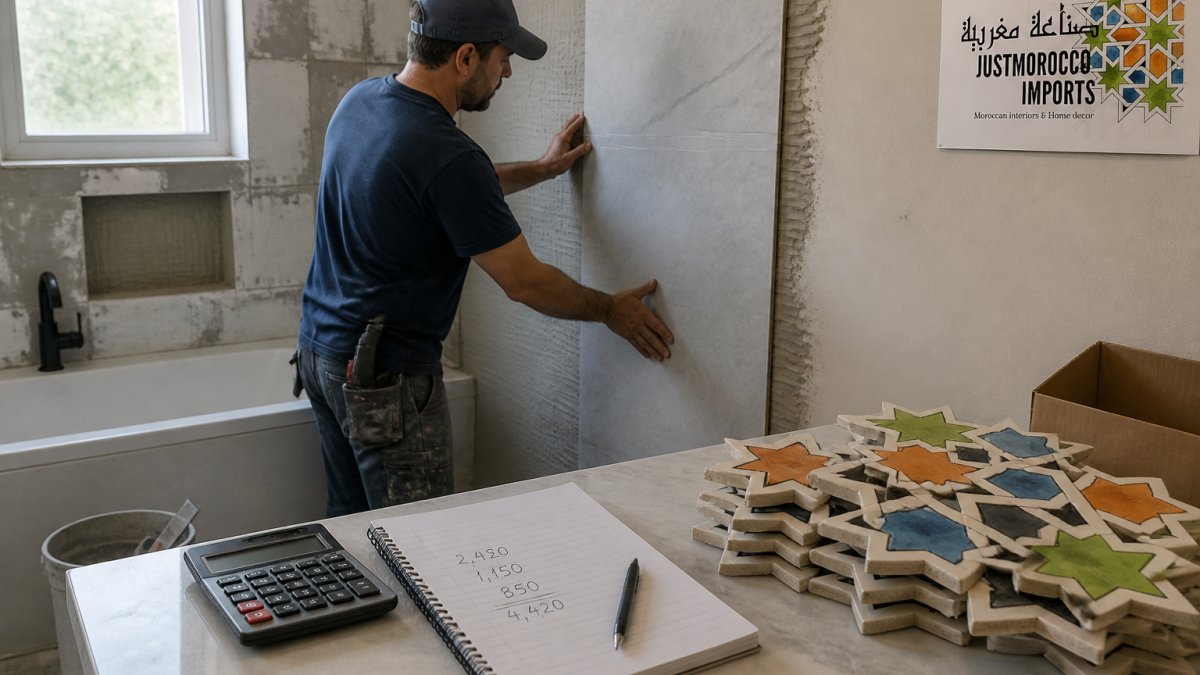
Scenario 1: Powder room accent wall, budget finish. One wall, roughly 20 square feet, behind a vanity. Acrylic panel or a modest ceramic tile. Material runs $150-$400; labor is 4-8 hours. Installed range: $500-$1,200. This is the least expensive path and the fastest to complete. The trade-off is that a single accent wall rarely justifies a premium material, the design payoff is small.
Scenario 2: Full guest bath, mid-range finish. A tub-and-shower surround plus a vanity wall, roughly 90 square feet of wall. Laminate panels or mid-grade porcelain tile. Material runs $700-$2,000; waterproofing and setting materials add $400-$900; labor is 20-35 hours. Installed range: $2,500-$5,500. This is where the panel-versus-tile decision matters most, because the wall area is larger and labor adds up. A laminate panel system can land near the low end; porcelain tile with a full membrane tends toward the high end.
Scenario 3: Primary bath, high-end finish. A large walk-in shower with a feature wall, roughly 150 square feet of wall. Solid-surface panels or handcrafted Moroccan tile, possibly both. Material runs $3,000-$9,000; waterproofing, trim, and specialty setting materials add $800-$2,000; labor is 40-70 hours. Installed range: $6,000-$15,000+. Here the material cost dominates, and the design value justifies it. A feature wall in handcrafted tile can consume half the material budget on its own.
How to adjust for your own project. Take the wall area in square feet and multiply by the per-square-foot installed range for your chosen material and finish level. Then add these fixed items, which do not scale with wall area: demolition and haul-away ($300-$1,200), substrate repair allowance ($200-$1,500), plumbing rough-in if fixtures move ($500-$2,500), permits ($100-$500), and trim and edge pieces ($150-$600). Those fixed costs are why a small powder room can cost proportionally more per square foot than a large shower.
For a custom look at any size, our custom bathroom remodeling services let you specify the tile, layout, and finish before work begins, so the budget is set against a real design rather than an estimate. If your plan includes a vanity or storage piece that has to fit an awkward space, our custom furniture imports can be specified alongside the tile so everything arrives to the same measurements.
Maintenance, Durability, and Lifespan: The Costs After Installation
Maintenance costs after installation separate the options more than the upfront price does. A tiled wall needs periodic sealing and grout cleaning for as long as you own it. Panels need a wipe-down. Over a decade, that difference adds up in both time and money.
Tile durability itself is excellent. Ceramic and porcelain last for decades, and natural stone can last even longer. The weak point is grout, which stains, cracks, and needs resealing. A tiled shower that is not maintained can develop water damage behind the wall.
Panels resist staining and do not have grout to seal. Acrylic can scratch and dull over time. Solid-surface panels hold up best and can be repaired if damaged.
Lifespan expectations, in general terms:
- Ceramic and porcelain tile: decades, with grout maintenance
- Acrylic panels: long service life with careful cleaning
- Laminate panels: good lifespan if seams stay sealed
- Solid-surface panels: the longest-lived of the panel options
For resale, a well-maintained tile or solid-surface bathroom reads as an upgrade. Cheap-looking panels can read as a quick fix.
How to Choose: A Decision Framework for Your Bathroom Remodel
A clear decision framework beats comparing prices in isolation. Answer four questions, and the right material usually picks itself.
How much wall are you covering? A small powder room favors panels for speed. A large shower with a feature wall favors tile for design.
What is your finish level? Budget remodels favor acrylic and basic ceramic. High-end remodels favor solid-surface and handcrafted tile.
How much maintenance do you want? If you want minimal upkeep, panels win. If you love the look of real tile and will maintain it, tile wins.
What is your timeline? Panels install in a day or two. Tile takes longer, especially with a waterproofing step.
Use this checklist to compare quotes fairly:
- Material cost per square foot, itemized by type
- Labor hours and rate, separated from material
- Waterproofing method and cost
- Grout, sealant, and trim included or extra
- Substrate repair allowance
- Permit and inspection fees
- Estimated timeline and disruption
If you want a one-of-a-kind bathroom, our handcrafted tile and custom cabinetry bring a level of detail that mass-produced panels cannot match. For the tile itself, the Alhambra bathroom tile pack is a strong starting point for a Moroccan-inspired wall, and our team can help you plan the full layout.
The cheapest material rarely produces the cheapest bathroom. Compare installed cost, not sticker price, and weigh maintenance over the life of the room.
Conclusion: Balancing Beauty, Budget, and Long-Term Performance
The hardest part of a bathroom remodel is not choosing a material. It is comparing options on equal footing so the budget you set is the budget you spend. Panels save on labor and maintenance; tile wins on design and durability. The right answer depends on your space, your finish level, and how much upkeep you want.
At Justmorocco, we specialize in custom bathroom remodeling with authentic, handcrafted Moroccan tile and cabinetry. Our team helps you plan the layout, select the tile, and set the budget before work begins, with direct shipping to California, Texas, New York, and Florida. Get started with Justmorocco and turn your bathroom into a space that holds its beauty and its value for years.
Frequently Asked Questions
Are shower wall panels cheaper than tile?
Shower wall panels often have a lower installed cost than tile because they skip grout, sealing, and the labor-intensive waterproofing membrane. A professional tile installation can run $1,500 to $3,000 or more for a standard shower, while panel systems may be installed for $800 to $2,000. However, material choice matters: ceramic or porcelain tile at $2 to $15 per square foot plus labor can be competitive, especially for DIY projects. The true comparison depends on your local labor rates and whether you hire a pro.
What can I use on my bathroom walls instead of tiles?
Beyond traditional ceramic and porcelain tile, you can use waterproof bathroom wall materials such as acrylic panels, solid-surface sheets, laminate panels, and even decorative Moroccan cement tiles. Acrylic and solid-surface panels are popular for shower walls because they are easy to clean and resist mold. For a unique look, hand-painted Moroccan tiles like the Alhambra bathroom tile pack offer artistry with natural sealing. Each alternative has different costs and maintenance needs, so weigh upfront price against long-term durability.
How much does it cost to install bathroom wall panels?
Installation costs for bathroom wall panels vary by material and region. Acrylic or laminate panels typically cost $40 to $80 per square foot installed, while solid-surface panels can reach $100 to $150 per square foot. Labor alone often runs $50 to $100 per hour, and a standard tub surround might take 4 to 8 hours. For a 50-square-foot shower, expect $2,000 to $5,000 total. Always get multiple quotes and factor in removal of old materials and any plumbing adjustments.
Is it cheaper to tile a bathroom or use a solid wall panel?
For a like-for-like shower surround, solid wall panels can be less expensive when you account for labor, grout, and waterproofing. Tile material might cost $300 to $800 for a 50-square-foot area, but professional installation adds $1,000 to $2,500, plus $200 to $500 for waterproofing and grout. Solid-surface panels often cost $2,500 to $5,000 installed, but they eliminate recurring sealing and grout cleaning. The cheaper option depends on whether you DIY the tile or hire out, and how long you plan to stay in the home.
Which bathroom wall material is easiest to maintain?
Solid-surface and acrylic panels are the easiest to maintain because they have no grout lines to scrub or seal. A mild soap and water wipe-down keeps them clean. Tile requires periodic grout sealing and scrubbing to prevent mold, though some Moroccan tiles like the Tangier tile are naturally sealed and only need grout joint sealing. For minimal upkeep, panels win; for a handcrafted look with moderate maintenance, ceramic or cement tile is a solid choice.