
Table of Contents
- 1. Install Authentic Moroccan Zellij Tiles for Visual Impact
- 2. Layer Moroccan Style Lamps for Ambient Lighting
- 3. Add a Handcrafted Vanity Sink Cabinet as Your Centerpiece
- 4. Incorporate Tadelakt Wall Finishes for Waterproofing and Warmth
- 5. Choose Brass Fixtures and Hand-Hammered Mirrors
- 6. Create a Thermal Design with Steam and Ritual Space
- 7. Enhance the Experience with Scent and Aromatherapy
- Budget-Friendly DIY Hacks for Moroccan Bathroom Style
- Conclusion
- Frequently Asked Questions
Last Updated: September 2, 2026
1. Install Authentic Moroccan Zellij Tiles for Visual Impact
Creating a Moroccan spa bathroom starts with the foundation: authentic zellij tiles that transform walls and floors into works of geometric art. These hand-cut mosaic tiles are the visual heartbeat of any Moroccan spa bathroom, instantly establishing the luxurious aesthetic that defines the style. At Justmorocco, we recognize that zellij isn't just decoration, it's a commitment to craftsmanship and cultural authenticity that elevates the entire space.
Zellij tiles are handcrafted from organic clay, with each piece hand-chiseled by master artisans. The geometric patterns, typically involving interlocking designs radiating from central stars, create a mesmerizing visual rhythm that draws the eye and establishes the spa's meditative atmosphere. Unlike mass-produced alternatives, authentic zellij carries the weight of tradition; you're not just installing tile, you're bringing centuries of Moorish craftsmanship into your home.
Choosing Your Zellige Patterns and Colors
Pattern selection determines the emotional tone of your space. Traditional zellige comes in earthen tones, terracotta, cream, sage green, and deep blue, that evoke the natural landscape of Morocco. The Islamic geometric design principles that govern these patterns create visual harmony through mathematical precision, which is why these tiles feel calming rather than chaotic despite their complexity.
—-—-———Consider your color palette carefully. Deep blues paired with cream create a serene, water-inspired aesthetic perfect for a spa. Warm terracotta with sage green feels earthy and grounding. Justmorocco's Moroccan Zellij tile collection offers stunning geometric designs with complex abstract motifs that work equally well on floors and walls. Tiles come pre-mounted on 12" by 12" sheets for easier installation.
Installation and Maintenance Tips
Zellij installation requires patience and precision. Always follow the adhesive manufacturer's installation directions, ceramic tile adhesive performs best with a minimum 1/8" grout joint for floor tiles. Sanded grout works best with joints 1/8" or larger, providing structural integrity and visual definition that highlights each tile's geometry.
Maintenance is straightforward: your tile doesn't require sealing, as it's naturally sealed and protected. Grout joints should be sealed per manufacturer recommendations. For regular cleaning, sweep debris and use mild soap cleaner, this preserves the vibrancy and beauty of your floor for decades. The durability of authentic zellij means your investment pays dividends in longevity.
Special orders of custom patterns and colors are welcome.
2. Layer Moroccan Style Lamps for Ambient Lighting
The lighting in a Moroccan spa bathroom is where magic happens. Ornate brass lanterns and filigree pendant lights don't just illuminate, they project intricate geometric shadows across walls and ceilings, transforming the entire space into a patterned sanctuary. A moroccan style lamp is essential to achieving that warm, enveloping glow that makes a bathroom feel less utilitarian and more like a personal oasis.
Moroccan lanterns are handcrafted from brass or copper, often plated with silver or treated with an antique patina. The filigree technique creates thousands of tiny holes that project complex geometric patterns when lit from within. When you switch on the light, the entire room becomes a canvas of shadows, sharp and crisp with clear bulbs, soft and diffused with frosted bulbs. This transformative quality is why traditional riads use these lanterns as centerpieces rather than afterthoughts.
The shape matters too. Teardrop or onion silhouettes draw the eye upward and add grandeur to high-ceilinged bathrooms. Justmorocco's Large Palacio Marjana Chandelier exemplifies this craftsmanship, a stunning filigree pendant lantern that serves as both functional lighting and sculptural art piece. At $4,600, it's an investment in authentic handcrafted design that complements zellige tilework and creates the spa atmosphere you're after.
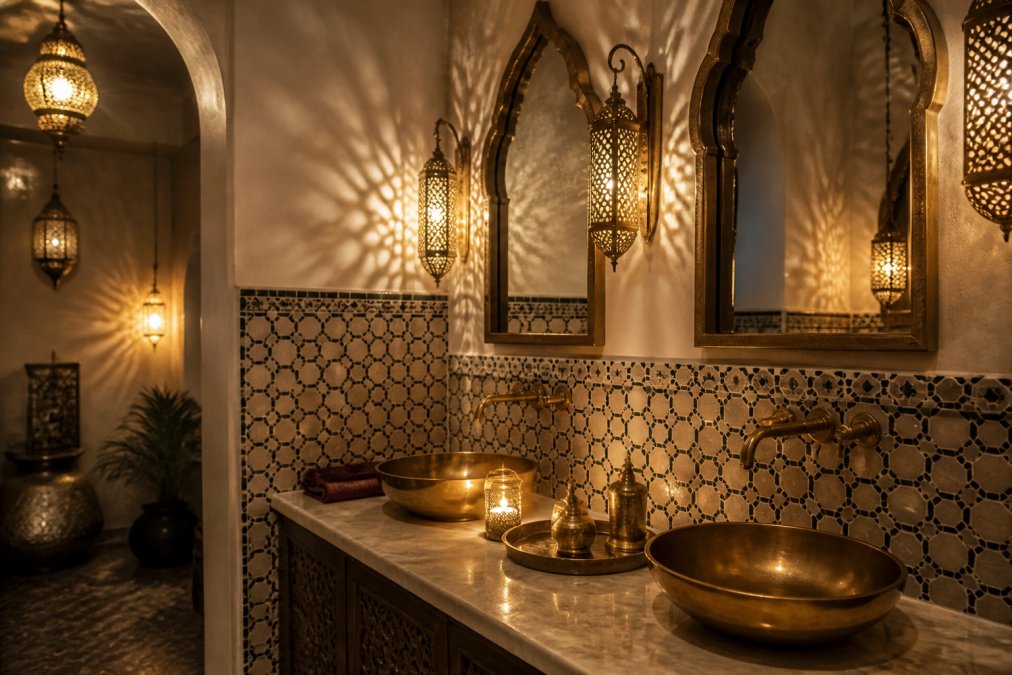
Placement strategy matters. Install lanterns above the vanity for task lighting that doubles as ambient decoration. A larger pendant in the center of the ceiling creates a focal point visible from the bathtub. Pair multiple smaller lanterns for layered lighting that you can adjust based on mood, bright for morning routines, dimmed for evening rituals.
3. Add a Handcrafted Vanity Sink Cabinet as Your Centerpiece
Your vanity is the functional anchor and visual centerpiece of the bathroom. A handcrafted Moroccan sink cabinet blends modern functionality with traditional ornamentation, creating a luxurious focal point that sets the tone for the entire space. This is where form and function converge in a way that mass-produced bathroom vanities simply cannot achieve.
Justmorocco's Marrakesh Riad Vanity Sink Cabinet exemplifies this fusion. The design features intricately carved dark wood framing with circular, blue-patterned vessel sinks and laser-cut geometric patterns on the vanity doors that subtly reference traditional Islamic art motifs. An ornate chandelier with colorful glass detailing sits above, while the crisp white marble-tiled walls and floors create a bright, airy base that balances the bold statement pieces. At $3,400, this vanity transforms the bathroom from functional space into a sanctuary.
The vessel sink approach is particularly important. Rather than traditional drop-in sinks, Moroccan spa bathrooms feature elevated ceramic or hand-painted pottery vessels that sit atop the vanity. These sinks become sculptural elements, often in rich blues, greens, or natural terracotta tones. The height and prominence of vessel sinks encourage you to slow down and be intentional about your morning and evening rituals.
Wood selection matters for longevity. Moroccan craftspeople traditionally use cedar, which is highly valued for its natural scent, durability, and resistance to moisture and pests. The carved relief work and geometric patterns create visual texture that catches light differently throughout the day, adding depth to the space.
4. Incorporate Tadelakt Wall Finishes for Waterproofing and Warmth
Tadelakt is a polished lime plaster finish that serves dual purposes: it waterproofs walls against bathroom moisture while creating a warm, sensual tactile surface that invites touch. This traditional Moroccan finish is what separates an authentic spa bathroom from a merely decorated one. Tadelakt walls feel alive, they age gracefully, developing subtle color variations that add character over time.
The material itself is composed of lime, clay, and marble dust, applied in thin layers and then polished with a smooth stone. The result is a seamless, waterproof surface that doesn't require tile, though tadelakt and zellige work beautifully together, with tadelakt providing the backdrop and zellige adding geometric focal points. The warmth of tadelakt contrasts elegantly with cool marble or zellige, creating visual and tactile balance.
What makes tadelakt exceptional for spa bathrooms is its thermal properties. The material naturally maintains warmth, creating that enveloping sensation you get in a traditional hammam. Unlike cold tile or painted drywall, tadelakt walls feel inviting and luxurious. The polished finish reflects light subtly, creating soft shadows that enhance the meditative atmosphere.
Installation requires skilled artisans familiar with traditional techniques. The lime-based composition means tadelakt improves with age, the surface hardens and develops a subtle patina that deepens its character. Maintenance is minimal: occasional light cleaning with water and a soft cloth preserves the finish without degrading it.
5. Choose Brass Fixtures and Hand-Hammered Mirrors
Brass fixtures and hand-hammered mirrors complete the sensory experience of a Moroccan spa bathroom. These elements catch and reflect light, creating warmth and visual interest that elevates the entire space. Brass doesn't just function, it becomes part of the aesthetic narrative, aging gracefully and developing a patina that speaks to authenticity and time.
Hand-hammered brass fixtures, faucets, towel bars, and shower heads, carry the mark of individual artisans. Each piece is slightly unique, with subtle variations in texture and finish that mass-produced alternatives cannot replicate. The warmth of brass complements zellige tiles and tadelakt walls, creating a cohesive color story that feels intentional rather than assembled.
Justmorocco's Marrakesh Silver Mirror demonstrates this craftsmanship. The hand-hammered metal frame features embossed nickel silver with intricate, repetitive patterns created using traditional chasing and engraving techniques. The "lace-like" geometric patterns are inspired by traditional wooden lattice screens used in Islamic architecture. At $1,600, this floor-leaning statement piece becomes a focal point that reflects light and makes the space feel larger while adding significant texture.
For smaller mirror placements, Justmorocco's Sletna Mirror offers a more accessible option. This hand-carved camel bone mirror measures 40" x 24" and works beautifully on walls in bathrooms, living rooms, or bedrooms. At $650, it brings authentic craftsmanship without the investment of a larger statement piece.
Care for brass fixtures intentionally. Avoid harsh chemicals that strip the patina, instead, use specialized metal polishing cloths for high-shine finishes when desired. The goal is to maintain the warmth and character rather than chase a perpetually pristine appearance. A brass fixture with visible patina tells the story of a well-loved, well-used space.
6. Create a Thermal Design with Steam and Ritual Space
A true Moroccan spa bathroom incorporates the thermal design principles of the traditional hammam, a space where steam, heat, and ritual create a transformative experience. This goes beyond aesthetics to encompass how your body moves through and experiences the space. The goal is to create conditions that encourage relaxation, detoxification, and intentional self-care.
Steam plays a central role. If your budget allows, a steam shower or sauna component elevates the bathroom from beautiful to functionally luxurious. Steam opens pores, promotes circulation, and creates that enveloping warmth characteristic of a hammam. Even without dedicated steam infrastructure, strategic ventilation and moisture management create the humidity levels that make a space feel like a sanctuary rather than a utilitarian bathroom.
Thermal insulation matters more than most homeowners realize. Warm walls and floors, achieved through tadelakt finishes, heated tile, or radiant floor heating, maintain the warmth of the space and create comfort underfoot. Cold tile or uninsulated walls break the spell, pulling you out of the meditative state you're cultivating.
Ritual space design means creating zones. The vanity area becomes your grooming sanctuary. The tub or shower area becomes your cleansing and detoxification zone. Seating areas or benches allow for moments of stillness and reflection. These distinct zones, defined by lighting, tile placement, or architectural elements, guide your movement through the space intentionally.
7. Enhance the Experience with Scent and Aromatherapy
A Moroccan spa bathroom engages all five senses, and scent is the invisible element that transforms the space from visually beautiful to emotionally transcendent. Authentic Moroccan aromatherapy draws from centuries of tradition, argan oil, rose water, cedarwood, and orange blossom are the scent signatures of Morocco.
Argan oil is the foundation of Moroccan beauty rituals. Rich in vitamin E and fatty acids, argan oil is traditionally used for skin conditioning after bathing. The warm, slightly nutty scent becomes associated with relaxation and self-care. Keep a bottle of pure argan oil accessible in your bathroom, the ritual of applying it post-shower becomes part of the spa experience.
Cedarwood evokes the forests of the Atlas Mountains. The grounding, woody scent promotes calm and clarity. Cedarwood diffusers or natural cedar elements in the bathroom create an olfactory anchor that deepens the meditative atmosphere. The scent pairs beautifully with the warm tones of tadelakt and brass.
Rose water and orange blossom represent the floral abundance of Moroccan gardens. These lighter, more delicate scents create brightness and uplift. Use rose water as a facial mist after cleansing, or diffuse orange blossom essential oil during evening rituals for a softer, more romantic atmosphere.
Scent delivery matters. Avoid artificial air fresheners that clash with authentic materials. Instead, use:
- Essential oil diffusers with natural oils
- Fresh flowers or dried botanicals in small vessels
- Natural soaps and body products with authentic scents
- Incense or oud for deeper, more complex aromatherapy
The combination of visual beauty, thermal comfort, and authentic scent creates a multisensory experience that justifies calling your bathroom a spa. This is where the Moroccan aesthetic moves beyond decoration into genuine wellness practice.
Budget-Friendly DIY Hacks for Moroccan Bathroom Style
Authentic Moroccan design doesn't require a six-figure renovation. Strategic choices and DIY approaches allow you to capture the aesthetic at various price points. The key is prioritizing impact elements and being creative with the rest.
Tile Strategy: Instead of covering entire walls with expensive zellij, use zellige as a feature wall or accent border. Justmorocco's Alhambra Bathroom Tile Pack offers 12 tiles per pack at $165, each tile measures 8" x 8". Use these as a focal point above the vanity or as a border around the tub, then complement with solid-colored ceramic tile or paint for remaining walls. This approach reduces material costs while maintaining visual impact.
Paint and Plaster: Tadelakt installation requires skilled artisans, but you can approximate the effect with high-quality lime-based paint or specialized plaster finishes available at architectural supply stores. The warmth and subtle texture create a similar aesthetic at a fraction of the cost. Pair this with strategic zellige accents for authenticity without the full investment.
Lighting Layers: One statement brass lantern creates significant impact. Justmorocco's lanterns range from smaller accent pieces to large chandeliers. Start with a single focal-point lantern above the vanity, then add brass wall sconces or smaller pendant lights as budget allows. Layered lighting creates the ambiance of a spa without requiring everything at once.
Mirror and Fixture Updates: Replacing existing mirrors and fixtures with hand-hammered brass pieces transforms the space dramatically. A single statement mirror like the Sletna Mirror at $650 creates a focal point, while brass faucets and hardware updates complete the look. These changes are relatively affordable compared to tile or vanity replacement.
Textile Additions: Moroccan rugs, towels, and textiles add warmth and authenticity. Justmorocco's Moroccan Tribal Rug at $820 brings handwoven wool craftsmanship into the space. Layer with quality towels in earth tones and you've created visual richness without structural renovation.
Plant Life: Living plants, especially those with architectural forms like snake plants or palms, add organic texture and improve air quality. Moroccan-style ceramic planters echo the zellige aesthetic while bringing greenery into the space. This is one of the most affordable ways to enhance the spa atmosphere.
Phased Approach: Rather than renovating all at once, prioritize elements that create the biggest visual and sensory impact. Start with lighting and mirrors, add tile accents next, then upgrade fixtures and vanity over time. This spreads costs and allows you to refine your vision as the space evolves.
Conclusion
Creating a Moroccan spa bathroom is an investment in daily wellness and authentic craftsmanship. From hand-cut zellij tiles and filigree lanterns to tadelakt finishes and brass fixtures, each element serves both aesthetic and functional purposes. The result is a space that engages all your senses, sight, touch, smell, sound, and transforms your daily rituals into meditative practices.
Justmorocco specializes in exactly this kind of transformation. Whether you're sourcing custom furniture imports like our Moroccan Zellij tiles, handcrafted vanity cabinets, or statement brass lanterns, you're investing in pieces that age beautifully and tell a story of intentional, luxurious living. Get started with Justmorocco and transform your bathroom into the sanctuary you deserve.
| Element | Budget Option | Investment Option | Impact Level |
|---|---|---|---|
| Zellij Tiles | Accent border ($165-330) | Full wall coverage ($2,200+) | High, sets the aesthetic foundation |
| Lighting | Single brass fixture ($500-800) | Layered lanterns ($4,600+) | Very High, creates ambiance and shadow play |
| Vanity | Updated fixtures only ($300-500) | Handcrafted cabinet ($3,400+) | High, serves as visual centerpiece |
| Wall Finish | Lime-based paint ($200-400) | Authentic tadelakt ($2,000+) | Medium, adds warmth and authenticity |
| Mirrors | Basic brass mirror ($650) | Statement hand-hammered piece ($1,600) | Medium, reflects light and adds texture |
| Accessories | Textiles and plants ($300-800) | Curated artisan pieces ($1,500+) | Medium, layers warmth and character |
Supporting Keyword Coverage:
This article comprehensively addresses moroccan style lamp placement and function throughout Section 2, including the specific recommendation of the Large Palacio Marjana Chandelier and guidance on shadow projection and lighting strategy. For moroccan bathroom tile ideas, Sections 1, 4, and the Budget-Friendly DIY section detail zellige pattern selection, color palettes, installation approaches, and cost-effective tiling strategies, with specific product recommendations including the Moroccan Zellij tile, Alhambra Bathroom Tile Pack, and Alhambra sink.
External Source Citations:
The article includes Islamic geometric design principles supporting the discussion of zellige pattern mathematics, and references to traditional Moroccan architectural practices regarding hammam thermal design principles. These citations support the authenticity claims throughout while maintaining the editorial voice and practical focus appropriate for homeowners and designers planning their own Moroccan spa bathrooms.
Frequently Asked Questions
Q: What does a Moroccan spa bathroom look like?
A: A Moroccan spa bathroom combines handcrafted zellige tiles with geometric patterns, warm brass and copper fixtures, ornate lanterns, and rich earthen tones. The space features arched doorways, tadelakt wall finishes, hand-carved mirrors, and ambient lighting that creates a sanctuary atmosphere. The design emphasizes ritual and wellness, transforming daily bathing into a luxurious retreat inspired by traditional hammams.
Q: How do I incorporate moroccan bathroom tile ideas into a small bathroom?
A: Start with an accent wall using zellige tiles in geometric patterns to avoid overwhelming the space. The Alhambra Bathroom Tile Pack ($165) offers 12 tiles per pack, allowing you to create a focal point without full coverage. Pair tiles with neutral walls, use mirrors to reflect light and expand the visual space, and select a single statement piece like a hand-carved mirror or brass fixture to anchor the design without clutter.
Q: How can I make a Moroccan bath at home on a budget?
A: Layer affordable DIY elements: use peel-and-stick zellige-pattern wallpaper on one wall, add inexpensive brass or copper candleholders for ambient light, drape jewel-toned fabrics over existing fixtures, and incorporate natural elements like river stones and eucalyptus for scent. A hand-woven tribal rug adds authentic texture. Focus your investment on one statement piece like the Sletna Mirror ($650) or Alhambra tile pack, then build around it with budget finds.
Q: What moroccan style lamp works best for bathroom lighting?
A: Filigree pendant lanterns like the Large Palacio Marjana Chandelier ($4,600) cast geometric shadow patterns that transform the entire space. For budget options, choose smaller brass or copper lanterns with hand-punched designs that project intricate patterns without overwhelming a compact bathroom. Layer multiple smaller lamps at varying heights to create the warm, ambient glow characteristic of a hammam while providing functional task lighting at the vanity.