
Table of Contents
- Moroccan Bathroom Vanity vs Modern Vanity: Quick Comparison
- What Defines a Moroccan Bathroom Vanity
- Modern Bathroom Vanity Trends in 2026
- Key Design Differences: Moroccan vs Modern
- Moroccan Tile Bathroom Design Integration
- Custom Bathroom Cabinetry: Moroccan Craftsmanship
- Installation and Plumbing Compatibility
- Budget Comparison: Artisan Investment vs Contemporary Pricing
- Fusion Design: Blending Moroccan and Modern Elements
- Which Vanity Style Is Right for You?
Last Updated: August 25, 2026
Moroccan Bathroom Vanity vs Modern Vanity: Quick Comparison
When redesigning your bathroom, the vanity choice sets the entire tone. A Moroccan bathroom vanity brings handcrafted artistry, intricate patterns, and warm textures that feel like stepping into a luxury riad. A modern vanity prioritizes clean lines, minimalist design, and functional elegance that creates a spa-like simplicity.
The real decision comes down to what you're trying to achieve: do you want your bathroom to feel like an exotic escape, or a serene contemporary sanctuary? At Justmorocco, we've helped homeowners navigate this choice by understanding that these two styles differ in materials, installation requirements, maintenance, and long-term investment.
Below is a side-by-side comparison of how these vanity styles stack up across the key dimensions that matter when making your choice:
| Aspect | Moroccan Bathroom Vanity | Modern Vanity |
|---|---|---|
| Design Approach | Ornate, handcrafted, cultural authenticity | Minimalist, clean lines, functional elegance |
| Primary Materials | Cedar, bone inlay, hand-painted ceramic | Engineered wood, metal, porcelain |
| Vessel Sink Style | Ceramic or brass basin, hand-painted patterns | Sleek ceramic or stone, solid colors |
| Installation Complexity | Custom sizing, plumbing coordination required | Standard sizes, straightforward mounting |
| Color Palette | Jewel tones, earthy neutrals, intricate patterns | Neutral, monochromatic, high-contrast accents |
| Price Range | $3,400-$4,600 for artisan pieces | $800-$2,500 for quality contemporary options |
| Durability | Requires careful maintenance, climate-sensitive | Low-maintenance, resistant to humidity |
| Best For | Statement pieces, eclectic design, luxury bathrooms | Small spaces, minimalist aesthetics, rental properties |
What Defines a Moroccan Bathroom Vanity
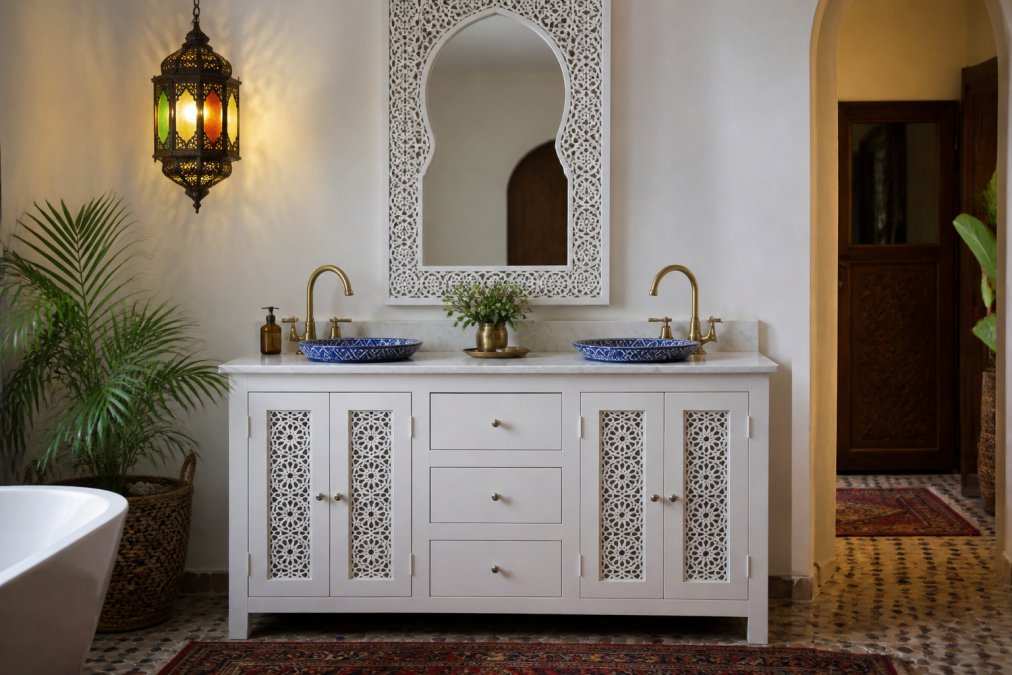
A Moroccan bathroom vanity is far more than a functional sink cabinet. It's a handcrafted statement piece that brings authentic cultural artistry into your home. These vanities feature intricately carved wooden frames, often made from cedar or other quality hardwoods, with details inspired by traditional Islamic geometric patterns, arch motifs, and botanical designs.
The defining characteristic is the marriage of functional elegance with ornamental detail. Every element, from the carved cabinetry to the ceramic vessel sink to the brass or bone-inlay accents, is chosen to create visual richness. A Moroccan bathroom vanity transforms the vanity from utilitarian fixture into a focal point that commands attention and sets the aesthetic direction for the entire bathroom.
Handcrafted Materials and Artisan Techniques
Authentic Moroccan vanities are built using traditional artisan methods refined over generations. Cedar wood is the material of choice for cabinetry, it's naturally moisture-resistant, develops a rich patina over time, and can be intricately carved without splintering.
The hand-carving process is labor-intensive. Artisans use chisels and hand tools to create each pattern, meaning no two pieces are identical. True artisan work shows tool marks, subtle variations in depth, and a tactile quality that mass-produced "Moroccan-style" vanities using routers and CNC machines cannot replicate.
Beyond the wooden frame, Moroccan vanities incorporate bone inlay and mother-of-pearl accents, painstakingly fitted into recessed areas and hand-sanded to create a flush surface. Brass hardware is often cast and finished by hand, developing patina and character as it ages. When evaluating authenticity, look for visible tool marks, slight asymmetries in pattern repetition, variations in wood grain, and hardware showing signs of hand-finishing rather than factory uniformity.
Vessel Sinks and Ceramic Details
The vessel sink is the functional heart of a Moroccan bathroom vanity and where artistry becomes most visible. Unlike traditional undermounted sinks, vessel sinks sit atop the vanity surface, making them a design feature.
Moroccan vessel sinks are typically hand-thrown ceramic or hand-painted pottery featuring cobalt blues, terracotta reds, sage greens, and cream tones in patterns ranging from geometric repetition to botanical motifs. Each sink is unique.
Practically, a ceramic vessel sink requires a countertop hole for the drain and faucet, with the sink sitting above the surface. Water splashing is more visible than with traditional sinks, but this visibility is intentional, the vessel sink is meant to be admired as a sculptural element. Brass basins are another option, developing natural patina over time and offering more durability than ceramic, though they require regular cleaning to maintain their finish.
Modern Bathroom Vanity Trends in 2026
Modern bathroom vanity design in 2026 is defined by restraint, functionality, and the principle that less is more. Contemporary vanities eliminate unnecessary ornamentation, focusing on clean lines, integrated storage, and materials that prioritize durability and ease of maintenance.
The modern aesthetic emerged partly as a reaction against over-decorated spaces. It's rooted in the belief that a bathroom should feel like a personal spa, a calm, uncluttered environment. This doesn't mean modern vanities are cold or sterile; they achieve warmth through material choice, subtle color variation, and thoughtful spatial planning.
Minimalist Design and Clean Lines
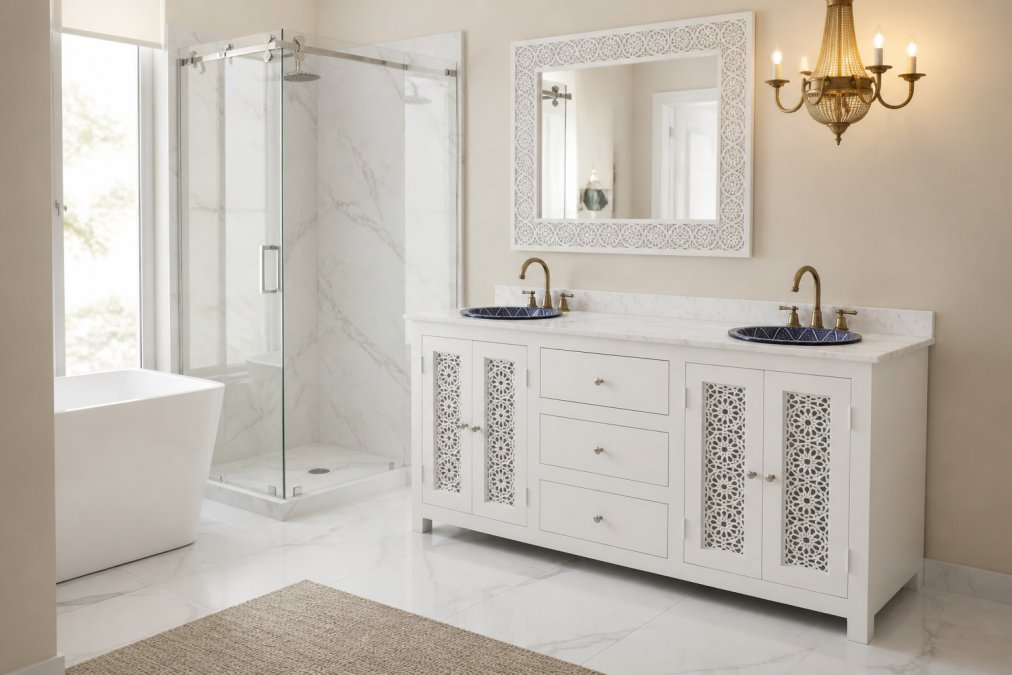
A modern vanity is characterized by horizontal emphasis, flush-front cabinetry, and hardware that's either completely hidden or extremely subtle. Contemporary vanities often feature integrated countertops where the sink and counter surface are one continuous plane, eliminating the visual break and creating a seamless appearance. Handles are frequently hidden, opening via a subtle push-to-open mechanism.
Color choices lean toward neutrals: whites, soft grays, warm beiges, and natural wood tones. These strategic choices allow lighting, mirrors, and tile to create visual interest without competing for attention. The spatial hierarchy is intentional, the vanity is functional but not decorative, with every element serving a purpose and ornament eliminated entirely.
Sustainable Materials and Smart Storage
Modern vanity design increasingly incorporates sustainable materials and smart storage solutions. Engineered wood with low-VOC finishes, recycled glass countertops, and responsibly sourced hardwoods are becoming standard.
Storage is integrated thoughtfully with deep drawers featuring soft-close mechanisms, pull-out shelves, and internal organization systems that maximize space without adding visual clutter. Modern vanities are designed for longevity, 15-20 years or more, making them a better long-term investment. The minimalist design ensures they won't feel dated, as clean lines and neutral colors are inherently timeless.
Key Design Differences: Moroccan vs Modern
Understanding the core design differences between these two approaches helps clarify which direction aligns with your vision and lifestyle.
Color Palettes and Pattern Choices
A Moroccan bathroom vanity celebrates color and pattern with rich jewel tones, deep blues, emerald greens, ruby reds, combined with warm earth tones like burnt orange, ochre, and terracotta. Patterns are intricate: geometric tessellations, botanical motifs, arabesque designs, and calligraphic details cover ceramic sinks, painted cabinetry, and tile work. This abundance creates visual richness and cultural authenticity, though it requires thoughtful coordination with surrounding elements to avoid visual chaos.
A modern vanity works within a restrained color palette, typically two to three colors maximum with high contrast or subtle variation. This approach reflects the belief that restraint creates sophistication.
Ornate vs Functional Elegance
Ornate detail is the signature of a Moroccan bathroom vanity. Hand-carved arch motifs, inlaid bone and mother-of-pearl, painted ceramic details, and brass accents create a sense of luxury and cultural authenticity. The vanity is a sculptural element that commands appreciation.
Functional elegance is the modern approach. Beauty emerges from proportion, material quality, and the thoughtful elimination of unnecessary elements. A modern vanity is elegant because it does exactly what it needs to do, nothing more. Practically, a Moroccan vanity requires engagement with its ornamentation, while a modern vanity recedes into the background, allowing you to focus on your routine without visual distraction.
Moroccan Tile Bathroom Design Integration
If you're leaning toward a Moroccan bathroom vanity, integrating it successfully with tile and overall bathroom design is critical.
Pairing Tiles with Your Vanity Choice
Moroccan zellige tiles with their intricate geometric patterns, hand-cut edges, and jewel-tone glazes are the natural companion to a Moroccan bathroom vanity. When paired, the two elements reinforce each other's cultural authenticity and visual richness.
The key is coordination without overwhelming the space. If your vanity features a blue hand-painted ceramic sink and carved geometric patterns, your tile should complement rather than compete. You might choose zellige tiles in coordinating blues and whites for an accent wall behind the vanity, then keep surrounding walls neutral to create visual breathing room.
For a modern vanity, tile choices differ. Large-format porcelain tiles in neutral colors create a seamless, minimalist backdrop. A fusion approach pairs a Moroccan vanity with modern tile, using solid-color or subtly patterned tile in neutral tones, allowing the vanity to be the primary focal point.
Creating Spatial Hierarchy and Visual Flow
Spatial hierarchy determines where your eye travels when entering the bathroom. In a Moroccan design, the vanity is typically the dominant focal point, with everything else arranged to emphasize and support it. The mirror might be oversized and ornately framed, lighting might be a statement piece like a brass chandelier or hand-hammered lantern, and tile work might frame the vanity area with an accent wall.
In a modern design, spatial hierarchy is more subtle. The vanity is functional and present but not necessarily dominant. The eye travels across clean lines, appreciating the proportion and balance of the entire space. This reflects how each design philosophy treats the vanity's role. bathroom renovation ideas.
Custom Bathroom Cabinetry: Moroccan Craftsmanship
If you're considering a Moroccan bathroom vanity, understanding the custom cabinetry process helps you appreciate what you're investing in.
Cedar Cabinet Construction and Durability
Cedar is the preferred wood for Moroccan bathroom cabinetry because of its natural moisture resistance and beautiful warm tone that showcases hand-carving details. Quality artisans allow wood to acclimate to humidity levels before carving, preventing warping and cracking. The carving is done by hand using traditional chisels and gouges, creating patterns that might take weeks to complete.
After carving, the wood is sanded smooth, then finished with natural oils or traditional waxes that protect while allowing it to age gracefully. Over time, cedar develops a deeper patina and warm luster that factory finishes cannot replicate.
Durability depends on climate and maintenance. Cedar is moisture-resistant, but bathrooms with high humidity or poor ventilation can develop issues. In coastal environments or bathrooms without proper exhaust fans, the wood can develop mold or mildew. Regular maintenance, occasional oiling, proper ventilation, and prompt attention to water damage extend the life of a cedar vanity significantly. A well-maintained handcrafted cedar vanity can last 20-30 years or longer.
Customization and Sizing Options
One of the advantages of a Moroccan bathroom vanity is the ability to customize it to your exact specifications. Unlike modern vanities that come in standard sizes, a handcrafted piece can be built to fit your specific bathroom dimensions, plumbing layout, and design preferences.
Customization options include overall dimensions, vessel sink size and style, carved pattern design, finish, hardware choices, and mirror design. You can work with the artisan to incorporate specific design elements or adjust proportions to suit your space. This flexibility is valuable in bathrooms with unusual layouts or where you want a vanity that fits perfectly into your design vision.
Justmorocco offers custom furniture imports including handcrafted options like the Marrakesh Riad Vanity Sink Cabinet at $3,400, the Marrakesh Riad Lakdim Vanity Sink Cabinet at $3,800, and the Marrakesh Palace Vanity Sink Cabinet at $4,500. Each piece is handcrafted with custom sizing available to fit your specific bathroom layout and design vision.
Installation and Plumbing Compatibility
Installation is where the practical differences between Moroccan and modern vanities become most apparent.
Vessel Sink Installation Considerations
A vessel sink installation differs significantly from traditional undermounted sinks. The sink sits atop the vanity surface, requiring a hole drilled in the countertop for the drain and faucet. The faucet typically mounts directly to the countertop or vanity surface rather than through the sink itself.
This installation method requires coordination with your plumber. The drain line must be accessible from below, and the faucet's water supply lines need to connect to the vessel sink's basin. Most vessel sink installations require a visible drain assembly below the sink. The advantage is flexibility, you can position the vessel sink anywhere on the vanity surface and choose from a wider range of faucet styles. The disadvantage is that visible plumbing becomes part of your design.
For a modern vanity with an integrated sink, installation is more straightforward. The sink and countertop are one piece, and plumbing connections are standard, typically meaning faster installation and fewer compatibility issues.
Vanity Mounting and Wall Preparation
A Moroccan bathroom vanity is often a substantial, heavy piece due to the carved wood and ceramic details. It requires solid wall support and proper mounting hardware. Your walls need to be assessed for structural integrity; if you have drywall, you'll need to locate studs and use heavy-duty mounting brackets.
Wall preparation might involve removing existing tile or paint to access the wall structure. If your bathroom has moisture issues, addressing those before installation is critical. A handcrafted wooden vanity is vulnerable to water damage, so ensuring proper ventilation and waterproofing is essential.
Modern vanities, being lighter and more standardized, typically mount more easily. Installation usually takes a few hours, while a custom Moroccan vanity might require a full day or more, especially if plumbing adjustments are needed.
Budget Comparison: Artisan Investment vs Contemporary Pricing
The financial investment in a bathroom vanity varies dramatically between Moroccan and modern options.
Moroccan Vanity Price Range and Value
A handcrafted Moroccan bathroom vanity is a significant investment, typically ranging from $3,400 to $4,600 or higher, depending on complexity, materials, and customization.
This price reflects the cost of quality cedar or other hardwoods, the artisan's labor (which might involve weeks of hand-carving), the hand-painted ceramic vessel sink, brass hardware, and shipping. A piece represents genuine artisan craftsmanship and materials.
The value proposition differs from modern vanities. You're investing in artistry, cultural authenticity, and a product designed to develop character and patina over time. A well-maintained Moroccan vanity becomes more beautiful as it ages. Additionally, a handcrafted piece is unique, you're not buying something mass-produced that thousands of other homeowners have.
Modern Vanity Costs and Long-Term ROI
A quality modern bathroom vanity ranges from $800 to $2,500, depending on materials and brand. This lower entry price reflects standardized manufacturing, simpler design, and mass production efficiencies.
The long-term value of a modern vanity lies in durability, ease of maintenance, and timelessness. A well-built contemporary vanity lasts 15-20 years with minimal maintenance and won't require special care or climate control. From a resale perspective, modern bathrooms appeal to a broader audience than highly stylized Moroccan designs, making a contemporary vanity a safer choice if you plan to sell within 10 years.
The ROI calculation is personal. If you value uniqueness, artistry, and cultural heritage, a Moroccan vanity's value extends beyond its functional lifespan. If you prioritize practicality, low maintenance, and broad appeal, a modern vanity offers better financial efficiency.
Fusion Design: Blending Moroccan and Modern Elements
The most interesting bathroom designs often blend these two approaches, creating a space that feels both luxurious and livable.
Balancing Ornate Mirrors with Minimalist Fixtures
A successful fusion bathroom pairs an ornate Moroccan mirror with minimalist fixtures and clean-lined cabinetry. The mirror becomes the statement piece, perhaps a large, intricately carved frame with a horseshoe arch or elaborate geometric pattern, while everything else remains simple and contemporary.
This approach lets the mirror shine without creating visual chaos. Your vanity might be a sleek, modern piece in white or natural wood with minimalist chrome or matte black hardware. Lighting is another area where fusion works beautifully, a brass or copper chandelier with colored glass panels brings Moroccan warmth and character to a modern bathroom. The key principle: choose one or two statement pieces and keep everything else simple.
Creating a Spa-Like Atmosphere with Mixed Styles
A spa-like bathroom feels calm, luxurious, and intentionally designed. Start with clean lines and neutral colors as your foundation. Use a modern vanity in white or natural wood, minimalist tile in neutral tones, and simple fixtures. Then layer in Moroccan elements: a hand-painted ceramic vessel sink, brass or copper accents, perhaps an ornate mirror or statement light fixture.
Lighting is crucial. Warm, ambient lighting creates the spa atmosphere. Use dimmers and warm color temperatures (2700K-3000K) to create a relaxing environment. Incorporate natural textures: stone, wood, brass, and ceramic. These materials feel tactile and luxurious.
The result is a bathroom that feels like a personal sanctuary, sophisticated, beautiful, and genuinely relaxing to use.
Which Vanity Style Is Right for You?
The choice between a Moroccan bathroom vanity and a modern vanity depends on your design aesthetic, maintenance tolerance, budget, and how long you plan to stay in your home.
Choose a Moroccan bathroom vanity if you want a unique, one-of-a-kind statement piece reflecting cultural artistry; are willing to invest in maintenance and climate control; plan to stay 15+ years; have good bathroom ventilation; prefer warm, rich colors and intricate patterns; and view your bathroom as a personal sanctuary where artistry matters.
Choose a modern vanity if you prioritize clean lines and minimalism; want low-maintenance functionality; plan to move within 10 years; have a smaller bathroom; prefer neutral colors and uncluttered design; and value durability and practicality over artistic uniqueness.
Consider a fusion approach if you want the best of both worlds. A modern vanity with an ornate Moroccan mirror, or a contemporary bathroom with handcrafted brass lighting and ceramic accents, allows you to incorporate elements you love without committing entirely to one aesthetic.
The bathroom is one of the most personal spaces in your home. Your vanity choice should reflect how you want to feel in that space every day.
The decision between a Moroccan bathroom vanity and a modern vanity ultimately comes down to what matters most in your home. If you're drawn to handcrafted artistry and authentic cultural design, a Moroccan vanity transforms your bathroom into a luxury retreat. At Justmorocco, we specialize in custom furniture imports with authentic handcrafted pieces that bring genuine Moroccan craftsmanship directly to your space. Our vanities feature hand-carved cedar cabinetry, hand-painted ceramic vessel sinks, and brass accents that create a truly luxurious bathroom experience. Explore our collection of custom bathroom cabinetry and discover how authentic Moroccan design can elevate your home.
Frequently Asked Questions
Q: What are the key design differences between a Moroccan and a modern bathroom vanity?
A: Moroccan bathroom vanities emphasize handcrafted artistry with intricate carved details, ornate mirrors, and vessel sinks featuring hand-painted patterns or bone inlays. Modern vanities prioritize clean lines, minimalist hardware, and functional storage with neutral color palettes. Moroccan designs create focal points with decorative elements, while modern designs blend the vanity seamlessly into an uncluttered space.
Q: Are Moroccan bathroom vanities durable for daily use in humid climates?
A: Yes, when properly sealed and maintained. Handcrafted Moroccan vanities made from cedar cabinetry and ceramic vessel sinks are designed to withstand moisture. However, intricate wood carvings and hand-painted details require regular maintenance to prevent water damage. Applying protective finishes and ensuring proper ventilation in your bathroom helps preserve the craftsmanship and extends the vanity's lifespan.
Q: How do you integrate a Moroccan vanity into a modern bathroom layout?
A: Create balance by pairing ornate Moroccan elements with minimalist fixtures and clean surfaces. Use the vanity as your focal point, then keep surrounding walls, flooring, and shower enclosures simple and neutral. Incorporate Moroccan tile bathroom design through geometric patterns on accent walls or floors, add warm metallic fixtures (brass or gold), and use ambient lighting like lanterns to tie the aesthetic together without overwhelming the space.
Q: What materials are typically used in handcrafted Moroccan sink cabinets?
A: Authentic Moroccan vanities feature cedar cabinetry for durability and natural beauty, paired with hand-carved geometric and arch motifs. Vessel sinks are typically made from ceramic or pottery, often hand-painted with intricate patterns. Many pieces incorporate bone and resin inlays for decorative detail. These natural materials develop character over time and require proper sealing to maintain water resistance in bathroom environments.
Q: Does a Moroccan vanity increase the resale value of a home?
A: Moroccan vanities appeal to buyers seeking unique, artisan-crafted homes but may not increase resale value as dramatically as neutral modern designs. The investment works best when the entire bathroom reflects cohesive design intent. Custom bathroom cabinetry and handcrafted pieces demonstrate quality craftsmanship, which can justify premium pricing for the right buyer. Consider your target market: design-forward, culturally interested buyers will value authentic Moroccan artistry more than those seeking conventional contemporary homes.