
Table of Contents
- Moroccan Bathroom Remodeling: Key Design Elements That Define the Aesthetic
- Moroccan Bathroom Tile Patterns and Zellige Applications
- Modern Moroccan Bathroom Vanity Ideas and Custom Cabinetry
- How to Choose Moroccan Bathroom Lighting for Ambiance and Function
- Cost of Moroccan Bathroom Renovation: Budget Planning and Material Selection
- Tadelakt Plaster, Color Palettes, and Architectural Details
- Small-Space Moroccan Bathroom Solutions and Maintenance Tips
- Conclusion
Last Updated: August 5, 2026
Moroccan Bathroom Remodeling: Key Design Elements That Define the Aesthetic
A well-executed moroccan bathroom remodeling project transforms an ordinary space into a sanctuary of warmth, artistry, and timeless elegance. At Justmorocco, we've worked with homeowners across California, Texas, New York, and Florida to bring authentic Moroccan design into their most intimate spaces. The aesthetic draws from centuries of Islamic craftsmanship, geometric precision, and a palette of earthy tones that create visual depth without overwhelming the senses.
What makes this design direction compelling is its balance between intricate detail and functional simplicity. Unlike trendy bathroom styles that fade within years, Moroccan design remains relevant because it's rooted in architectural principles and materials that age beautifully. The key elements, zellige tile patterns, handcrafted fixtures, tadelakt plaster, and carefully curated lighting, work together to create a cohesive narrative.
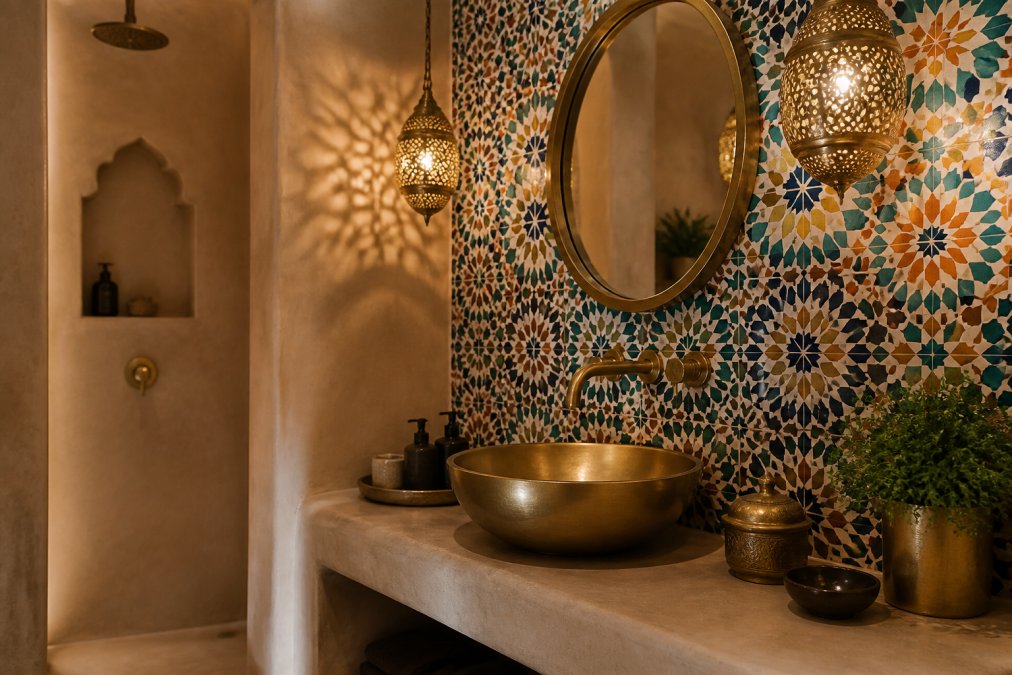
The foundation of any moroccan bathroom remodeling project rests on understanding how these elements interact. Zellige tiles provide visual interest and texture. Brass hardware adds warmth and develops natural patina over time. Tadelakt plaster creates seamless, waterproof surfaces that feel organic. Lighting determines how these materials reveal themselves throughout the day.
Moroccan Bathroom Tile Patterns and Zellige Applications
Hand-Glazed Zellige and Geometric Patterns
Hand-glazed zellige tiles are the visual anchor of Moroccan bathroom design. These individually cut and glazed ceramic pieces create intricate geometric patterns, stars, diamonds, interlocking shapes, that establish the room's character. Each tile is unique due to the hand-glazing process, meaning no two bathrooms look identical.
Zellige works best on accent walls rather than covering every surface. A full wall of geometric zellige behind the vanity creates a dramatic focal point. Alternatively, use zellige as a border around a mirror or as a feature wall in the shower enclosure. This approach maximizes visual impact while keeping installation complexity and cost manageable.
The color palette typically features warm earth tones: terracotta, ochre, dusty blue, sage green, and cream. These colors complement most bathroom fixtures, and the mathematical precision of Islamic design ensures balance even in complex compositions.
Sourcing authentic zellige requires working with specialized suppliers. Mosaic House and Zia Tile both offer handmade Moroccan zellige tiles imported from Fes, Morocco, with installation guides and spec sheets. Both suppliers ship across North America.
Encaustic Cement Tiles and Arabesque Designs
Encaustic cement tiles offer a more affordable alternative to hand-glazed zellige while maintaining authentic Moroccan aesthetic. These tiles feature arabesque designs inspired by Islamic art and are made using natural pigments and hand-pressed techniques.
Cement tiles work well for floor applications where durability and slip resistance matter. They also function beautifully as accent borders or complements to zellige walls. The matte finish creates a softer visual effect than glazed zellige, ideal for bathrooms where you want pattern without high shine.
One practical consideration: cement tiles are porous and require sealing before installation in wet areas. Once sealed properly, they're durable and develop character as they age.
Modern Moroccan Bathroom Vanity Ideas and Custom Cabinetry
Handcrafted Walnut Vanities with Mother-of-Pearl Inlay
A custom moroccan bathroom remodeling project lives or dies based on the vanity. This is the functional centerpiece and the first thing guests notice. Handcrafted walnut vanities with mother-of-pearl inlay represent the pinnacle of Moroccan craftsmanship: solid wood construction, hand-carved details, and intricate bone or pearl inlays that catch light.
What makes these vanities worth the investment is their longevity and uniqueness. A handcrafted walnut vanity with mother-of-pearl inlay improves with age, the wood develops richer tones, the pearl gains subtle patina, and the overall piece becomes more beautiful as it's used. Custom vanities also solve layout problems, fitting perfectly into unusual dimensions or around plumbing constraints.
Vessel Sinks and Brushed Brass Hardware
Vessel sinks, bowls that sit atop the counter, are essential to Moroccan bathroom design. They elevate the vanity and make the sink itself a design statement.
Handcrafted brass sinks from artisans like Brassry offer authentic Moroccan metalwork shaped using traditional techniques. Brass develops a natural patina over time, which many homeowners view as an enhancement. A protective coating prevents excessive tarnishing.
Brushed brass hardware, faucets, towel bars, and cabinet pulls, complements vessel sinks perfectly. The warm, muted tone feels more refined than polished chrome and ties the vanity into the broader Moroccan aesthetic. Hardware from Justmorocco's custom collection can be specified to match your design vision.
How to Choose Moroccan Bathroom Lighting for Ambiance and Function
Brass Lanterns and Wall Sconces
Lighting determines how your bathroom feels at different times of day. Moroccan design relies on handcrafted brass lanterns and wall sconces that cast intricate shadow patterns through perforated metal, creating visual movement and warmth.
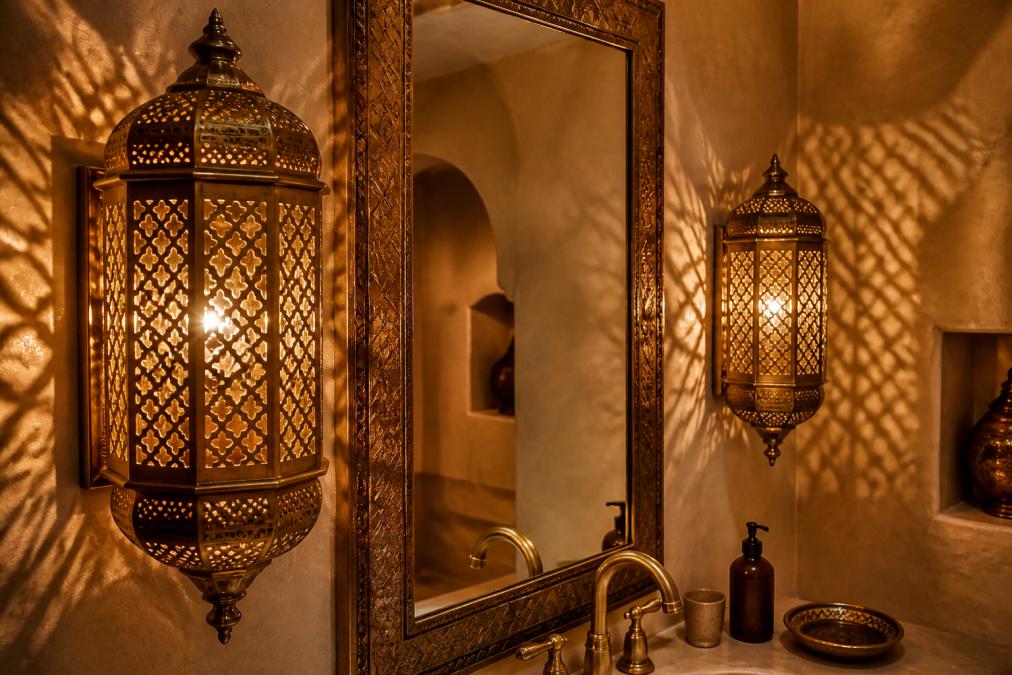
Wall sconces positioned on either side of the mirror provide functional task lighting while creating atmospheric quality. Position sconces at eye level, approximately 60-66 inches from the floor, to minimize glare and ensure even illumination.
Tazi Designs specializes in handcrafted Moroccan lighting fixtures made in Morocco and wired to UL standards in California. Their collection includes brass lanterns, wall sconces, and ceiling fixtures in exclusive designs. Lead times typically run 6-8 weeks for production and shipping.
A common mistake is installing too much lighting. Moroccan bathrooms benefit from layered lighting: ambient light from lanterns or sconces, task lighting near the mirror, and accent lighting that highlights architectural details. This approach creates depth while ensuring adequate light when needed.
Ceiling Fixtures and Pendant Lights
Ceiling fixtures anchor the overall lighting scheme. Traditional Moroccan designs feature brass fixtures with colored glass panels or perforated metal shades that create intricate light patterns.
Edken Lights offers handcrafted Moroccan ceiling fixtures. Their designs include brass and glass combinations that create dramatic light-and-shadow effects.
For smaller bathrooms, a single statement fixture above the vanity works well. For larger ensuite bathrooms, consider multiple pendant lights or a larger central fixture supplemented by wall sconces.
Cost of Moroccan Bathroom Renovation: Budget Planning and Material Selection
Premium vs. Budget-Friendly Tile Options
Moroccan bathroom remodeling costs vary dramatically based on material choices. Premium hand-glazed zellige tiles represent the high end, while encaustic cement tiles and machine-made geometric tiles offer more budget-conscious alternatives that still deliver authentic aesthetic.
Hand-glazed zellige requires custom ordering and involves lead times. However, using zellige strategically, on a single accent wall rather than throughout, allows you to invest in premium materials where they have maximum visual impact while using more affordable options elsewhere.
Machine-made geometric tiles that mimic Moroccan patterns are readily available and cost significantly less than handcrafted alternatives. These tiles work well for larger areas like floors or shower surrounds.
The key to smart budgeting is prioritizing where handcrafted, premium materials matter most. The vanity, sink, and lighting fixtures are visible focal points that guests notice immediately. Investing in quality here delivers better returns than premium materials in areas that receive less attention.
DIY-Friendly Accents and Sustainable Material Sourcing
Not every element of moroccan bathroom remodeling requires professional installation or premium pricing. Textile accents, hand-woven towels, embroidered bath mats, and decorative pillows, add authentic Moroccan character at accessible price points.
Brass and copper accessories develop patina naturally and age beautifully. Soap dispensers, toothbrush holders, and mirror frames in brushed brass can be sourced from artisan suppliers at reasonable costs and installed without professional help.
Tadelakt plaster is made from natural lime and traditional ingredients, making it an eco-friendly alternative to synthetic waterproofing products. Color Atelier manufactures tadelakt in the US using high-quality natural ingredients.
Reclaimed or vintage Moroccan pieces add authenticity while supporting sustainability. Justmorocco sources vintage and newly handmade Moroccan furniture and decor, offering access to authentic pieces that tell a story.
| Material Option | Cost Level | Best For | Installation |
|---|---|---|---|
| Hand-glazed zellige | Premium | Accent walls, focal points | Professional |
| Encaustic cement tiles | Mid-range | Floors, borders | Professional |
| Machine-made geometric tiles | Budget-friendly | Large areas, subtle pattern | Professional |
| Handcrafted brass fixtures | Premium | Vanities, sinks, hardware | Mixed |
| Textile accents | Budget-friendly | Towels, mats, pillows | DIY |
| Tadelakt plaster | Mid-range | Waterproofing, walls | Professional |
| Vintage/reclaimed pieces | Variable | Character, sustainability | Depends |
Tadelakt Plaster, Color Palettes, and Architectural Details
Earthy Tones and Warm Neutrals
The color palette of moroccan bathroom remodeling draws from the natural landscape of Morocco: terracotta, ochre, dusty blue, sage green, warm cream, and soft gold. These earthy tones create a cohesive, calming atmosphere that feels timeless.
Warm neutrals work as the foundation. Cream, beige, or soft taupe walls provide a backdrop that allows zellige tiles, brass fixtures, and textiles to stand out. These neutral tones also make smaller bathrooms feel more spacious.
Accent colors appear in tiles, textiles, and accessories. A terracotta-and-blue zellige pattern on one wall creates visual interest without overwhelming the space. Dusty blue or sage green towels add color without requiring permanent changes.
Lighting dramatically affects how colors appear. Warm-toned brass fixtures and lanterns cast golden light that enhances earthy tones and creates warmth.
Alcoves, Archways, and Intricate Textiles
Architectural details elevate moroccan bathroom remodeling from nice-looking to genuinely immersive. Alcoves, recessed spaces in walls, can be created during renovation to display decorative objects, store towels, or frame mirrors. Arched doorways and windows reference Islamic architecture and create visual interest.
These architectural elements are expensive to add during renovation, so plan them carefully. An arched niche above the vanity or a recessed alcove in the shower wall creates authentic Moroccan character.
Textiles bring softness and pattern to balance hard surfaces. Hand-woven towels, embroidered bath mats, and decorative pillows in geometric patterns and warm colors add texture and authenticity.
Justmorocco's collection includes authentic textiles and decorative accessories that complement bathroom design. Incorporating these pieces adds layers of pattern and texture that make the space feel genuinely Moroccan.
Small-Space Moroccan Bathroom Solutions and Maintenance Tips
Small bathrooms present unique challenges for Moroccan design. Intricate patterns and bold colors can overwhelm a compact space. The solution is restraint: use zellige strategically on a single accent wall, keep other surfaces neutral, and rely on lighting and accessories to create atmosphere.
Vertical space matters in small bathrooms. Wall sconces positioned above the vanity draw the eye upward. A tall mirror with an ornate brass frame creates the illusion of depth. Shelving with decorative baskets adds functionality while maintaining aesthetic.
Vessel sinks take up more counter space than traditional sinks. Consider a smaller vessel sink or a rectangular basin that doesn't extend as far from the wall.
Maintenance of Moroccan bathroom materials is straightforward. Zellige tiles should be sealed annually to protect the glaze. Tadelakt plaster requires minimal maintenance, occasional gentle cleaning with a soft cloth is sufficient. Brass fixtures should be wiped dry after use to prevent water spots, though some patina development is natural.
Encaustic cement tiles require regular sealing because they're porous. Reseal every 1-2 years depending on usage. Mother-of-pearl inlays on vanities need occasional dusting and should never be scrubbed harshly.
Moroccan bathroom remodeling creates a sanctuary that transcends typical bathroom design. The combination of hand-glazed zellige tiles, handcrafted brass fixtures, tadelakt plaster, and carefully curated lighting transforms an ordinary space into a luxurious retreat. Justmorocco specializes in custom kitchen and bathroom remodeling projects that blend traditional Moroccan artistry with modern functionality, from authentic mother-of-pearl inlay cabinetry to specialized custom doors and ceiling panels. Work with experienced designers who understand how these elements interact, source materials from reputable artisans, and plan your project timeline carefully. The result is a bathroom that feels authentically Moroccan while functioning perfectly for contemporary living.
Frequently Asked Questions
What are the key elements of a Moroccan-style bathroom?
A Moroccan bathroom remodeling design centers on hand-glazed zellige tiles, geometric patterns, and arabesque details. Essential elements include handcrafted brass fixtures, earthy color palettes with warm neutrals, tadelakt plaster finishes, and architectural features like alcoves and archways. Authentic pieces feature mother-of-pearl inlay, intricate textiles, and custom cabinetry that blend traditional artistry with modern functionality.
How do I incorporate Moroccan bathroom tile patterns into a modern space?
Balance traditional zellige and encaustic cement tiles with contemporary fixtures and minimalist layouts. Use geometric patterns as accent walls or floor borders rather than covering entire surfaces. Pair hand-glazed tiles with modern vessel sinks and brushed brass hardware. Consider tadelakt plaster for seamless, waterproof surfaces alongside tile work. This hybrid approach respects Moroccan authenticity while maintaining a current aesthetic suitable for today's homes.
What's the cost of a Moroccan bathroom renovation, and how can I budget wisely?
Moroccan bathroom renovation costs vary widely depending on scope, materials, and customization. Premium handcrafted pieces like custom vanities and authentic zellige tiles represent significant investments, but budget-friendly alternatives exist. Consider focusing investment on statement pieces (tile work, lighting fixtures) while using DIY-friendly accents for textiles and smaller decorative elements. Sustainable material sourcing and selective use of authentic components can balance luxury with practical budgeting.
How do I maintain zellige tiles and other delicate Moroccan finishes?
Hand-glazed zellige tiles require gentle cleaning with pH-neutral products to preserve their hand-crafted patina. Avoid harsh chemicals that can damage the glaze. Tadelakt plaster finishes develop a natural protective layer over time; clean with soft cloths and mild soap. Mother-of-pearl inlays benefit from occasional dusting and protective waxing. Brass fixtures develop a desirable natural patina; use protective coatings to prevent excessive tarnishing while maintaining authentic character.
This article was written using GrandRanker