

Table of Contents
- What Makes Moroccan Stained Glass Distinctive
- The Artisan Craftsmanship Behind Moroccan Stained Glass
- Geometric Patterns and Color Palettes in Moroccan Design
- How to Style Stained Glass Lamps in Modern Interiors
- Custom Stained Glass Windows and Architectural Elements
- Authenticating Handcrafted Moroccan Glass Pieces
- Maintenance and Restoration of Moroccan Stained Glass
- Installation and DIY Considerations for Stained Glass
- Frequently Asked Questions
Last Updated: September 22, 2026
What Makes Moroccan Stained Glass Distinctive
Moroccan stained glass fuses geometric precision, vibrant colors, and centuries-old techniques that distinguish it from Western traditions. While European stained glass depicts figurative scenes, Moroccan stained glass emphasizes intricate geometric patterns and arabesque motifs, creating a "starry canopy" when illuminated.
Authentic Moroccan stained glass carries cultural significance beyond aesthetics. Each panel is hand-cut and assembled using traditional methods. Colors, rich ambers, deep blues, emerald greens, and warm reds, reflect natural dyes and regional glass-making traditions, embodying the region's artistic heritage.
Moroccan artisans use brass frames and copper channels instead of lead came. The brass patinas with age, adding character and authenticity.
The Artisan Craftsmanship Behind Moroccan Stained Glass
Creating authentic Moroccan stained glass demands years of training in glass behavior, color theory, and structural integrity. Artisans sketch geometric designs inspired by zellige tile patterns, then hand-cut each piece using specialized cutters to ensure perfect alignment.
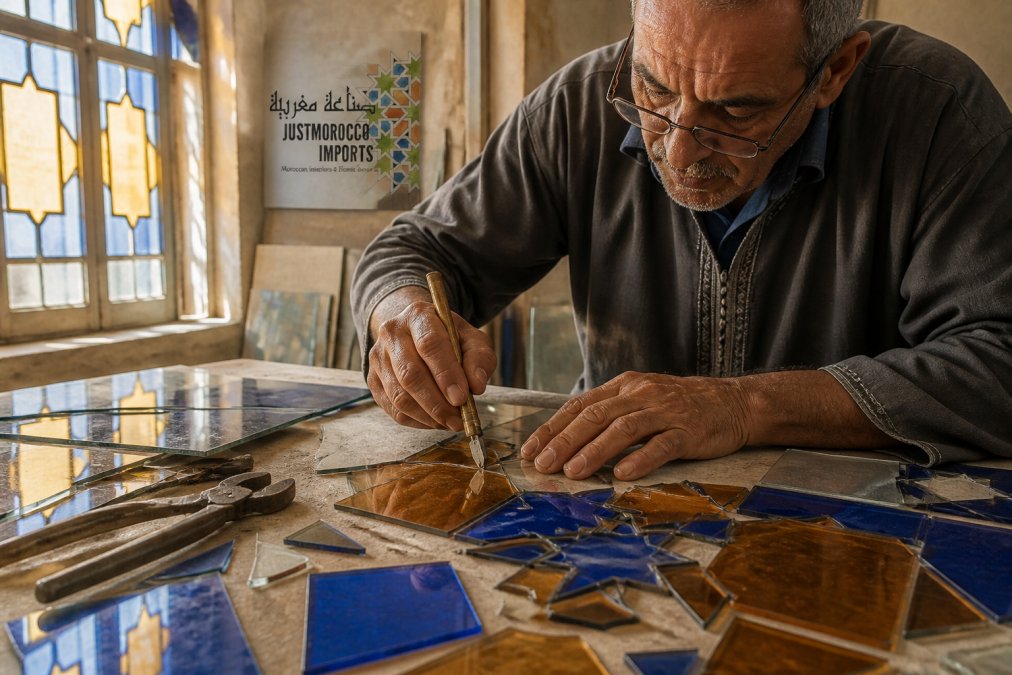
Assembly involves soldering glass pieces into brass frames. Master craftspeople evaluate light transmission and color distribution, ensuring a single misaligned panel doesn't compromise the entire composition.
Handcrafted Moroccan stained glass varies inherently, no two pieces are identical. Slight variances in glass thickness, natural inclusions, and brass patina prove authenticity and human craftsmanship.
Geometric Patterns and Color Palettes in Moroccan Design
Moroccan design centers on mathematical symmetry and repeating geometric forms reflecting Islamic traditions. Common patterns include eight-pointed and six-pointed stars, interlocking hexagons, and tessellations.
Color selection follows regional availability and cultural preference. Amber creates warm, honeyed light; cobalt blue represents luxury and spiritual significance; emerald green, ruby red, and clear glass complete the palette, each chosen for light interaction.
Color and geometry create optical effects that shift throughout the day. A panel appearing amber in morning light may reveal hidden blue patterns in afternoon sun. Artisans deliberately design these shifts, using light diffusion to create depth and movement.
How to Style Stained Glass Lamps in Modern Interiors
Moroccan stained glass lamps function as both lighting and art, requiring styling that amplifies their colored light and shadow effects rather than competing with them.
Light Projection and Shadow Mapping
Moroccan stained glass lamps project geometric patterns and colored light onto surrounding surfaces, creating dynamic effects that shift with natural light angles. Position lamps where patterns land on neutral surfaces, white walls, light wood floors, or pale upholstery, to serve as a canvas.
A pendant lamp suspended above a dining table casts sharp geometric shadows; positioned higher creates softer, diffused color washes. Adjust height to control pattern intensity.
Amber-dominant lamps enrich cream, beige, and warm white walls; blue and green lamps contrast with white or pale gray.
Integration with Existing Lighting Layers
Moroccan stained glass lamps work best as ambient or accent lighting, not task lighting. Layer them with separate task lighting (desk lamps, under-cabinet lights, recessed fixtures) for activities requiring visibility.
In dining spaces, position the Moroccan lamp as primary overhead fixture for evening meals; supplement with additional lighting for daytime visibility. This layered approach preserves the lamp's dramatic evening impact.
In bedrooms, a Moroccan pendant creates intimate ambient lighting for evening relaxation. Pair with bedside task lighting for reading.
Color Coordination with Furnishings and Textiles
Coordinate with the dominant color in the lamp rather than matching every hue. An amber lamp with blue and green accents pairs with warm wood furniture and earth-tone textiles; secondary colors create visual interest without exact matching.
In minimalist interiors, let a multicolor Moroccan lamp serve as the primary color statement. Keep furnishings neutral so the lamp's patterns become the focal point, unifying open-concept spaces visually.
In bohemian interiors, layer the lamp with patterned textiles and global artwork. Ensure the lamp's color palette harmonizes with dominant textile colors; mismatched intensity creates visual discord.
Spatial Positioning for Maximum Impact
Entryways benefit from Moroccan stained glass lamps because the first impression of a home sets the tone for the entire interior. A pendant lamp suspended in an entry foyer projects colored light and geometric patterns onto walls and flooring, immediately signaling that the home contains thoughtful, curated design. The lamp's visual impact is heightened in entry spaces because visitors encounter it before becoming accustomed to the room's overall aesthetic.
Above dining tables, Moroccan lamps create a natural gathering point, their colored light drawing attention downward and creating intimacy around the table. The lamp's geometric patterns become a conversation piece during meals.
In reading nooks or window seats, a hanging Moroccan lamp provides ambient light while the window's natural daylight supplies task lighting. The combination of colored artificial light and natural daylight creates a layered, sophisticated lighting environment. Position the lamp to the side rather than directly above the reading area.
In home offices or creative spaces, position the Moroccan lamp as accent lighting visible from the workspace but not directly overhead. Its colored light creates an inspiring, culturally rich environment.
Avoiding Common Styling Mistakes
Do not position a Moroccan stained glass lamp directly above a surface you need to see clearly, desks, kitchen counters, or bathroom mirrors. The colored glass reduces light output and casts colored shadows that interfere with visibility. Reserve these lamps for spaces where ambiance matters more than functional illumination.
Avoid clustering multiple Moroccan lamps in a single room unless they feature complementary color palettes. Multiple lamps with competing colors create visual chaos rather than cohesion.
Do not hang a Moroccan lamp in direct sunlight from windows. Intense natural light overpowers the lamp's colored glow, making it invisible during daylight hours.
Custom Stained Glass Windows and Architectural Elements
Custom stained glass windows transform architectural spaces into living art installations. Unlike mass-produced panels, bespoke windows accommodate specific dimensions, incorporate personalized geometric patterns, and integrate seamlessly with existing architectural features like arched transoms or curved wall sections. The design process begins with detailed measurements and architectural drawings, ensuring the finished piece fits precisely within its intended location.
Moroccan architectural traditions offer rich inspiration for custom window designs. Mashrabiya screens, intricately carved wooden or stone lattices that traditionally screened windows, translate beautifully into stained glass. Custom stained glass transoms above doorways or windows create visual continuity while controlling light entry into adjacent rooms.
The installation of custom stained glass windows requires structural planning. Brass frames must be securely anchored to prevent movement from vibration or temperature fluctuations. Professional installation ensures proper sealing against weather while maintaining the piece's artistic integrity. Custom furniture imports and architectural elements from specialized Moroccan importers can guide you through the design and installation process, managing both the artistic vision and technical requirements of large-scale installations.
Authenticating Handcrafted Moroccan Glass Pieces
Distinguishing genuine handcrafted Moroccan stained glass from machine-made imitations requires understanding several authentication markers that go beyond surface observation. This is a critical skill for buyers, as the market contains significant volumes of factory-produced pieces marketed as artisanal work.
Glass Thickness and Cutting Precision
Authentic Moroccan stained glass uses hand-cut glass typically measuring 3-4 millimeters thick, creating rich color saturation and dimensional depth when backlit. Examine cut edges under magnification: genuine hand-cut glass displays slight irregularities, micro-chips at edges, and varying cut angles that prove manual labor.
When you hold authentic glass to natural light, observe how the color shifts and deepens as light passes through the thickness. Cheap, thin glass (under 2mm) appears washed-out and flat, lacking the translucent complexity of genuine pieces.
Brass Frame Construction and Patina Development
Hand-hammered brass frames show visible tool marks, uneven surface texture, and organic patina patterns that develop unevenly over time. Run your fingers across the frame: authentic brass feels slightly rough and irregular.
Examine solder joints closely. Authentic hand-soldered connections display variable bead sizes, slight asymmetry, and occasional flux residue (a crystalline coating that forms during soldering). The solder appears to flow naturally into joints rather than sit uniformly on top.
The patina itself tells a story. Genuine Moroccan brass develops a natural greenish or brownish oxidation layer over months and years.
Geometric Pattern Alignment and Symmetry Tolerance
Hand-assembled geometric patterns in authentic pieces show minor misalignments, gaps between glass pieces that vary by 1-2 millimeters, slight rotations in repeating motifs, and asymmetrical spacing that proves human assembly. These imperfections are features, not flaws; they confirm that no two pieces are identical.
Request photos of multiple angles and close-ups of pattern intersections; authentic artisans are proud to show the subtle variations that prove their work.
Color Consistency and Natural Inclusions
Genuine Moroccan glass contains natural inclusions, tiny bubbles, mineral particles, or slight color variations within individual panes, that result from traditional glass-making methods. These inclusions scatter light slightly, adding to the piece's visual complexity. Hold a panel up to bright light and look for these imperfections; their presence is a positive authentication marker.
Provenance and Artisan Documentation
Reputable importers provide detailed information about artisan origins, the specific region where the piece was made, and the techniques employed. Authentic pieces often come with documentation identifying the artisan by name or workshop, production dates, and the specific geometric patterns used.
Be cautious of sellers who claim pieces are "handmade in Morocco" but cannot specify which artisan, workshop, or region produced them. Generic sourcing claims suggest the piece was purchased from a middleman distributor rather than directly from the maker.
Price as an Authentication Signal
Authentic handcrafted Moroccan stained glass commands prices reflecting the labor, materials, and artisan skill involved. A genuine hand-cut and hand-assembled pendant lamp typically costs $150-$400, depending on size and complexity.
Maintenance and Restoration of Moroccan Stained Glass
Moroccan stained glass requires minimal maintenance when properly cared for, but understanding appropriate cleaning methods prevents damage to both glass and brass components. Dust accumulation reduces light transmission, so gentle cleaning maintains the piece's visual impact. Use a soft, lint-free cloth slightly dampened with distilled water, never tap water, which contains minerals that leave spots on glass. Avoid commercial glass cleaners containing ammonia, which can corrode brass frames over time.
For more thorough cleaning, prepare a solution of distilled water with a single drop of mild dish soap. Apply the solution sparingly with a soft cloth, working gently across the glass surface. Dry immediately with a separate clean cloth to prevent water spots. Pay special attention to the brass frame, using the same gentle approach to preserve the patina.
Restoration of damaged pieces requires professional expertise. Cracked or broken glass panels can be carefully replaced while maintaining the original brass framework. Loose solder joints should be re-soldered by someone experienced with stained glass work. For valuable or antique pieces, consult specialists familiar with Moroccan techniques before attempting any repairs.
Environmental factors affect longevity. Extreme temperature fluctuations cause expansion and contraction in glass and brass, potentially stressing solder joints. Humidity variations, particularly in coastal regions with salt air, can accelerate brass oxidation. Positioning pieces away from direct heat sources and maintaining stable indoor humidity levels extends their lifespan considerably.
Installation and DIY Considerations for Stained Glass
Installing Moroccan stained glass as a hanging pendant lamp requires basic electrical knowledge if wiring for electricity, though many pieces function beautifully with traditional candles or battery-powered lighting. The Mecca lantern, measuring 33 inches high by 11 inches wide, can be suspended from existing ceiling fixtures or hung from decorative chains. Ensure the mounting structure supports the weight.
For window installations, DIY approaches work for small pieces but larger custom windows demand professional installation. Measure opening dimensions precisely, accounting for frame depth and any architectural irregularities. Window frames must be structurally sound and properly sealed to prevent moisture intrusion. If your opening has curves, arches, or non-standard dimensions, professional installation ensures proper fitting and weather sealing.
Hanging options vary based on piece type and location. Pendant lamps suspend from ceiling-mounted fixtures using chain or wire. Window-hung pieces use suction cups designed for glass. Permanent installations employ brass brackets and fasteners that distribute weight evenly. The Moroccan treya lantern, at 33 inches high and 15 inches wide, requires sturdy mounting to prevent swaying that could stress solder joints.
Safety considerations matter particularly for pieces in high-traffic areas. Ensure suspended installations clear head height to prevent accidental contact. Secure all hanging hardware with appropriate fasteners rated for the piece's weight. In homes with children or pets, position delicate stained glass pieces where impact is unlikely. Periodically inspect mounting hardware for corrosion or loosening.
Moroccan stained glass transforms spaces through the marriage of geometric precision, vibrant color, and authentic craftsmanship. Whether you're drawn to the warm amber glow of a traditional lantern or the architectural drama of a custom stained glass window, these pieces elevate interiors with cultural depth and visual sophistication. At Justmorocco, we curate handcrafted Moroccan stained glass from master artisans, ensuring each piece meets rigorous standards for authenticity and quality. Explore our collection of pendant lamps and custom architectural elements to discover how genuine Moroccan stained glass can transform your home into a luxurious sanctuary infused with global charm.
Frequently Asked Questions
What makes Moroccan stained glass unique compared to other stained glass styles?
Moroccan stained glass stands apart through its geometric patterns, vibrant color palettes, and traditional handcrafted techniques passed down through generations. Unlike European stained glass, which often features figurative designs, Moroccan pieces emphasize intricate geometric and mosaic patterns reflecting Islamic artistic traditions. The use of brass frames, ambient lighting effects, and the emphasis on light diffusion through colored panels creates a distinctive aesthetic that transforms spaces into bohemian sanctuaries with global charm.
How do I know if Moroccan stained glass pieces are authentically handcrafted?
Authentic handcrafted Moroccan stained glass shows visible signs of artisan work: slight variations between pieces (no two are exactly identical), hand-cut glass edges that may be slightly irregular, hand-soldered brass joints with visible craftsmanship, and natural patina on metal frames. Request documentation of origin, artisan information, and production methods. Examine the glass closely for bubbles, color variations, and hand-carved designs that indicate traditional souk production rather than mass manufacturing.
Can I install Moroccan stained glass lamps myself, or do I need professional help?
Moroccan stained glass lanterns like the Mecca Lantern ($250) and Amber Warda ($450) are designed for straightforward installation. They can be hung in windows to catch natural light or easily wired for electricity by someone with basic electrical knowledge. However, for custom stained glass windows or complex architectural installations, professional help ensures proper framing, weatherproofing, and structural integrity. If you're uncertain about electrical work, consult a licensed electrician to ensure safety and code compliance.
How should I care for and clean Moroccan stained glass to preserve its beauty?
Clean Moroccan stained glass gently using a soft, lint-free cloth and mild soap with warm water. Avoid harsh chemicals or abrasive materials that can damage the glass surface or brass frames. Dry immediately with a clean cloth to prevent water spots. Avoid direct pressure on delicate glass panels and keep pieces away from extreme temperature changes.