

Last Updated: October 23, 2026
Quick Summary
Clean moroccan leather poufs by dusting or vacuuming the surface dry first, then wiping with a barely damp cloth and mild soap, followed immediately by a dry cloth. Condition every 3-6 months, patch testing first, and keep poufs out of direct sun and heat to prevent cracking.
- Identify your leather finish before cleaning, since natural and finished hides react differently.
- Never pour water directly on leather or let it pool in the stitching.
- Blot stains instead of rubbing, and test any cleaner on a hidden spot first.
- Stuff poufs to about 85-90% capacity and store them in a breathable bag, never sealed plastic.
- Call a professional for split seams, deep cracks, or large stains that won't lift.
Table of Contents
- Why Moroccan Leather Poufs Need a Different Care Routine
- What You'll Need Before You Start
- Step-by-Step: How to Clean a Leather Ottoman or Pouf Safely
- How to Remove Stains From Leather: Spot-by-Spot Fixes
- Choosing a Leather Conditioner for Poufs
- How to Protect Leather From Cracking and Drying Out
- Stuffing, Storage, and Everyday Prevention
- When to Repair and When to Call a Professional
- Conclusion
- Frequently Asked Questions
Why Moroccan Leather Poufs Need a Different Care Routine
Moroccan leather poufs are hand-stitched leather ottomans, often vegetable-tanned and finished by hand, and that construction is exactly why they need gentler care than factory-sealed furniture. At Justmorocco, we import these pieces directly from artisan workshops.
The leather is the difference. Many authentic poufs use natural, semi-aniline, or unfinished hides that breathe and age. Those hides absorb whatever you put on them, good or bad.
Here's what most care guides get wrong: they treat all leather the same. It isn't. A dyed, sealed finish tolerates more than a soft natural hide. Use the wrong product on the wrong finish and you get dark patches, color transfer, or a stiff, cracked surface that never recovers.
So before you touch a cloth to your pouf, you need to know what you're working with. That single step prevents most of the damage we hear about.
Identify Your Leather Type and Finish First
Genuine leather poufs fall into a few broad types, and each responds differently to cleaning. If you're unsure whether your pouf is the real thing, see our guide on genuine Moroccan leather poufs vs fakes. Full-grain leather keeps the natural surface and shows marks easily. Semi-aniline has light protection and sits in the middle. Finished or pigmented leather has a sealed surface that resists water but can still dry out.
A quick test helps. Press a fingertip into an inconspicuous spot. Soft, absorbent leather that darkens slightly is natural or semi-aniline. Leather that feels slick and repels moisture is finished.
What You'll Need Before You Start
Gather your supplies first so you're not scrambling mid-clean. The right kit is simple and cheap.
You'll need:
- A soft cloth or microfiber towel (two or three)
- A soft-bristle brush or vacuum with a brush attachment
- Mild soap, such as a gentle saddle soap or pH-neutral leather cleaner
- A small bowl of water
- A leather conditioner made for your finish type
- White vinegar for spot treatments
- A dry cloth for buffing
Skip these:
- Harsh all-purpose cleaners
- Bleach or ammonia
- Scented wipes with alcohol
- Anything labeled for "heavy degreasing"
The rule is simple: mild products, small amounts, and never soak the leather. A damp cloth, not a wet one, is your main tool.
Step-by-Step: How to Clean a Leather Ottoman or Pouf Safely
Cleaning a leather ottoman comes down to two stages: lift the loose dirt, then wipe the surface without soaking it. Do them in order and you avoid pushing grime into the hide.
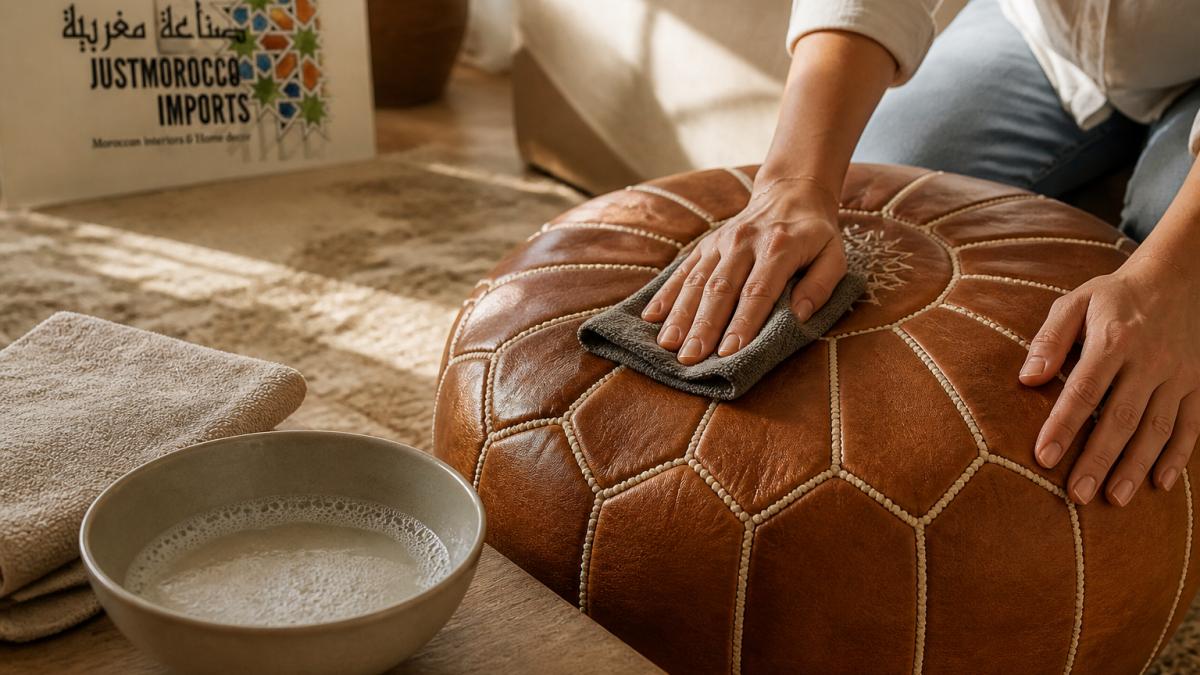
Dust, Vacuum, and Prep the Surface
Start dry. Dust and grime settle into seams and stitching, and wiping over them wet just grinds the dirt deeper.
- Brush or vacuum the whole surface with a soft attachment.
- Pay attention to seams, corners, and the base where dust collects.
- Flip the pouf and clear the underside too.
- Shake out any loose debris from the stitching lines.
This step takes a few minutes and does most of the work. Skipping it is the most common mistake we see.
Wipe With a Damp Cloth and Mild Soap
Now clean with restraint. Wring your cloth until it's barely damp, then wipe in small sections.
- Dip a soft cloth in mild soapy water and wring it out well.
- Wipe one section at a time in gentle circles.
- Follow immediately with a clean, dry cloth to lift residue.
- Rinse the cloth often and keep it damp, not wet.
- Let the pouf air dry away from direct heat or sun.
How to Remove Stains From Leather: Spot-by-Spot Fixes
Treat stains fast and match the method to the mess. Fresh stains lift far more easily than set ones, so act the same day when you can. The table below gives the first move for each common spill, but the steps that follow matter just as much as the product you reach for.
| Stain Type | First Move | What to Avoid |
|---|---|---|
| Surface dirt and dust | Soft brush, then damp cloth | Soaking the leather |
| Grease or oil | Blot with dry cloth, then mild soap | Rubbing hard or using heat |
| Water marks | Damp cloth over the whole panel, air dry evenly | Spot-wetting one area only |
| Ink or dye transfer | Dab gently with a cloth, test vinegar first | Scrubbing, which spreads the mark |
| Food or drink spills | Blot, then wipe with a barely damp cloth | Letting residue dry into the grain |
| Light mildew smell | Air out, wipe with diluted white vinegar | Sealing it away while damp |
The Four-Step Stain Protocol
Every stain follows the same sequence, regardless of type. Work through these steps in order and stop as soon as the mark lifts.
- Blot, don't rub. Press a dry cloth onto the spill to pull liquid out of the grain. Rubbing pushes the substance deeper and can lift dye from the finish.
- Lift solids dry first. For food, mud, or anything with texture, let it dry completely, then brush it off with a soft-bristle brush before any moisture touches the leather.
- Test on a hidden spot. Apply a drop of your chosen cleaner under the base or along an inside seam. Wait 10-15 minutes and check for darkening, color transfer, or a sticky residue before you touch the visible surface.
- Clean in small sections. Use a barely damp cloth with mild soap, wipe in gentle circles, and follow immediately with a dry cloth. Rinse the cloth often and keep it damp, not wet.
Stain-Specific Cautions
- Oil and grease: Blot first, then apply a small amount of mild soap or a dedicated leather degreaser. Never use heat, a hair dryer or radiator will set the oil into the hide. If the mark remains after two gentle attempts, stop and let a professional assess it.
- Ink and dye transfer: Dab, don't wipe. Test white vinegar diluted with equal parts water on a hidden spot first. If the ink is ballpoint or permanent, home treatment can spread it, a leather specialist has solvents that lift ink without stripping the finish.
- Water marks: These form when one area gets wet and dries at a different rate than the surrounding leather. Dampen the entire panel evenly with a barely damp cloth and let it air dry away from heat, so the whole surface dries at the same pace.
- Food and drink: Blot liquids immediately. For sticky residues, use a barely damp cloth with a drop of mild soap, then dry. Sugary spills that dry in can attract pests and stiffen the leather, so don't leave them overnight.
- Mildew: A musty smell means moisture is trapped. Air the pouf in a dry, ventilated space, wipe with diluted white vinegar, and let it dry fully before conditioning. Never seal a damp pouf in a bag or cover.
For most stains, blot, don't scrub. Scrubbing pushes the substance into the grain and can lift color. Test any liquid on a hidden spot first, and if a stain won't lift after two gentle attempts, stop.
Choosing a Leather Conditioner for Poufs
Conditioner is what keeps leather supple, and it's the step most people skip. A good leather conditioner for poufs replaces the oils that cleaning and daily use strip away. But the wrong conditioner can darken a natural hide, leave a finished surface tacky, or attract dust, so match the product to your finish before you buy.
Match the Conditioner to Your Leather Finish
- Natural, unfinished, and semi-aniline hides: These absorb moisture and respond best to a cream or oil-based conditioner. A little goes a long way, apply thin layers and let each one absorb before adding more. Over-application on absorbent leather can darken the color and leave a greasy feel.
- Finished or pigmented leather: The sealed surface resists absorption, so a lighter lotion that sits on top is the better choice. Creams and oils can leave a film that attracts dust and feels tacky. Buff off any excess thoroughly.
- Full-grain leather: Treat it like natural hide, it shows marks easily and benefits from regular conditioning, but test any product on a hidden spot first because full-grain can darken unevenly.
Product Types and What They Do
- Leather soap: A cleaner, not a conditioner. Use it to lift grime before conditioning, and choose a pH-neutral formula labeled for leather.
- Leather conditioner (cream or lotion): Replaces oils and keeps the hide supple. Creams suit absorbent hides; lotions suit finished surfaces.
- Neatsfoot oil or dedicated leather oil: Deeply nourishing for dry, natural hides, but it can darken color significantly. Avoid it on finished leather and on light-colored poufs unless you've patch-tested.
- White vinegar (diluted): A spot treatment for mildew and some stains, not a conditioner. It can dry leather if used repeatedly, so follow with conditioner once the surface is fully dry.
- Shoe polish: Formulated for footwear, not furniture leather. It can contain waxes and dyes that transfer to clothing or leave a sticky film on a pouf. Skip it.
How to Apply Conditioner
- Clean the pouf first and let it dry fully. Conditioner traps dirt if applied over grime.
- Patch test on a hidden area, under the base or along an inside seam, and wait 24 hours. Check for darkening, tackiness, or color transfer.
- Put a small amount on a soft cloth, a dime-sized amount is enough to start.
- Work it in with light circles, section by section.
- Buff off any excess with a dry cloth.
- Let it absorb for several hours before you use the pouf.
Always patch test. Apply a little to a hidden area and wait a day to check for darkening or tackiness. Check the product label for the manufacturer's guidance on finish compatibility, and when in doubt, choose a pH-neutral leather conditioner labeled for your finish type.
Handmade Moroccan Silver Metal Coffee Table & Leather Pouf Seating →
Delicate inlay furniture needs the same patience. Our guide on maintaining mother-of-pearl furniture shows how careful product choices protect fragile finishes, and the same logic applies to a fine leather pouf.
How to Protect Leather From Cracking and Drying Out
Cracking comes from moisture loss, and prevention beats repair every time. Leather dries out from sun, heat, and dry indoor air, and once it cracks, the damage is permanent.
Keep poufs out of direct sunlight and away from radiators, vents, and fireplaces. In dry climates or heated homes, condition a little more often.
Daily habits that protect leather:
- Rotate the pouf so one side doesn't take all the wear
- Keep it off hot floors and away from heat sources
- Wipe spills promptly
- Condition on a regular schedule, not just when it looks dry
Humidity matters too. In coastal or humid homes, the risk shifts toward moisture and mildew rather than dryness. Our guide on Moroccan decor in humid climates covers how to protect your pieces from moisture-related damage.
Stuffing, Storage, and Everyday Prevention
A well-stuffed pouf holds its shape and resists creasing. Over time, filling settles and the leather slumps, which stretches the seams.
How to stuff and store a pouf:
- Fill to about 85-90% capacity so the leather stays taut but not strained
- Use blankets, old clothes, or foam to reach a rounded shape
- Store in a breathable bag, never sealed plastic
- Keep stored poufs dry and out of damp basements
Everyday prevention is mostly about placement. Keep poufs away from sharp edges, pet claws, and heavy traffic that scuffs the surface. A quick weekly dust keeps grime from settling into seams.
Once your pouf is clean and well-kept, styling it becomes the fun part.
When to Repair and When to Call a Professional
Some wear you can handle at home. Other damage needs a pro, and knowing the line saves you from making it worse.
Handle at home:
- Minor scuffs and light surface marks
- Dull color that needs conditioning
- Loose surface dust and everyday grime
Call a professional:
- Split seams or torn stitching
- Deep cracks in dried leather
- Large stains that won't lift
- Structural damage to the filling or base
A leather repair specialist can re-stitch seams and treat deep damage in ways home kits can't. For a handcrafted piece, that investment is worth it. Cheap fixes on fine leather often cost more in the end.
Conclusion
A Moroccan leather pouf rewards consistent, gentle care. Clean it dry first, wipe with a barely damp cloth, condition on a schedule, and keep it out of harsh sun and heat. That routine keeps the leather supple and the stitching strong for years.
If your pouf is beyond saving, or you want seating that matches a piece you already love, browse our handmade Moroccan silver metal coffee table and leather pouf seating. Each set is handcrafted, and only one is available in stock.
At Justmorocco, we bring authentic, handcrafted Moroccan furniture to homes across the country, from custom furniture imports to statement seating. Get started with Justmorocco and give your space the timeless craftsmanship it deserves.
Frequently Asked Questions
How often should you condition a leather pouf?
Condition a Moroccan leather pouf every three to six months, and sooner if the leather feels stiff or looks dull. In dry climates or heated homes, monthly checks help you catch dryness before it turns into cracking. Always clean the surface first so dust and grime don't get pushed into the grain, then apply a thin layer of leather conditioner for poufs, buff it in with a soft cloth, and let it absorb for 15 to 20 minutes before wiping off any excess.
What should you avoid using on Moroccan leather?
Skip harsh household cleaners, bleach, ammonia, alcohol, and abrasive scrubbing pads, since these strip the finish and dry out genuine leather. Avoid soaking the pouf or saturating it with water, because excess moisture weakens seams and can leave water stains. Don't use silicone-based polishes or shoe polish on unfinished or embroidered leather without a patch test. Also avoid direct sunlight and radiators for drying, which speed up cracking and color fading.
Can you use leather conditioner on a Moroccan pouf?
Yes, a leather conditioner for poufs is safe on most genuine leather and helps keep the surface supple. Patch test on a hidden area first, especially on dyed or embroidered finishes, and wait 24 hours to check for color transfer. Apply a small amount with a soft cloth, work it into the grain, and buff off the excess. Avoid conditioning suede or nubuck, and never condition dirty leather, because trapped dust and grime can scratch the surface.
How do you remove stains from a leather pouf?
Blot spills immediately with a dry cloth, then treat the spot with a damp cloth and a drop of mild soap. For oil stains, sprinkle cornstarch or baking soda, let it sit for a few hours, and brush it off. White vinegar diluted with water works on light surface stains. Test any method on a hidden spot first, and never rub hard, since friction can dull the finish and spread the stain.
Sources and further reading: leather care guidance from the American Leather Chemists Association, furniture care tips from the Good Housekeeping Institute, leather and upholstery care standards from the Business and Institutional Furniture Manufacturers Association
