1
/
of
10
Justmorocco
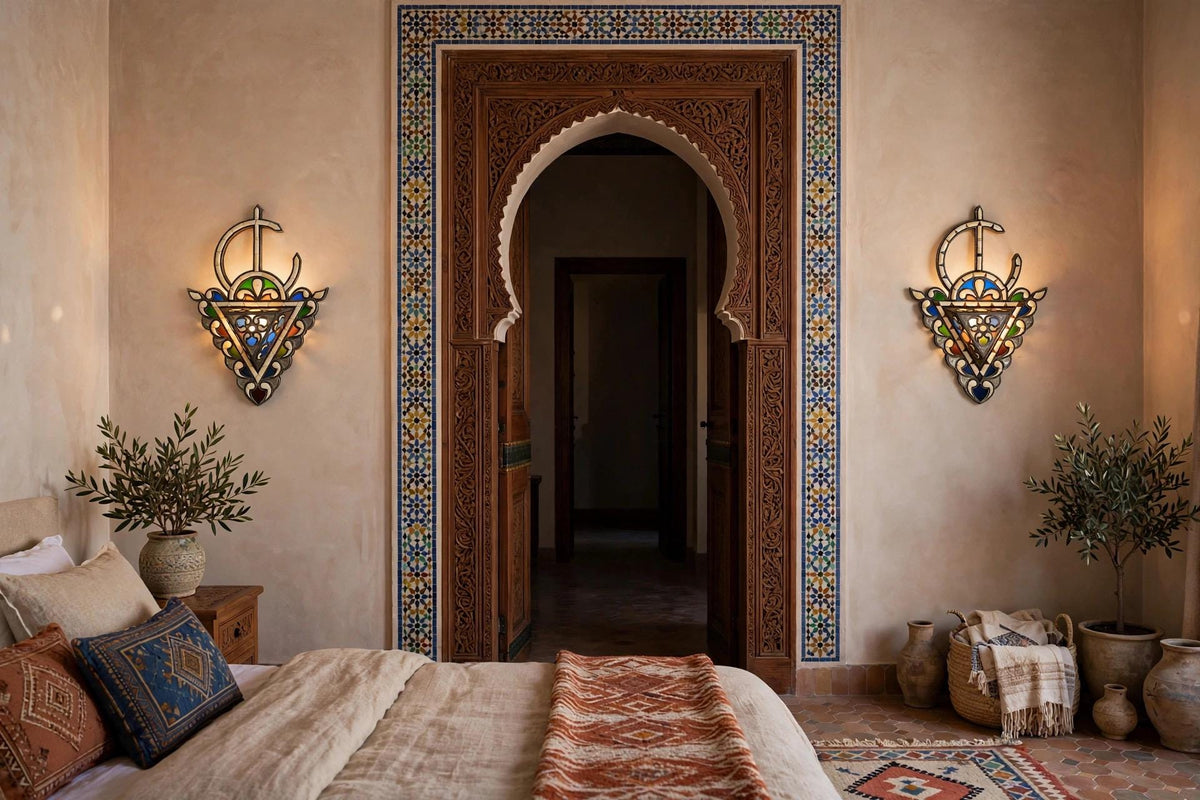
Two Antique Fibula Berber craftsmanship, geometric inlay with intricate chased metalwork. Statement piece
Regular price
$3,200.00
Regular price
Sale price
$3,200.00
Unit price
/
per
Shipping calculated at checkout.
Couldn't load pickup availability
This piece is a traditional Moroccan wall sconce / oil lamp holder (often referred to as a decorative Moroccan metal-and-bone wall bracket or appliqué), heavily rooted in Amazigh (Berber) and Moorish metalworking traditions.
Cultural & Regional Background
- Origins: This style of metalcraft and inlay work originated in North Africa, predominantly crafted by Jewish and Amazigh silversmiths and metalworkers in artisan hubs like Tiznit, Taroudant, Fez, and Marrakech.
- Artistic Synthesis: It blends Amazigh geometric motifs (triangles, bone/horn inlays, enamel accents) with Moorish Arabesque elements (curved leaf tendrils, fleur-de-lis, and palmettes).
Key Design & Structural Elements
- Top Crescent & Pin (Tazerzit / Fibula Inspiration): The top structure resembles the iconic Amazigh fibula (Tazerzit), a traditional cloak clasp featuring a crescent ring and a vertical pin, widely recognized as a symbol of protection, female dignity, and tribal identity.
- Inlay Work: The cream-colored geometric pieces are bone or camel horn inlays, framed by stained glass or enamel panels in deep blue, green, and amber tones.
- Central Basin / Cup: The projecting triangular box in the middle serves as a holder or basin, historically designed to support an oil lamp burner or a small candle. The openwork metal facade allowed light to project intricate shadows against the wall.
- Repoussé & Engraving: The metal frame (typically nickel silver, brass, or alloy) is decorated using hand-hammered repoussé and chasing techniques to form intricate floral scrolls.
Historical Function & Evolution
- Traditional Function: Historically, wall-mounted fixtures like this were used in domestic courtyards (riad interiors) and reception spaces to hold oil lamps or candles, serving both as functional lighting and decorative talismans.
- Modern Era: In the mid-to-late 20th century (particularly from the 1960s onward), Moroccan artisans adapted these classical architectural components into decorative sconces, often converted to hold electric light sources or used purely as wall art to highlight traditional craftsmanship.

Only 1 available
Cultural & Regional Background
- Origins: This style of metalcraft and inlay work originated in North Africa, predominantly crafted by Jewish and Amazigh silversmiths and metalworkers in artisan hubs like Tiznit, Taroudant, Fez, and Marrakech.
- Artistic Synthesis: It blends Amazigh geometric motifs (triangles, bone/horn inlays, enamel accents) with Moorish Arabesque elements (curved leaf tendrils, fleur-de-lis, and palmettes).
Key Design & Structural Elements
- Top Crescent & Pin (Tazerzit / Fibula Inspiration): The top structure resembles the iconic Amazigh fibula (Tazerzit), a traditional cloak clasp featuring a crescent ring and a vertical pin, widely recognized as a symbol of protection, female dignity, and tribal identity.
- Inlay Work: The cream-colored geometric pieces are bone or camel horn inlays, framed by stained glass or enamel panels in deep blue, green, and amber tones.
- Central Basin / Cup: The projecting triangular box in the middle serves as a holder or basin, historically designed to support an oil lamp burner or a small candle. The openwork metal facade allowed light to project intricate shadows against the wall.
- Repoussé & Engraving: The metal frame (typically nickel silver, brass, or alloy) is decorated using hand-hammered repoussé and chasing techniques to form intricate floral scrolls.
Historical Function & Evolution
- Traditional Function: Historically, wall-mounted fixtures like this were used in domestic courtyards (riad interiors) and reception spaces to hold oil lamps or candles, serving both as functional lighting and decorative talismans.
- Modern Era: In the mid-to-late 20th century (particularly from the 1960s onward), Moroccan artisans adapted these classical architectural components into decorative sconces, often converted to hold electric light sources or used purely as wall art to highlight traditional craftsmanship.
Only 1 available
Share