

1
/
of
5
Justmorocco
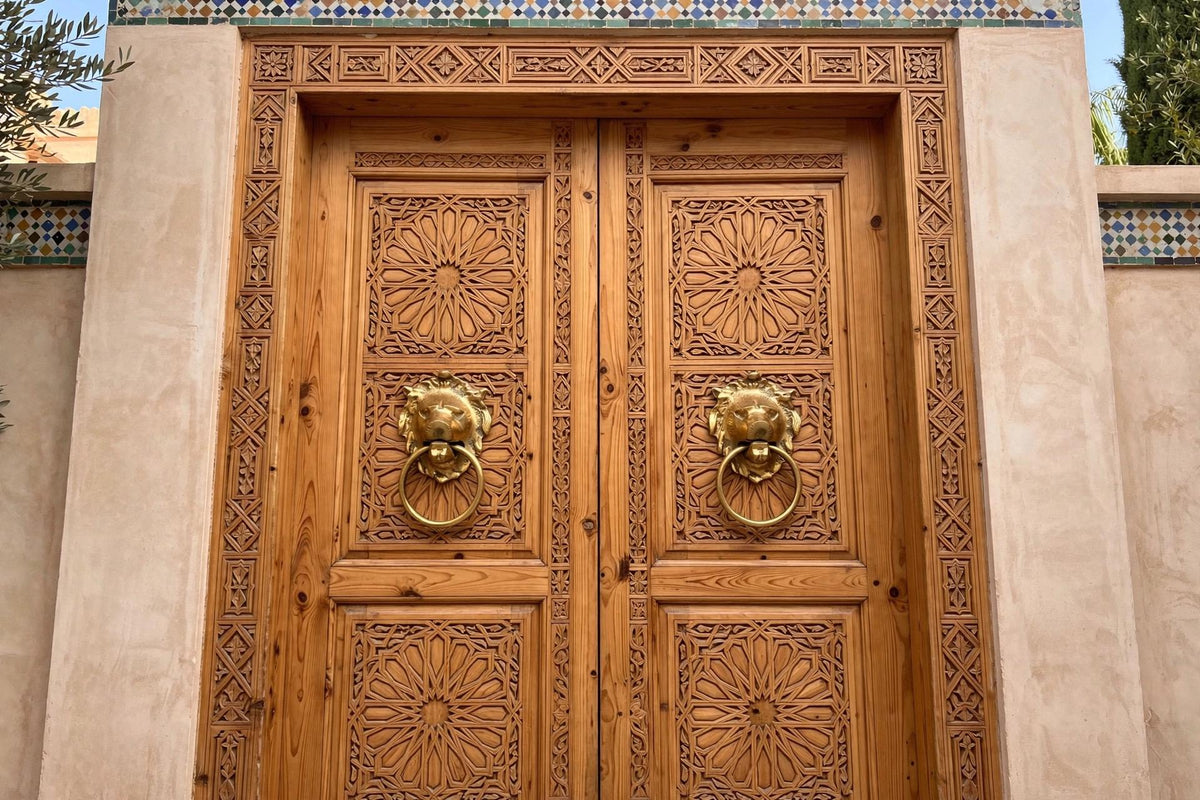
Handmade Moroccan brass lion door knocker
Handmade Moroccan brass lion door knocker
Regular price
$190.00
Regular price
Sale price
$190.00
Unit price
/
per
Shipping calculated at checkout.
Couldn't load pickup availability
This is a brass lion's head Moroccan door knocker.
Design & Style: Features a classic regal lion's head with a textured mane, holding a heavy ring in its mouth. The lion motif is historically symbolic of strength, courage, and protection, making it a very popular decorative choice for front entryways starting back in the Georgian and Victorian eras.
Material: Solid polished brass.
Mounting: Usually, these mount to a door using threaded bolts or screws from the back (or through small pre-drilled holes in the plate), with the base of the ring striking a striking plate (or directly against the door) to sound a knock.
1. Cleaning & Restoration
Preserving the Patina: If you like the aged look, stick to warm water, mild dish soap, and a soft toothbrush to clean out dirt from the mane's crevices without removing the character.
High Shine Finish: To make it gleam, apply a dedicated brass polish (like Brasso or Wright's) with a microfiber cloth.
Natural Alternative: A paste of equal parts lemon juice and baking soda gently rubbed on with a cloth removes tarnish without harsh chemical fumes.
2. Mounting & Installation
Check the Back: Turn the knocker over to see how it attaches. Most solid brass knockers use through-bolts (bolts that go all the way through the door from the inside into threaded sockets on the back of the lion).
Protect the Door: If your knocker didn't come with a small circular striker anvil (the metal plate the ring hits), consider adding one so the ring knocks against metal rather than damaging your door's finish.
3. Identifying Age & Origin
Casting Texture: Hand-cast antique knockers usually have a rough, unpolished backside with minor imperfections. Modern reproductions tend to be smooth or hollowed out behind the lion's head.
Hardware & Threads: Coarse, uneven hand-cut bolt threads or square nuts point toward pre-1920s origin, whereas uniform, machine-cut threads indicate mid-to-late 20th century or modern production.
Stamps & Marks: does not come with a stamp
All handmade
Materials: Brass
Design & Style: Features a classic regal lion's head with a textured mane, holding a heavy ring in its mouth. The lion motif is historically symbolic of strength, courage, and protection, making it a very popular decorative choice for front entryways starting back in the Georgian and Victorian eras.
Material: Solid polished brass.
Mounting: Usually, these mount to a door using threaded bolts or screws from the back (or through small pre-drilled holes in the plate), with the base of the ring striking a striking plate (or directly against the door) to sound a knock.
1. Cleaning & Restoration
Preserving the Patina: If you like the aged look, stick to warm water, mild dish soap, and a soft toothbrush to clean out dirt from the mane's crevices without removing the character.
High Shine Finish: To make it gleam, apply a dedicated brass polish (like Brasso or Wright's) with a microfiber cloth.
Natural Alternative: A paste of equal parts lemon juice and baking soda gently rubbed on with a cloth removes tarnish without harsh chemical fumes.
2. Mounting & Installation
Check the Back: Turn the knocker over to see how it attaches. Most solid brass knockers use through-bolts (bolts that go all the way through the door from the inside into threaded sockets on the back of the lion).
Protect the Door: If your knocker didn't come with a small circular striker anvil (the metal plate the ring hits), consider adding one so the ring knocks against metal rather than damaging your door's finish.
3. Identifying Age & Origin
Casting Texture: Hand-cast antique knockers usually have a rough, unpolished backside with minor imperfections. Modern reproductions tend to be smooth or hollowed out behind the lion's head.
Hardware & Threads: Coarse, uneven hand-cut bolt threads or square nuts point toward pre-1920s origin, whereas uniform, machine-cut threads indicate mid-to-late 20th century or modern production.
Stamps & Marks: does not come with a stamp
All handmade
Materials: Brass
Share