

Justmorocco
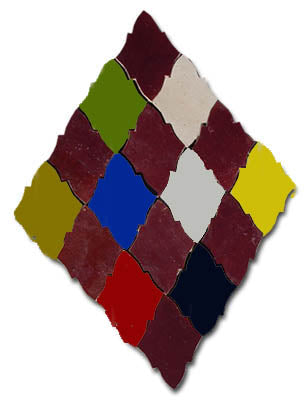
Cordobesa tile
Cordobesa tile
Couldn't load pickup availability
This is a stunning example of Neo-Moorish or Modern Moroccan interior design. It perfectly balances heavy, traditional craftsmanship with the clean lines required for a functional modern kitchen.
Here is a breakdown of the key design elements that make this space so effective:
1. Intricate Woodwork (Mashrabiya-Inspired)
The cabinetry is the star of the show. The doors feature deep-relief carvings of geometric arabesque patterns (specifically 12-point stars), which are a hallmark of Islamic art.
The Archway: Notice the scalloped, "muqarnas-lite" arch framing the stove area. This traditional architectural element adds height and drama to the workspace.
Texture: Using a dark, matte-finished walnut or oak keeps the intricate patterns from feeling too busy or "shiny," giving it an aged, soulful look.
2. Geometric Tilework
The backsplash and flooring provide a necessary contrast to the dark wood:
Backsplash: The burgundy and cream diamond pattern (Zellij style) adds a rhythmic, vertical energy.
Flooring: The muted, hexagonal terracotta tiles in earth tones (sage, ochre, and sand) ground the room and prevent it from feeling too formal.
3. Iconic Lighting
The brass filigree lanterns* (Fanoos) are essential for this aesthetic. The perforated metal creates "shadow art" on the walls when lit, adding a layer of ambient texture that you can’t get with standard recessed lighting.
4. Cultural Accents
The inclusion of a clay tagine on the counter and the view through the window—showing a traditional courtyard (Riad) architecture—suggests a seamless connection between the interior design and the building's heritage.
Design Tip: If you are looking to replicate this, the key is the Visual Weight balance. Because the wood patterns are so dense, the plain wooden countertops and the neutral-colored walls are necessary to give the eyes a place to rest
Share