1
/
of
8
Justmorocco
Antique Moroccan Bone Inlay Door, Middle Eastern Royal Decor
Regular price
$17,360.00
Regular price
Sale price
$17,360.00
Unit price
/
per
Shipping calculated at checkout.
Couldn't load pickup availability
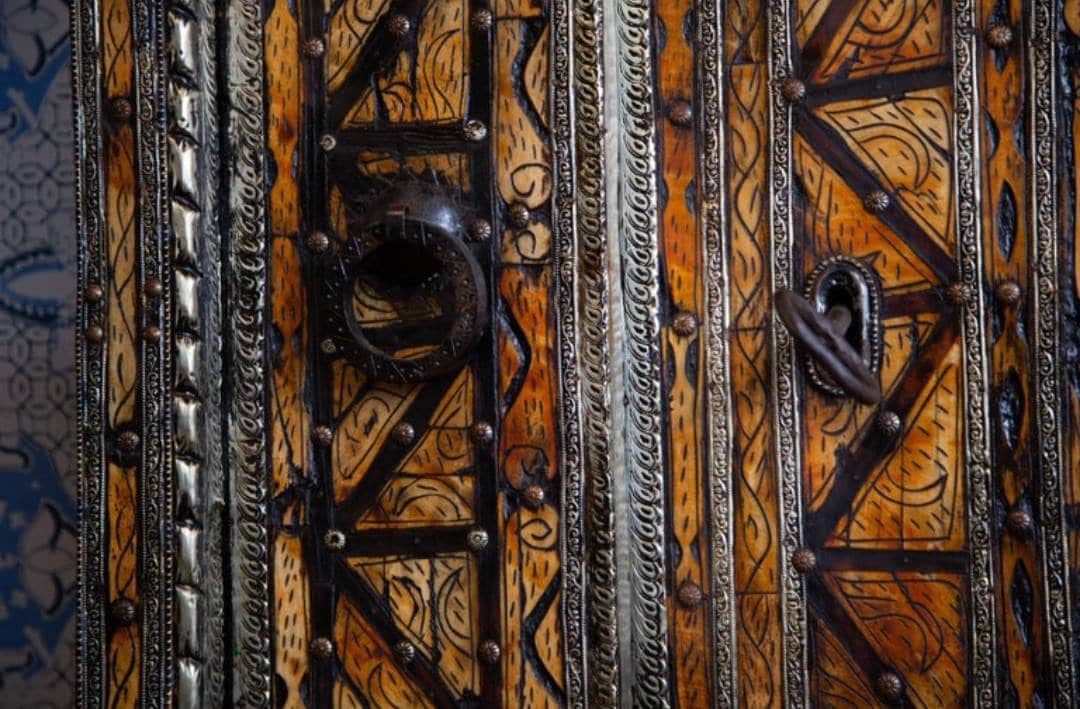
Antique Royal one of a kind camel bone door
That is a stunning example of a traditional Zanzibar door, a hallmark of Swahili architecture.
These doors are famous for their intricate craftsmanship and the way they blend diverse cultural influences.
Key Features & Symbolism
The design of a Zanzibar door often tells a story about the owner's status, profession, and heritage.
Here is a breakdown of what makes this piece special:
* Cultural Fusion: The geometry and woodwork are a mix of Arab, Indian, and African influences.
* The "Mshabaiki" (Arch):
The pointed, multi-layered arch at the top center is a classic Arabic architectural element, often used to frame the main entrance.
* Geometric Patterns: Unlike many Zanzibar doors that feature floral or marine motifs (like lotus flowers or fish), this one is heavily geometric.
The interlocking triangles and zig-zags are common in indigenous African and Islamic art, often representing the weaver's craft or protection.
* Metalwork & Studs:
The brass or iron studs you see across the horizontal beams were originally an Indian tradition used to prevent war elephants from battering down palace doors.
Over time, they became purely decorative symbols of wealth.
* The Lintel: The top section with the small wooden balustrades (the little "fences" at the very top) serves as a decorative transom, allowing light and air to pass through while maintaining security.
Interesting Fact
In Stone Town, Zanzibar, these doors were typically the first part of a house to be built.
The more elaborate the carvings, the higher the social standing of the family living inside.
That is a stunning example of a traditional Zanzibar door, a hallmark of Swahili architecture.
These doors are famous for their intricate craftsmanship and the way they blend diverse cultural influences.
Key Features & Symbolism
The design of a Zanzibar door often tells a story about the owner's status, profession, and heritage.
Here is a breakdown of what makes this piece special:
* Cultural Fusion: The geometry and woodwork are a mix of Arab, Indian, and African influences.
* The "Mshabaiki" (Arch):
The pointed, multi-layered arch at the top center is a classic Arabic architectural element, often used to frame the main entrance.
* Geometric Patterns: Unlike many Zanzibar doors that feature floral or marine motifs (like lotus flowers or fish), this one is heavily geometric.
The interlocking triangles and zig-zags are common in indigenous African and Islamic art, often representing the weaver's craft or protection.
* Metalwork & Studs:
The brass or iron studs you see across the horizontal beams were originally an Indian tradition used to prevent war elephants from battering down palace doors.
Over time, they became purely decorative symbols of wealth.
* The Lintel: The top section with the small wooden balustrades (the little "fences" at the very top) serves as a decorative transom, allowing light and air to pass through while maintaining security.
Interesting Fact
In Stone Town, Zanzibar, these doors were typically the first part of a house to be built.
The more elaborate the carvings, the higher the social standing of the family living inside.
Share