
Table of Contents
- Authentic Moroccan Rugs and Textiles
- Moroccan Style Lamp Choices for Luxury Interiors
- Leather Poufs and Low-Profile Seating Arrangements
- Geometric Patterns and Zellige Tile Work
- Color Palettes: Terracotta, Indigo, and Gold Accents
- Modern Moroccan Interior Design Ideas for Contemporary Homes
- Handcrafted Moroccan Home Decor and Artisan Craftsmanship
- Sustainability and Ethical Sourcing in Moroccan Decor
- Maintenance and Care for Authentic Moroccan Materials
- Conclusion
Last Updated: August 18, 2026
Authentic Moroccan Rugs and Textiles
Authentic handwoven rugs and textiles define Moroccan home decor, setting the tone for an entire room. These artisan-crafted pieces carry cultural significance and improve with age, developing patinas that mass-produced imports cannot achieve.
Berber rugs from the Atlas Mountains represent the pinnacle of Moroccan textile artistry. Hand-knotted from natural wool with geometric patterns referencing tribal symbols, these rugs anchor a space with warmth and texture. The patterns communicate identity, protection, and prosperity within Berber culture.
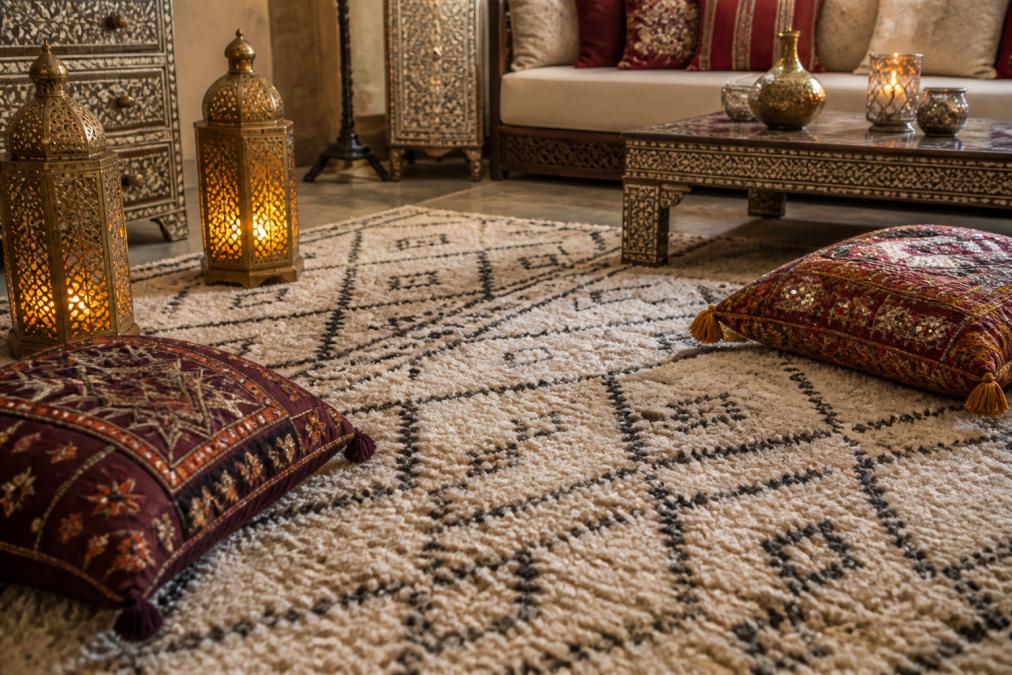
Beni Ourain carpets deserve special attention. Recognizable by cream and black striped patterns with looser knots and higher pile than traditional Berber weaves, they're exceptionally durable and work equally well in minimalist contemporary or maximalist bohemian interiors. A quality Beni Ourain, like the one from Justmorocco at $600, becomes a statement piece.
Sabra silk, made from recycled silk and wool blends, drapes beautifully and catches light in ways pure wool cannot. These textiles work best as wall hangings, throws, or upholstery accents rather than floor rugs, elevating design toward bohemian luxury.
Layering multiple textile pieces creates depth. Rather than one large rug, pair a Beni Ourain base with smaller vintage kilims scattered throughout. This approach adds visual interest and color variation without overwhelming the space.
Moroccan Style Lamp Choices for Luxury Interiors
Moroccan lighting transforms atmosphere through intricate metalwork and colored glass that fragments light into patterns. A moroccan style lamp creates a sensory experience beyond simple illumination.
Brass lanterns with pierced metalwork represent the most iconic choice. These fixtures cast intricate shadows across walls and ceilings, with warm glow filtered through colored glass, typically deep blues, amber, or emerald. Justmorocco's Mamounia clear glass chandelier at $850, handmade in Marrakesh, exemplifies this approach using traditional methods employed for centuries.
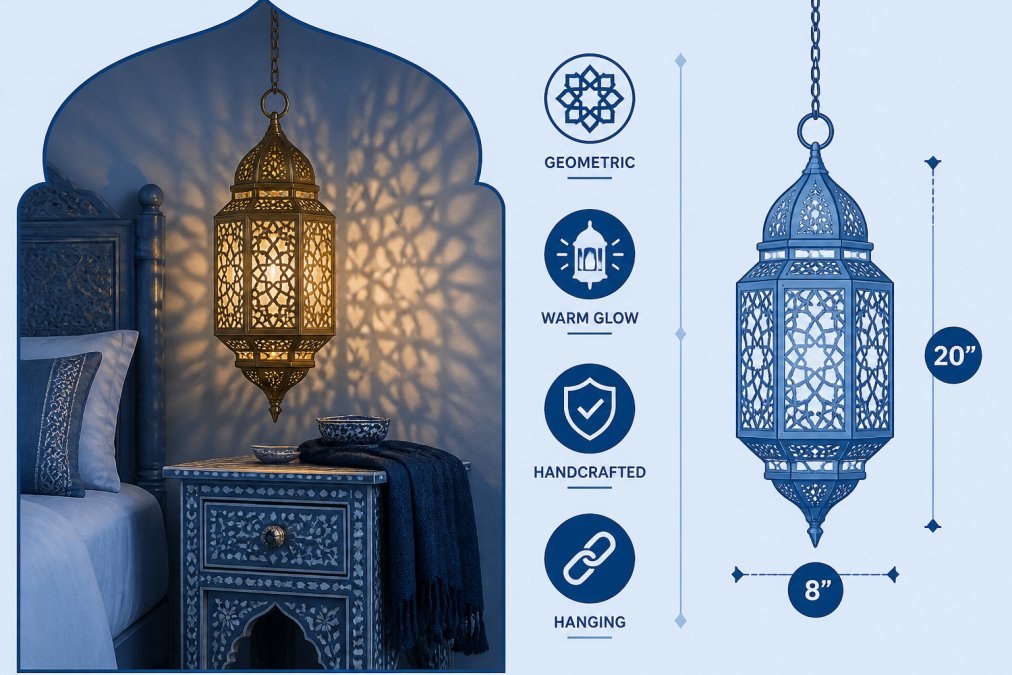
Authentic brass lanterns feature hand-hammered brass with visible tool marks, irregular solder lines, and mouth-blown glass. These imperfections indicate craftsmanship. Mass-produced alternatives prioritize uniformity, resulting in thinner brass and inferior glass.
Placement strategy determines effectiveness. Hanging lanterns work best in entryways, above dining tables, or bedroom corners. Wall-mounted fixtures suit hallways and reading nooks. Position lamps where shadows interact with architectural features, carved screens, textured walls, or fabric drapes to amplify the light-scattering effect.
Warm amber and golden tones align with traditional aesthetics. If integrating moroccan style lamp choices into modern homes, use warm-toned LED bulbs rather than cool whites to respect the traditional aesthetic while maintaining energy efficiency.
Leather Poufs and Low-Profile Seating Arrangements
Moroccan interiors prioritize floor-level living through low-profile seating that encourages conversation and connection to the floor. Leather poufs, soft and versatile, anchor this approach.
Leather poufs serve multiple functions: footrests, extra seating, side tables for tea glasses, and sculptural elements. Moroccan leather, traditionally tanned using vegetable methods, develops rich, aged patinas and becomes more beautiful with use.
Low-profile furniture arrangements work best in rooms with high ceilings, where contrast between vertical space and horizontal seating creates visual drama. Floor cushions layered with geometric patterned fabrics, combined with leather poufs in jewel tones, establish gathering spaces that feel both luxurious and inviting.
Cluster pieces around a central focal point, a mosaic tile table, low-burning brazier, or open floor space, to create intimacy and encourage close conversation. The layout should feel organic and slightly asymmetrical, never rigidly symmetrical.
Layering textures with leather poufs prevents monotony. Pair smooth leather with woven jute, embroidered fabrics, and hand-loomed textiles. The contrast between soft leather and rougher natural fibers creates tactile interest that elevates the entire arrangement.
Geometric Patterns and Zellige Tile Work
Zellige tiles represent mathematical precision underlying Moroccan design. These hand-cut ceramic pieces, arranged in intricate geometric patterns, create visual complexity that rewards close observation. Unlike mass-produced tiles, zellige features slight variations that make each installation unique.
The patterns carry meaning. Star formations reference astronomical knowledge and spiritual concepts. Interlocking geometric shapes symbolize infinity and interconnectedness. Integrating zellige tile work embeds cultural and mathematical sophistication into your physical space.
Zellige appears most effectively in bathrooms, kitchens, and accent walls. A full wall in an entryway creates immediate luxury and intention. Smaller applications, borders around doorways, feature walls, or backsplashes, introduce geometric complexity without demanding dominance.
Deep indigo, terracotta, and cream represent classic combinations. Introducing jewel tones alongside traditional colors creates modern interpretations that respect heritage while asserting contemporary sensibility.
Installation requires skilled craftspeople. Zellige tiles must be cut precisely and arranged with mathematical accuracy. Working with artisans who understand traditional methods ensures authentic proportions and visual harmony. For those seeking authentic zellige installations, custom furniture imports from specialized importers bring traditional zellige craftsmanship to homes across the United States.
A mosaic blue tile table at $650 offers accessible entry into zellige aesthetics, allowing you to test how zellige interacts with existing decor before committing to larger applications.
Color Palettes: Terracotta, Indigo, and Gold Accents
Moroccan color stories draw from regional landscape and cultural heritage. Terracotta references clay-built medinas and desert earth. Deep indigo comes from traditional textile dyes used for centuries. Gold and brass accents echo precious materials historically reserved for royal palaces and sacred spaces.
Terracotta as a primary wall color creates warmth without intensity. Pair terracotta walls with cream or white ceilings to prevent enclosure. The contrast maintains visual balance.
Deep indigo functions as an accent color rather than dominant hue. Used in textiles, painted doors, or feature walls, indigo provides depth and sophistication. This color associates with luxury in Moroccan tradition; indigo dyes were expensive and labor-intensive, making indigo-dyed fabrics status symbols.
Gold and brass accents tie the palette together. Introduce gold through fixtures, hardware, decorative objects, and trim work. A brass-framed mirror, gold-leafed door frames, or brass lantern fixtures create visual connections unifying the color story.
Balance these colors carefully. Let terracotta dominate walls and large surfaces, use indigo as secondary color in textiles and accents, and reserve gold for highlights and fixtures. This hierarchy creates visual rest while maintaining interest.
Warm, amber-toned lighting enhances terracotta and gold while deepening indigo. Cool white lighting flattens all three colors. If integrating these colors into modern homes with bright white lighting, adjust light sources to warm tones or use dimmer switches.
Modern Moroccan Interior Design Ideas for Contemporary Homes
Modern moroccan interior design ideas require extracting essential Moroccan elements and integrating them thoughtfully into contemporary architecture rather than recreating centuries-old riads.
The minimalist-maximalist balance defines successful modern Moroccan spaces. Contemporary homes feature open floor plans, clean lines, and neutral backdrops. Use this architecture as a canvas. Introduce Moroccan elements through carefully curated pieces that stand out against simplicity. A single statement rug, dramatic zellige tile feature, or collection of brass lanterns becomes more powerful when surrounded by restraint.
Respect original architecture rather than imposing Moroccan aesthetics on incompatible spaces. A contemporary loft with exposed brick and industrial ceilings can incorporate Moroccan elements through textiles, lighting, and low-profile seating without structural changes. The contrast between raw industrial elements and refined Moroccan craftsmanship creates compelling visual interest.
Color restraint supports modern integration. Use terracotta or indigo in textiles and accents rather than painting walls. Cream or white walls provide breathing room while Moroccan pieces command attention, preventing the space from feeling themed.
The Silver Palace Sofa from Justmorocco at $1,999 demonstrates how traditional Moroccan craftsmanship, hand-carved details, quality fabrics, silver hamsa artwork, functions in contemporary living rooms. Paired with modern accent chairs and minimalist tables, this piece becomes a focal point without overwhelming.
Modern moroccan interior design ideas embrace functional minimalism. Select pieces serving dual purposes: leather poufs become seating and storage; brass lanterns provide lighting and sculptural interest; textile throws offer warmth and pattern while remaining practical.
Handcrafted Moroccan Home Decor and Artisan Craftsmanship
Handcrafted moroccan home decor represents a fundamentally different category from mass-produced alternatives. Artisan craftsmanship prioritizes quality, longevity, and cultural authenticity over cost reduction.
Every handcrafted piece carries evidence of human creation. Tool marks on brass, irregularities in ceramic glaze, variations in knot tension on rugs, these aren't flaws but signatures of authentic creation. Handcrafted moroccan home decor improves with age rather than deteriorating.
Production timelines differ dramatically from industrial manufacturing. Hand-knotted rugs take weeks or months. Zellige tiles are cut individually. Brass lanterns are hammered and soldered piece by piece. This extended timeline reflects genuine craftsmanship justifying premium pricing.
Justmorocco specializes in sourcing authentic handcrafted moroccan home decor, working directly with artisans in Morocco to ensure rigorous quality standards. This direct relationship eliminates middlemen and supports artisan communities.
Understanding the artisan's role changes how you interact with handcrafted moroccan home decor. Owning a hand-knotted rug supports family weaving traditions. Installing zellige tiles preserves techniques surviving centuries. This cultural connection transforms functional objects into meaningful acquisitions.
Customization possibilities within handcrafted moroccan home decor far exceed mass production. Working with artisans and importers like Justmorocco, you can commission pieces matching specific dimensions, color preferences, and design vision.
Sustainability and Ethical Sourcing in Moroccan Decor
Sustainable moroccan home decor practices begin with understanding where pieces originate and how they're produced. Ethical sourcing means verifying that artisans receive fair compensation, work in safe conditions, and maintain ownership of traditional knowledge and designs.
Many mass-market retailers exploit Moroccan artisans by purchasing pieces at minimal cost while offering no transparency about production conditions or compensation. Choosing ethical sources means paying premium prices that actually reach the people creating pieces.
Natural materials form sustainable moroccan home decor foundations. Wool, leather, clay, brass, and wood are renewable or recyclable resources that biodegrade without environmental toxicity. Authentic materials age beautifully, meaning you're less likely to discard pieces prematurely.
Vegetable-tanned leather represents a sustainable choice for poufs and upholstery. This traditional tanning method uses natural plant compounds rather than chromium salts, producing leather safer for artisans and the environment. The resulting leather develops richer patinas and lasts longer than chrome-tanned alternatives.
Hand-dyed textiles using natural colorants offer sustainability advantages. Indigo derived from plant sources creates traditional deep blues. Madder root produces warm terracottas and reds. These natural dyes are biodegradable and create colors that deepen and shift subtly over time rather than fading uniformly.
Supporting artisan communities through ethical purchasing strengthens cultural preservation. When traditional crafts remain economically viable, younger generations continue learning these skills. Research sources before purchasing. Reputable importers like Justmorocco maintain transparent relationships with artisans and can document production methods and fair-trade practices.
Maintenance and Care for Authentic Moroccan Materials
Authentic moroccan home decor requires specific care practices to preserve quality and longevity.
Hand-knotted rugs need regular vacuuming with low-pile settings. Rotate rugs quarterly to distribute wear evenly. Professional cleaning every 2-3 years prevents dirt accumulation. For spills, blot immediately rather than rubbing. Use minimal water and mild soap for spot cleaning, never harsh chemicals.
Leather poufs benefit from conditioning with natural leather oils every 6-8 months. Use products specifically formulated for leather. Wipe away dust regularly. Address stains quickly before they set.
Brass fixtures develop patina over time, which many consider beautiful. Polish monthly with appropriate brass polish if you prefer brightness. Avoid abrasive scrubbing. Use soft brushes for intricate pierced work.
Zellige tile work needs minimal maintenance beyond regular cleaning with damp cloth and mild soap. Avoid acidic cleaners. Inspect grout lines periodically for deterioration, particularly in bathrooms. Regrouting may be necessary every 5-10 years.
Wooden carved pieces respond well to occasional oiling with furniture oils. Avoid direct sunlight, which fades wood and causes cracking. Maintain consistent humidity levels; extreme fluctuations cause wood to expand and contract.
The sensory dimension of moroccan home decor extends to scent. Authentic Moroccan homes incorporate fragrance through argan oil, cedarwood, rose water, and incense. Burned cedar chips, essential oil diffusers with traditional scents, or fresh flowers create olfactory richness completing the aesthetic experience.
Creating luxury moroccan home decor requires commitment to authenticity and quality over trend-chasing. When you invest in authentic moroccan home decor from ethical sources, you acquire pieces that improve with age while supporting artisan communities and preserving cultural traditions. Start with one statement piece and build your aesthetic intentionally from there.
Frequently Asked Questions
What defines luxury Moroccan interior design?
Luxury Moroccan design combines authentic handcrafted elements with high-quality materials and intentional curation. It features hand-knotted Berber rugs, brass and copper fixtures, zellige tile work, and artisan-made leather poufs. The aesthetic balances maximalist textures with thoughtful color palettes of terracotta, deep indigo, and gold. True luxury lies in sourcing pieces directly from skilled craftspeople, ensuring each item carries genuine cultural authenticity and exceptional workmanship rather than mass-produced imitations.
How do I incorporate authentic Moroccan decor into a modern home?
Start by selecting a few anchor pieces, a handcrafted Moroccan sofa, geometric tile table, or statement brass lantern, rather than filling your space entirely. Layer textures using Berber rugs, floor cushions, and woven wall hangings alongside contemporary furniture. Use warm lighting from a moroccan style lamp to create ambiance. Blend traditional zellige tiles in a kitchen backsplash or bathroom accent wall with minimalist modern cabinetry. The key is treating Moroccan pieces as curated focal points within a contemporary framework, not as a complete thematic takeover.
What materials should I look for in handcrafted moroccan home decor?
Authentic handcrafted Moroccan home decor prioritizes natural, durable materials. Look for hand-knotted wool in Berber rugs, solid brass and copper in lighting fixtures, and hand-cut zellige tiles in mosaics. Leather poufs should feature genuine goat or camel leather. Mother-of-pearl inlays and bone work indicate higher-end pieces. Avoid synthetic alternatives and mass-produced items labeled as artisanal. Genuine handcrafted pieces show slight variations and imperfections, these are marks of authenticity, not flaws. Request sourcing information and craftsmanship details from retailers to verify quality.
How do I maintain Moroccan decor in humid or coastal climates?
Moroccan pieces require specific care in challenging climates. Wool rugs need regular vacuuming and occasional professional cleaning to prevent moisture absorption. Leather poufs should be conditioned quarterly to resist salt air and humidity damage. Brass and copper fixtures require periodic polishing to prevent oxidation from coastal salt spray. Zellige tiles and mosaic surfaces should be sealed to resist moisture penetration. Wooden carved pieces benefit from occasional wood conditioner. In high-humidity areas, ensure proper ventilation around delicate items and consider using dehumidifiers in rooms with mother-of-pearl inlays or bone work to prevent warping.
This article was written using GrandRanker