
Table of Contents
- Luxury Moroccan Furniture for Interior Designers: A Curated Selection
- Feature Comparison Table: Luxury Moroccan Pieces at a Glance
- Handcrafted Moroccan Bedroom Collections: Bone and Pearl Inlay Beds
- Architectural Accents: Hand-Carved Doors and Custom Design Elements
- Custom Moroccan Furniture for Designers: Bespoke Living and Dining Pieces
- Authentic Moroccan Mosaic Tile Fountains and Bathroom Fixtures
- Integrating Moroccan Decor into Modern Interiors: Design Strategies
- Essential Moroccan Materials: Brass, Bone, and Hand-Woven Textiles
- Moroccan Decor Resale Value Tips: Investment in Luxury Design
- How We Evaluate Authenticity and Craftsmanship
- Frequently Asked Questions
Last Updated: September 19, 2026
Luxury Moroccan Furniture for Interior Designers: A Curated Selection
Luxury Moroccan furniture transforms interiors with authentic craftsmanship that commands attention. For interior designers seeking distinctive pieces that elevate client spaces, sourcing authentic Moroccan decor requires understanding both artisanal techniques and material authenticity. At Justmorocco, we curate handcrafted collections that bring genuine North African artistry to high-end residential and commercial projects across the United States.
The challenge isn't finding Moroccan-inspired pieces, it's finding ones that deliver on the promise of authentic craftsmanship. Mass-produced imitations flood the market, leaving designers frustrated by poor quality and questionable provenance. Real luxury Moroccan furniture distinguishes itself through hand-chiseled details, mother-of-pearl and camel bone inlays, and construction methods unchanged for centuries.
This guide covers the essential categories of luxury Moroccan furniture for designers: bedroom collections featuring bone and pearl inlay work, architectural accents like hand-carved doors, custom living and dining pieces with geometric inlay tables, bathroom fixtures with hand-painted pottery vessels, and the integration strategies that make these pieces work in contemporary interiors. We'll also address material durability, resale value considerations, and how to evaluate authenticity when sourcing for high-budget projects.
Feature Comparison Table: Luxury Moroccan Pieces at a Glance
| Piece Type | Primary Materials | Typical Size Range | Best Design Context | Durability Consideration |
|---|---|---|---|---|
| Camel Bone Inlay Beds | Wood, bone, metal | King/Queen | Master bedrooms, luxury hotels | Sensitive to humidity shifts |
| Mother-of-Pearl Beds | Wood, shell, marble, metal | King/Queen | Formal bedrooms, high-end residences | Durable with proper care |
| Hand-Carved Doors | Cedar, forged iron | 95"W x 118"H (or custom) | Grand entryways, feature walls | Extremely durable, architectural-grade |
| Geometric Inlay Tables | Wood, bone, glass top | 36"-48" diameter | Living rooms, dining areas | Glass top protects inlay work |
| Hand-Tooled Desks | Silver metal, wood | 80"W x 58"H | Home offices, studies | Requires dust protection |
| Pottery Vessel Sinks | Ceramic, carved wood | Custom | Master bathrooms, spa-like baths | Hand-painted finish needs gentle care |
| Berber Wool Carpets | Hand-woven wool | 60"-80" | Accent walls, layered floors | Benefits from professional cleaning |
Handcrafted Moroccan Bedroom Collections: Bone and Pearl Inlay Beds
Moroccan bedroom furniture built with bone and pearl inlays represents the pinnacle of artisanal craftsmanship. These pieces take months to complete, with artisans hand-cutting individual bone or shell segments and setting them into geometric patterns across wooden frames. The result is a bed that functions as both functional furniture and sculptural art.
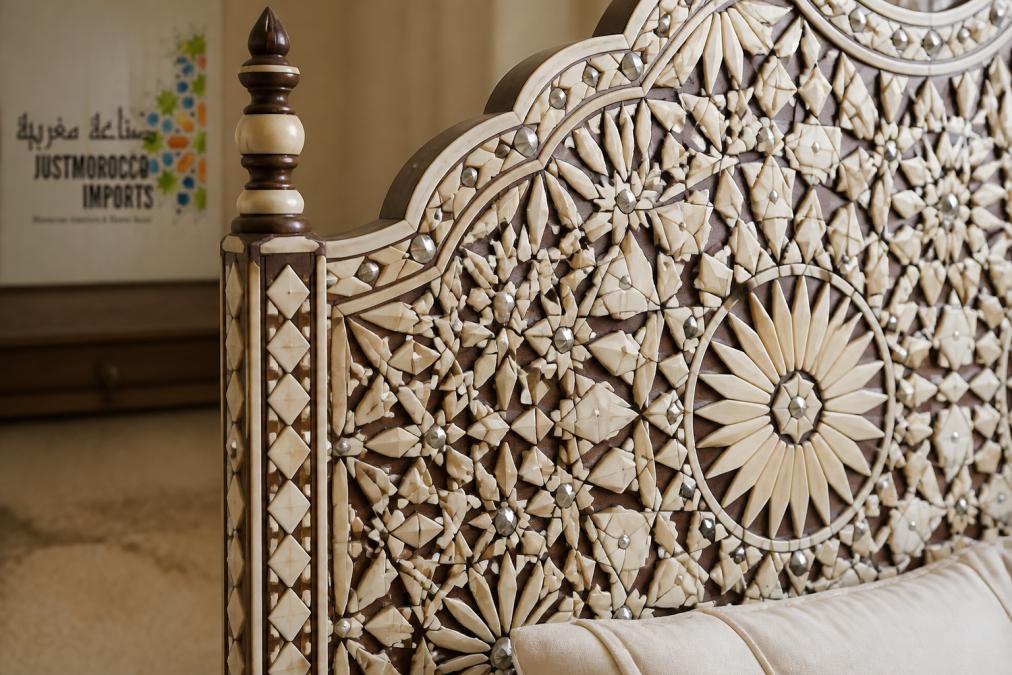
What separates these from mass-produced alternatives is the visible hand-chiseled work. Every joint, every inlay segment, and every metal accent shows evidence of human craft. This isn't aesthetic theater, it's structural integrity built into the piece. Designers working on $200K+ master bedroom remodels find that a single statement bed anchors the entire design direction.
Camel Bone Inlay Beds: Artisanal Craftsmanship in King and Queen Sizes
The Vintage Silver Inlaid Camel Bone Headboard: Moroccan Sultan Bed presents a statement-making option at $4,740, featuring hand-carved bone segments set into wood with silver metal accents. The headboard alone measures 68" tall by 63" wide, substantial enough to define a luxury bedroom without additional wall treatment.
For designers managing larger master suites, the Vintage Camel Bone Inlay King Bed with Nightstands, Moroccan Bedroom Decor at $24,500 includes matching nightstands and represents a complete bedroom anchor. The bed stands 75 inches tall and 91 inches wide, dimensions that require high ceilings and thoughtful spatial planning. This is the piece that justifies the design budget and becomes the focal point clients remember.
Mother of Pearl Inlaid Beds: Syrian Elegance for Luxury Interiors
The Syrian Mother of Pearl Inlaid King Bed Set: Headboard & Nightstands at $16,060 brings Middle Eastern craftsmanship traditions into contemporary bedrooms. The set includes a full headboard and two matching nightstands, creating visual continuity across the bedroom wall.
Mother-of-pearl's reflective quality makes it particularly effective in bedrooms with limited natural light. The inlay work catches ambient lighting and artificial sources, creating depth that bone alone cannot achieve.
Architectural Accents: Hand-Carved Doors and Custom Design Elements
Hand-carved Moroccan doors function as architectural statements, not merely functional entryways. The Authentic Moroccan Hand-Carved Cedar Double Doors - 95" W x 118" H Entryway Panels at $42,000 represent a significant investment, but one that transforms a home's presence from the moment guests arrive.
These doors showcase centuries-old Moorish design principles. Each panel features horseshoe-arched wicket doors (Bab Seghir), geometric star panels, and deeply relief-carved rosettes. The hand-forged iron hardware includes traditional sliding bolts and decorative studs. This isn't decorative veneer, it's solid cedar with authentic hand-chiseled tool marks visible across the surface.
The scale matters. At 118 inches tall and nearly 48 inches per panel, these doors demand architectural consideration. They work best in homes with 10-foot ceilings or higher and in entryways that can accommodate their visual weight. For designers working on high-end residential projects or hospitality installations, these pieces justify their cost through sheer presence.
Placement strategy determines success. Position hand-carved doors as the primary visual anchor for an entryway sequence. Pair with minimal surrounding décor, let the doors command attention. Neutral wall colors (warm whites, soft grays, pale sand tones) allow the geometric carving to remain the focal point.
Custom Moroccan Furniture for Designers: Bespoke Living and Dining Pieces
One-of-a-kind custom pieces solve the problem that ready-made luxury Moroccan furniture cannot: exact dimensional fit and design integration with specific architectural plans. Justmorocco specializes in custom furniture imports, working with designers to adapt traditional patterns and materials to project requirements.
Geometric Inlay Tables with Hand-Chiseled Details
The Eclectic Vintage Moroccan Inlay Table: Bone Silver, Geometric Artwork at $4,630 demonstrates the level of detail achievable in dining and living room centerpieces. This table features hand-cut camel bone set into dark cedar, traditional Islamic geometric star patterns, and hand-hammered silver metalwork. A tempered glass top protects the delicate inlay work while providing a functional dining surface.
What makes this piece work in contemporary interiors is its visual restraint. Unlike heavily ornate Moroccan furniture that can feel dated, geometric inlay tables read as modern sculptural objects when paired with minimal surrounding décor. The TASSTEER pattern, traditional Moroccan decorative technique, creates visual interest without overwhelming the space.
Styling requires intentionality. Place the table in a room with neutral-toned rugs or solid-colored seating. Avoid competing patterns that fragment the visual field. The table's geometric work demands visual silence around it to register fully.
Hand-Tooled Desks and Storage: Moorish Design Meets Function
The Argana Desk at $4,500 brings hand-tooled Moorish design to home offices and studies. Hand-hammered silver metalwork covers the surface, with each detail worked over hundreds of hours by artisans in Marrakesh. The desk measures 80.5 inches wide by 58 inches deep, substantial enough for serious work while remaining visually graceful.
For designers integrating Moroccan luxury furniture into contemporary home offices, hand-tooled desks solve a real problem: most traditional Moroccan pieces lean decorative, not functional. This desk delivers both. The metal surface resists scratching and develops a patina over time that enhances rather than detracts from the design.
Vintage Silver Inlaid Camel Bone →
Storage solutions like the Handcarved Cedar Armoire at $3,800 provide sculptural storage without the bulk of modern cabinetry. Hand-carved from solid cedar with Moorish design details, this piece functions as wardrobe storage or display cabinet. The wood's natural warmth and the carved details create visual interest that built-in closets cannot match.
Authentic Moroccan Mosaic Tile Fountains and Bathroom Fixtures
Bathroom design represents the highest-value opportunity for custom Moroccan luxury furniture. These pieces command premium pricing because they require specialized installation knowledge and material sourcing.
Hand-Painted Pottery Vessel Sinks: Fez Tilework Aesthetics
The Unique Moroccan Bathroom Sink Vanity with Two Pottery Sinks Clay Vessels at $4,200 brings authentic Fez tilework aesthetics to master bathrooms. The vanity features an intricately carved wooden base with lattice artwork, topped with two hand-painted ceramic vessel sinks in blues, yellows, and earthy tones characteristic of traditional Moroccan pottery.
This piece transforms a functional bathroom element into a focal point. The carved wood base echoes traditional Moorish architectural design, creating visual continuity with other custom elements in the home.
Installation requires careful planning. Vessel sinks demand custom countertop work and plumbing adaptation. The hand-painted finish needs gentle cleaning, avoid harsh chemical cleaners that can compromise the glaze. Recommend professional installation by contractors experienced with artisanal fixtures.
Each sink carries the artisan's individual mark. For designers marketing luxury custom bathrooms, this authenticity commands premium pricing from clients seeking irreplaceable pieces.
Integrating Moroccan Decor into Modern Interiors: Design Strategies
Luxury Moroccan furniture for interior designers succeeds when integrated with clear design intent, not scattered randomly through a space. The most common mistake is treating Moroccan pieces as exotic accents rather than structural design anchors.
Start with ONE statement piece. A hand-carved door, a camel bone inlay bed, or a geometric inlay table becomes the design direction for the entire room or sequence of rooms. Every other element, wall color, lighting, secondary furniture, textiles, should support that anchor piece.
Color palettes matter. Moroccan luxury furniture works best against warm neutrals: soft whites, pale sand, warm grays, and muted terracotta. These backgrounds allow geometric patterns and material details to register without visual noise. Avoid cool grays or stark whites that create contrast rather than harmony.
Lighting design amplifies material beauty. Hand-chiseled details and inlay work demand directional lighting that casts shadows and reveals dimensionality. Uplighting on hand-carved doors creates dramatic architectural presence. Soft spotlighting on inlay tables highlights the craftsmanship. Ambient lighting alone flattens these pieces.
Textural layering creates sophistication. Pair geometric inlay tables with hand-woven Moroccan textiles. Layer Berber wool carpets under statement furniture pieces. The Moroccan Berber Wool Carpet | Abstract Wall Hanging Art (80" x 61") at $850 works as both floor covering and wall hanging, introducing color and pattern in a controlled way.
Spacing creates visual breathing room. Moroccan luxury furniture is visually dense, hand-chiseled details, geometric patterns, material complexity. Surround these pieces with visual calm. Minimize competing furniture. Use negative space strategically. The goal is emphasis through contrast, not decoration through accumulation.
Essential Moroccan Materials: Brass, Bone, and Hand-Woven Textiles
Understanding materials determines whether luxury Moroccan furniture for interior designers performs as promised or disappoints over time.
Both materials respond to extreme moisture swings. In coastal properties or humid climates, recommend dehumidifiers in summer and humidifiers in winter to maintain 40-50% relative humidity. Bone shrinks slightly in dry conditions; excessive moisture can cause the wood frame to swell, stressing the inlay work.
Protect brass from harsh chemical cleaners. A soft cloth and occasional light oil maintenance preserve the surface without stripping character.
Hand-woven textiles from Morocco, whether Berber wool carpets or silk accents, benefit from professional cleaning rather than home treatment. Vacuum gently and avoid heavy foot traffic on delicate pieces. The Moroccan Berber Wool Carpet uses mixed wool that responds best to specialized carpet cleaners familiar with handwoven construction.
Avoid direct sunlight exposure that can bleach the wood unevenly.
Moroccan Decor Resale Value Tips: Investment in Luxury Design
Luxury Moroccan furniture for interior designers represents a significant investment, one that clients naturally ask about regarding resale value. The answer is nuanced: authentic, well-maintained pieces appreciate or hold value; mass-produced imitations depreciate sharply.
Authenticity documentation drives resale value. Pieces with provenance, artisan attribution, construction method documentation, material sourcing information, command 20-30% premiums versus similar-looking pieces without documentation.
Vintage Silver Inlaid Camel Bone →
Condition preservation matters more than age. A 50-year-old hand-carved door in excellent condition outvalues a 5-year-old piece showing neglect. Recommend protective measures during installation: careful handling during shipping, professional installation by experienced craftspeople, and documented maintenance protocols for clients.
Market positioning affects resale. Moroccan luxury furniture performs best in high-end markets (coastal properties, urban luxury residences, hospitality properties) where buyers actively seek distinctive design elements. In conservative suburban markets, these pieces may face buyer hesitation despite their quality.
Custom pieces built for specific architectural requirements (doors sized to exact dimensions, tables designed for particular spaces) reduce resale appeal.
Photograph documentation creates value. Maintain professional photos of each piece from multiple angles, with close-ups of craftsmanship details. These images support marketing claims and help future buyers understand what they're acquiring.
How We Evaluate Authenticity and Craftsmanship
Distinguishing authentic luxury Moroccan furniture from mass-produced imitations requires examining specific markers of genuine handwork.
Hand-chiseled details show tool marks, visible evidence of individual hammer or chisel strikes. Machine-carved pieces display uniform, repetitive patterns without variation. Run your hand across carved surfaces: authentic pieces show slight irregularities and varying depths that machine work cannot replicate.
Inlay work authentication focuses on material quality and construction method. Real camel bone and mother-of-pearl are expensive; manufacturers using plastic substitutes are cutting costs, not preserving tradition. Request material samples or close-up photography before committing to large orders.
Joinery reveals construction quality. Authentic Moroccan furniture uses traditional joinery methods, mortise and tenon joints, hand-fitted panels, rather than modern fasteners. Examine underneath tables and inside cabinets where joinery is visible. Quality construction shows in these hidden areas.
Metal work authenticity appears in hand-hammering evidence. Brass and iron pieces should show individual hammer strikes creating subtle surface variation. Uniform, perfectly smooth metal surfaces suggest machine finishing rather than artisanal work.
Wood grain and finish development indicates age and authentic aging processes. Genuine vintage pieces show color variation, natural checking, and patina development that cannot be artificially replicated in new pieces. New handmade pieces show clean wood with minimal aging, which is appropriate, but they should not be misrepresented as vintage.
Documentation and provenance matter more than visual assessment alone. This traceability is what separates authentic luxury furniture from convincing imitations.
Luxury Moroccan furniture for interior designers represents more than aesthetic choice, it's a commitment to authentic craftsmanship and material quality that elevates entire projects. The investment in genuine handcrafted pieces, architectural accents, and custom design solutions distinguishes high-end interiors from standard renovations.
At Justmorocco, we specialize in sourcing and importing authentic luxury Moroccan furniture that meets the exacting standards of professional designers. From camel bone inlay beds and hand-carved doors to custom geometric inlay tables and hand-painted pottery fixtures, our collection brings centuries of Moorish craftsmanship to contemporary spaces. Work with our team to integrate custom Moroccan furniture into your next high-budget project and transform ordinary interiors into distinctive sanctuaries of authentic design.
Frequently Asked Questions
What makes luxury Moroccan furniture authentic and handcrafted?
Authentic luxury Moroccan furniture is distinguished by hand-chiseled details, traditional artisanal techniques, and natural materials like camel bone, mother of pearl, and hammered brass. Each piece shows organic variation and tool marks from skilled craftspeople. Justmorocco's collection features handmade beds with bone and pearl inlays, hand-carved cedar doors with geometric patterns, and hand-tooled desks, all crafted using centuries-old methods that cannot be replicated by mass production.
How can custom Moroccan furniture for designers be tailored to fit specific project requirements?
Custom Moroccan furniture for designers allows you to work directly with artisans on dimensions, materials, and design elements. Justmorocco specializes in bespoke pieces that integrate with architectural plans and design specifications. Whether you need custom kitchen cabinetry, bathroom vanities with hand-painted pottery sinks, or architectural doors in exact dimensions, the team collaborates with your plans to ensure seamless installation and aesthetic alignment with your project vision.
What is the difference between camel bone and mother of pearl inlay in Moroccan furniture?
Camel bone inlay features hand-cut geometric patterns in cream or off-white tones set into dark wood frames, offering a subtle, sophisticated aesthetic. Mother of pearl inlay uses iridescent shell material that reflects light, creating a more luminous, luxurious appearance. Both use traditional TASSTEER and geometric techniques. Camel bone beds start at $4,740, while mother of pearl king sets begin at $16,060.
How does investing in Moroccan decor affect resale value of a luxury home?
Moroccan decor resale value tips emphasize that high-end, authentic pieces appeal to buyers seeking distinctive, curated interiors. Custom architectural elements like hand-carved cedar doors ($42,000) and unique bed sets establish strong focal points that justify premium pricing. However, resale success depends on quality authenticity, professional integration into the overall design, and appeal to the luxury market segment. Pieces that blend Moroccan aesthetics with functional, modern design tend to retain value better than purely decorative items.
What materials should interior designers prioritize when sourcing authentic Moroccan home decor?
Essential Moroccan materials include hand-hammered brass, camel bone, mother of pearl, hand-carved cedar wood, and hand-woven wool textiles. These materials define luxury Moroccan design and ensure durability and authenticity. Justmorocco sources pieces featuring these core materials, from bone-inlaid tables with tempered glass tops to hand-tooled silver mirrors and Berber wool carpets. Prioritizing these materials ensures your designs maintain authentic provenance and withstand the test of time in high-end residential and commercial projects.