
Table of Contents
- Handcrafted Moroccan Decor for Homes: A Complete Guide
- Quick Comparison: Signature Moroccan Pieces by Price
- Authentic Moroccan Furniture: The Foundation of Your Space
- Choosing a Moroccan Style Lamp for Warm Ambient Light
- Handcrafted Mosaic Tile Fountains as Focal Points
- Camel Bone Inlay Tables: A Rare Statement Piece
- How to Verify Authenticity of Handcrafted Moroccan Decor
- Caring for Handcrafted Moroccan Decor in US Climates
- Styling Handcrafted Moroccan Decor for Modern Homes
- Conclusion: Building Your Moroccan-Inspired Home
- Frequently Asked Questions
Last Updated: September 9, 2026
Handcrafted Moroccan Decor for Homes: A Complete Guide
Handcrafted moroccan decor for homes transforms ordinary rooms into layered, textural spaces that feel personal and lived-in. This guide from Justmorocco walks you through the signature pieces that define the look, how to verify their authenticity, and practical ways to care for them in US climates. Whether you are an interior designer sourcing statement furniture or a homeowner adding accents, the key is understanding what separates genuine artisan work from mass-produced imitations.
Authentic Moroccan design is rooted in traditional craftsmanship: hand-cut zellige tile, carved thuya wood, camel bone inlay, and hand-tooled metalwork. These pieces carry cultural heritage and natural imperfections that machine production cannot replicate. Below, we break down the essential categories, what each costs, and how to style them without turning your home into a theme park.
Quick Comparison: Signature Moroccan Pieces by Price
Moroccan decor is not a single purchase; it is a collection built over time. The table below summarizes the signature pieces featured in this guide, their starting prices, and where they work best.
| Piece | Starting Price | Best Use | Sourcing Note |
|---|---|---|---|
| Saediya camel bone side table | $1,200 | Living room accent | Antique, one in stock |
| Moresque brass table lamp | $650 | Warm ambient lighting | Hand-tooled by a master with 65 years of experience |
| Mosaic blue tile table | $650 | Patio or sunroom focal point | Hand-cut Andalusian tilework |
| Moroccan square silver mirror | $290 | Entryway or hallway | Hand-carved metal artwork |
| Garden wall fountain | $4,500 | Courtyard or garden centerpiece | Custom orders available |
| Harouna Kone bed | $2,500 | Master bedroom statement | Hand-tooled silver tin headboard |
| Cordobesa inlay door | $3,200 | Interior room divider or entry | Camel bone and metal inlay |
| Carved cedar ceiling panel | $5,600 | Architectural installation | One of a kind, solid wood |
| Extra large Mecca camel bone table | $13,500 | Grand dining or conference space | Rare antique, air freight shipping |
Authentic Moroccan Furniture: The Foundation of Your Space
Authentic Moroccan furniture is the backbone of this aesthetic, and it goes far beyond accessories. The most coveted pieces are built on solid wood frames and finished with hand-applied inlay work, such as the Saediya side table, a white camel bone piece that is genuinely rare and difficult to source. At $1,200, it is an investment, but one that anchors a corner with texture and history that a mass-produced cabinet cannot match.
For larger spaces, the Extra large Mecca camel bone table at $13,500 serves as a monumental centerpiece. It is a vintage nomad Tuareg table embellished with silver accents and bone carving, measuring 90 inches long. This is not a piece you order twice; it is a one-of-a-kind antique.
Choosing a Moroccan Style Lamp for Warm Ambient Light
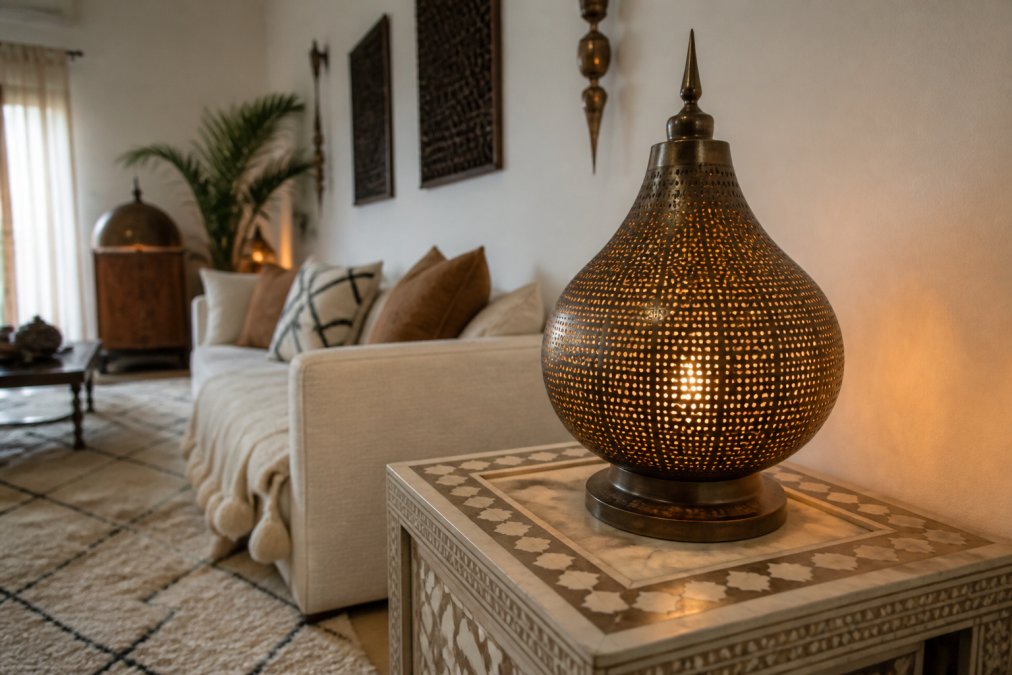
A moroccan style lamp is the quickest way to change a room's atmosphere, casting intricate geometric shadows that instantly read as "Moroccan." The Moresque brass lamp is a prime example, hand-tooled from dark brass by an artisan with nearly 65 years of metalworking experience. At $650, it is priced for the craftsmanship that took weeks to complete, not for mass production.
The key to lighting a Moroccan-inspired room is layering. Use a pierced metal lantern on a side table for low, flickering light, and pair it with recessed ceiling lighting to keep the room functional. Avoid relying on a single overhead fixture, which flattens the shadows that give the space its depth. For a cohesive look, consider matching the lamp's metal finish to other hardware in the room, such as the hand-carved Moroccan square silver mirror at $290.
Handcrafted Mosaic Tile Fountains as Focal Points
Handcrafted mosaic tile fountains bring the sound of water and the visual complexity of zellige into a home, turning a quiet corner into a sensory focal point. The Garden wall fountain is a standout, featuring Andalusian Moorish tile work where every pattern is hand-cut by a team of artisans. At $4,500, this 64-inch by 35-inch piece is designed for spaces that can support its visual weight.
The decision to install a fountain comes down to placement. A wall-mounted design like this one works best in a courtyard, a covered patio, or a grand entryway where the water sound is a feature, not a nuisance. Because these are heavy, custom pieces, shipping quotes are provided based on your zip code, and special orders are available.
Camel Bone Inlay Tables: A Rare Statement Piece
Camel bone inlay tables are the most labor-intensive furniture category in Moroccan craftsmanship, requiring artisans to hand-carve small bone pieces and embed them into a wooden frame. The Mosaic blue tile table offers a different take on this craft, using hand-cut Andalusian tile patterns with a wrought iron base for $650. It is a Mediterranean-Moorish hybrid that suits sunrooms and covered patios.
For a true collector's piece, the Extra large Mecca camel bone table is the pinnacle. Authentic bone inlay feels cool to the touch and has a slight, natural texture with tiny pores or faint grain lines. When styling, treat these tables as sculpture; keep the surface mostly clear to let the geometric patterns and silver accents command attention.
How to Verify Authenticity of Handcrafted Moroccan Decor
Verifying authenticity is the most critical step when investing in handcrafted Moroccan decor, as the market is flooded with factory-made pieces marketed as artisanal. The first test is the touch test: real bone and wood feel cool and have natural texture, while resin and plastic feel warm and smooth. The second is the pattern test, as authentic inlay and zellige show minor asymmetries and variations that are the signature of human hands.
Ask your supplier direct questions about sourcing. Reputable importers should be able to tell you which city or cooperative the piece came from and whether it is newly handmade or vintage. For antique pieces like the Saediya side table, ask for close-up photos of the inlay edges to check for hand-cutting marks. Justmorocco provides detailed close-up imagery for its one-of-a-kind pieces.
Caring for Handcrafted Moroccan Decor in US Climates
US climates pose specific challenges for Moroccan decor, from dry desert heat to humid coastal air. Proper care is not a one-size-fits-all routine; it requires understanding the materials in each piece. This guide details maintenance for the most common handcrafted materials.
Camel Bone and Wood Inlay
Camel bone inlay is sensitive to rapid changes in humidity. In arid states like Arizona or Nevada, the dry air can cause the bone to dry out and crack. To protect your investment:
- Placement: Avoid direct sunlight and proximity to heating vents, fireplaces, or air conditioning units. These create microclimates that accelerate moisture loss.
- Dusting: Use a soft, dry microfiber cloth or a natural-bristle brush to dust weekly. This prevents abrasive particles from scratching the finish.
- Cleaning: Never use water-based cleaners or polishes. Moisture can seep into the seams between the bone and the wood, loosening the adhesive over time. For stubborn dirt, use a slightly damp cloth and dry immediately with a separate soft cloth.
- Conditioning: Once or twice a year, apply a thin layer of natural furniture wax (like beeswax) to the wood portions only, avoiding the bone inlay. This helps seal the wood and maintain its luster.
Brass and Metalwork
Hand-tooled brass and silver-tin pieces, such as the Moresque lamp or the Harouna Kone bed, require different care depending on your local climate.
- In humid states like Florida or Louisiana, salt air and high humidity cause metals to oxidize faster. Wipe metal surfaces weekly with a dry microfiber cloth to remove salt residue and moisture. For tarnish, use a specialized brass cleaner, but test it on an inconspicuous area first to ensure it does not strip the artisan's patina.
- In dry climates, metal is less prone to tarnish but can accumulate dust in intricate carvings. Use a soft brush or compressed air to clean detailed patterns.
- Avoid abrasive pads or harsh chemical cleaners, which can scratch the hand-tooled surfaces and remove the dark, oxidized finish that gives the metal its depth.
Textiles and Rugs
Hand-woven wool rugs and kilims are durable but need regular care to prevent fiber damage.
- Vacuuming: Vacuum gently without a beater bar, which can pull and break the wool fibers. Vacuum in the direction of the weave.
- Rotation: Rotate rugs every six months to ensure even wear, especially in high-traffic areas.
- Spills: Blot spills immediately with a clean, dry cloth. Do not rub. For deeper cleaning, professional rug cleaning is recommended, as home washing machines can felt the wool and ruin the weave.
Maintaining Indoor Humidity
For all handcrafted wood and bone pieces, maintaining a consistent indoor humidity level between 40 and 50 percent is critical. In winter, when heating systems dry out the air, use a humidifier in rooms with significant wood or bone decor. In summer, especially in the Southeast, a dehumidifier will prevent warping and mold growth. A simple hygrometer can help you monitor levels.
By tailoring your care routine to your specific climate and the materials in your home, you protect the craftsmanship and ensure these pieces age gracefully for generations.
Styling Handcrafted Moroccan Decor for Modern Homes
The most common mistake is treating Moroccan decor as a full-room theme. The look works best in modern, minimalist homes when used as a contrast layer. This section focuses on a unique angle rarely covered by competitors: integrating one or two handcrafted pieces into a contemporary, uncluttered space without creating a theme-park effect.
The "One Hero Piece" Rule
Start with a neutral base of white, warm gray, or light beige walls and simple, clean-lined upholstery. Then, introduce a single statement piece that serves as the room's focal point. This could be:
- A Cordobesa inlay door ($3,200) used as a sliding room divider or a dramatic headboard behind a low-profile bed.
- A Carved cedar ceiling panel ($5,600) installed as an architectural accent in a dining room or entryway, paired with minimalist furniture.
- A Mosaic blue tile table ($650) placed against a plain wall in a sunroom or covered patio, letting the intricate tilework stand out.
The key is restraint. If every surface is busy, the craftsmanship gets lost. Let the Moroccan piece be the only ornate element in the room.
Layering Texture, Not Color
Moroccan decor is often associated with vibrant colors, but in a modern home, texture is the more effective tool. Instead of adding colorful cushions or throws, focus on textural contrast:
- A hand-woven kilim rug in a neutral, earthy tone (like undyed wool or muted terracotta) adds warmth to a polished concrete or hardwood floor.
- Woven baskets in natural seagrass or palm leaf provide storage and visual interest without introducing pattern.
- A leather pouf in a dark brown or tan adds a tactile, organic element that contrasts with a sleek leather or linen sofa.
This approach keeps the palette calm while adding the depth and warmth that Moroccan craftsmanship provides.
Modern Lighting Placement
Lighting is where Moroccan decor can shine in a modern setting. Instead of hanging a lantern in the center of the room, which can feel traditional, use it as an accent:
- Place a hand-tooled brass lamp on a floating shelf or a slim console table to cast geometric shadows on a plain wall.
- Use a pierced metal lantern on a bedside table instead of a standard lamp, creating a warm, low-light ambiance that pairs well with crisp white bedding.
- For a more architectural approach, install a Moroccan-style pendant over a kitchen island, but choose a design with a clean, simple silhouette to avoid overwhelming the space.
The "Riad-Inspired" Corner
If you want to commit to a small Moroccan-inspired corner without affecting the rest of the room, create a dedicated reading nook or meditation space:
- Place a camel bone side table next to a low-profile armchair.
- Add a wool cushion in a solid, muted color.
- Hang a hand-carved silver mirror above the chair to reflect light and add depth.
This creates a curated, riad-inspired feel that is intentional and contained, not a maximalist bazaar.
By following these principles, you can incorporate authentic, handcrafted Moroccan pieces into a modern, minimalist home in a way that feels curated and sophisticated, not cluttered or costumed.
Conclusion: Building Your Moroccan-Inspired Home
Sourcing authentic, handcrafted Moroccan decor requires patience and a willingness to invest in quality. The reward is a home filled with pieces that carry stories, support artisan communities, and age gracefully in ways that factory furniture cannot. From the $290 silver mirror to the $13,500 antique bone table, every piece in this guide shares a common thread: it was made by hand, often over weeks, by a master artisan.
At Justmorocco, we import these pieces directly from the souks of Marrakesh to clients across California, Texas, New York, and Florida. Whether you are seeking a single accent lamp or planning a custom kitchen remodel with handcrafted cabinetry, our collection is curated for those who value authenticity over imitation. Explore our custom furniture imports to see how traditional Moroccan artistry can transform your space.
Frequently Asked Questions
What defines handcrafted Moroccan decor and how is it different from mass-produced items?
Handcrafted Moroccan decor is made by artisans using traditional techniques passed down through generations. Unlike mass-produced items, each piece shows minor variations in pattern, subtle color shifts, and organic asymmetries that prove it was made by hand. For example, a camel bone inlay table will have slight differences in the shape of each bone piece. Authentic pieces also use natural materials like camel bone, brass, cedar wood, and wool. Look for these imperfections as signs of genuine craftsmanship, not flaws.
How can I incorporate authentic Moroccan furniture into a modern or minimalist interior?
Start with one statement piece, such as a handcrafted mosaic tile table or an inlaid camel bone side table. Keep the surrounding decor simple with neutral tones and clean lines so the piece stands out. Use a moroccan style lamp to add warm ambient lighting without overwhelming the space. Layer in textural elements like a wool kilim rug or woven baskets. This approach creates a riad-inspired focal point while maintaining a modern, uncluttered feel.
Are handcrafted mosaic tile fountains suitable for outdoor use in US climates?
Handcrafted mosaic tile fountains are built with durable materials and are suitable for covered outdoor areas. For states with freezing winters, you should drain the fountain and cover it during cold months to prevent tile or mortar damage. In humid coastal areas like Florida, the tile work holds up well. With basic seasonal care, these fountains remain a striking focal point for years.
What materials are commonly used in traditional Moroccan home furnishings?
Traditional Moroccan furnishings rely on natural materials: camel bone for inlay work, brass and silver-tin for lamps and mirrors, cedar wood for carved ceilings and doors, wool for kilim rugs, and clay for ceramics. Leather is used for poufs and seating. These materials are chosen for durability and their ability to be worked by hand. The combination of these elements creates the intricate patterns, geometric designs, and vibrant colors that define the Moroccan aesthetic.
How do I care for camel bone inlay furniture to keep it looking its best?
Dust your camel bone inlay pieces regularly with a soft, dry cloth. Avoid harsh chemical cleaners that can damage the bone or resin filling. Wipe spills immediately with a slightly damp cloth and dry the area thoroughly. Keep the furniture out of direct, prolonged sunlight to prevent the bone from yellowing. These simple steps preserve the intricate patterns and natural beauty of the inlay.