
Table of Contents
- What Defines Best Moroccan Style Furniture Brands
- Authentic Moroccan Home Decor: Handcrafted Lighting and Lanterns
- Moroccan Interior Design Tips for Living Rooms and Seating
- Hand-Carved Chairs and Moorish Seating Pieces
- Inlay Furniture and Bone-Accented Benches
- Custom Moroccan Tile Fountains and Architectural Elements
- Moroccan Rugs, Textiles, and Accent Pieces
- Authenticity Verification: How to Spot Real Handcrafted Moroccan Furniture
- Budget vs. Investment: Finding Your Moroccan Furniture Price Point
- Conclusion
What Defines Best Moroccan Style Furniture Brands
When you're searching for authentic Moroccan seatting style furniture brands, you're looking for something beyond mass-produced pieces labeled "bohemian." The best moroccan style furniture brands distinguish themselves through genuine craftsmanship, authentic design heritage, and a commitment to handmade quality that translates directly into how these pieces function in your home.
At Justmorocco, we recognize that the difference between authentic Moroccan furniture and knockoffs comes down to three core elements: the artisans who create the pieces, the materials sourced directly from traditional markets, and the design philosophy that respects centuries of cultural tradition. A true moroccan style furniture brand doesn't simply replicate patterns, it preserves them.
What separates the best from the rest is transparency about sourcing and construction. Authentic pieces use natural materials like cedar wood, bone inlay, leather, and hand-woven textiles. The joinery is done by hand, not machine. The geometric patterns and arabesques aren't printed; they're carved, painted, or inlaid with painstaking precision. When you invest in furniture from a reputable moroccan style furniture brand, you're acquiring pieces that age gracefully and develop character over time, the opposite of trendy decor that feels dated in five years.
This guide covers how to identify authentic moroccan style furniture brands, what makes their pieces worth the investment, and how to integrate these striking designs into contemporary homes, whether you're furnishing a single room or undertaking a full custom kitchen or bathroom remodel.
Authentic Moroccan Home Decor: Handcrafted Lighting and Lanterns
Lighting is the soul of Moroccan interior design. Where many Western interiors treat lighting as purely functional, authentic Moroccan home decor positions lanterns and light fixtures as sculptural elements that define the entire aesthetic of a space.
Handcrafted lighting in the Moroccan tradition uses perforated brass or copper, often combined with colored glass or intricate metalwork. These pieces don't just illuminate; they cast intricate shadow patterns across walls and ceilings, creating an ambiance that shifts throughout the day. The best moroccan style furniture brands understand that a single hanging lantern can anchor an entire room's design language.
Traditional Moroccan lanterns come in several distinct styles. Moorish lanterns feature geometric perforations that create star and diamond patterns when lit. Hanging pendant versions work best over dining areas or entryways, where the shadow play becomes part of the decor. Table lanterns, standing 12 to 24 inches tall, function as both lighting and sculptural accent pieces on side tables or shelves. Wall-mounted sconces bring the same perforated aesthetic to vertical surfaces.
The craftsmanship matters significantly here. Hand-hammered brass develops a patina over time that adds depth and authenticity. Machine-stamped versions look flat by comparison. When evaluating handcrafted lighting from any moroccan style furniture brand, examine the inside of the perforations, hand-work shows slight variations in hole size and spacing, while industrial production shows perfect uniformity.
Moroccan Interior Design Tips for Living Rooms and Seating
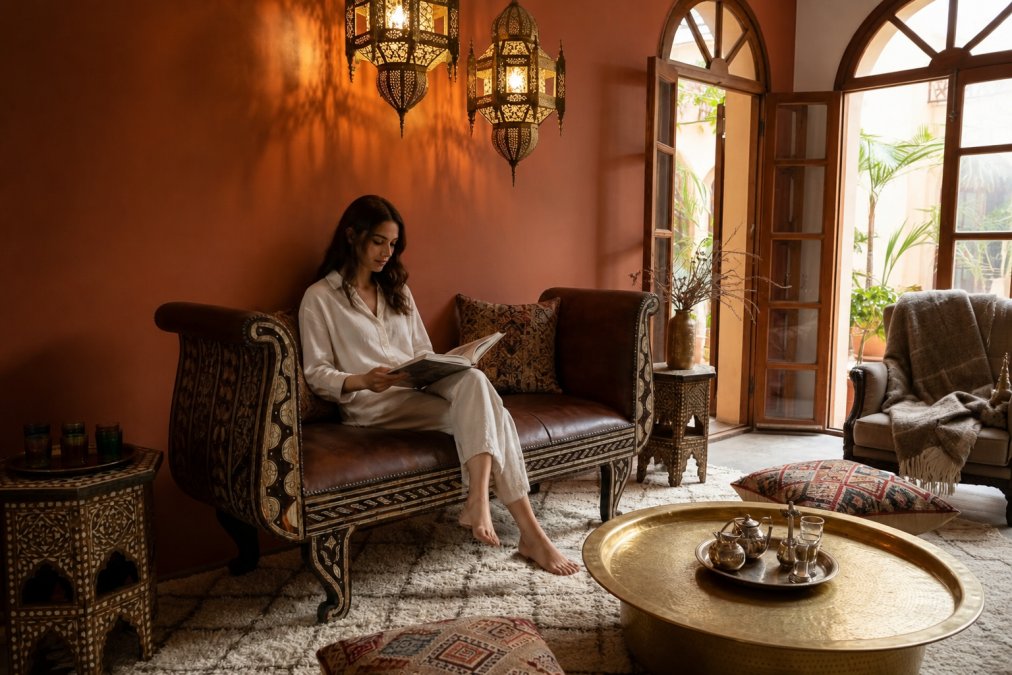
Creating an authentic Moroccan living room requires understanding that this design tradition prioritizes comfort, conversation, and layered textures over minimalist restraint. The best moroccan style furniture brands build pieces that encourage people to sink in, relax, and stay, not perch awkwardly on sculptural statement furniture.
Start with seating as your foundation. A leather Moroccan couch or set of low-profile seating pieces creates the anchor. Moroccan interior design tips consistently emphasize mixing seating heights, pair a substantial sofa with floor cushions, ottomans, and poufs at varying levels. This creates visual interest and functional flexibility. The Traditional Marrakesh Set from Justmorocco exemplifies this approach, combining hand-carved wooden frames with richly patterned textiles and ornate fringe detailing that invites tactile interaction.
Layering textiles is non-negotiable. Moroccan interior design tips stress that authentic spaces use multiple pattern types simultaneously, geometric prints, florals, and solid textures coexist without clashing. The key is maintaining a cohesive color palette. Deep jewel tones (emerald, sapphire, burgundy) paired with warm earth tones (terracotta, ochre, cream) create richness without chaos.
Lighting transforms the entire mood. Overhead brass lanterns cast patterned shadows that change throughout the day. Table lamps with colored glass or pierced metal shades provide ambient light for evening gatherings. The interplay of light and shadow is what makes Moroccan interior design tips so effective, you're not just illuminating a room, you're creating an experience.
Moroccan interior design tips for small living rooms emphasize vertical space. Wall-mounted shelving displaying ceramics, small lanterns, or hand-woven baskets draws the eye upward and creates visual interest without consuming floor space. A room divider or decorative screen can define zones without blocking sightlines entirely.
The Leather Moroccan Couch from Justmorocco brings this philosophy to life with its focus on warmth, intricate details, and inviting proportions. Pair it with layered rugs, stacked floor cushions, and brass lanterns to create a complete Moroccan living room that feels both luxurious and lived-in.
Hand-Carved Chairs and Moorish Seating Pieces
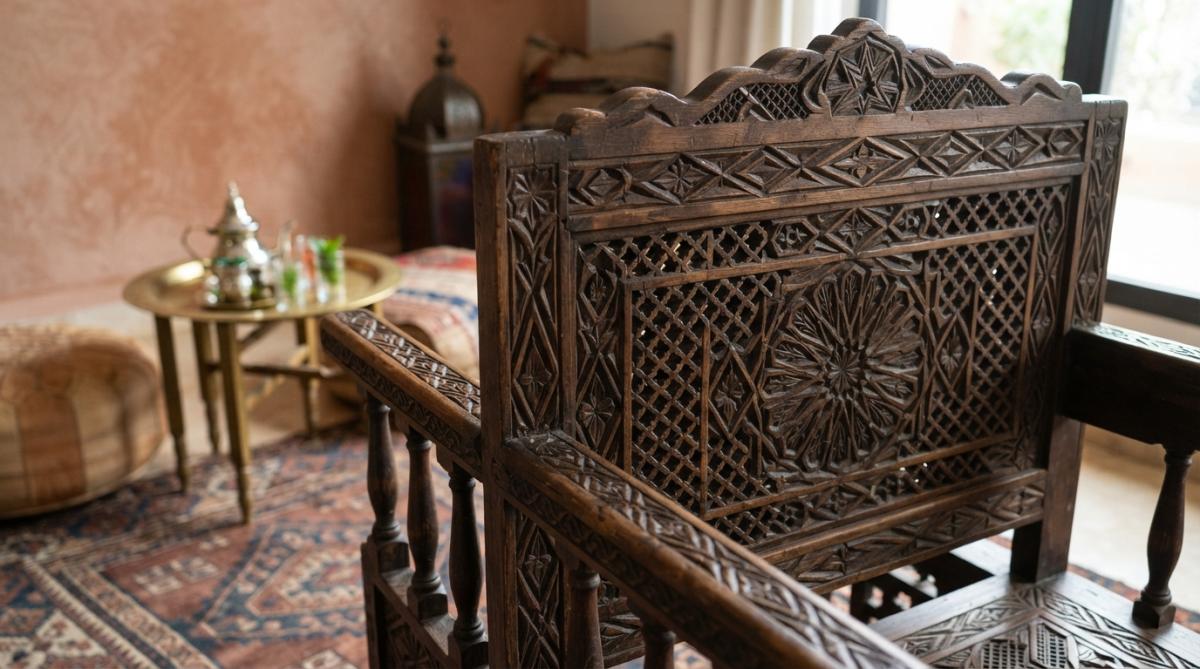
Hand-carved chairs represent the pinnacle of Moroccan furniture craftsmanship. These pieces are functional art, every curve, every geometric pattern, every joinery detail serves both aesthetic and structural purposes rooted in centuries of tradition.
The Moorish chair tradition produces several distinct styles. Lattice-work chairs (mousharabia style) feature intricate geometric cutouts inspired by traditional architectural screens. These pieces are visually striking but require careful placement, the negative space created by the lattice means they work best as accent chairs rather than primary seating. The Palace Chair from Justmorocco exemplifies this approach, with its hand-carved mosharabia detailing and solid cedar construction.
Carved wooden chairs with solid backs and seats offer more comfort for extended sitting while maintaining the sculptural quality. The Touareg Carved Chair combines tribal design elements with ergonomic proportions, making it functional for actual use rather than purely decorative. Hand-carving means each piece shows slight variations, the mark of authentic artisanship rather than factory production.
The wood selection matters enormously. Cedar, acacia, and walnut are traditional choices because they're abundant in North African markets and age beautifully. Cedar develops a rich patina; walnut deepens with time. Machine-sanded surfaces look uniform and sterile; hand-finished pieces show the natural grain variation that gives them character.
Construction details reveal authenticity. Look for mortise-and-tenon joinery (wooden joints without nails or screws), hand-carved details that show tool marks, and finishes applied by hand rather than spray coating. The Moorish Chair from Justmorocco features hand-carved lattice work on all sides, making it a true sculptural piece that looks equally striking from any angle.
When integrating hand-carved chairs into contemporary spaces, use them strategically. A single statement chair in a reading nook or bedroom corner creates focal-point interest. Multiple pieces work in larger rooms with dedicated Moroccan design zones. The key is treating these chairs as functional art rather than casual seating.
Inlay Furniture and Bone-Accented Benches
Inlay work represents the most labor-intensive furniture craftsmanship in the Moroccan tradition. Bone inlay, mother-of-pearl inlay, and metal inlay techniques create surfaces that catch light and draw the eye through their intricate geometric or floral patterns.
Bone inlay involves cutting thin pieces of camel bone or goat bone into precise shapes, then setting them into wooden frames with natural adhesives and hand-finishing. The result is a surface that's simultaneously delicate and durable. Mother-of-pearl inlay uses iridescent shell pieces to create surfaces that shift color depending on lighting and viewing angle. Both techniques require master artisans, production cannot be rushed without sacrificing quality.
The Bone Inlay Bench from Justmorocco demonstrates this craftsmanship at the highest level. At 61.5 inches long with white bone accents set into solid wood and topped with upholstered leather, it functions as both seating and sculptural statement piece. The geometric patterns are traditional Moroccan arabesque designs, each piece of bone hand-cut and individually fitted.
Inlay furniture works best as focal pieces rather than background elements. A bone-inlaid bench at the foot of a bed, a mother-of-pearl side table in a living room corner, or an inlaid cabinet in an entryway creates visual interest and demonstrates appreciation for craftsmanship. These pieces are investment-grade furniture, they appreciate in character with age rather than deteriorating.
Care for inlay furniture requires attention. Avoid direct sunlight on mother-of-pearl pieces, as prolonged UV exposure can fade the iridescence. Bone inlay benefits from occasional conditioning with natural oils to maintain the luster. These pieces are not low-maintenance, but the investment in their care pays dividends in longevity and beauty.
Custom Moroccan Tile Fountains and Architectural Elements
Custom moroccan tile fountains represent the intersection of traditional craftsmanship and functional design. These aren't decorative accessories, they're architectural statements that transform outdoor courtyards, indoor atriums, or spa-like bathroom spaces into immersive Moroccan environments.
Zellige tilework, the traditional technique of hand-cut glazed tiles arranged in geometric patterns, forms the foundation of authentic Moroccan tile fountains. Each tile is cut individually and fitted into place without mortar, creating surfaces that remain flexible and weather-resistant. The glazes are applied by hand, meaning color variation and depth that industrial production cannot replicate.
Custom moroccan tile fountains typically incorporate several design elements: a central basin or basin system, zellige tilework covering the sides and often the floor area, metal fixtures (usually brass or copper), and water circulation systems. The best examples integrate the fountain seamlessly with surrounding architecture rather than treating it as an isolated object.
These pieces work in several contexts. Outdoor courtyards benefit from fountains that provide cooling evaporation and ambient sound. Indoor spaces, particularly bathrooms undergoing custom remodeling, use smaller fountain designs to create spa-like atmospheres. Entryways with dedicated alcoves can feature statement fountains that set the tone for the entire home.
Commissioning a custom moroccan tile fountain requires working with artisans who understand both traditional techniques and modern plumbing requirements. The timeline extends from initial design through tilework completion to final installation and waterproofing. Justmorocco specializes in custom furniture imports and custom kitchen and bathroom remodeling projects that incorporate these architectural elements, ensuring that traditional craftsmanship integrates properly with contemporary building systems.
Moroccan Rugs, Textiles, and Accent Pieces
Moroccan rugs anchor the entire aesthetic of authentic Moroccan interior design. These aren't decorative afterthoughts, they're foundational pieces that define color palettes, establish texture, and create visual grounding for furniture arrangements.
Hand-woven Moroccan rugs come from several distinct traditions. Beni Ourain rugs from the Atlas Mountains feature natural wool in cream and ivory with geometric patterns in deep colors. Azilal rugs use brighter, more saturated colors and often incorporate abstract patterns. Kilim rugs display bold geometric designs with flat weaves. Each style carries regional identity and cultural significance.
The quality markers for authentic moroccan rugs include hand-knotting (visible knots on the back), natural dye variations that create subtle color shifts, and irregular patterns that show human hand rather than mechanical precision. Genuine wool has natural lanolin that creates a subtle sheen; synthetic alternatives look flat and plastic.
Beyond rugs, Moroccan textiles include hand-woven throws, embroidered cushion covers, and tapestries. These pieces layer texture and color throughout a space. The Moroccan salon from Justmorocco, Great moroccan upholstered fabric & silver metal daybed sofa all handmade & unique. A gorgeous moroccan sofa with quality orange fabric Hand tooled silver bench, it brings authentic artisanship directly into your home.
Accent pieces complete the Moroccan aesthetic. Ceramic vessels, brass trays, carved wooden boxes, and woven baskets all contribute to the layered, collected-over-time feeling that defines authentic Moroccan interiors. Rather than purchasing a complete "set," the best approach involves curating individual pieces that speak to you personally.
Authenticity Verification: How to Spot Real Handcrafted Moroccan Furniture
The market contains significant quantities of mass-produced furniture marketed as "Moroccan" or "bohemian" that bears little resemblance to authentic handcrafted pieces. Learning to distinguish genuine articles from imitations protects your investment and ensures you're supporting actual artisans rather than factory operations.
Wood Construction: Examine the grain patterns and joinery. Hand-carved pieces show variations in depth and spacing that reveal individual artisan work. Machine-cut patterns display perfect uniformity. Look underneath furniture for joinery details, mortise-and-tenon joints (wooden pieces fitted together without metal fasteners) indicate traditional construction. Nailed or screwed joints suggest industrial production.
Finish Quality: Run your hand across surfaces. Hand-finished pieces show slight variations in smoothness and finish depth. Spray-applied finishes feel uniformly smooth but lack character. Natural wood finishes develop patina; synthetic finishes remain static.
Inlay Work: If the piece features bone, mother-of-pearl, or metal inlay, examine how pieces fit together. Hand-cut inlay shows slight variations in spacing and fit, this is the signature of individual craftsmanship. Machine-cut inlay displays perfect alignment. Genuine bone inlay has weight and subtle color variation; plastic imitations feel light and uniform.
Paint and Pattern: Hand-painted details show visible brushstrokes and color variations. Printed patterns appear flat and uniform. Geometric patterns should show slight irregularities that prove hand-execution rather than mechanical precision.
Weight and Construction: Authentic Moroccan furniture uses solid wood, genuine leather, and natural textiles. These materials have weight and substance. Lightweight pieces often indicate particle board or MDF cores disguised with veneer. Lift pieces when possible, genuine craftsmanship feels substantial.
Documentation: Reputable moroccan style furniture brands provide artisan attribution, construction photos, and material specifications. Justmorocco includes detailed product descriptions explaining where pieces were made, who created them, and what materials were used. If a seller cannot provide this information, the authenticity is questionable.
Price Reality: Handcrafted Moroccan furniture requires months of artisan labor. Pieces priced significantly below market rates likely involve industrial production or material substitution. The Bone Inlay Bench at $3,600 reflects the genuine labor required for hand-cut bone work and leather upholstery. Lower-priced "similar" pieces typically substitute materials or skip handwork steps.
Budget vs. Investment: Finding Your Moroccan Furniture Price Point
Moroccan furniture spans an enormous price range, from $150 accent pieces to $5,000+ statement furniture. Understanding where your priorities lie helps you allocate budget effectively.
Entry-Level Pieces ($150-$500): These are typically smaller accent items, side tables, decorative screens, or textile pieces. The Marrakech Side Table at $210 represents excellent value for hand-painted wooden furniture with traditional Zouaq artistry. These pieces work as starting points for building a Moroccan aesthetic without major financial commitment.
Mid-Range Seating ($1,250-$3,200): Functional seating pieces like the Touareg Carved Chair ($1,250), Palace Chair ($1,600), Moorish Chair ($1,500), or Leather Moroccan Couch ($3,200) represent significant investments but deliver years of use and character development. These pieces anchor rooms and justify their cost through daily functionality.
Statement Investment Pieces ($3,600+): The Bone Inlay Bench at $3,600 exemplifies investment-grade furniture. These pieces are acquired for specific purposes, a master bedroom focal point, a bathroom remodel centerpiece, or a living room statement that defines the entire aesthetic. They appreciate in character with time and are often passed down as family pieces.
Living Room Sets ($1,650-$2,550): The Marrakech Living Set ($2,550) and Traditional Marrakesh Set ($1,650) offer curated groupings that work together, reducing the guesswork of assembling compatible pieces. These sets establish a complete Moroccan aesthetic for a single room.
The smart approach involves identifying which pieces will be permanent fixtures versus temporary accents. Invest heavily in seating, architectural elements, and foundational pieces that will remain in your home for years. Use budget-friendly accent pieces to complete the aesthetic and allow flexibility for future changes.
Consider the cost-per-use calculation. A $3,200 leather couch used daily for fifteen years costs less per use than a $500 accent chair that sits unused. Conversely, a $200 side table that brings joy to your space every day delivers better value than a $2,000 piece that doesn't align with your actual living patterns.
Conclusion
The best moroccan style furniture brands deliver authentic handcrafted pieces that elevate your space with genuine cultural artistry rather than trendy approximations. From handcrafted lighting and lanterns to bone-inlaid benches and custom tile fountains, these pieces transform houses into sanctuaries.
Justmorocco specializes in sourcing and customizing authentic Moroccan furniture, offering everything from hand-carved chairs and leather couches to custom kitchen and bathroom remodeling with traditional architectural elements. With direct access to master artisans and transparent sourcing practices, Justmorocco ensures every piece meets the standards of authentic craftsmanship. Get started with Justmorocco and bring the timeless elegance of Moroccan design into your home.
Frequently Asked Questions
Q: What defines authentic Moroccan style furniture?
A: Authentic Moroccan style furniture combines handcrafted details with traditional artisanal techniques passed down through generations. Look for hand-carved wood with geometric or floral patterns, bone and mother-of-pearl inlays, intricate lattice work (mousharabia), and natural materials like cedar and leather. Genuine pieces feature vibrant colors, ornate details, and evidence of individual craftsmanship rather than mass production. The best moroccan style furniture brands emphasize these traditional elements while maintaining quality construction that lasts.
Q: How do I identify high-quality handcrafted Moroccan furniture?
A: Quality handcrafted Moroccan furniture shows visible signs of artisan work: slightly irregular patterns (indicating hand-painting or carving), solid wood construction, detailed joinery, and authentic materials like bone inlay and leather. Check for consistent craftsmanship across the piece, smooth finishes on carved elements, and proper weight and stability. Ask sellers for origin details, artisan credentials, and documentation of handmade construction. Reputable brands provide information about where pieces are made and by whom, distinguishing true artisanal work from factory-produced imitations.
Q: What are the most popular Moroccan furniture pieces for modern homes?
A: Popular pieces for contemporary spaces include low-profile leather couches and chaises, hexagonal side tables with hand-painted details, carved wooden chairs with geometric patterns, bone-inlay benches, and room dividers (screens). These pieces work well in modern settings because they function as statement art while providing actual utility. Living room sets with quality fabric and silver accents, along with accent chairs featuring mosharabia lattice work, adapt easily to minimalist or eclectic decor. Moroccan lighting fixtures and textiles also integrate seamlessly into contemporary interiors.
Q: Where can I find custom Moroccan cabinetry and tile work?
A: Custom moroccan tile fountains and architectural elements are available through specialized importers and artisan networks that source directly from craftspeople in Morocco. Look for brands offering custom kitchen and bathroom remodeling services with authentic mosaic tilework, hand-carved cabinetry, and bespoke design consultation. Many premium suppliers work with architects and interior designers to create custom pieces matching your space dimensions and aesthetic vision. Request portfolio examples, timelines, and detailed cost estimates before committing to large projects.
Q: Why is handcrafted Moroccan furniture more expensive than mass-produced alternatives?
A: Handcrafted Moroccan furniture commands premium prices because each piece requires skilled artisans to hand-carve, paint, or inlay details over weeks or months. Master craftspeople invest years learning traditional techniques, and materials like solid cedar, bone, and leather are sourced for quality and authenticity. There is no mass production shortcut for intricate geometric patterns or mosharabia lattice work. Additionally, authentic pieces are often one-of-a-kind or limited production runs, and importing involves quality control, insurance, and shipping costs across distances. The investment reflects genuine artistry and durability that mass-produced items cannot match.