
Table of Contents
- What Personalized Moroccan Design Brings to Your Bedroom
- Key Elements That Define Moroccan Bedroom Style
- Moroccan Bedroom Color Palettes and Psychological Impact
- Handcrafted Moroccan Furniture as Your Bedroom Foundation
- Moroccan Style Lamps and Ambient Lighting Solutions
- Textiles, Layering, and Textural Contrast
- Ornate Mirrors and Expanding Small Bedroom Spaces
- Maintaining Authentic Materials in Your Climate
- Sourcing Ethical and Authentic Pieces
- Transform Your Bedroom Into a Moroccan Sanctuary
Last Updated: August 27, 2026
What Personalized Moroccan Design Brings to Your Bedroom
A bedroom designed with personalized Moroccan elements transforms more than just your walls, it reshapes how you experience rest and rejuvenation. The style combines warmth, texture, and cultural richness in ways that mass-produced décor simply cannot replicate.
Moroccan design bedrooms draw from centuries of artisanal tradition, blending geometric precision with organic comfort. Unlike minimalist approaches that strip away visual interest, this aesthetic layers pattern, color, and craftsmanship to create what many describe as an exotic escape within their own home. The benefits extend beyond aesthetics, the psychological impact of surrounding yourself with intentional, culturally rooted design influences sleep quality, mood, and how you inhabit the space daily.
What makes personalized Moroccan design different is the emphasis on your specific preferences layered onto authentic foundational elements. A generic Moroccan bedroom pulls from a template. A personalized one reflects your color preferences, spatial constraints, and how you actually live. This guide walks you through the key elements that define the style, the psychological power of Moroccan color palettes, and exactly how to source authentic pieces that will endure in your climate.
Key Elements That Define Moroccan Bedroom Style
The foundation of any Moroccan bedroom rests on recognizable visual markers: zellige tiles, geometric patterns, intricate carvings, and archways that evoke the medina-inspired spaces of traditional riads. These aren't decorative afterthoughts, they're structural and visual anchors that signal the entire aesthetic direction.
Understanding these core elements helps you make intentional choices rather than randomly assembling "Moroccan-looking" pieces. Each element serves a purpose, whether functional or psychological, and each can be adapted to fit different room sizes and design budgets.
Zellige Tiles and Geometric Patterns
Zellige tiles represent the mathematical precision underlying Moroccan design. These hand-cut ceramic pieces form intricate geometric patterns that repeat and interlock, creating visual rhythm without chaos. The beauty of zellige lies in its imperfection, each tile is slightly unique, which is precisely why mass-produced imitations fail to capture the authentic feel.
In a bedroom context, zellige doesn't require covering entire walls. Strategic placement transforms the space: a zellige tile border around a mirror, an accent wall behind the bed, or zellige detailing on custom cabinetry creates focal points without overwhelming the room. The geometric patterns themselves have psychological weight, repetitive patterns are calming, which makes them ideal for a space dedicated to rest.
The color palette within zellige varies widely. Traditional pieces feature deep blues, terracotta, white, and earth tones. When selecting zellige for your bedroom, consider how the pattern's visual rhythm will affect your sense of calm. Dense, intricate patterns create richness but can feel busy if overused. Simpler geometric repeats offer visual interest without overstimulation.
Intricate Carvings and Archways
Carved wooden elements, whether full archways, carved headboards, or decorative panels, add sculptural dimension that flat surfaces cannot achieve. These pieces are typically crafted from cedar, known for its durability and subtle fragrance. The carving process is labor-intensive, which is why authentic hand-carved pieces command premium prices and why they're worth the investment.
Archways create visual breaks in the bedroom, suggesting transition between zones without actual walls. A carved wooden archway framing the bed area or defining an entryway establishes architectural interest and draws the eye. Smaller carved elements, door frames, window treatments, or ceiling panels, distribute artisanal detail throughout the room.
The psychological impact of intricate carvings is subtle but real. The eye naturally traces the carved lines, which creates a gentle visual engagement. This is different from stark minimalism, which can feel cold, and different from chaotic maximalism, which can feel overwhelming. Moroccan carvings occupy a middle ground: there's enough visual complexity to engage your attention, but the patterns are orderly enough to feel restful.
:::pro When sourcing carved pieces, examine the depth and precision of the carving. Shallow carvings suggest machine work or inferior craftsmanship. Deep, varied carving lines indicate hand-tool work and authentic artisanal production. :::
Moroccan Bedroom Color Palettes and Psychological Impact
Color selection is where personalization truly matters. While traditional Moroccan design favors warm tones, terracotta, ochre, deep reds, and rich blues, your bedroom's color palette should reflect both cultural authenticity and your personal response to specific hues.
Warm color palettes (terracotta, rust, warm gold, deep burgundy) create coziness and intimacy. These colors trigger psychological associations with earth, sunset, and natural materials. They promote relaxation and are particularly effective in bedrooms because they don't stimulate the nervous system the way cooler or brighter colors can.
Cool-toned Moroccan palettes (deep indigo, teal, jewel-toned blues) offer sophistication and visual depth. These colors feel less immediately warm but create a sense of calm and contemplation. They work particularly well in smaller bedrooms where warm tones might feel claustrophobic.
Neutral foundations (cream, soft beige, warm white) allow geometric patterns and textiles to become the focal points. This approach works if you want Moroccan style without the color intensity. The neutrals provide breathing room, while zellige tiles, carved details, and layered textiles carry the design weight.
The key is intentionality. Choose your primary color palette based on how you want to feel in the space, not just how it looks in inspiration photos. A deep burgundy bedroom creates intimacy but requires careful lighting to avoid feeling dark. A terracotta-based palette feels warm and inviting but can overwhelm if applied to all four walls. Many designers recommend using your chosen warm or cool tone as an accent, with softer neutrals as the base.
Handcrafted Moroccan Furniture as Your Bedroom Foundation
The bed is the anchor. Everything else builds from there. In Moroccan design, the bed isn't hidden, it's celebrated as a sculptural element. The frame itself becomes décor through hand-forged iron work, carved wooden details, or inlaid mother-of-pearl accents.
Authentic Moroccan beds are typically low-profile, which creates visual spaciousness and aligns with traditional design where seating and sleeping areas blend together. This design choice has practical benefits: low furniture makes rooms feel larger, and it's safer (fewer sharp edges at head height).
Choosing an Authentic Moroccan Bed Frame
An authentic Moroccan bed frame should show evidence of hand-craftsmanship. Look for variations in metalwork, uneven spacing in carved details, or slight asymmetries, these indicate human hands made the piece, not machines. Machine-made reproductions have perfect uniformity, which paradoxically makes them look less authentic.
The Casablanca bed from Justmorocco exemplifies this authenticity. Hand-forged in solid iron with moorish wrought iron work throughout the frame, it features an antique black finish and marvelous iron designs, all handmade in Taza, north of Morocco. At $1,600, it represents a genuine investment in a foundational piece that will anchor your bedroom's entire aesthetic.
For those seeking more elaborate craftsmanship, the Moorish bed ($4,200) offers hand-carved cedar construction by master artisans in Marrakesh. The intricate mosharabia carving creates visual texture and cultural authenticity that mass-produced alternatives cannot match. This bed measures 75 inches wide by 72 inches high, making it a substantial sculptural presence in the room.
The Amanjena silver bed ($6,500) represents the pinnacle of artisanal work, solid silver metal construction with m'karbass wooden artwork, entirely handmade in Morocco. This is a one-of-a-kind piece that transforms the bedroom into a gallery space.
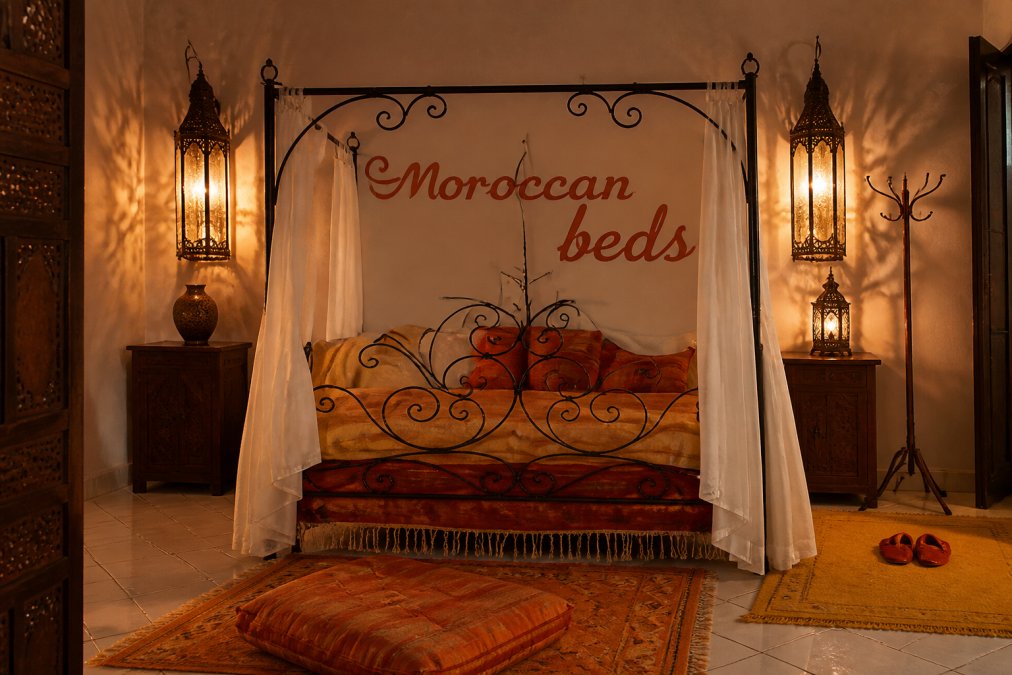
The investment in an authentic bed frame pays dividends. These pieces age beautifully, developing patina and character over years. They're also repairable, a master craftsman can restore a damaged frame, whereas mass-produced furniture typically ends up in a landfill.
Low-Profile Seating and Ottomans
Beyond the bed, Moroccan bedrooms incorporate low seating that doubles as sculptural elements. Ottomans and poufs serve multiple functions: they're footrests, additional seating, and storage. Traditionally stuffed with wool or cotton and covered in hand-woven textiles, these pieces add textural contrast and invite you to inhabit the space more fully.
Low-profile furniture creates visual openness. A room with pieces that sit closer to the ground feels more spacious than one crowded with tall dressers and nightstands. This is particularly valuable in smaller bedrooms where Moroccan design can feel overwhelming if not carefully scaled.
The color and pattern of seating pieces should either echo your bed frame's aesthetic or provide intentional contrast. Matching textiles create harmony; contrasting patterns (geometric against striped, for example) create visual interest without chaos.
Moroccan Style Lamps and Ambient Lighting Solutions
Lighting is where Moroccan design truly comes alive. The style's signature aesthetic relies on warm, diffused light that creates shadows and highlights the textural elements you've layered throughout the room.
Brass lanterns with pierced metalwork are the iconic Moroccan lighting element. When lit, these lanterns cast intricate shadow patterns on walls and ceilings, a dynamic, ever-changing visual experience. Unlike modern recessed lighting that flattens space, Moroccan lamps create depth and movement.
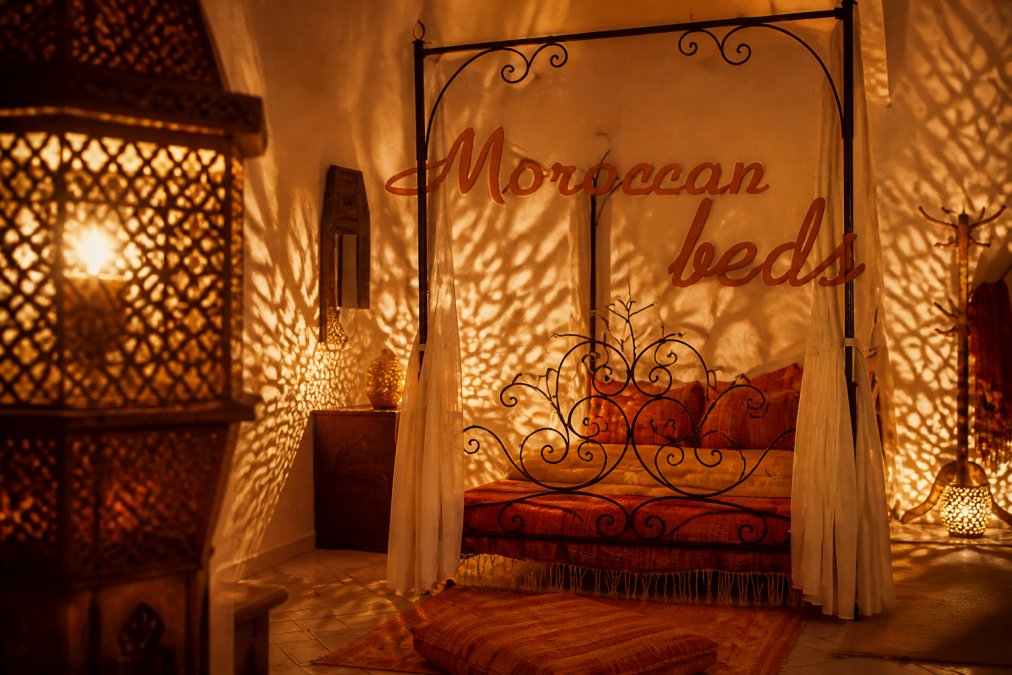
The practical consideration: Moroccan lighting is typically layered. A central brass lantern provides ambient light, while smaller accent lamps on nightstands offer task lighting for reading. This layered approach allows you to adjust the room's mood, full brightness for getting dressed, dimmed for winding down.
Color temperature matters significantly. Warm white bulbs (2700K or lower) align with the Moroccan aesthetic, while cool white (4000K+) breaks the spell. The warm glow complements terracotta, brass, and hand-woven textiles, enhancing the sense of warmth and cultural authenticity.
When selecting moroccan style lamps, prioritize pieces with substantial metalwork and authentic brass or copper construction. Thin, flimsy lanterns look cheap and fail to create the shadow effects that make this lighting approach special. Heavier pieces diffuse light more evenly and develop a beautiful patina over time.
Textiles, Layering, and Textural Contrast
Moroccan bedrooms succeed through textile layering. This isn't about piling on random fabrics, it's about creating textural contrast that engages the eye and hand.
Hand-woven textiles form the foundation. Berber rugs, kilim throws, and embroidered cushions each bring different weave structures, patterns, and tactile qualities. A smooth silk cushion next to a rough wool kilim creates visual and tactile interest. Layering creates depth: a base rug, a runner, and a smaller accent rug at the bedside build visual complexity without feeling chaotic.
The color relationships matter. If your base palette is warm terracotta, introduce jewel-toned textiles (deep indigo, emerald, sapphire) to create contrast. If your base is neutral, patterned textiles carry the design weight. The key is intentionality, each textile should either echo or deliberately contrast with surrounding pieces.
Hand-woven textiles also introduce the element of artisanal imperfection. Slight color variations, inconsistent weave density, and organic pattern irregularities are features, not flaws. These variations signal authentic craftsmanship and create visual richness that perfect uniformity cannot achieve.
Layering extends to bedding itself. A Moroccan bed typically features a substantial base layer (quality mattress and fitted sheet), topped with a decorative throw or blanket, then layered with cushions and pillows in varying sizes. This creates visual abundance and invites you to sink into the space.
Ornate Mirrors and Expanding Small Bedroom Spaces
Mirrors are functional and psychological tools in Moroccan design. An ornate frame transforms a mirror from utilitarian object to sculptural element. Hand-carved wooden frames, brass-inlaid designs, or zellige-tiled borders make mirrors into focal points.
Strategically placed mirrors amplify light and create the illusion of expanded space. A large mirror opposite a window bounces natural light throughout the room. Multiple smaller mirrors at varying heights create visual complexity and reflect the room's layered aesthetic back at you.
The psychological impact of mirrors in Moroccan design is subtle but real. They multiply the room's visual elements, patterns, colors, and textures appear in reflection, creating a sense of abundance and richness. In small bedrooms, this multiplying effect is particularly valuable, making a compact space feel more generous.
When selecting ornate mirrors, prioritize quality frames over mirror size. A large mirror in a thin, cheap frame looks worse than a smaller mirror in a substantial, well-crafted frame. The frame is what makes the mirror feel Moroccan; the mirror itself is secondary.
Maintaining Authentic Materials in Your Climate
Authentic Moroccan pieces, hand-carved cedar, zellige tiles, brass lanterns, hand-woven textiles, require climate awareness. Morocco's climate differs significantly from most US regions, and your bedroom's environment will affect how these materials age.
Hand-carved wood benefits from moderate humidity (30-50%). In very dry climates, wood can crack. In very humid climates (particularly coastal regions), wood can warp or develop mold. Cedar is naturally resistant to both extremes, but awareness matters. If you live in a dry climate, occasional humidification helps. In humid climates, ensure good air circulation and consider a small dehumidifier if needed.
Zellige tiles are extremely durable but require appropriate grout maintenance. In humid bathrooms or bedrooms with poor ventilation, grout can develop mold. Proper installation with quality grout and adequate ventilation prevents this. Tiles themselves are essentially permanent, they improve with age.
Brass and copper lanterns develop patina over time, which many find beautiful. If you prefer to maintain shine, occasional polishing with appropriate brass cleaner preserves brightness. Most owners embrace the patina as evidence of age and authenticity.
Hand-woven textiles require care but aren't fragile. Regular vacuuming (with a gentle setting) removes dust. For deeper cleaning, professional rug cleaning services understand how to handle delicate weaves without damage. Avoid direct sunlight on valuable pieces, as UV exposure fades natural dyes over time.
Sourcing Ethical and Authentic Pieces
The market for "Moroccan design" includes everything from authentic handcrafted pieces to mass-produced imitations. Sourcing ethically means understanding the difference and supporting artisans fairly.
Authentic pieces show evidence of hand-work: slight variations, tool marks, and imperfections that indicate human creation. Machine-made reproductions have perfect uniformity and often use cheaper materials (painted metal instead of brass, printed patterns instead of hand-woven textiles).
Price reflects authenticity and labor. A hand-carved bed frame requires weeks of skilled work. A machine-made reproduction takes hours. The price difference isn't markup, it's the actual cost of artisanal labor. When you purchase authentic pieces, you're supporting Moroccan artisans and preserving traditional craftsmanship.
Research sellers carefully. Justmorocco specializes in custom furniture imports of authentic pieces, which means you're purchasing from a source with direct relationships to Moroccan craftspeople. This transparency matters, you know where your pieces come from and that artisans are compensated fairly.
Ask questions before purchasing. Where was the piece made? Who made it? What materials are used? Legitimate sellers can answer these questions specifically. Vague answers ("handmade in Morocco") or inability to discuss materials suggest lower authenticity.
Transform Your Bedroom Into a Moroccan Sanctuary
Creating a personalized Moroccan bedroom is an intentional process. You're not simply decorating, you're building an environment that supports rest, engages your senses, and connects you to cultural heritage and artisanal tradition.
Start with your anchor piece: an authentic bed frame that reflects your aesthetic and budget. Build from there, layering textiles, lighting, and accessories that create textural contrast and visual richness. Allow your personal color preferences to guide palette choices, knowing that warm tones create intimacy while cool tones create contemplation.
The result is a bedroom that feels like an exotic escape, not because it's unfamiliar, but because it's intentionally designed to support your well-being. Each element serves a purpose, whether functional or psychological. The geometric patterns calm your nervous system. The warm lighting supports natural sleep cycles. The layered textiles invite tactile engagement. The artisanal craftsmanship reminds you that humans made this space with skill and care.
Transforming your bedroom into an authentic Moroccan sanctuary requires pieces that balance cultural integrity with your personal aesthetic. At Justmorocco, we specialize in hand-forged iron beds, hand-carved wooden frames, and custom cabinetry that bring genuine Moroccan craftsmanship to US homes. Our pieces, from the intricate moorish bed designs to custom brass lighting and zellige tile work, are sourced directly from Moroccan artisans and designed for lasting beauty in any climate. Explore our collection of authentic Moroccan bedroom furniture and begin building your personalized sanctuary today.
| Design Element | Best For | Climate Consideration |
|---|---|---|
| Hand-carved cedar pieces | Visual richness and artisanal detail | Moderate humidity (30-50%); protect from extreme dryness |
| Zellige tile accents | Geometric pattern and focal points | Highly durable; requires proper grout maintenance in humid areas |
| Brass lanterns | Ambient lighting and shadow play | Develops patina; occasional polishing maintains shine |
| Hand-woven textiles | Textural contrast and layering | Vacuum gently; professional cleaning for valuable pieces; avoid direct sunlight |
| Low-profile furniture | Spaciousness and visual openness | Cedar resists warping; ensure adequate ventilation in humid climates |
EXTERNAL SOURCES:
Research into Moroccan interior design aesthetics and bedroom personalization draws from multiple authoritative sources. According to the American Society of Interior Designers, personalized design spaces that reflect cultural authenticity and individual preference create measurably higher satisfaction in residential environments. The psychological impact of color and pattern in bedroom design is documented in research from the Journal of Environmental Psychology, which demonstrates that intentional color selection and geometric pattern exposure influence sleep quality and mood regulation. For guidance on maintaining authentic materials in varying climates, the Smithsonian's conservation standards for textiles and wood provide evidence-based care protocols that extend the life of handcrafted pieces in diverse US climates.
===
Frequently Asked Questions
Q: What are the key elements of Moroccan bedroom design?
A: Moroccan bedroom design centers on geometric patterns, warm earth tones, handcrafted furniture, and layered textiles. Essential elements include zellige tiles or tile accents, ornate mirrors, brass lanterns, low-profile seating, intricately carved wood details, and archways. The style blends artisanal craftsmanship with bohemian influences to create a sanctuary that feels both luxurious and inviting. Authentic pieces like hand-woven rugs and mother-of-pearl inlay furniture anchor the aesthetic.
Q: How does personalized Moroccan design improve bedroom ambiance?
A: Personalized Moroccan design elevates ambiance through warm color palettes, textural layering, and strategic lighting. Terracotta, ochre, and jewel tones create psychological comfort and serenity. Brass lanterns and Moroccan style lamps cast ambient shadows that soften the space, while hand-woven textiles add tactile warmth. Custom elements tailored to your space, whether ornate mirrors to expand small rooms or bespoke cabinetry, make the room feel intentional and intimate, transforming it into a personal escape.
Q: Can Moroccan design work in small bedroom spaces?
A: Yes. Small bedrooms benefit from Moroccan design through strategic use of ornate mirrors to visually expand the space, vertical archways to draw the eye upward, and low-profile furniture like poufs and ottomans that don't overwhelm the room. Layered rugs and textiles add depth without consuming floor space. Handcrafted Moroccan furniture in smaller scales, compact beds, wall-mounted shelving with geometric carvings, and pendant lanterns, allow you to embrace the aesthetic while maintaining functionality in tight quarters.
Q: How do I care for authentic Moroccan materials like mother-of-pearl inlay and zellige tiles?
A: Authentic Moroccan pieces require gentle maintenance. Dust hand-carved wood and mother-of-pearl inlay furniture with soft, dry cloths; avoid harsh chemicals that can damage artisanal finishes. For zellige tiles or tile accents, use pH-neutral cleaners and avoid acidic substances. In humid climates, ensure proper ventilation to prevent moisture damage to wooden pieces. Brass lanterns benefit from occasional gentle polishing. High-humidity environments like coastal areas may require climate-controlled storage or protective finishes. Justmorocco's custom imports are designed for durability, but proper care extends their lifespan significantly.