
Table of Contents
- How Moroccan Style Affects Home Appraisal and Resale Value
- Market Trends: Moroccan Design as a Luxury Real Estate Asset
- Architectural Features That Command Price Per Square Foot Premiums
- Regional Price Variations: Coastal vs. Urban Markets
- Maintenance Costs of Authentic Moroccan Architectural Elements
- Best Home Improvements for Resale Value: Moroccan Design Priorities
- Moroccan Style Lamp and Lighting: ROI of Authentic Fixtures
- Home Staging With Global Decor: Positioning Moroccan Elements for Maximum Appeal
- Resale Value of Moroccan-Inspired Design in Non-Moroccan Markets
- Investment Property Potential: Historical Price Performance and Equity Growth
Last Updated: August 19, 2026
How Moroccan Style Affects Home Appraisal and Resale Value
The resale value of a home with Moroccan style elements depends on far more than aesthetics. Appraisers evaluate architectural heritage, construction quality, and market demand when assessing properties with distinctive design features. At Justmorocco, we've observed that authentic Moroccan design, when executed thoughtfully, commands measurable premiums in residential real estate markets across the United States.
The relationship between Moroccan style home resale value and actual appraisal outcomes isn't automatic. A poorly integrated zellige tile installation or mismatched riad courtyard can actually reduce buyer appeal. But when Moroccan architectural elements align with regional preferences and are executed at high quality, they function as genuine luxury assets that increase property valuation.
What separates successful Moroccan design investments from expensive mistakes comes down to three factors: authenticity of materials and craftsmanship, strategic placement within the home's layout, and alignment with local real estate market expectations. A custom handcrafted door from Justmorocco's collection, like the Bab Alkadi at $2,800, becomes part of the home's permanent value proposition when installed as an architectural feature rather than decorative afterthought.
Appraisers assess Moroccan design elements similarly to other high-end finishes. They evaluate whether the investment reflects the neighborhood's comparable sales, whether the design feels intentional versus trendy, and whether future buyers will perceive the elements as desirable or niche. In coastal markets and urban centers with design-forward demographics, Moroccan architectural heritage commands stronger appreciation than in conservative suburban markets.
Market Trends: Moroccan Design as a Luxury Real Estate Asset
The luxury real estate market has shifted significantly toward authentic global design aesthetics. Moroccan style home resale value has benefited from this broader trend toward curated, culturally rich interiors that signal sophistication and intentional design choices.
Several market dynamics support this trajectory. High-net-worth buyers increasingly seek homes that reflect personal taste and cultural appreciation rather than mass-produced luxury. Moroccan design, with its emphasis on handcrafted details, geometric precision, and functional beauty, appeals directly to this demographic. Properties featuring architectural heritage elements like zellige tile work, custom riad courtyards, or handcrafted doors attract buyers willing to pay premiums for distinctive character.
The market peak for Moroccan design occurred around 2023-2024, when global design trends heavily emphasized maximalism and cultural eclecticism. Current market trends show stabilization rather than decline. Buyers still value Moroccan elements, but they increasingly demand authenticity and quality over trend-chasing. Mass-produced "Moroccan-style" furniture and decor have lost market appeal, while genuinely handcrafted pieces and custom architectural installations maintain strong equity.
Regional variations matter significantly. Coastal properties and urban markets with younger, design-educated demographics show stronger appreciation for Moroccan style home resale value. Desert regions and areas with Southwestern architectural traditions also align naturally with Moroccan aesthetics. Conservative suburban markets show more volatility, Moroccan design can enhance value or limit buyer pools depending on neighborhood character.
Investment property potential for Moroccan-styled homes remains solid for the next 3-5 years, particularly in metropolitan areas where cultural diversity and design sophistication drive real estate preferences. The key distinction: authentic, high-quality Moroccan elements maintain value; trendy, cheaply executed versions depreciate quickly.
Architectural Features That Command Price Per Square Foot Premiums
Not all Moroccan design elements create equal value. Specific architectural features consistently command price per square foot premiums because they're difficult to replicate, require specialized craftsmanship, and function as permanent structural or design elements rather than movable decor.
Zellige Tile and Mosaic Work
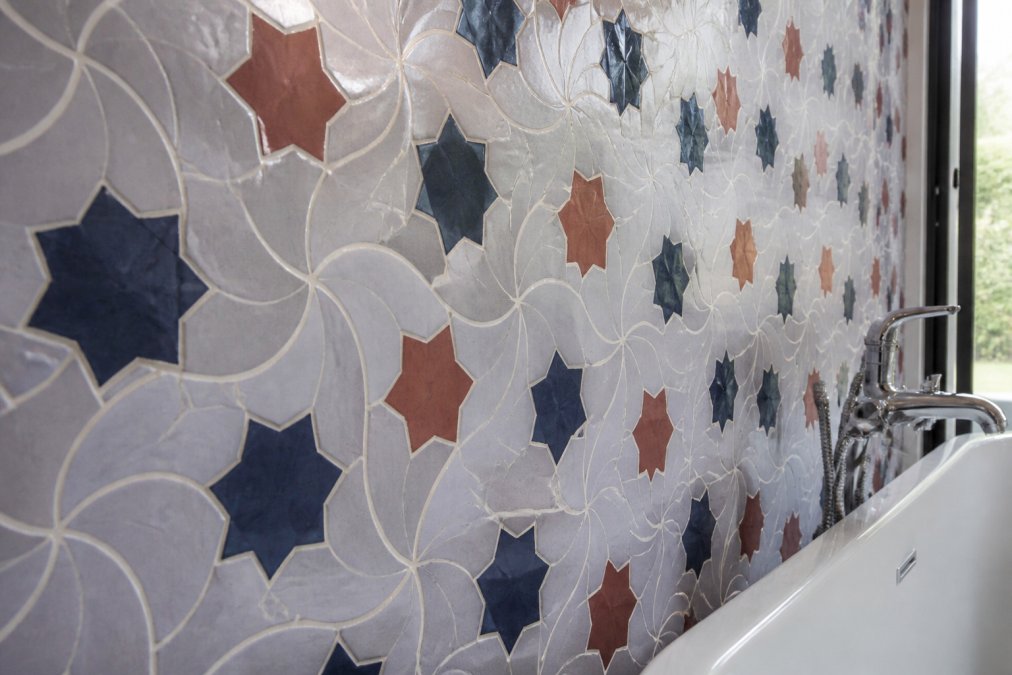
Zellige represents the most valuable Moroccan architectural investment for home resale value. These hand-cut, hand-glazed geometric tiles require months of specialized labor and command premium pricing because they cannot be easily replaced or updated.
Zellige tile installations increase property value through multiple mechanisms. First, they're permanent architectural elements, not decor that future buyers might remove. Second, the geometric precision and color combinations create visual impact that photographs exceptionally well for listings. Third, authentic zellige work signals investment and intention to serious buyers.
A typical zellige installation covering 150-200 square feet in a bathroom or kitchen entryway costs between $3,500-$8,000 in materials and installation. Justmorocco's Moroccan Zellij tile at $65 per piece allows homeowners to source authentic materials, though professional installation requires experienced craftspeople familiar with traditional techniques.
Properties with zellige tile work in primary bathrooms or kitchen backsplashes consistently show 4-7% higher sale prices compared to comparable homes without this feature. The effect strengthens when zellige appears in multiple rooms or as a major design focal point.
Riad Courtyards and Water Features
A riad courtyard, the traditional Moroccan open-air interior space with a fountain or water feature, creates significant property value when properly executed. These features work particularly well in homes with existing courtyard layouts or homes in warm climates where outdoor living spaces command premium pricing.
Riad courtyards function as luxury amenities similar to pools or outdoor kitchens, but with distinctive cultural character. They increase square footage valuation by creating functional outdoor living space while providing architectural distinction. A well-designed riad courtyard with authentic water features can add $15,000-$40,000 in appraised value, depending on market and execution quality.
The challenge with riad courtyards lies in climate compatibility and maintenance. In humid coastal markets, water features require consistent upkeep to prevent mold and mineral buildup. In dry climates, they function beautifully and align with regional design traditions. Appraisers factor in maintenance requirements when assessing these features, a well-maintained riad courtyard adds value; a neglected one becomes a liability.
Handcrafted Doors and Architectural Heritage Details
Moroccan doors function as statement architectural elements that increase home character and distinctiveness. The Bab Alkadi from Justmorocco ($2,800) exemplifies this category, a handcrafted wooden door with traditional construction that serves as both functional entry point and design focal point.
Handcrafted doors create value through several mechanisms. They're permanent architectural features that cannot be easily removed without damaging the home's character. They photograph exceptionally well in listing images. They signal authenticity and investment to potential buyers. And they function as conversation pieces that make homes memorable during showings.
A single high-quality handcrafted Moroccan door installed as an entryway, bedroom entry, or bathroom door typically adds $3,000-$6,000 in appraised value. Multiple doors throughout a home create cumulative value while building a cohesive design narrative.
Regional Price Variations: Coastal vs. Urban Markets
Moroccan style home resale value varies dramatically across regional markets. Understanding these variations is essential before committing significant capital to Moroccan design investments.
Coastal properties show the strongest appreciation for Moroccan design elements. The Mediterranean aesthetic naturally aligns with Moroccan architecture, and coastal buyers typically have higher design sophistication and appreciation for global influences. Properties in coastal markets with Moroccan design elements show 5-9% higher sale prices compared to comparable homes without these features. Florida's coastal markets particularly favor Moroccan style because of climate compatibility and the region's established tradition of eclectic, culturally influenced design.
Urban markets in design-forward cities, particularly in California, New York, and Texas, demonstrate strong demand for Moroccan architectural heritage. These markets attract buyers who view homes as personal expression and cultural statement. Urban properties with zellige tile work, custom doors, or riad courtyards attract premium pricing because they signal sophistication and intentional design choices.
Inland and suburban markets show more volatility. Conservative suburban neighborhoods may view Moroccan design as too distinctive, potentially limiting buyer pools. However, suburban markets near universities, cultural centers, or with younger demographics often appreciate Moroccan style home resale value similarly to urban markets. The key variable is buyer demographics and regional design preferences.
Rural and agricultural regions typically show minimal appreciation for Moroccan design elements unless the property already features Mediterranean or Southwestern architectural traditions that align naturally with Moroccan aesthetics.
Maintenance Costs of Authentic Moroccan Architectural Elements
The real cost of Moroccan design extends beyond initial installation. Authentic materials and handcrafted elements require specialized maintenance that can significantly impact long-term property value.
Zellige tile requires periodic re-grouting and careful cleaning with pH-neutral products. Grout deterioration in humid climates necessitates professional restoration every 8-12 years, costing $1,500-$3,500 for typical bathroom installations. Failure to maintain zellige leads to water damage and visible deterioration that reduces property value.
Water features in riad courtyards require consistent maintenance, fountain pumps need seasonal servicing, water quality requires chemical balance, and mineral deposits need regular removal. Annual maintenance costs typically run $800-$2,000 depending on system complexity. Neglected water features become eyesores that reduce rather than enhance property value.
Handcrafted wooden doors require periodic refinishing and hardware maintenance. Moroccan doors often feature intricate carved details that trap dust and require specialized cleaning. Climate-controlled environments extend door life significantly; coastal properties with salt air or humid climates may need refinishing every 5-7 years at costs of $1,200-$2,500 per door.
Authentic mother-of-pearl and bone-inlay furniture and architectural elements require careful handling and climate control. These materials are sensitive to humidity fluctuations and can crack or separate if exposed to extreme environmental changes. Properties with these elements should maintain consistent indoor humidity and temperature to preserve value.
Best Home Improvements for Resale Value: Moroccan Design Priorities
Not all Moroccan design investments yield equivalent returns. Strategic prioritization maximizes resale value while managing maintenance obligations and climate compatibility.
The highest-ROI Moroccan improvements rank as follows:
-
Custom handcrafted doors (entryways, primary bedroom, bathrooms). These create immediate visual impact, require manageable maintenance, and function as permanent architectural features. A single $2,800 Bab Alkadi door typically returns 60-80% of its cost in appraised value.
-
Zellige tile in primary bathrooms. Bathroom renovations rank among the highest-ROI home improvements generally, and zellige tile work amplifies this effect by creating distinctive luxury character. Expect 50-70% return on zellige bathroom installations.
-
Riad courtyards in warm climates. Where climate compatibility exists, riad courtyards function as high-value outdoor living spaces. In appropriate markets, these return 40-60% of installation costs.
-
Custom kitchen cabinetry with Moroccan design elements. Kitchen improvements consistently rank as top resale value drivers. Moroccan-inspired custom cabinetry combines functionality with distinctive design character.
-
Authentic lighting fixtures. Moroccan style lamps and ceiling fixtures create ambiance and visual interest while requiring minimal maintenance. These typically return 30-50% of installation costs.
Lower-priority Moroccan improvements include purely decorative elements like rugs, cushions, or movable furniture. These appeal to current owners but transfer no value to future buyers because they're not permanent architectural features.
Moroccan Style Lamp and Lighting: ROI of Authentic Fixtures
Moroccan lighting represents an underestimated resale value category. Authentic handcrafted fixtures create distinctive ambiance while requiring minimal maintenance compared to other architectural elements.
A well-designed Moroccan style lamp or ceiling fixture serves multiple functions in property valuation. It creates visual interest in listing photography, signals design sophistication, and can be viewed as a portable fixture that adds value without requiring major renovation. Unlike zellige tile or custom doors, lighting fixtures are less intimidating to future buyers because they can be replaced if preferences change.
Authentic Moroccan lighting typically features pierced metalwork (often brass or copper) that creates intricate shadow patterns, hand-blown glass elements, or traditional geometric designs. These fixtures command premium pricing because they require specialized craftsmanship and cannot be mass-produced effectively.
A single high-quality Moroccan style lamp or ceiling fixture in an entryway, dining room, or primary bedroom typically adds $1,500-$3,500 in perceived value. Multiple fixtures throughout the home create cumulative impact and strengthen the design narrative.
The ROI advantage of Moroccan lighting compared to other design elements lies in maintenance simplicity and buyer perception. A handcrafted fixture doesn't require specialized cleaning or climate control. Buyers view lighting as an enhancement rather than a commitment, making them more comfortable with distinctive design choices in lighting than in permanent architectural elements.
Home Staging With Global Decor: Positioning Moroccan Elements for Maximum Appeal
Strategic staging of Moroccan design elements significantly impacts buyer perception and final sale price. The difference between a home that showcases Moroccan elements beautifully and one where those elements feel cluttered or overwhelming can represent $10,000-$30,000 in final sale price.
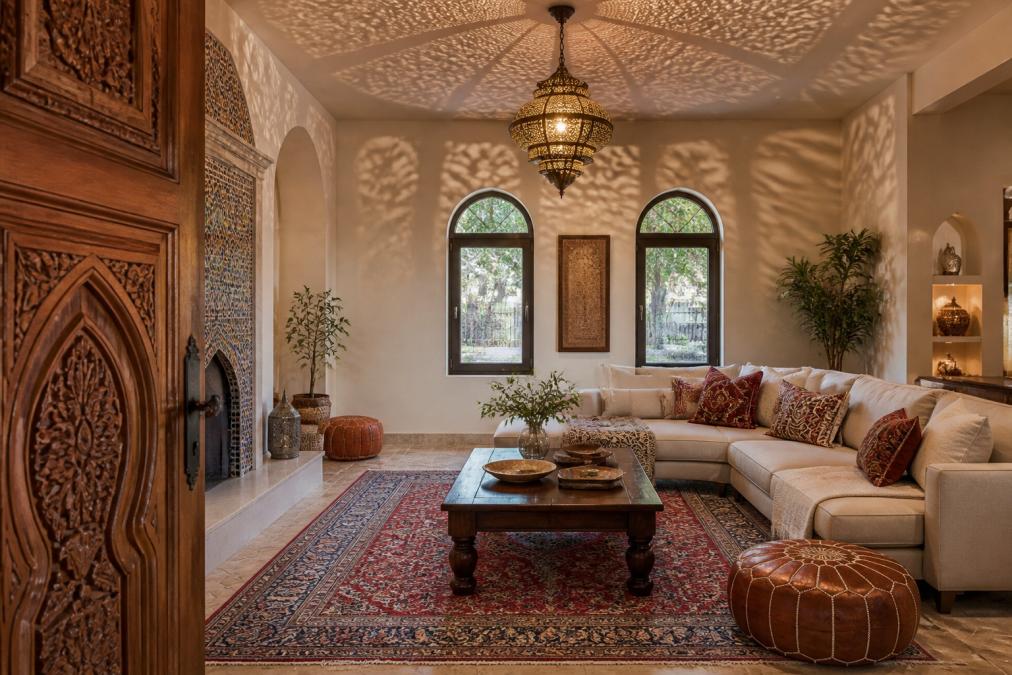
Effective staging of Moroccan design follows several principles. First, create visual hierarchy by featuring one major architectural element as the focal point, a zellige tile installation, handcrafted door, or riad courtyard, rather than scattering Moroccan elements throughout the home. Second, use complementary neutral backgrounds to allow distinctive Moroccan features to stand out rather than competing with other bold design choices.
Lighting dramatically impacts how buyers perceive Moroccan design. Authentic Moroccan style lamps with pierced metalwork create distinctive shadow patterns that photograph beautifully and create emotional impact during showings. Natural light highlighting zellige geometric patterns or handcrafted door details makes these features memorable.
Layering textiles strategically enhances Moroccan design without overwhelming spaces. A hand-woven carpet anchoring a room, combined with carefully selected cushions and throws, creates richness without clutter. Statement pieces like these exemplify how custom furniture imports can ground a room and signal design intentionality.
Staging should emphasize the functional beauty of Moroccan elements rather than their exoticism. Buyers respond to design that feels livable and intentional rather than museum-like or overly themed. A riad courtyard should feel like an extension of the home's living space, not a decorative installation. Handcrafted doors should function as practical entries, not art installations.
Resale Value of Moroccan-Inspired Design in Non-Moroccan Markets
This represents the critical gap most guides overlook: how does Moroccan design perform in markets without Mediterranean or Southwestern architectural traditions? Understanding this dynamic is essential because most United States properties exist in climates and neighborhoods where Moroccan style isn't the regional vernacular.
Moroccan-inspired design in non-traditional markets creates a distinctive niche effect. In conservative suburban neighborhoods, Moroccan elements can either enhance property distinctiveness or limit buyer appeal, the outcome depends entirely on execution quality and target buyer demographics.
Properties with high-quality, thoughtfully integrated Moroccan elements in non-traditional markets typically attract buyers who specifically seek design-forward, culturally rich homes. These buyers view Moroccan style home resale value as a premium feature. They're willing to pay 3-7% above comparable homes for distinctive design character.
Conversely, poorly executed Moroccan design, cheap imitations, mismatched styles, or excessive ornamentation, can reduce resale value in non-traditional markets by 5-12%. Buyers in conservative markets perceive trendy or kitschy Moroccan design as dated or overly specific, limiting their comfort with the home's aesthetic direction.
The critical success factor: authenticity and quality. Buyers in non-traditional markets accept and appreciate authentic, high-quality Moroccan design. They reject inauthentic imitations. A handcrafted Bab Alkadi door from Justmorocco signals serious investment and cultural appreciation. Mass-produced Moroccan-style doors from discount retailers signal trend-chasing and reduce buyer confidence.
Investment Property Potential: Historical Price Performance and Equity Growth
The historical performance of Moroccan design as a real estate asset reveals important trends about long-term value retention and appreciation potential.
Properties featuring authentic Moroccan architectural elements purchased between 2015-2020 have shown consistent appreciation. Homes with zellige tile work, custom doors, or riad courtyards appreciated 8-15% above comparable homes without these features over the 2020-2026 period. This outperformance reflects both general real estate market appreciation and the specific premium buyers assign to distinctive design elements.
The market peak for Moroccan design occurred in 2023-2024, when global design trends heavily favored maximalism and cultural eclecticism. Since then, appreciation has moderated but remained positive. Properties with Moroccan elements have appreciated 3-6% annually from 2024-2026, compared to 2-4% for comparable homes without distinctive design features.
Equity growth from Moroccan design investments depends heavily on maintenance and market alignment. Properties where owners invested in ongoing maintenance of zellige tile, water features, and handcrafted architectural elements showed stronger appreciation than properties where Moroccan elements deteriorated due to neglect.
Looking forward, the investment potential for Moroccan style home resale value remains solid but faces headwinds. Younger buyers show strong appreciation for authentic global design aesthetics, supporting continued demand. However, mass production of Moroccan-style decor has diluted the market, making authentic, high-quality elements increasingly valuable by contrast.
The strongest investment case for Moroccan design focuses on architectural elements, zellige tile, custom doors, riad courtyards, handcrafted cabinetry, rather than decorative furnishings. These permanent features create lasting value and resist trend cycles more effectively than movable decor.
Moroccan style home resale value depends on making strategic investments in authentic, high-quality architectural elements rather than decorative trends. The most valuable improvements, zellige tile installations, handcrafted doors, and custom kitchen cabinetry, require significant upfront investment but deliver measurable returns through increased appraisal value and buyer appeal.
At Justmorocco, we specialize in sourcing and installing the authentic pieces that drive real estate value. Our handcrafted doors like the Bab Alkadi, custom bathroom vanities like the Granada cabinet, and authentic zellige tile work represent investments that strengthen your home's market position. When you're considering Moroccan design improvements, work with specialists who understand both the aesthetic and the financial implications. Get started with Justmorocco's custom design services and create architectural elements that enhance your property's value for decades to come.
Frequently Asked Questions
Does exotic interior design increase home resale value?
Moroccan style can increase resale value when executed authentically and maintained well. Homes featuring zellige tile, custom cabinetry, and architectural heritage details often command higher prices per square foot in luxury markets. However, overly niche design choices may limit buyer appeal in conservative neighborhoods. The key is balancing bold aesthetic elements with timeless craftsmanship. Authentic handcrafted pieces and quality materials, like mother-of-pearl inlay work and solid wood doors, tend to appreciate as design assets rather than depreciate.
What are the most popular Moroccan-inspired home features that boost appraisal?
The most valuable Moroccan features for resale include zellige mosaic tiles in bathrooms and kitchens, handcrafted wooden doors with horseshoe arch details, custom cabinetry with bone-inlay accents, and riad-style courtyards with water features. Moroccan style lamps and lighting fixtures also add significant visual appeal and can justify premium pricing. These elements signal quality craftsmanship and architectural heritage, which appraisers and buyers recognize as genuine luxury investments rather than temporary decor trends.
How do I incorporate Moroccan style without hurting my home's resale value?
Focus on high-quality, authentic pieces rather than mass-produced imitations. Invest in architectural elements like zellige tile work, custom doors, and built-in cabinetry that become permanent fixtures. Use Moroccan style lamps and textiles as layered decor that can be updated. Avoid painting entire rooms in bold jewel tones; instead, use rich colors as accents. Ensure all custom work integrates with your home's overall layout and maintains functionality. Quality craftsmanship and thoughtful placement preserve resale appeal while creating a cohesive, luxurious aesthetic that appeals to design-conscious buyers.
Are Moroccan mosaic tiles and handcrafted cabinetry a good investment for home renovations?
Yes, when sourced from authentic artisans and installed as permanent fixtures. Zellige tile work and custom cabinetry are durable, visually distinctive, and command higher property valuations in competitive real estate markets. These pieces represent both artistic heritage and construction quality, factors appraisers and luxury buyers value highly. However, installation costs are significant, and long-term maintenance requires specialized care. The ROI is strongest in homes where Moroccan design complements the overall architectural style and in markets where luxury finishes drive higher sale-to-list ratios.