
Table of Contents
- What Makes Moroccan Style Bathroom Tile Design Special
- Zellige Tiles: The Heart of Moroccan Bathroom Design
- Moroccan Tile Shower Ideas and Wet Area Applications
- Encaustic and Handcrafted Cement Tiles for Floors and Walls
- How to Clean Moroccan Cement Tiles and Maintain Zellige
- Best Grout Color for Moroccan Tile and Design Coordination
- Budget-Friendly Moroccan Tile Alternatives
- Mixing Patterns, Textures, and Moroccan Design Elements
Last Updated: August 10, 2026
What Makes Moroccan Style Bathroom Tile Design Special
Moroccan style bathroom tile design transforms ordinary spaces into luxurious sanctuaries through centuries-old craftsmanship and bold aesthetic choices. Handcrafted authenticity, intricate geometric patterns, and a color palette ranging from earthy terracottas to jewel-tone blues and greens distinguish these tiles from mass-produced alternatives. Authentic moroccan style bathroom tile design celebrates imperfections as character, each tile carries the fingerprints of artisans who shaped it by hand.
At Justmorocco, we understand that these tiles are statements of sophistication that elevate bathrooms from ordinary to extraordinary. The handmade quality means no two tiles are identical, creating depth and visual richness that machine-made alternatives cannot replicate. This natural variation is precisely what makes moroccan style bathroom tile design so compelling for homeowners and designers seeking something genuinely unique.
The design philosophy behind Moroccan tiles draws from North African heritage, where zellige artisans have perfected their craft over generations. These tiles balance function and artistry, withstanding moisture and daily use while delivering undeniable visual impact.
Zellige Tiles: The Heart of Moroccan Bathroom Design
Zellige represents the pinnacle of Moroccan tile artistry. The term "zellige" (also spelled "zellij") refers to hand-cut ceramic tiles that are glazed, fired, and assembled into intricate mosaics. These tiles originate from Fez, Morocco, where master artisans continue traditions dating back centuries.
Zellige tiles are cut by hand from clay, glazed with natural pigments, and fired in traditional kilns. The process creates variations in thickness, glaze depth, and color impossible to achieve through industrial manufacturing. When you incorporate zellige into your bathroom, you're installing pieces that carry authentic Moroccan heritage directly into your home.
The versatility of zellige makes it suitable for bathrooms of any size. You can use it as a statement backsplash behind the vanity, cover entire shower walls, or create a feature floor. This adaptability is why zellige remains the first choice for designers and homeowners pursuing genuine moroccan style bathroom tile design.
Hand-cut versus machine-made zellige
Hand-cut zellige, produced by artisans in Morocco, features irregular edges, subtle color variations, and a matte glaze that develops character over time. Machine-made versions attempt to replicate this look but fall short in authenticity and depth of finish.
Hand-cut zellige tiles vary slightly in size, typically ranging from 4x4 inches to 2x6 inch bejmat bricks, requiring skilled installation. The irregularity isn't a flaw; it's evidence of human craftsmanship. For a moroccan style bathroom tile design that genuinely captures the aesthetic, hand-cut zellige is non-negotiable. The investment pays dividends in visual richness and longevity, these tiles age beautifully, developing a patina that machine-made versions never achieve.
Color palettes for Moroccan bathrooms
Color selection drives the entire emotional tone of moroccan style bathroom tile design. The traditional palette draws from North African landscapes: deep blues inspired by the Mediterranean, terracottas echoing clay earth, rich greens from oasis vegetation, and warm creams from desert sand.
Deep blues and teals dominate luxury Moroccan bathroom designs, creating a spa-like atmosphere. Pair deep blue zellige with white grout lines to emphasize geometric patterns. Earthy terracottas and burnt oranges bring warmth and work especially well in bathrooms with natural light. Emerald and forest greens add sophistication and pair elegantly with jewel-tone blues in mixed-pattern designs.
Neutral creams, whites, and soft grays serve as sophisticated backdrops that let geometric patterns take center stage. A monochromatic moroccan style bathroom tile design using varying shades of cream and white creates understated luxury while maintaining a serene atmosphere.
The key is restraint. Select a dominant color and use complementary shades as accents. A bathroom dominated by deep blue zellige with terracotta and cream accents feels intentional and cohesive.
Moroccan Tile Shower Ideas and Wet Area Applications
Shower installations demand different considerations than dry wall applications. moroccan style bathroom tile design in wet areas requires careful attention to waterproofing, drainage, and tile selection. Zellige and handcrafted cement tiles can absolutely perform in showers, but installation methodology matters enormously.
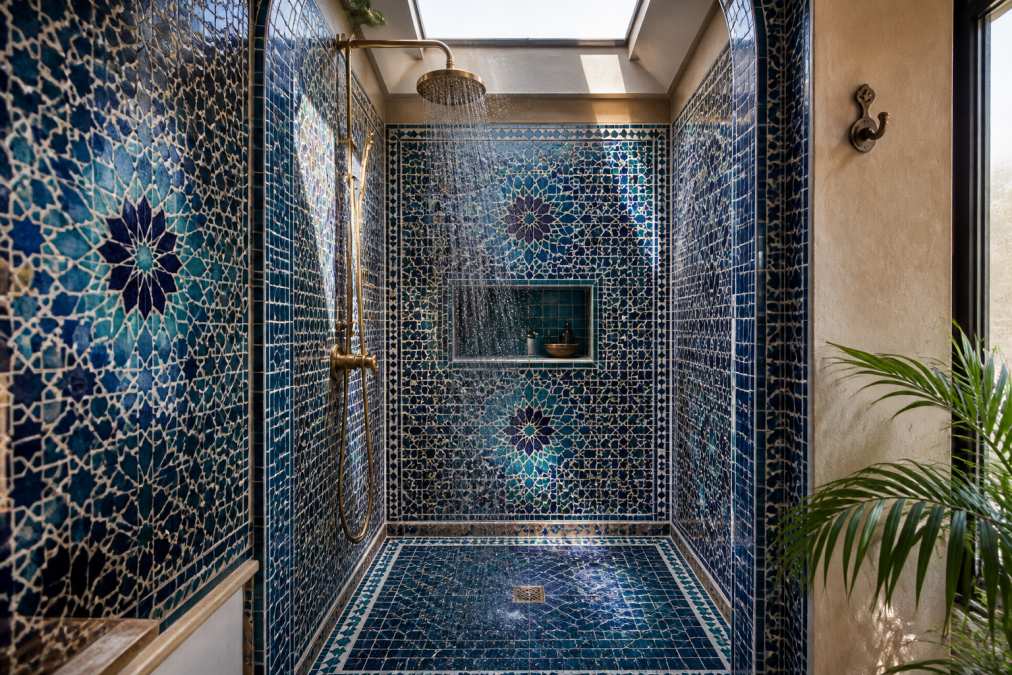
The most visually stunning moroccan tile shower ideas involve covering the entire back wall with intricate geometric patterns. A full-wall installation creates an immersive experience, stepping into the shower feels like entering a Moroccan riad. Niche installations offer a practical alternative if full-wall coverage feels overwhelming, becoming a sculptural focal point while reducing tile quantity.
Waterproofing and installation technicalities
Waterproofing is non-negotiable in moroccan style bathroom tile design for showers. The substrate must be sealed before tiles are installed. Most professionals recommend a waterproof membrane applied to the entire shower area, walls, floor, and niche openings.
Grout selection matters significantly in wet areas. Epoxy grout resists water penetration better than traditional cement-based grout and requires less maintenance. The slope of shower floors must be calculated precisely to ensure proper drainage, a minimum 1/4-inch drop per foot of floor length.
Installation of zellige in showers typically involves thinset mortar applied with a notched trowel. Spacing between tiles, typically 1/4 to 3/8 inch, allows for grout application and accounts for slight irregularities in handmade pieces. Professional installation is strongly recommended, as improper waterproofing can lead to water damage months later. Justmorocco's custom bathroom remodeling services include expertise in wet-area tile installation.
Encaustic and Handcrafted Cement Tiles for Floors and Walls
Encaustic cement tiles represent a distinct category within moroccan style bathroom tile design. These tiles are hand-poured using colored cement pigments, creating patterns that penetrate the entire tile depth. Unlike glazed zellige, encaustic tiles feature a matte finish and solid color throughout.
Encaustic tiles offer exceptional durability and a distinctive aesthetic. The patterns emerge from the cement composition itself rather than surface glazing, remaining visible as the tile ages and develops patina. Handcrafted cement tiles are particularly suited to bathroom floors, where they withstand foot traffic and moisture exposure beautifully.
Installation of encaustic tiles requires sealing before and after grouting. The porous nature of cement means it absorbs water and stains without proper protection. A quality sealant applied during installation and reapplied annually maintains the tiles' appearance and protects against moisture damage.
How to Clean Moroccan Cement Tiles and Maintain Zellige
Maintenance determines whether your moroccan style bathroom tile design remains beautiful for decades or deteriorates within years. For daily cleaning of zellige tiles, use a soft cloth or mop with lukewarm water and a pH-neutral cleaner. Avoid acidic cleaners like vinegar or lemon juice, which can damage the glaze and grout.
Moroccan cement tiles require more careful maintenance than glazed zellige. The porous surface absorbs moisture and stains readily. Clean spills immediately with a soft cloth and neutral cleaner. Monthly deep cleaning involves mixing a pH-neutral tile cleaner with warm water and using a soft-bristled brush to gently clean grout lines.
Annual sealing of cement tiles is essential. A quality penetrating sealer applied according to manufacturer instructions protects the porous surface and prevents water absorption and staining.
Best Grout Color for Moroccan Tile and Design Coordination
Grout color profoundly affects how moroccan style bathroom tile design reads visually. White or cream grout creates maximum contrast with patterned zellige, emphasizing geometric designs. This approach works beautifully with deep-colored tiles, where white grout against blue or green zellige creates striking visual definition.
Matching grout, selecting a color that blends with the tile, creates a more cohesive, integrated appearance. Gray grout offers a sophisticated middle ground, complementing both warm and cool tile colors while creating subtle definition. Dark grout, charcoal or black, creates dramatic contrast and emphasizes geometric patterns, though it's better suited to larger spaces with abundant natural light.
The width of grout lines also affects visual impact. Wider grout lines (3/8 inch) emphasize individual tiles and geometric patterns. Narrower lines (1/4 inch) create a more unified appearance. Handcrafted zellige typically requires slightly wider grout lines to accommodate natural variations in tile size.
Epoxy grout in colors matching your chosen palette offers superior performance and easier maintenance compared to traditional cement grout.
Budget-Friendly Moroccan Tile Alternatives
Authentic handcrafted zellige and encaustic tiles represent a significant investment. For homeowners seeking moroccan style bathroom tile design on a more modest budget, alternatives exist that capture the aesthetic without the premium price point.
Stenciled tile designs offer the most economical approach. Using Moroccan stencils and paint, you can transform plain ceramic tiles into patterned pieces reminiscent of zellige. Machine-made ceramic tiles with Moroccan-inspired patterns provide a middle ground, offering durability and affordability while lacking handcrafted authenticity.
Porcelain tiles with Moroccan designs offer excellent durability and water resistance at significantly lower cost than handcrafted alternatives. Mixing authentic zellige with budget alternatives creates a practical compromise, install handcrafted tiles in high-visibility areas where their artistry commands attention, and use more affordable Moroccan-patterned tiles in secondary areas.
Mixing Patterns, Textures, and Moroccan Design Elements
The sophistication of moroccan style bathroom tile design emerges through thoughtful pattern mixing and textural layering. Rather than overwhelming a space with patterns, successful designs balance bold geometric tiles with complementary elements.
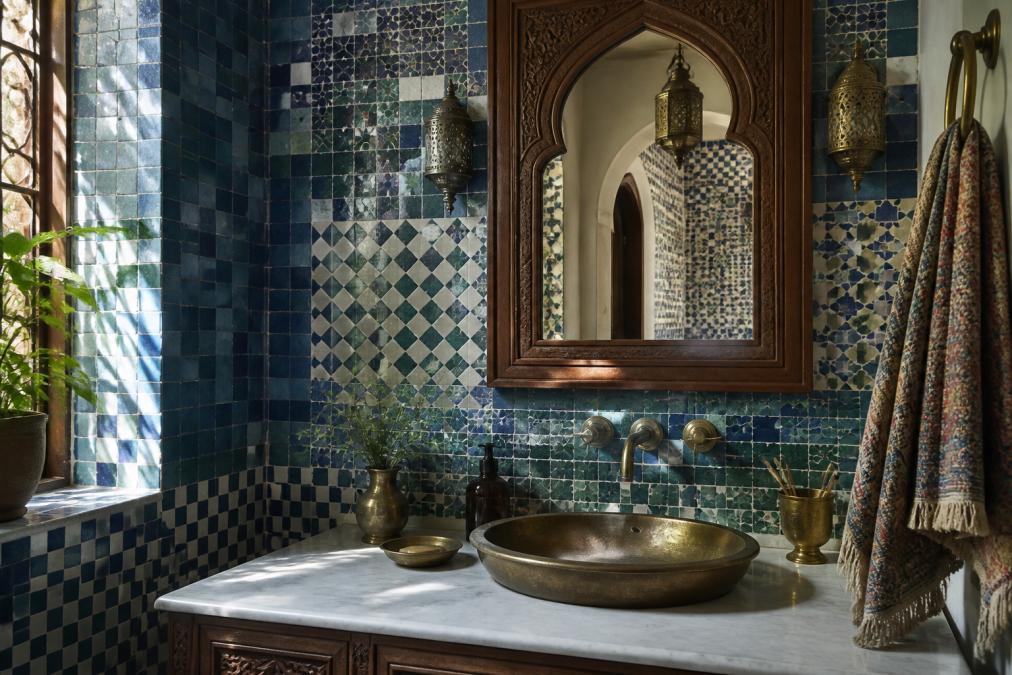
Geometric patterns are the foundation of Moroccan design. Star patterns, interlocking shapes, and hexagonal mosaics create visual movement and complexity. When mixing multiple geometric patterns, establish a color palette that unifies them. Two or three patterns sharing the same dominant colors feel intentional rather than chaotic.
Texture mixing elevates moroccan style bathroom tile design beyond surface decoration. Combining glazed zellige's glossy finish with matte encaustic tiles creates tactile and visual interest. Adding woven textiles, natural wood elements, and carved details introduces additional texture layers that make the space feel luxurious and inviting.
Brass and copper fixtures complement warm-toned moroccan style bathroom tile design beautifully. In cooler blue-dominant designs, polished brass creates elegant contrast. Natural wood elements ground moroccan style bathroom tile design in warmth and authenticity. Lighting dramatically affects how patterns and colors read, warm lighting enhances terracotta and cream tones, while cool or natural light makes blue and green tiles glow with jewel-like intensity.
The principle of restraint applies universally to moroccan style bathroom tile design. Rather than covering every surface with patterns, allow some areas to breathe. A solid-colored wall or simple tile field creates visual rest and prevents the space from feeling overwhelming.
Moroccan bathroom tile design transforms functional spaces into personal sanctuaries. The handcrafted authenticity of zellige tiles, combined with thoughtful color selection and pattern mixing, creates visual richness that elevates your entire home. Whether you're planning a complete bathroom renovation or adding Moroccan accents to an existing space, the key is selecting tiles and design elements that reflect your personal aesthetic while respecting the artisanal heritage these pieces represent.
Justmorocco specializes in custom bathroom remodeling projects that bring authentic Moroccan design to life. Our team works with handcrafted zellige tiles, encaustic cement pieces, and custom architectural elements to create bathrooms that feel like personal retreats. From waterproofing wet areas to coordinating grout colors with tile patterns, we handle every technical detail. Get started with Justmorocco and transform your bathroom into a luxurious Moroccan sanctuary that reflects your sophisticated taste.
| Moroccan Tile Type | Best Application | Maintenance Level | Durability |
|---|---|---|---|
| Hand-cut Zellige | Walls, backsplashes, shower surrounds | Moderate (pH-neutral cleaner, annual sealing) | Excellent (decades with proper care) |
| Encaustic Cement Tiles | Floors, feature walls | Higher (frequent sealing, immediate spill cleanup) | Very good (develops character with age) |
| Machine-made Ceramic | Floors, walls, budget projects | Low (standard tile cleaner) | Good (5-10 years typical) |
| Peel-and-stick Moroccan | Temporary applications, renters | Minimal | Fair (1-3 years typical) |
Frequently Asked Questions
Are Moroccan tiles good for bathrooms?
Yes, Moroccan bathroom tile design works beautifully in bathrooms when properly installed and sealed. Zellige tiles and handcrafted cement encaustic tiles add authentic character and vibrant color. However, they require waterproofing in wet areas like showers and around tubs. The matte finish and natural imperfections that make Moroccan tiles special also mean they need regular maintenance with pH-neutral cleaners to preserve their glazed surfaces and prevent water damage.
What colors go with Moroccan bathroom tiles?
Traditional Moroccan bathroom color palettes draw from natural pigments: deep blues, terracotta, cream, sage green, and jewel tones like ruby and emerald. These colors work well together because they reflect Morocco's landscape and traditional glaze techniques. Pair vibrant zellige or encaustic tiles with neutral walls to let the tilework stand out, or create a cohesive look by extending the same color family across multiple surfaces. Grout color matters too, neutral grays or warm beiges complement bold tiles without competing for attention.
Do Moroccan tiles need to be sealed in a bathroom?
Handcrafted zellige tiles with glaze typically need sealing before and after grouting to protect against moisture penetration. Unglazed or matte-finish encaustic cement tiles absolutely require sealing, especially in shower areas and around bathtubs. Sealing creates a protective barrier against water absorption and staining. After installation, use a pH-neutral cleaner during maintenance to avoid degrading the sealant. For high-moisture areas, resealing every 1-2 years helps maintain durability and prevents mold or water damage.
How do you style a Moroccan bathroom?
Layer zellige or encaustic tiles with complementary architectural elements: horseshoe arches, carved wooden mirrors, brass or copper fixtures, and carved ceiling panels create an authentic atmosphere. Use geometric patterns and fluid lines in tilework as the focal point, then add textiles like patterned rugs and towels in coordinating colors. Incorporate natural materials, clay-based tiles, bone-inlay accents, and wood, to enhance the handcrafted, artisanal feel. Lighting is crucial; ornate brass or lantern-style fixtures amplify the Moroccan aesthetic.
What is the difference between zellige and encaustic tiles?
Zellige tiles are hand-cut clay tiles individually glazed and fired, creating unique variations in size, thickness, and color depth. They originate from Fez and other Moroccan centers and are assembled into mosaics or geometric patterns. Encaustic or cement tiles are molded as complete units with inlaid pigment throughout, creating uniform patterns with sharp geometric designs. Zellige offers more authentic handcrafted character and imperfections; encaustic provides consistency and durability for high-traffic areas. Both are durable and suitable for bathrooms when properly sealed.