
Table of Contents
- Why Moroccan Decor Works in Coastal Homes
- Natural Materials and Textures That Resist Salt Air
- Color Palettes That Bridge Moroccan Warmth and Coastal Cool
- Incorporating Geometric Patterns Without Visual Clutter
- Moroccan Style Lamps and Warm Lighting Design
- Textiles, Rugs, and Upholstery for Humid Environments
- Maintaining Wood Furniture in Coastal Climates
- Furniture Selection: Low-Slung Styles and Banquette Seating
- Creating an Airy, Sun-Filled Sanctuary with Moroccan Elements
- Conclusion
Why Moroccan Decor Works in Coastal Homes
Moroccan decor in coastal climates creates a compelling aesthetic fusion that bridges the warm, artisanal richness of North African design with the airy, light-filled sensibility of seaside living. Both traditions prioritize natural materials, layered textures, and deep connection to sunlight and outdoor spaces. At Justmorocco, we've spent years helping homeowners and designers understand why these aesthetics complement each other so well.
Moroccan design emphasizes handcrafted durability and timeless construction, qualities that matter enormously in salt-air environments where mass-produced furniture deteriorates quickly. Authentic Moroccan pieces, built with natural fibers, solid wood, and traditional joinery, possess the resilience coastal climates require. The color palette also serves practical function: warm terracottas, deep indigos, rich golds, and earthy neutrals resist fading under intense coastal sunlight better than lighter tones. When paired with seafoam greens, sandy neutrals, and weathered grays, these warm accents create visual depth without appearing dark or heavy.
Natural Materials and Textures That Resist Salt Air
Salt air corrodes metals, warps untreated wood, and degrades synthetic fabrics at accelerated rates. Moroccan design traditions, developed in arid environments with extreme temperature swings, naturally favor materials built to last.
Rattan and woven natural fibers form the backbone of this aesthetic. Unlike synthetic wicker, genuine rattan develops a beautiful patina in coastal environments rather than becoming brittle. Hand-woven pieces from Morocco are constructed with traditional joinery that flexes with humidity changes instead of cracking. These textural elements actually conceal minor weathering, making the aging process part of the design's charm.
Terracotta and unglazed clay represent another cornerstone material. Handmade pieces from Moroccan artisans develop a silvery patina over time when exposed to salt spray and humidity, a transformation that enhances their visual appeal. The porous nature of unglazed clay prevents moisture accumulation that causes mold in sealed materials.
Brass and copper accents, when properly finished, benefit from coastal exposure. Authentic Moroccan metalwork uses these materials because they develop a protective patina that prevents further corrosion. Mass-produced brass-plated items, by contrast, flake and peel.
Natural stone, particularly limestone and marble, performs exceptionally in coastal climates. Zellige tilework uses glazed ceramics that resist humidity and salt air when properly sealed.
Avoid heavily stained or painted wood without protective coatings. Instead, seek pieces finished with natural oils or traditional wax treatments that allow wood to breathe while providing protection. Justmorocco's custom furniture imports are finished with climate-appropriate sealers.
Color Palettes That Bridge Moroccan Warmth and Coastal Cool
The magic of moroccan decor in coastal climates lies in color selection that honors both traditions without creating visual conflict. Moroccan design draws from the landscape: deep indigos, terracotta and ochre, rich reds and golds, and warm creams. Coastal design gravitates toward seafoam green, soft gray-blues, sandy neutrals, and weathered whites.
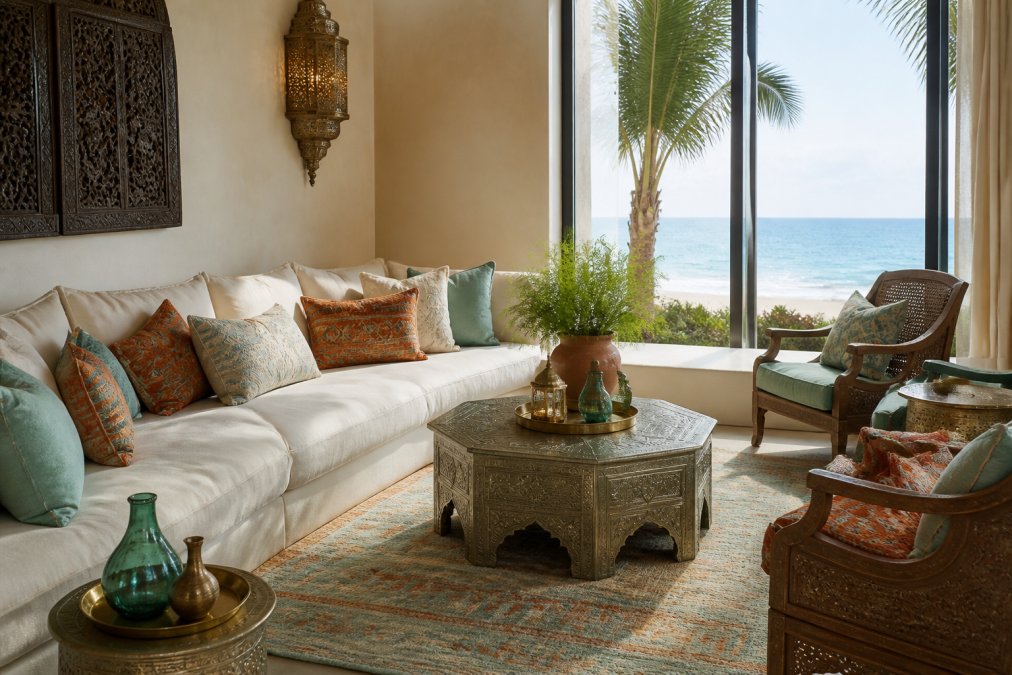
Successful fusion integrates warm Moroccan tones as accents against a predominantly coastal neutral base. A living room might feature soft linen walls in warm cream or pale sand, with geometric patterned pillows in indigo and terracotta as focal points. Brass lanterns provide warm accent lighting against cool-toned upholstery.
Seafoam green pairs beautifully with Moroccan warmth. A seafoam accent wall behind low-slung banquette seating, paired with terracotta throw pillows and a handwoven rattan side table, creates a sophisticated retreat that feels both grounded and airy.
Neutral palettes serve as the canvas, allowing handcrafted Moroccan pieces to command attention. A room with pale gray walls, natural wood floors, and minimal furnishings gains immediate visual interest when a single statement piece, perhaps a custom Moroccan cabinet with mother-of-pearl inlay, becomes the focal point.
Consider the quality of light in your specific coastal location. Intense, direct sunlight bleaches colors differently than diffused coastal fog. In bright climates, slightly deeper versions of coastal colors prevent washed-out appearance.
Incorporating Geometric Patterns Without Visual Clutter
Moroccan design is renowned for intricate geometric patterns, arabesque tilework, and complex textile designs. In coastal homes, these patterns must be carefully integrated to avoid overwhelming small spaces or creating visual chaos.
Use geometric patterns as intentional focal points rather than covering every surface. A single accent wall featuring geometric zellige tile behind a fireplace or headboard creates drama without saturation. A patterned Moroccan rug anchors a seating area while keeping walls and larger furniture pieces simple. Geometric throw pillows add pattern interest without requiring pattern on multiple furniture pieces.
Scale matters significantly. Large-scale geometric patterns work better in spacious rooms with high ceilings. Smaller coastal homes benefit from medium-scale patterns or patterns confined to specific pieces. This restraint maintains the airy, uncluttered feeling while still incorporating Moroccan pattern richness.
Layering patterns requires intentional coordination. If your rug features geometric patterns, keep pillow patterns simpler or use solid colors with subtle texture. The eye needs visual rest points to process complex spaces comfortably.
Geometric patterns work particularly well in functional pieces rather than architectural elements. A geometric-patterned runner, geometric-tiled side tables, or patterned poufs offer Moroccan visual interest in contained doses.
Consider the pattern's color saturation. Geometric patterns in muted tones, indigo on cream, terracotta on sand, soft gold on pale gray, integrate more seamlessly than high-contrast patterns.
Moroccan Style Lamps and Warm Lighting Design
Lighting fundamentally transforms how moroccan decor in coastal climates is experienced. Moroccan style lamps, particularly brass lanterns, pierced metal fixtures, and ceramic vessels with internal lighting, create the warm, intimate atmosphere that contrasts beautifully with bright coastal sunlight.
Moroccan style lamps rely on perforated metal or carved ceramic that casts intricate shadow patterns. In coastal homes with abundant natural light, these fixtures become most impactful during evening hours, creating warm pools of light and textural shadow play.
Position moroccan style lamps in corners or along walls where shadow projection enhances architectural features. Cluster smaller brass lanterns at varying heights to create visual interest and layered light. A single large pendant lamp with perforated metalwork above a dining table becomes a sculptural focal point.
Warm white light (2700K or lower) complements both Moroccan warmth and coastal aesthetics. Cool white light can feel clinical and contradicts the inviting, handcrafted quality these spaces aim to achieve. Dimmable fixtures provide flexibility, bright neutral light during daytime activities, warm dimmed light for evening ambiance.
Natural light optimization complements artificial moroccan style lighting. In coastal homes with large windows, lightweight linen or cotton curtains filter harsh sunlight while maintaining transparency and airiness.
Textiles, Rugs, and Upholstery for Humid Environments
Textiles define the comfort and visual richness of moroccan decor in coastal climates, but humidity and salt air demand careful material selection. Natural fibers, wool, cotton, linen, and silk, outperform synthetics in moisture-prone environments because they absorb and release moisture without degrading, unlike polyester or acrylic which trap moisture and develop mildew.
Moroccan rugs, traditionally hand-knotted from wool, naturally resist moisture and develop character through age. The dense pile structure prevents mold growth while the lanolin in wool provides inherent water resistance. Vintage and antique Moroccan rugs improve with time in coastal environments, developing subtle color variations that enhance their visual appeal.
Upholstery fabric selection directly impacts furniture longevity. Natural linen, cotton blends, and wool upholstery allow moisture to pass through rather than accumulate, preventing musty odors and mildew. Moroccan design traditionally uses hand-loomed textiles in natural fibers, a practical choice ideal for coastal homes.
Throw pillows and cushions provide the easiest way to introduce Moroccan textile richness while maintaining climate-appropriate material choices. Handwoven pillows from Morocco add visual interest and tactile warmth. These pieces are easily replaced if fading becomes noticeable.
Layering textiles, a larger geometric rug anchoring the space, solid-colored upholstery on main furniture, patterned throw pillows, a woven textile wall hanging, creates depth and visual richness without overwhelming the space.
Maintenance in coastal environments requires attention. Regular vacuuming prevents salt and dust accumulation. Occasional professional cleaning removes embedded moisture and salt. Avoid plastic covers or sealed storage, which trap moisture and encourage mildew.
Maintaining Wood Furniture in Coastal Climates
Wood furniture represents a significant investment, and coastal environments present unique challenges. Salt air accelerates wood deterioration, causing finish breakdown, wood warping, and joint failure in poorly constructed pieces.
The quality of wood construction determines coastal durability. Solid wood furniture, constructed with traditional joinery (mortise and tenon joints, dovetail joints), flexes with humidity changes without failing. Plywood or particleboard furniture absorbs moisture unevenly, causing swelling, warping, and joint separation.
Wood species matter significantly. Dense hardwoods like walnut, oak, and cedar resist moisture better than soft woods. Cedar naturally repels insects and resists rot.
Finish quality directly impacts longevity. Oil-based finishes allow wood to breathe while providing protection, a traditional approach that outperforms modern polyurethane in humid climates. Wax finishes, common on Moroccan pieces, require regular maintenance but allow wood to develop natural patina.
Maintenance requires consistent attention. Dust regularly with soft, dry cloths to prevent salt and grit accumulation. Every 6-12 months, apply appropriate finish maintenance, oil refreshing or wax reapplication, to maintain the protective barrier. Wipe spills immediately and ensure furniture sits on moisture-wicking surfaces.
Position wood furniture away from direct ocean spray and extreme humidity sources. Interior placement, with strategic use of dehumidifiers in high-moisture areas, extends wood furniture lifespan significantly.
Monitor joints and connections annually. Humidity-induced wood movement can loosen traditional joinery. Early intervention prevents expensive repairs.
Furniture Selection: Low-Slung Styles and Banquette Seating
Moroccan furniture design emphasizes low-slung, ground-hugging silhouettes that create intimate, conversational spaces. This aesthetic perfectly complements coastal homes, where low furniture maintains visual airiness and prevents spaces from feeling heavy or cluttered.
Low-slung sofas sit closer to the floor than contemporary Western furniture. This design choice creates visual lightness while encouraging relaxed, informal entertaining. In coastal homes with high ceilings or open floor plans, low furniture prevents the space from feeling empty or cavernous.
Banquette seating, built-in or freestanding bench-style seating with back support, represents a space-efficient Moroccan tradition. A banquette along a window wall creates a reading nook while maintaining visual openness. Paired with geometric-patterned cushions and throw pillows, banquette seating becomes a sculptural design element.
Poufs and low tables complement low-slung seating, creating flexible, conversation-focused arrangements. Moroccan poufs, traditionally hand-woven leather or textile pieces, serve as seating, footrests, or impromptu tables. These versatile pieces work beautifully in coastal homes where adaptable, informal entertaining defines lifestyle.
Material selection for seating pieces follows the same coastal durability principles as other furniture. Solid wood frames with traditional joinery, natural fiber upholstery, and hand-stitched construction ensure longevity.
Scale considerations become critical in smaller coastal homes. Low-slung furniture works in compact spaces because it doesn't visually overwhelm rooms. A single statement banquette with layered cushions and textiles creates visual richness without requiring multiple separate pieces.
Creating an Airy, Sun-Filled Sanctuary with Moroccan Elements
The ultimate goal of moroccan decor in coastal climates is creating a sanctuary that feels both grounded in authentic design tradition and open to light, air, and the surrounding environment.
Spatial planning forms the foundation. Arrange furniture to maximize sightlines and natural light penetration. Avoid blocking windows with heavy curtains or oversized furniture. Use lightweight, sheer fabrics that filter harsh sunlight while maintaining transparency. Position seating to face views rather than inward, creating visual connection to the coastal environment.
Vertical space usage prevents visual clutter while maintaining design richness. Wall-mounted shelving displays handcrafted ceramics, brass vessels, and textiles without consuming floor space. Hanging textiles or tapestries add pattern and texture while allowing light to pass behind them.
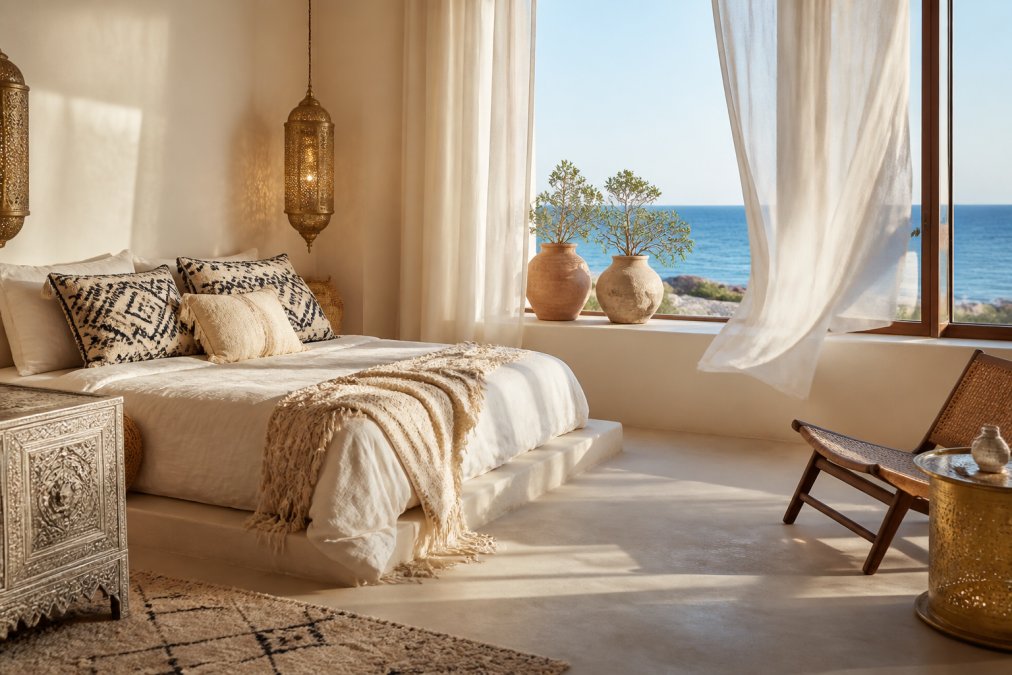
Negative space, intentionally empty areas, becomes as important as decorated areas. Resisting the urge to fill every surface maintains visual rest and prevents overwhelming the space. A single statement piece commands attention when surrounded by simplicity.
Color restraint supports airiness. Keeping walls neutral and introducing Moroccan warmth through textiles, accessories, and accent pieces allows spaces to feel open while maintaining design sophistication.
Lighting design directly impacts perceived airiness. Layered lighting, natural light during day, warm moroccan style lamps during evening, creates flexibility and ambiance. Avoid heavy, dark lampshades or recessed lighting that creates shadows.
Indoor-outdoor flow enhances the sanctuary feeling. Large windows or glass doors connecting interior spaces to patios or terraces blur the boundary between inside and outside. Continuing design elements from interior to exterior creates visual continuity that expands the perceived space.
Humidity management supports comfort and preservation. Strategic dehumidifier placement, adequate ventilation, and moisture-wicking materials prevent the musty atmosphere that contradicts the fresh, airy aesthetic.
Moroccan decor in coastal climates transforms your home into a sophisticated sanctuary that honors both design traditions while respecting environmental realities. The fusion of warm, artisanal Moroccan elements with the airy, light-filled aesthetic of coastal design creates spaces that feel both grounded and open.
At Justmorocco, we understand the specific challenges coastal homeowners face when incorporating handcrafted Moroccan pieces. Our custom furniture imports, authentic mother-of-pearl inlay work, and specialized knowledge of climate-appropriate finishes ensure your investment endures. Whether you're selecting a handcrafted clay planter for coastal gardens or planning a complete custom kitchen remodel, our team guides you toward pieces and solutions specifically designed for your environment. Explore our collection of authentic, climate-tested Moroccan furniture and discover how to elevate your coastal home with timeless, luxurious design.
Frequently Asked Questions
How do I incorporate Moroccan decor into a coastal home without it feeling cluttered?
Start with a neutral base of seafoam, cream, or soft gray walls. Layer Moroccan elements gradually: begin with one statement piece like a handcrafted brass lantern or geometric rug, then add complementary textiles and accents. Use negative space intentionally, coastal homes benefit from airiness. Group similar items (pillows, poufs) rather than scattering them. The key is balancing boho richness with the minimalist-boho aesthetic that works best in salt-air environments. Avoid overcrowding by choosing quality handcrafted pieces over numerous smaller items.
What materials are best for Moroccan-inspired furniture in humid coastal climates?
Opt for salt-air resistant materials: teak, cedar, and reclaimed wood with proper finishing; rattan and natural fibers treated for moisture; brass and copper accents that develop patina; and terracotta for outdoor pieces like the Zagora large clay planter ($1,400). Avoid untreated softwoods and materials prone to rust. Handcrafted pieces from artisanal makers often use traditional techniques that naturally resist humidity. Mother-of-pearl inlays and bone-inlay work beautifully if sealed properly. Ceramic and tile elements hold up exceptionally well in coastal conditions.
How do you maintain handcrafted Moroccan decor in salt-air environments?
Dust regularly with a soft, dry cloth to prevent salt residue buildup. For wood furniture, apply a protective marine-grade finish annually or as needed. Wipe down brass and copper accents monthly to slow patina development if desired. For textiles, vacuum rugs and pillows frequently and air them outside to prevent moisture absorption. Keep humidity levels between 40-50% using a dehumidifier in high-salt-air zones. Store seasonal pieces in sealed containers. Address any water damage immediately. Handcrafted pieces benefit from professional cleaning every 2-3 years to maintain their artisanal character while protecting against coastal wear.
What color palettes work best for Moroccan decor in coastal homes?
Combine warm Moroccan tones with coastal cool shades: pair terracotta and earthy tones with seafoam green, soft blues, and sandy neutrals. Neutral palettes of cream, ivory, and warm gray provide the backdrop. Add pops of jewel tones like deep indigo or burnt sienna through textiles and accent pieces. Avoid overly saturated colors that compete with natural light. The fusion works best when warm colors dominate interiors while cool tones appear in larger architectural elements or outdoor spaces. This balance creates a convivial atmosphere that feels both luxurious and breezy.
This article was written using GrandRanker