
Table of Contents
- What Makes Moroccan Color Palettes Distinctive
- Moroccan Living Room Ideas with Warm Earth Tones
- Moroccan Interior Design Colors: The Jewel Tone Approach
- Terracotta and Blue Living Room: A Timeless Combination
- Jewel Tone Living Room Ideas for Sophisticated Spaces
- Neutral Moroccan Palettes for Understated Elegance
- Layering Moroccan Color Palettes in Your Space
- Moroccan Rugs and Textiles as Your Color Foundation
- Frequently Asked Questions
Last Updated: October 10, 2026
What Makes Moroccan Color Palettes Distinctive
Moroccan color palettes draw their character from centuries of cultural tradition, geometric design, and the natural landscape of North Africa. At Justmorocco, we recognize that these palettes are far more than aesthetic choices, they represent a philosophy of layering warmth, depth, and intentional contrast into a single room.
What separates Moroccan color palettes from other design approaches is their fearless embrace of saturation. Rather than playing it safe with neutrals, Moroccan design combines rich jewel tones with earthy grounds, allowing colors to coexist without competing. The interplay between deep blues and warm terracottas, between emerald greens and saffron yellows, creates visual rhythm that feels both luxurious and livable.
The foundation of any Moroccan color palette rests on understanding three core principles: warmth (earth tones and spices), richness (saturated accent colors), and balance (neutral breathing room). These elements work together to transform a living room from a simple gathering space into a sanctuary that feels intentionally curated and authentically grounded.
Moroccan Living Room Ideas with Warm Earth Tones
Warm earth tones form the backbone of traditional Moroccan interiors. Terracotta, ochre, burnt sienna, and warm sand create an enveloping atmosphere that feels both grounded and inviting. These colors reflect the desert landscape and clay architecture of Morocco itself, making them culturally authentic while remaining universally appealing.
A living room built around warm earth tones typically features walls in soft terracotta or deep ochre, paired with darker wood furnishings and brass accents. The warmth of these walls allows jewel-tone textiles, deep blues, emerald greens, and rich purples, to pop without overwhelming the space. Layering a handwoven rug like the Boojaad Vintage Berber Rug anchors the room with multiple warm and cool tones, creating visual depth that draws the eye.
The beauty of warm earth-tone palettes is their flexibility. They work equally well in modern minimalist spaces and maximalist bohemian rooms. A single terracotta accent wall paired with cream upholstery and brass lighting creates understated sophistication. The same terracotta background layered with patterned cushions, carved wooden screens, and traditional lanterns becomes a full cultural immersion.
Moroccan Interior Design Colors: The Jewel Tone Approach
Jewel tones represent the heart of what makes Moroccan color palettes visually striking. Deep sapphire blues, emerald greens, rich amethyst purples, and ruby reds bring luxury and drama to living spaces. These saturated colors derive from traditional dyes used in Moroccan textiles and ceramics for centuries.
The jewel tone approach works best when these colors appear in moderation, through pillows, rugs, wall art, and carved wooden screens rather than as dominant wall colors. A living room with warm sand-colored walls gains instant sophistication when jewel-tone textiles are introduced through layered seating. The contrast between cool jewel tones and warm walls creates visual tension that feels intentional rather than chaotic.
Moroccan interior design colors in the jewel tone family often appear together in traditional patterns. A single rug or textile might combine sapphire, emerald, and amethyst in geometric arrangements, allowing you to pull these tones throughout the room in complementary pieces. This creates a cohesive palette that feels rich without requiring every surface to be saturated in color.
Terracotta and Blue Living Room: A Timeless Combination
The pairing of terracotta and blue represents one of the most iconic Moroccan color combinations, rooted in both geography and tradition. Terracotta echoes the clay buildings of Moroccan cities, while blue reflects the Mediterranean Sea and traditional indigo dyes. Together, they create a balance between warmth and coolness that feels naturally harmonious.
A terracotta and blue living room typically features warm terracotta walls or furnishings paired with sapphire or cobalt blue accents in textiles and decorative pieces. This combination works because the colors sit opposite each other on the color wheel, creating complementary contrast that's visually dynamic yet restful. The warmth of terracotta prevents the blue from feeling cold, while the blue prevents the terracotta from becoming monotonous.
Implementing this palette requires intentional placement. A terracotta-painted accent wall pairs beautifully with blue-patterned cushions, a blue ceramic side table, and brass fixtures that bridge both warm and cool tones. The Azilal hamra carpet in warm reds and blues exemplifies this traditional combination, bringing authentic Moroccan artistry directly into your space while grounding the color scheme with handwoven texture.
Jewel Tone Living Room Ideas for Sophisticated Spaces
Jewel tone living rooms elevate Moroccan design into high-luxury territory. These spaces prioritize richness, depth, and a sense of curated abundance. Rather than the warm-earth-plus-accents approach, jewel tone rooms layer multiple saturated colors in a carefully orchestrated composition.
Creating a jewel tone living room requires confidence in color. Start with a neutral or warm-toned wall color, cream, soft taupe, or pale ochre, then introduce jewel tones through layered textiles, carved wooden furniture, and decorative accessories. A velvet sofa in deep emerald or sapphire becomes the room's anchor, surrounded by patterned pillows in coordinating jewel tones. Brass and gold fixtures add warmth that prevents the space from feeling cold or clinical.
The sophistication of jewel tone palettes comes from their restraint. Rather than painting walls in bold color, these rooms use walls as a neutral backdrop for jewel-toned furnishings and textiles to shine. This approach also makes the space more adaptable, you can shift accent colors seasonally or as your preferences evolve without repainting walls.
Boojaad Vintage Berber Rug, Moroccan Carpet for Living Room | Colorful abstract →
Neutral Moroccan Palettes for Understated Elegance
Not every Moroccan living room requires bold color saturation. Neutral Moroccan palettes prove that authentic Moroccan design can be subtle, sophisticated, and calming while maintaining cultural integrity. These palettes rely on texture, pattern, and layering rather than color intensity.
A neutral Moroccan palette typically features cream, beige, warm taupe, and soft gray walls paired with natural wood furnishings and woven textiles. The richness comes from material variety: wool rugs with subtle geometric patterns, carved wooden screens with intricate detailing, and brass or copper fixtures that add warmth. The Azilal spring carpet in muted blues and naturals demonstrates how traditional Moroccan rugs can complement neutral palettes while adding visual interest through pattern rather than bold color.
Neutral Moroccan palettes appeal to those seeking authentic design without overwhelming their space. They work particularly well in smaller living rooms, open-concept homes, or spaces that need to feel calm and cohesive. The subtlety doesn't mean blandness, it means letting craftsmanship, pattern, and texture carry the visual weight rather than color alone.
Layering Moroccan Color Palettes in Your Space
The true art of Moroccan design lies in layering, combining colors, patterns, textures, and materials in ways that feel abundant yet intentional. Layering prevents a space from feeling flat or one-dimensional, creating depth that invites exploration and relaxation.
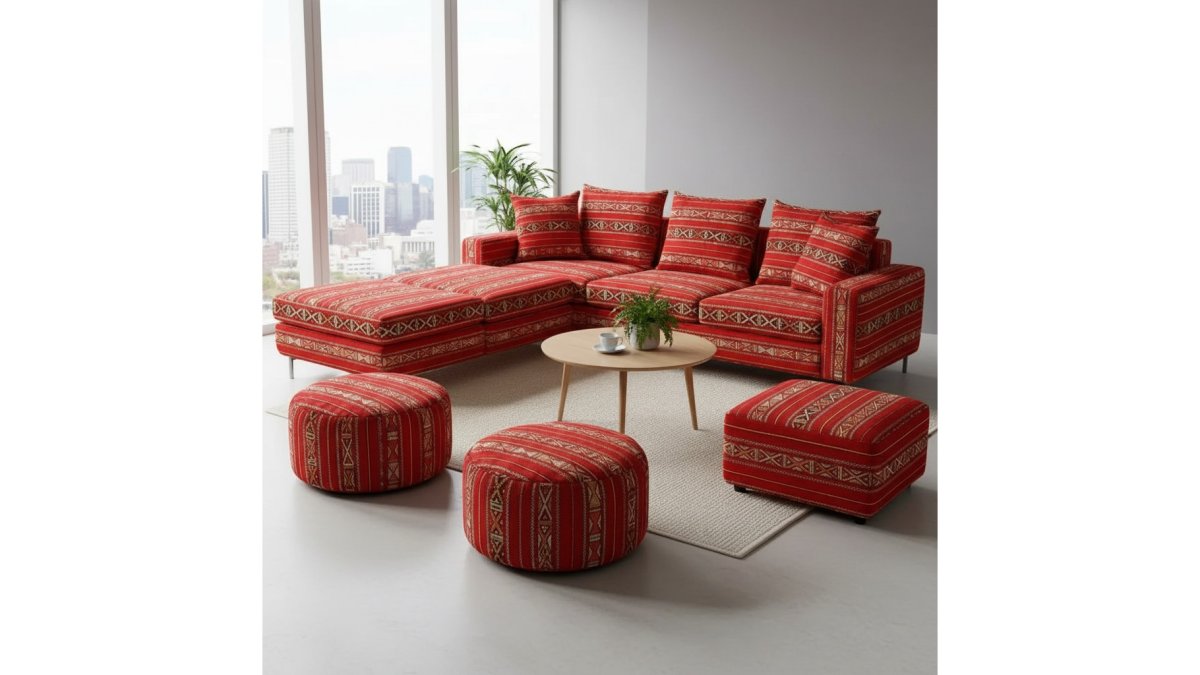
Begin with your wall color as the foundation. Whether you choose warm earth tones, neutral creams, or soft jewel tones, this base sets the stage for everything that follows. Next, introduce your primary textile, typically a large rug that establishes multiple colors and patterns. The Vintage kilim living room set demonstrates effective layering, combining bold patterned upholstery with coordinating accessories that echo and expand the color palette.
Layer additional textiles through pillows, throws, and wall hangings. Each layer should reference colors established in previous layers while introducing subtle variations. A pillow in sapphire blue echoes the rug's blue while introducing a new saturation level. A throw in warm rust bridges the rug's warm tones with wall color. This creates visual continuity that makes the space feel designed rather than randomly assembled.
Moroccan Rugs and Textiles as Your Color Foundation
In authentic Moroccan interiors, rugs and textiles don't simply accessorize, they define the entire color story. These handwoven pieces combine multiple colors in patterns that have been perfected over generations, making them ideal anchors for your living room palette.
A Moroccan rug establishes color relationships that can guide your entire design. If your rug contains sapphire blue, terracotta, cream, and emerald green, these become your palette's permission structure. Wall color should complement rather than compete with the rug. Furniture and accessories can then pull individual colors from the rug, creating a cohesive scheme that feels intentionally connected.
The beauty of using Moroccan textiles as your color foundation is their authenticity and uniqueness. Each handwoven piece carries cultural heritage and individual character that mass-produced textiles cannot replicate. When you build your living room around a traditional rug, you're not just choosing colors, you're anchoring your space in genuine Moroccan artistry and craftsmanship.
| Textile Type | Primary Color Range | Best Wall Color | Accent Approach |
|---|---|---|---|
| Berber rug (geometric) | Warm reds, blues, creams | Soft taupe or cream | Pull jewel tones from pattern |
| Kilim rug (bold pattern) | Multiple saturated hues | Neutral cream or pale ochre | Echo dominant pattern colors |
| Azilal rug (abstract) | Muted blues, naturals | Warm terracotta or beige | Layer solid jewel tones |
| Vintage rug (faded tones) | Dusty reds, blues, greens | Warm sand or soft gray | Introduce brighter accents |
Building a Moroccan living room around authentic color palettes transforms your space into a sanctuary that feels both culturally grounded and personally expressive. The key is understanding that Moroccan design celebrates color without chaos, it layers warmth, richness, and intentional contrast to create rooms that feel luxurious yet livable.
At Justmorocco, we've helped countless homeowners bring these palettes to life through carefully curated furniture, handwoven rugs, and custom design solutions. Our collection of authentic Moroccan pieces, from vintage Berber rugs to custom carved screens, provides the foundation you need to implement these color strategies with confidence. Whether you're drawn to warm earth tones, jewel tone sophistication, or understated neutral elegance, the right Moroccan pieces elevate your vision from inspiration to reality. Explore our custom furniture imports and discover how authentic Moroccan design can transform your living room into the sanctuary you've envisioned.
Frequently Asked Questions
What colors are commonly used in Moroccan interior design?
Moroccan color palettes draw from the region's natural landscape and rich cultural heritage. Common colors include terracotta, deep blues, jewel tones like emerald and sapphire, warm golds, burnt oranges, and earthy neutrals such as cream and sand. These colors often appear together in rugs, tilework, and textiles, creating warm, layered interiors that feel both luxurious and inviting.
How can I create a Moroccan color palette for my living room?
Start by selecting one dominant color from Moroccan traditions, terracotta, deep blue, or jewel tones work well. Layer in complementary accent colors using textiles like rugs, pillows, and throws. Use neutral walls (cream, sand, or soft white) to let your Moroccan pieces shine. Add metallic accents through brass lighting or mother-of-pearl inlays. Handwoven rugs like the Boojaad Vintage Berber Rug bring multiple colors together naturally, making them an excellent foundation for your palette.
What colors go well with terracotta in a living room?
Terracotta pairs beautifully with deep blues, creating a warm-cool balance that feels both grounded and sophisticated. Jewel tones like emerald green and sapphire blue complement terracotta's warmth. Cream, sand, and soft gold accents prevent the space from feeling too heavy. Charcoal or dark brown grounding elements add depth. This combination is classic in Moroccan design and creates a living room that feels both energetic and welcoming.
How can I use jewel tones without making a living room feel overwhelming?
Balance jewel tones by using them as accent colors rather than dominating the entire room. Paint walls in neutral shades and introduce jewel tones through textiles, rugs, and decorative pieces. Layer different jewel tones thoughtfully, emerald with sapphire, for example, rather than using just one. Incorporate plenty of cream, sand, or white space to give the eye rest. Moroccan rugs with jewel tone details, like the Azilal spring carpet, add richness without overwhelming the space.