

Table of Contents
- Understanding Moroccan Mother of Pearl: Material Composition and Vulnerability
- Daily Cleaning and Debris Removal for Mother of Pearl Surfaces
- How to Clean Mother of Pearl Inlay Furniture Safely
- Mother of Pearl Cleaning Products: What Works and What to Avoid
- Preventing Scratches and Surface Damage to Maintaining Mother of Pearl
- Mother of Pearl Restoration: Addressing Discoloration and Damage
- Mother of Pearl Discoloration: Causes and Solutions
- Storage Best Practices and Environmental Control
Last Updated: July 31, 2026
Understanding Moroccan Mother of Pearl: Material Composition and Vulnerability
Mother of pearl, or nacre, is an organic composite made primarily of calcium carbonate layered with conchiolin, a protein that binds the structure together. This composition gives nacre its signature iridescent quality, but also makes it vulnerable to environmental stress, chemical exposure, and physical damage. Unlike solid stone or metal, mother of pearl consists of thin aragonite platelets stacked in a brick-like pattern. When moisture penetrates between these layers or harsh chemicals dissolve the conchiolin binding, delamination occurs, the layers separate and the surface loses its luster.
JustMorocco Mother of Pearl FurnitureWhat Makes Nacre So Delicate
Calcium carbonate reacts negatively to acidic cleaners, vinegar, lemon juice, and most commercial cleaners, they dissolve the calcium carbonate on contact. Alkaline solutions strip away the protective patina. Water itself, when in contact with nacre for extended periods, migrates between layers and causes swelling that pushes platelets apart.
Temperature fluctuations accelerate degradation. A mother-of-pearl table moved from air-conditioning to a warm patio experiences expansion and contraction that stresses both the wood substrate and inlay simultaneously. Humidity above 60% allows moisture to migrate into wood and nacre; below 30%, wood shrinks and inlay can loosen or crack. The ideal range is 40-55% humidity.
Why Moroccan Pieces Require Specialized Care
Moroccan mother-of-pearl furniture typically features inlay work, small nacre pieces set into wooden substrates like walnut or cedar. This construction creates vulnerability that solid nacre pieces don't have. The wood absorbs and releases moisture differently than the inlay, creating stress at the interface. Many Moroccan pieces lack modern protective coatings, leaving nacre exposed with only a thin wood sealant protecting the substrate.
| Vulnerability Factor | Impact | Timeline |
|---|---|---|
| Direct sunlight | Oxidation, yellowing, luster loss | 3-6 months |
| Humidity above 60% | Delamination, swelling, warping | 12-24 months |
| Chemical exposure (acids) | Surface etching, calcium loss | Immediate |
| Temperature swings (>15°F) | Wood movement, inlay stress | Ongoing |
| Moisture between layers | Separation, structural failure | 6-18 months |
Daily Cleaning and Debris Removal for Mother of Pearl Surfaces
The foundation of maintaining moroccan mother of pearl starts with daily dusting. Dust particles are abrasive and scratch nacre when rubbed across the surface. Use a microfiber cloth exclusively, its synthetic fibers are softer than cotton and won't scratch nacre. The cloth should be lint-free; loose fibers trap moisture against the surface.
Using Microfiber Cloths and Lint-Free Materials
Effective dusting requires gentle technique, not pressure. Hold the cloth loosely and use a gentle circular motion, letting the cloth do the work. Standard cotton cloths shed fibers constantly; when these sit on damp nacre, they trap moisture for hours. Microfiber cloths don't shed, making them ideal. Store your cleaning cloth in a sealed plastic bag or airtight container to prevent dust accumulation. Replace the cloth every 6-12 months depending on use frequency.
Gentle Dusting Techniques
Dust your mother-of-pearl pieces weekly. For inlaid furniture, dust the wood substrate first, then the nacre inlays. Never use compressed air or air dusters, the force drives dust particles into crevices where they scratch the surface. For intricate inlay work, use a soft-bristled brush with natural horsehair, brushing very lightly.
How to Clean Mother of Pearl Inlay Furniture Safely
When dusting alone isn't enough, gentle cleaning with minimal water is necessary to remove dirt and fingerprints without introducing moisture into the nacre's structure.
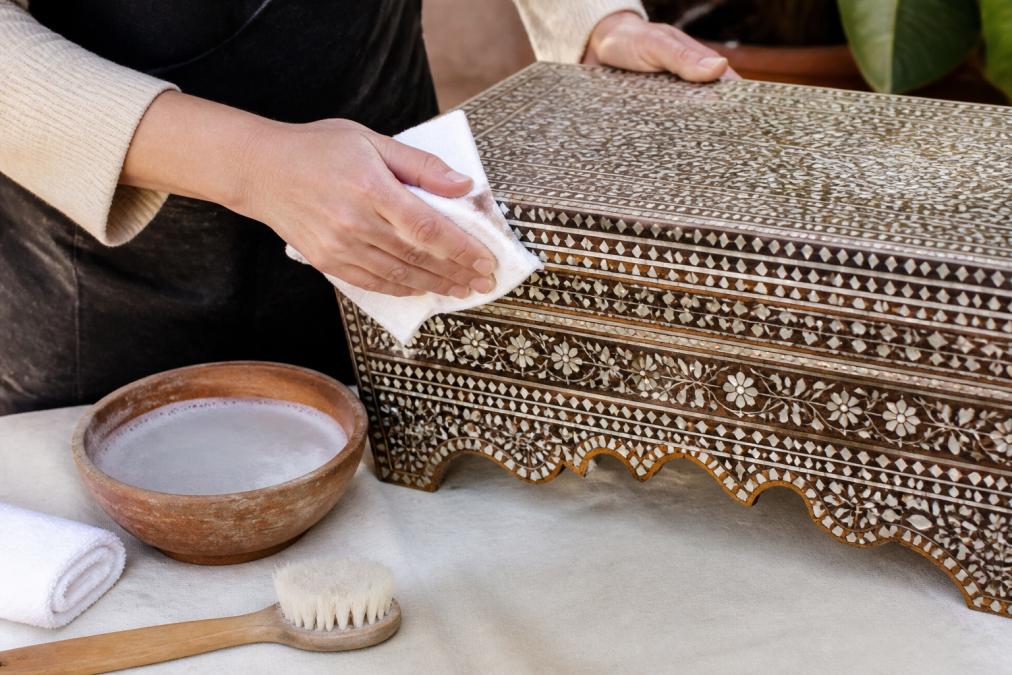
Step-by-Step Cleaning Process
Step 1: Prepare your cleaning solution (Time: 2 minutes)
Mix distilled water with a single drop of pH-neutral liquid soap, approximately 1 cup distilled water to 1 drop of soap. Regular tap water contains minerals that leave residue on nacre. pH-neutral soap is critical; dish soap and most commercial cleaners are alkaline or acidic and will damage nacre.
Step 2: Test on an inconspicuous area (Time: 1 minute)
Before applying the solution to visible surfaces, test it on the underside or back of the piece. Dampen a corner of your microfiber cloth with the solution and apply it to a hidden area. Wait 5 minutes. If the nacre shows no discoloration, etching, or adverse reaction, the solution is safe.
Step 3: Dampen your cloth minimally (Time: 1 minute)
Wring out the cloth thoroughly after dampening it. The cloth should be barely damp, not wet. If water drips from the cloth, it's too wet. The goal is to apply just enough moisture to lift dirt without saturating the nacre.
Step 4: Wipe the surface gently (Time: 5-10 minutes)
Using your barely-damp cloth, wipe the mother-of-pearl surfaces with gentle circular motions in small sections. Don't press hard. For stubborn spots, make a second pass with very light pressure rather than increasing pressure on the first pass.
Step 5: Dry immediately (Time: 5 minutes)
Use a dry microfiber cloth to remove all moisture from the nacre and surrounding wood. This step is non-negotiable. Any water left on the surface will migrate into the nacre and cause damage.
Step 6: Air dry in a stable environment (Time: 30 minutes)
Allow the piece to sit in a climate-controlled room (not near a heat source or window) for at least 30 minutes before using it or placing objects on it.
pH-Neutral Solutions and Distilled Water
Nacre is calcium carbonate, which dissolves in acidic solutions and breaks down in strongly alkaline ones. A pH-neutral solution (pH 7) doesn't attack the nacre chemically. Never use vinegar, lemon juice, or commercial window cleaners, these are acidic and will etch the surface within minutes. Never use bleach, ammonia, or alkaline degreasers. For heavily soiled pieces, repeat the gentle cleaning process multiple times over several days rather than using stronger cleaners.
Mother of Pearl Cleaning Products: What Works and What to Avoid
The safest approach is to avoid commercial products entirely and stick with distilled water and pH-neutral soap.
Safe Cleaning Agents for Moroccan Pieces
Distilled water is the foundation of safe cleaning. Tap water, spring water, and filtered water contain dissolved minerals that leave residue on nacre. pH-neutral soap is the only additive needed. Castile soap, certain plant-based soaps, and some gentle baby soaps are pH-neutral. When in doubt, use less soap rather than more.
Mineral oil can be used sparingly for surface polishing only, not regular cleaning. A tiny amount of food-grade mineral oil on a cloth, applied to dry nacre, can restore some luster temporarily. However, mineral oil can accumulate and trap dust. Use it no more than once every 6 months. For wood substrates on inlaid pieces, a dedicated pH-neutral wood cleaner is acceptable, but keep it away from the nacre itself.
Tools and Substances to Avoid
Never use abrasive tools on mother-of-pearl, including soft-bristled brushes for aggressive scrubbing or sponges with abrasive sides. Avoid all acidic cleaners: vinegar, lemon juice, citric acid, commercial glass cleaners, and bathroom tile cleaners. Avoid alkaline cleaners: bleach, ammonia, degreasers, and oven cleaners. Avoid wax-based polishes, silicone-based products, and prolonged contact with water.
Preventing Scratches and Surface Damage to Maintaining Mother of Pearl
Scratches are the most common form of damage to mother-of-pearl surfaces. The good news: scratches are largely preventable through environmental control and careful handling.
Protective Coatings and Preventative Maintenance
The best protective coating for mother-of-pearl inlay is clear polyurethane or lacquer applied by a professional during manufacture. Many new Moroccan pieces may include this coating, which provides a barrier against dust, moisture, and minor scratches. However, this coating degrades over 5-10 years. If you want to re-coat a piece, hire a professional furniture restorer with mother-of-pearl experience.
Keep mother-of-pearl pieces away from direct sunlight. UV rays oxidize nacre, turning it yellowish and dull. This oxidation is permanent. Use curtains, blinds, or UV-protective film on windows near the piece. Maintain stable humidity between 40-55% using a humidifier in dry climates or a dehumidifier in humid climates. Avoid placing furniture near heat sources or in areas with significant temperature swings.
Common Mistakes That Damage Inlay and Nacre
The most common mistake is treating mother-of-pearl like other decorative materials, using the same cleaning products on nacre that work on marble or tile. Another common mistake is placing mother-of-pearl furniture in high-traffic areas or near water sources. Pieces with inlay are best suited to living rooms, bedrooms, or formal dining areas, not kitchens or bathrooms. Stacking objects on mother-of-pearl surfaces or using them as work areas causes scratches and pressure damage. Failing to dust regularly allows dust to accumulate and become ground into the surface.
Mother of Pearl Restoration: Addressing Discoloration and Damage
When damage occurs despite best efforts, restoration is sometimes possible depending on the type and severity.
Understanding Oxidation and Patina Development
Oxidation is the process where nacre reacts with oxygen and develops a yellowish or brownish tint. Light oxidation, a slight yellowing that develops over 5-10 years with some sun exposure, is normal and expected. Heavy oxidation, significant yellowing or browning that develops over 2-3 years, indicates excessive sun exposure and is permanent.
Surface scratches are visible as fine lines on the nacre. Light scratches are cosmetic and don't affect structural integrity. Deep scratches that expose the wood substrate below allow moisture to penetrate. Delamination is visible as lifted or separated layers of nacre and is a structural problem that worsens over time.
DIY Restoration vs. Professional Services
Light surface scratches can sometimes be minimized with gentle polishing. A microfiber cloth with a tiny amount of food-grade mineral oil, applied in the direction of scratches, can make them less visible. This is not permanent, but the optical effect can be softened.
For anything beyond light scratches or minor oxidation, professional restoration is necessary. A professional furniture restorer or conservator specializing in mother-of-pearl can remove oxidized layers, fill small cracks with color-matched nacre, re-glue delaminated sections, re-apply protective coatings, and restore luster and color. Professional restoration costs vary widely. A small repair might cost $200-500. A major restoration of a large inlaid cabinet could cost $2,000-5,000 or more.
Mother of Pearl Discoloration: Causes and Solutions
Discoloration appears as yellowing, browning, or darkening of the nacre surface. The cause determines whether it's reversible.
Environmental Factors and Chemical Etching
Sunlight causes oxidation, which appears as yellowing or browning. This is irreversible. The only prevention is UV protection.
Humidity causes water staining, which appears as white or cloudy marks. These marks are mineral deposits left when water evaporates. Water staining is sometimes reversible. Gently wipe the stained area with a barely-damp cloth (distilled water only, no soap), then immediately dry. Repeat if necessary. If staining persists, it may be permanent mineral etching.
Chemical exposure causes etching, which appears as dull, rough patches. Acidic cleaners etch the calcium carbonate, creating a pitted surface. Alkaline cleaners strip away the protective conchiolin. Etching is permanent. Smoke and air pollution can cause discoloration over months or years in homes near fireplaces or in polluted urban areas.
Climate-Specific Maintenance for US Regions
Coastal regions (California, Florida, Hawaii, Northeast coast): Salt air accelerates oxidation. Require more frequent dusting (twice weekly) and aggressive humidity control at 45-55%. Keep pieces away from windows and doors where salt air enters.
Hot, dry climates (Arizona, Nevada, New Mexico, parts of Texas): Low humidity causes wood to shrink, stressing inlays. Use a humidifier to maintain 45-50% humidity. Avoid direct sunlight and keep pieces in climate-controlled interiors.
Hot, humid climates (Florida, Louisiana, parts of Texas): High humidity encourages mold and delamination. Use a dehumidifier to maintain 45-55% humidity. Dust more frequently and ensure air circulation around pieces.
Temperate climates (California interior, Pacific Northwest, Northeast): Seasonal humidity changes are the primary challenge. Use a humidifier in winter and dehumidifier in summer to maintain stable 40-55% humidity.
High-altitude regions (Colorado, Utah, parts of New Mexico): Low humidity and intense UV radiation are challenges. Maintain 45-55% humidity and use UV protection on windows.
Storage Best Practices and Environmental Control
If storing a mother-of-pearl piece temporarily or long-term, proper storage prevents damage.
Humidity Control and Temperature Stability
The ideal storage environment is climate-controlled: 45-55% humidity, 65-70°F temperature, no direct sunlight, good air circulation. Wrap the piece in acid-free cloth or paper, not plastic. Plastic traps moisture against the surface. Acid-free materials (available from art supply stores) don't off-gas chemicals that damage nacre. Store the piece in a climate-controlled closet, spare room, or storage unit, not an attic, basement, or garage. Use silica gel packets inside the wrapping to absorb excess moisture if the storage space tends to be humid. Replace silica gel every 3-6 months.
Long-Term Storage Protocols for Moroccan Pieces
For storage longer than 3 months:
- Photograph the piece from multiple angles to document its condition.
- Create a storage log noting the date stored, humidity level, temperature, and condition notes.
- Check the piece every 3 months. Unwrap it, inspect for damage, and ensure the storage environment remains stable.
- Don't stack pieces. Each should sit on a padded surface with air circulation around it.
- Avoid storing near heat sources, windows, or areas with temperature fluctuations.
For pieces stored longer than 1 year, inspect every 2 months. When removing a piece from storage, allow it to acclimate to room conditions for 24 hours before unwrapping to prevent sudden temperature and humidity changes from stressing the wood and nacre.
Maintaining moroccan mother of pearl requires patience and consistency, but the effort preserves pieces that represent significant artisan work and investment. The core principles, gentle cleaning, environmental stability, UV protection, and preventative maintenance, apply universally, though specific humidity and temperature targets vary by US climate.
Justmorocco's handcrafted pieces are designed to last generations when properly maintained. The company sources authentic mother-of-pearl inlay work from skilled artisans. When you combine that craftsmanship with the care practices outlined here, your pieces will retain their beauty and value for decades. For specific questions about caring for your particular piece, consult Justmorocco's conservation guidelines or contact a professional furniture conservator in your region.
Frequently Asked Questions
How often should I clean mother of pearl furniture?
For maintaining mother of pearl pieces, gentle dusting with a lint-free microfiber cloth weekly is ideal. Deep cleaning with mild soap and distilled water should occur monthly or when visible dust accumulates. High-traffic pieces in kitchens or bathrooms may need more frequent attention. Avoid over-cleaning, as excessive moisture exposure can damage the nacre and wood substrate. Regular preventative maintenance prevents the need for intensive restoration later.
What products are safe for cleaning mother of pearl inlay furniture?
For mother of pearl cleaning products, use only pH-neutral mild soap mixed with distilled water. Avoid mineral oil, abrasive cleaners, harsh chemicals, and acidic solutions that cause chemical etching. Microfiber cloths and soft-bristled brushes are safe tools. Never use vacuum soft brush attachments on inlay surfaces directly. Test any solution on an inconspicuous area first. When in doubt, consult professional conservators to prevent irreversible damage to authentic Moroccan pieces.
Can moisture damage mother of pearl and its wood substrate?
Yes, moisture damage is a primary threat to mother of pearl. Nacre is calcium carbonate, which reacts with excess humidity, causing delamination and oxidation. The wood substrate warps, swells, and deteriorates when exposed to high humidity or standing water. Maintain humidity between 30-50% in your home. In humid climates like Florida's coastal regions, use dehumidifiers and ensure proper ventilation. Avoid placing pieces near direct sunlight, heat sources, or areas prone to water exposure to preserve both the inlay and structural integrity.
Should I attempt DIY restoration or hire a professional for mother of pearl discoloration?
DIY restoration works for light surface dust and minor patina, using gentle cleaning methods. However, mother of pearl discoloration from oxidation, chemical etching, or delamination requires professional restoration. Authentic Moroccan handcrafted pieces are irreplaceable investments, incorrect buffing or polishing techniques can permanently damage nacre. Professional conservators have specialized tools and expertise to safely restore luster without harming the delicate inlay or wood. For valuable or heirloom pieces, professional services protect your investment and preserve authenticity.