
Table of Contents
- How to Integrate Moroccan Decor Into Your Home
- Step 1: Choose Your Moroccan Color Palette
- Step 2: Select Core Moroccan Living Room Ideas
- Step 3: Layer Textural Elements and Woven Textures
- Step 4: Add Lighting With Brass Lanterns and Ambient Fixtures
- Step 5: Incorporate Moroccan Poufs and Floor Seating
- Step 6: Best Moroccan Decor Accents for Beginners
- Budget-Friendly DIY Moroccan Decor Solutions
- Small-Space Moroccan Integration Strategies
- Conclusion
Last Updated: August 16, 2026
How to Integrate Moroccan Decor Into Your Home
Integrating Moroccan decor transforms ordinary rooms into spaces filled with warmth, character, and authentic craftsmanship. At Justmorocco, we offer an exquisite collection of high-end, authentic Moroccan furniture and home decor designed to elevate your living space with unique, handcrafted flair. The key isn't about filling your home with Moroccan pieces, it's about weaving them thoughtfully into your existing space so they feel intentional, not like you've decorated around a theme.
This guide walks you through six concrete steps to integrate Moroccan decor, plus two specialized strategies for common challenges: decorating on a budget and working with limited square footage. Whether you're starting with a single brass lantern or planning a full room transformation, you'll find actionable tactics that work in real homes, not just design magazines.
Step 1: Choose Your Moroccan Color Palette
The foundation of any successful Moroccan interior begins with color. Unlike minimalist aesthetics that rely on neutrals, Moroccan design thrives on an earthy color palette that feels grounded yet rich, think terracotta, deep indigo, warm ochre, burnt sienna, and forest green. These aren't random choices; they reflect the natural landscape and traditional dyeing techniques used in authentic Moroccan textiles and ceramics.
Start by selecting your dominant color, usually a warm neutral like cream, sand, or soft taupe that anchors the room. This becomes your visual breathing room. Then introduce your secondary color: a deeper earth tone like terracotta or rust that appears in rugs, wall treatments, or larger furniture pieces. Finally, layer in accent colors through smaller items like cushions, pottery, and brass fixtures. A common mistake is introducing too many colors at once, which creates visual chaos instead of intentional richness.
The color palette you choose determines everything else. A room built around warm ochres and deep blues will feel completely different from one emphasizing terracottas and forest greens. Test your colors by placing fabric swatches or paint samples on your walls under different lighting conditions, morning light, afternoon light, and evening light all change how colors read. According to color theory research from the American Society of Interior Designers, warm earth tones psychologically create feelings of comfort and stability, which is exactly what Moroccan interiors achieve.
Step 2: Select Core Moroccan Living Room Ideas
Your Moroccan living room becomes the heart of the home when designed with intention. The core elements, low seating, layered rugs, carved wooden screens, and ambient lighting, work together to create a space that's both visually striking and deeply functional. Moroccan living room ideas center on creating zones for gathering, conversation, and relaxation rather than the typical sofa-facing-TV arrangement.
Start with low seating: floor cushions, poufs, and low-profile sofas arranged in a conversational circle. This arrangement encourages interaction and makes the space feel more intimate. Layer your rugs, a larger Beni Ourain rug as your base, then a smaller geometric rug on top, to add depth and define the seating area. The Moroccan tribal rug from Justmorocco (starting at $820) exemplifies authentic handwoven craftsmanship that grounds a room with genuine cultural heritage and durability.
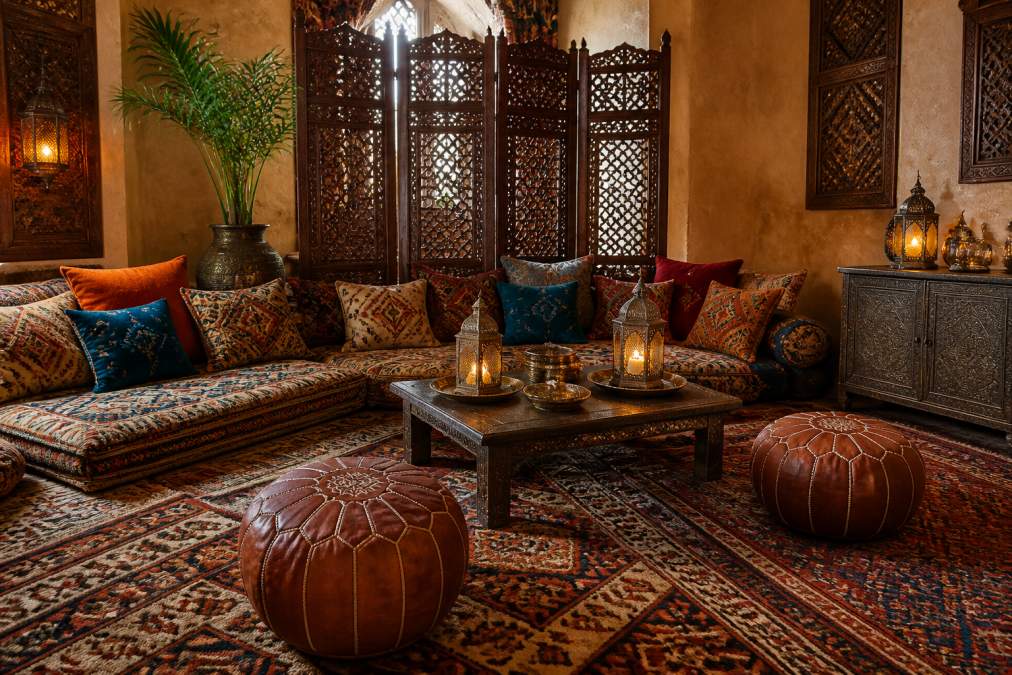
Add architectural interest with carved wooden screens or room dividers. The Mazagan room divider from Justmorocco ($1,200) features handmade wooden mosharabia work, traditional lattice screens crafted by master artisans, that creates visual separation while allowing light and air to flow. Position this behind your seating area or in a corner to define the space without closing it off.
Incorporate a low table, ideally a mosaic tile table or carved wooden piece, as your gathering point. The Mosaic blue tile table from Justmorocco ($650) combines Andalusian tilework with functional design, serving as both a visual anchor and a practical surface for tea, books, or decorative objects. These tables aren't just furniture; they're conversation starters that immediately signal the intentionality of your design.
The textural layering matters as much as the arrangement. Moroccan living room ideas work best when you combine smooth surfaces (tile, brass, glass) with rough textures (wool, linen, carved wood). This contrast creates visual interest and invites touch, a hallmark of authentic Moroccan interiors.
Step 3: Layer Textural Elements and Woven Textures
Moroccan design is fundamentally about texture. A room that looks flat, even if it has the right colors and pieces, misses the soul of the aesthetic. Layering textural elements creates depth, visual interest, and a sensory richness that flat design simply cannot achieve.
Begin with your foundation: woven textures in rugs, throws, and cushions. Beni Ourain rugs, with their distinctive geometric patterns and hand-knotted wool, provide both visual and tactile warmth. Layer a smaller patterned rug on top of a larger neutral one to create dimension. Add woven poufs, macramé wall hangings, and linen cushions in varying weaves, some smooth, some with visible texture. Each layer adds complexity without clutter when chosen intentionally.
Incorporate hand-carved wooden elements: screens, mirror frames, side tables, and architectural details. The carved wood doesn't need to match perfectly; slight variations in color and pattern actually enhance the authentic, handcrafted feel.
Add rustic ceramics and pottery to shelves and surfaces. Unglazed terracotta, hand-painted blue ceramics, and rough-textured vessels create visual breaks and add organic, earthy elements. These pieces should feel collected over time, not arranged like a showroom display.
Textured walls amplify everything else. Plaster finishes, Venetian plaster, or even textured paint create the appearance of aged, lived-in walls that reflect light unevenly and add architectural character. If repainting isn't feasible, textured wall hangings and tapestries achieve similar visual effect.
The key to successful textural layering is restraint. A room layered with too many competing textures becomes overwhelming rather than inviting. Aim for 3-4 dominant textures (woven, carved, ceramic, plaster) rather than trying to include everything at once.
Step 4: Add Lighting With Brass Lanterns and Ambient Fixtures
Lighting determines the mood of a Moroccan interior more than any other single element. Harsh overhead lighting destroys the ambiance; soft, layered, ambient lighting creates the warm, intimate atmosphere that defines Moroccan design.
Moroccan brass lanterns are the signature lighting element. These aren't modern fixtures; they're traditionally designed pieces with pierced metalwork that casts intricate shadows on walls and ceilings. The Mamounia clear glass chandelier from Justmorocco ($850) represents authentic Moroccan craftsmanship, handmade in Marrakesh using traditional techniques still employed in Moroccan palaces and homes. This piece doesn't just illuminate; it becomes a sculptural focal point that transforms how light moves through your space.
Layer your lighting with multiple sources at different heights and intensities. Hang a statement chandelier or pendant from the ceiling, place brass floor lamps in corners, add table lamps on side surfaces, and incorporate wall sconces for accent lighting. Each layer should be dimmable when possible, allowing you to adjust ambiance throughout the day and evening.
Consider the color temperature of your bulbs. Warm white (2700K) creates the cozy, inviting feel associated with Moroccan interiors, while cooler tones flatten the aesthetic. Brass fixtures naturally complement warm lighting, creating a cohesive, intentional look.
Lanterns aren't limited to overhead fixtures. Place decorative brass lanterns on tables, shelves, and the floor, some with candles, others with small LED lights. These create pools of warm light and add visual interest even when not illuminated. Research from the Illuminating Engineering Society confirms that layered, warm ambient lighting reduces stress and creates more welcoming interior spaces.
Step 5: Incorporate Moroccan Poufs and Floor Seating
Moroccan poufs and floor seating define how the space functions and feels. These aren't decorative afterthoughts, they're central to the Moroccan aesthetic of casual, intimate gathering spaces where people sit low to the ground, close together, in conversation.
Poufs serve multiple purposes: extra seating, footrests, side tables, and visual anchors that break up larger floor spaces. Choose poufs in leather, wool, or woven materials with geometric patterns, solid colors, or mixed textures. Leather poufs in deep jewel tones (emerald, sapphire, burgundy) add luxury and durability; wool poufs in natural fibers feel more casual and bohemian. Mix and match heights and sizes to create visual interest, some tall poufs paired with lower, wider ones create dynamic composition.
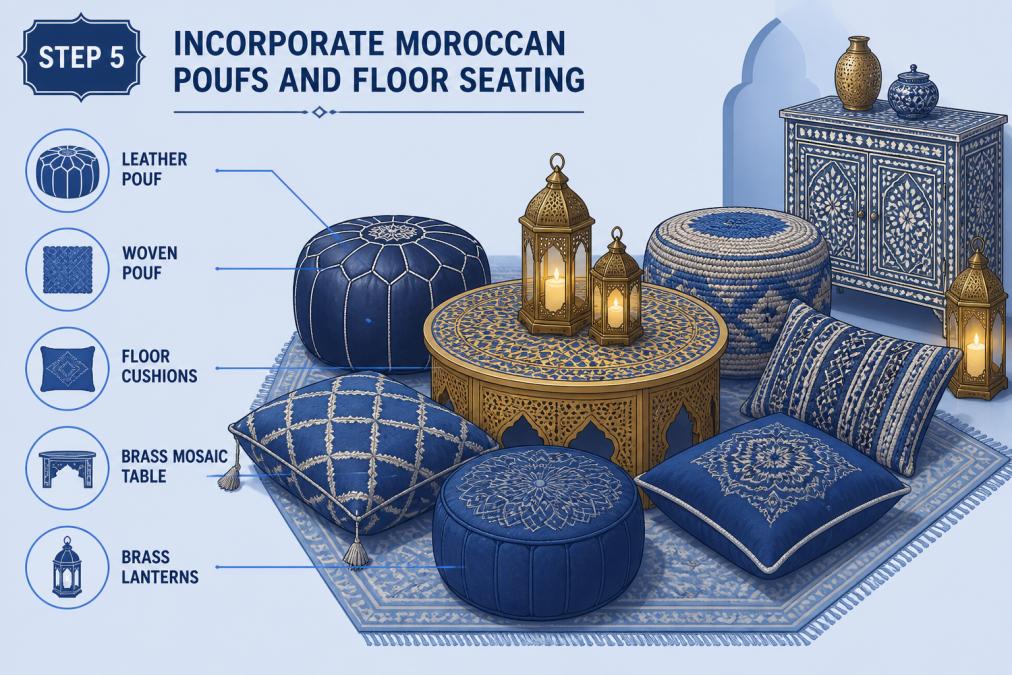
Floor cushions and pillows complete the seating arrangement. Layer them in corners, against walls, and around your central table. Use pillows with different patterns and textures, kilim designs, solid linen, embroidered details, fringe accents. This layered, seemingly casual arrangement actually requires thoughtful curation; each piece should complement rather than compete with others.
The arrangement should feel organic, not rigid. Moroccan interiors embrace asymmetry and imperfection. Group poufs and cushions in clusters rather than perfect rows. Allow some cushions to lean against walls, others to float in the space. This creates the lived-in, gathered-over-time aesthetic that distinguishes authentic Moroccan design from sterile, staged interiors.
Consider how many people typically gather in your space. A family of four needs fewer poufs than a space designed for entertaining. Plan for flexibility, poufs that can be moved easily allow you to reconfigure the space for different activities and occasions.
Step 6: Best Moroccan Decor Accents for Beginners
Best Moroccan decor accents for beginners are pieces that deliver maximum visual impact with minimal commitment or cost. If you're testing the aesthetic before investing in larger items, focus on these accessible entry points that transform a space without requiring renovation or major furniture purchases.
Start with textiles: throw pillows, blankets, and wall hangings in Moroccan patterns and colors. A single geometric pillow or patterned throw over existing furniture immediately signals the aesthetic. These are affordable, easy to swap out if your taste evolves, and they require zero installation.
Add brass or copper accessories: small bowls, trays, mirrors with brass frames, and decorative objects. These catch light, add warmth, and work in any room without demanding major changes. Brass accents cost less than larger fixtures but deliver disproportionate visual impact.
Incorporate pottery and ceramics: hand-painted plates, rustic vessels, terracotta pots. Display these on shelves, mantels, or as table centerpieces. They add color, texture, and cultural authenticity without overwhelming the space.
Hang a single statement piece: a large textile, carved wooden screen, or mirror with ornate frame. One focal point can anchor an entire room's aesthetic without requiring full redesign.
Add a small area rug or runner in a Moroccan pattern. This defines space, adds color and texture, and costs less than a full room renovation. Layer it over existing flooring to test how the aesthetic feels before committing to larger changes.
The best Moroccan decor accents for beginners follow this principle: choose pieces that excite you visually and feel authentic, then layer gradually. This approach prevents the common beginner mistake of over-purchasing items that don't work together, and it allows your space to evolve naturally as you refine your aesthetic preferences.
Budget-Friendly DIY Moroccan Decor Solutions
Authentic Moroccan decor doesn't require luxury pricing. Many traditional Moroccan pieces are handmade by artisans using inexpensive materials, clay, wool, wood, brass, transformed through skill and time into beautiful objects. You can achieve genuine Moroccan aesthetics on a modest budget by prioritizing handmade pieces over mass-produced imitations and by creating DIY solutions for common elements.
DIY textile projects offer tremendous value. Purchase plain linen or cotton fabric and hand-stitch geometric patterns using embroidery thread, creating custom pillows and wall hangings for a fraction of store-bought prices. Moroccan patterns are fundamentally geometric, diamonds, chevrons, crosses, and don't require advanced skills to replicate. YouTube tutorials and embroidery patterns abound for these traditional designs.
Create your own mosaic-inspired surfaces using adhesive tiles on existing furniture. Paint a wooden side table or storage box with geometric patterns using acrylic paint and stencils, then seal with polyurethane. This transforms inexpensive furniture into statement pieces that look intentional and handcrafted.
Make your own poufs using affordable materials. Purchase fabric, fill with foam or recycled materials, and hand-stitch into pouf shapes. A basic pouf costs $15-30 in materials but would retail for $80-150. The handmade quality actually enhances the aesthetic authenticity.
Layer inexpensive rugs creatively. Instead of purchasing one expensive Moroccan rug, combine two or three affordable rugs in complementary patterns and colors. The layering creates visual depth and the mixed-rug aesthetic actually aligns with traditional Moroccan interiors, where rooms accumulate textiles over generations.
Create brass-look fixtures using spray paint and thrifted metal objects. Old brass-toned picture frames, mirrors, and decorative items from thrift stores can be refreshed with metallic spray paint and repositioned as statement pieces. The imperfect, collected quality actually enhances authenticity.
Propagate plants in inexpensive terracotta pots and display them throughout your space. Moroccan interiors often feature abundant greenery in simple clay vessels. This adds life, color, and texture for minimal cost.
The philosophy behind budget-friendly Moroccan decor is this: the aesthetic values handmade authenticity and collected-over-time imperfection. Expensive pieces aren't inherently more Moroccan than thoughtfully curated affordable ones. What matters is intentionality, craftsmanship (even if DIY), and the feeling the space creates.
Small-Space Moroccan Integration Strategies
Small spaces present unique challenges for Moroccan design, which typically emphasizes layering, richness, and visual abundance. However, small-space Moroccan integration works beautifully when you apply strategic restraint and vertical thinking.
Vertical layering prevents small spaces from feeling cluttered. Instead of spreading Moroccan elements horizontally across limited floor space, draw the eye upward. Hang textile wall hangings, install floating shelves with pottery and brass objects, and use tall narrow mirrors with ornate frames. This creates visual richness without consuming precious square footage.
Choose a single dominant color palette rather than introducing multiple colors. A small space with terracotta, cream, and deep blue feels cohesive; the same space with six competing colors feels chaotic. Limit your palette to three colors maximum, using them consistently across textiles, walls, and accessories.
Select fewer, larger statement pieces rather than many small ones. One substantial carved wooden screen creates more impact than five small decorative objects. One large Moroccan rug grounds the space; multiple small rugs fragment it. One substantial brass chandelier defines the room; multiple small lanterns compete for attention.
Use furniture that serves multiple purposes. A low Moroccan table functions as seating, storage, and display surface. A pouf becomes a seat, footrest, and storage container. This maximizes functionality in limited square footage while maintaining the aesthetic.
Mirrors amplify light and create the illusion of more space. A large mirror with an ornate brass or carved wooden frame adds Moroccan character while making the room feel more expansive. Position mirrors to reflect natural light and create visual depth.
Embrace negative space. Small Moroccan interiors work when they're edited versions of larger ones, fewer poufs, less layering, more breathing room. This actually feels more contemporary and Scandinavian-influenced, creating an interesting fusion of Moroccan richness with minimalist restraint.
Consider a single feature wall rather than treating all walls identically. Apply textured plaster, geometric stenciling, or a bold paint color to one wall, keeping others neutral. This anchors the aesthetic without overwhelming the space.
Small-space Moroccan integration succeeds when you view constraints as creative opportunities. Limited square footage forces intentional curation, and intentional curation is exactly what makes Moroccan design feel authentic rather than touristy.
| Strategy | Best For | Implementation Time |
|---|---|---|
| Textiles and wall hangings | Renters, quick updates | 1-2 hours |
| DIY painted furniture | Budget-conscious decorators | 4-6 hours per piece |
| Layered rugs | Any space size | 1-2 hours |
| Vertical shelving | Small spaces | 2-4 hours (installation) |
| Single feature wall | Commitment-ready homeowners | 8-16 hours (paint/plaster) |
| Pouf and cushion arrangement | Flexible, evolving spaces | 1-2 hours |
Integrating Moroccan decor transforms your home into a sanctuary that reflects authentic craftsmanship and cultural richness. The process doesn't happen overnight, it evolves as you discover pieces that resonate with you and understand how they work together in your specific space. Start with color, layer in textures, add intentional lighting, and let the aesthetic develop naturally. At Justmorocco, we specialize in sourcing authentic handcrafted pieces, from hand-carved wooden screens to traditional brass lanterns and mosaic tile tables, that bring genuine Moroccan character to homes across the United States. Our custom design services work with your architect's specifications for kitchen and bathroom remodeling projects, ensuring that every piece integrates seamlessly into your vision. Explore our collection and discover how authentic Moroccan craftsmanship can elevate your living space into something truly extraordinary.
Frequently Asked Questions
What are the key elements of Moroccan interior design?
Moroccan interior design centers on geometric patterns, warm earthy color palettes, and handcrafted authenticity. Key elements include brass lanterns for ambient lighting, Beni Ourain rugs with natural wool textures, mosaic tiles with intricate patterns, carved wooden arches, and rustic ceramics. Textural layering through woven textiles, poufs, and cushions creates depth. Ornate details like calligraphic influences and hand-carved wood accents add cultural character. These elements work together to create serene, characterful spaces that blend traditional design traditions with functional modern living.
How do I mix Moroccan decor with modern furniture?
Create a minimalist fusion by pairing Moroccan pieces with clean-lined modern furniture. Use Moroccan textiles, like Beni Ourain rugs, as statement pieces against neutral modern sofas. Incorporate warm metal accents and brass lanterns to bridge both aesthetics. Select one or two ornate Moroccan items as focal points rather than filling the space. Keep walls neutral and let geometric patterns from rugs and cushions provide visual interest. This approach respects both design traditions while maintaining a contemporary feel suitable for any home.
How can I add Moroccan flair to a small apartment?
In small spaces, focus on vertical elements like lattice windows, arched entries, or hanging brass lanterns to draw the eye upward without consuming floor space. Use a single statement rug or mosaic tile table as your anchor piece. Layer poufs that double as storage and seating. Incorporate Moroccan decor accents like small ceramics, wall-mounted shelving with geometric patterns, or a carved wooden room divider to define zones. Choose one wall for a bold color or mosaic tile accent to avoid overwhelming the space. This strategic approach brings authentic craftsmanship into compact living areas.
What's the best way to source authentic Moroccan pieces?
Seek out importers and artisans who work directly with craftspeople in Morocco to ensure authentic handcrafted pieces. Verify craftsmanship through details like hand-cut mosaic tiles, natural wool in rugs, and genuine bone-inlay work. Request documentation of origin and construction methods. High-quality importers provide custom design services and can work with your specific dimensions for kitchen and bathroom remodeling projects. Authentic pieces may cost more upfront but offer superior durability and cultural integrity compared to mass-produced alternatives.