
Table of Contents
- What Defines High-End Moroccan Furniture Online
- Handcrafted Moroccan Furniture: Artisan-Made Pieces Worth the Investment
- Authentic Moroccan Decor Online: Verifying Craftsmanship and Materials
- Moroccan Lighting and Lanterns: Statement Pieces for Every Room
- Luxury Moroccan Decor Online: Bedroom, Living Room, and Custom Pieces
- Moroccan Interior Design Ideas: Styling High-End Pieces in Modern Homes
- Custom Moroccan Furniture Online: Bespoke Services and Design Consultation
- Care, Maintenance, and Durability of High-End Moroccan Pieces
High-End Moroccan Furniture Online: A Luxury Guide
Last Updated: August 2, 2026
When shopping for high-end moroccan furniture online, authenticity and craftsmanship are everything. At Justmorocco, we understand that discerning homeowners and interior designers are investing in pieces that tell a story of centuries-old artistry. The gap between mass-produced imitations and genuine handcrafted pieces has never been wider. This guide shows you what separates luxury Moroccan pieces from the rest, how to verify authenticity, and how to integrate these statement pieces into modern American homes.
The appeal is undeniable: intricate camel bone inlay work, hand-painted zellige tiles, carved cedar doors, and leather poufs that age beautifully over decades. Sourcing these pieces requires knowing exactly what to look for, how to identify authentic artisan-made Moroccan furniture, evaluate quality markers, and work with specialists who deliver custom pieces tailored to your project.
What Defines High-End Moroccan Furniture Online
Authentic Moroccan furniture isn't simply "old-looking" or decorated with geometric patterns. True high-end pieces share defining characteristics that justify premium pricing.
First, materials matter profoundly. Genuine luxury Moroccan furniture relies on solid woods, cedar, walnut, and thuya, combined with natural inlays like camel bone, mother-of-pearl, and brass. These materials develop character over time. Camel bone yellows and patinas. Mother-of-pearl catches light differently as it ages. Leather poufs develop a rich patina that synthetic materials cannot replicate.
Second, construction techniques define the category. Handcrafted Moroccan furniture uses joinery methods passed down through generations, assembled without nails using precision-cut joints and natural adhesives. This approach takes significantly longer than modern manufacturing but produces pieces lasting centuries rather than decades.
Third, design language matters. Authentic pieces incorporate Moorish geometric patterns, arabesques, and calligraphic details reflecting specific regional traditions. A hand-painted chest from Fez looks distinctly different from one crafted in Marrakech. Artisan-made pieces show intentional variation, no two are identical.
Handcrafted Moroccan Furniture: Artisan-Made Pieces Worth the Investment
The distinction between handcrafted and mass-produced Moroccan furniture is where your investment decision truly begins. Artisan-made pieces represent months of skilled labor, material sourcing, and design consultation that directly impact both price and longevity.
Handcrafted Moroccan furniture starts with material selection. Master craftsmen source aged cedar from sustainable suppliers, select camel bone pieces for consistent color and grain, and hand-cut mother-of-pearl into precise shapes. This process alone adds weeks to production timelines.
The carving process exemplifies artisan craftsmanship. A single Moroccan wooden door with traditional geometric patterns requires 80-120 hours of hand carving. Each cut is deliberate; mistakes mean starting over with new material.
Justmorocco specializes in connecting clients with master craftsmen who maintain these traditional techniques, offering vintage pieces sourced directly from Moroccan workshops alongside newly commissioned custom furniture. When you commission a bespoke Moroccan sofa or custom kitchen cabinetry, you're funding an artisan's livelihood while receiving a one-of-a-kind piece.
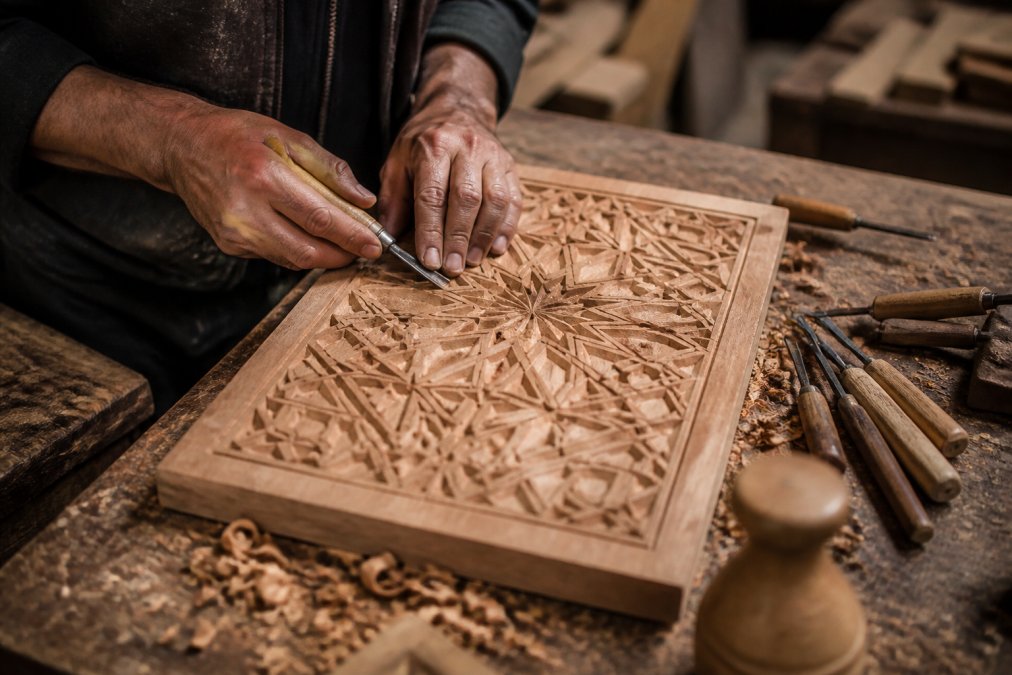
The investment in artisan-made pieces pays dividends over decades. A handcrafted Moroccan leather pouf costs more upfront but develops character, the leather softens, stitching remains intact, and after 15 years it looks better than at purchase. Mass-produced alternatives typically fail within 5-7 years.
Authentic Moroccan Decor Online: Verifying Craftsmanship and Materials
Skepticism is warranted when shopping for moroccan interior design ideas online. The internet is flooded with "Moroccan-inspired" pieces manufactured in Southeast Asia. Knowing how to verify authenticity protects both your investment and aesthetic vision.
Start by examining materials under magnification. Camel bone inlay has a distinctive warm cream color with subtle striations, is lightweight and slightly warm to the touch. Mother-of-pearl reflects light with an iridescent quality that synthetic shell cannot match. Real brass develops patina; plated brass flakes unevenly. If the seller cannot provide close-up photos of inlay details, that's a red flag.
Weight is another authenticity marker. Solid wood furniture is substantially heavier than veneer-based alternatives. A genuine Moroccan cedar chest should feel substantial. Ask sellers for weight specifications, legitimate artisans track this data.
Documentation matters enormously. Authentic sellers provide photos of the craftsperson or workshop, material sourcing information, production timeline details, care instructions, and provenance for vintage pieces. Sellers offering vague descriptions like "handcrafted Moroccan style" without material specifics are likely selling factory-made imitations.
| Authentication Marker | Authentic Indicator | Red Flag |
|---|---|---|
| Camel bone inlay | Warm cream color with natural striations | Uniform white or plastic appearance |
| Weight | Substantial, solid wood density | Suspiciously light for size |
| Seller documentation | Workshop photos, artisan info, material specs | Vague "handcrafted" claims without details |
| Pricing | Premium cost reflecting labor hours | Suspiciously low for claimed materials |
| Variation | Intentional design differences between pieces | Perfect uniformity across items |
| Patina | Natural aging on vintage pieces | Artificial distressing or staining |
Moroccan Lighting and Lanterns: Statement Pieces for Every Room
Moroccan lighting transforms spaces with warm, diffused illumination and architectural presence. High-end Moroccan lanterns and light fixtures are sculptural elements that anchor room design.
Authentic Moroccan lighting includes pierced metal lanterns creating intricate shadow patterns, hand-blown glass lanterns in jewel tones, and brass fixtures with geometric cutouts. Each style serves different aesthetic purposes and lighting functions.
Hand-pierced metal lanterns require artisans to mark precise patterns, then use traditional tools to create hundreds of individual perforations. A single large lantern might involve 40-60 hours of skilled metalwork, resulting in a piece that casts a completely unique light signature.
When selecting Moroccan lighting, consider room function. Bedroom spaces benefit from softer, diffused fixtures creating intimate ambiance. Living rooms accommodate larger statement lanterns serving as focal points. Installation requires planning, Moroccan lanterns are often heavier than standard fixtures, and ceiling support must be verified before hanging.
Luxury Moroccan Decor Online: Bedroom, Living Room, and Custom Pieces
Integrating luxury moroccan furniture online into specific rooms requires understanding how these pieces function within your overall design. High-end Moroccan decor works best when intentional rather than scattered.
Bedroom Furniture and Headboards
The bedroom is where Moroccan furniture shines most dramatically. A carved wooden headboard becomes an architectural feature. Justmorocco's collection includes handcrafted Moroccan sofas and beds inspired by old Moorish Andalusian design, featuring quality fabrics and silver detailing that create an exotic, immersive atmosphere.
Moroccan bedroom pieces work best in rooms with adequate wall space and ceiling height. Consider paint colors carefully, deep jewel tones, warm neutrals, or soft whites provide the right backdrop without visual chaos. Layer textiles with Moroccan rugs, cushions with geometric patterns, and traditional throws to complete the aesthetic.
Living Room Accent Pieces and Leather Poufs
Living rooms accommodate Moroccan accent furniture beautifully. Leather poufs serve multiple functions: seating, footrests, or coffee table bases.
Moroccan mosaic tables work as both functional and artistic elements. A zellige mosaic table featuring authentic hand-cut tiles arranged by skilled artisans becomes a conversation starter. These pieces combine artistic beauty with practical function, suitable for indoor and outdoor use.
The key to successful living room integration is balance. A single statement piece anchors the room; additional Moroccan elements like lanterns, poufs, and textiles support without overwhelming.
Moroccan Interior Design Ideas: Styling High-End Pieces in Modern Homes
The challenge with high-end Moroccan furniture online is integrating it into contemporary American homes without creating a disjointed aesthetic. Successful integration requires understanding color theory, spatial planning, and design principles that bridge traditional and modern sensibilities.
Start with a color anchor. Rather than matching every wall and furnishing to a Moroccan palette, choose one dominant color that grounds the design. Deep indigo, warm terracotta, rich jewel tones, or sophisticated neutrals all work. Everything else should reference this anchor color while maintaining visual interest through pattern and material variation.
Lighting is critical. Layer your lighting: ambient overhead fixtures, task lighting for function, and accent lighting to highlight statement pieces. Moroccan lanterns work beautifully as accent lighting, creating atmosphere without providing primary illumination.
Wall treatment matters significantly. In traditional Moroccan homes, zellige tile covers walls partially or completely. In modern American homes, consider zellige accents: a tile feature wall in one room, a tiled niche in a bathroom, or zellige trim around doorways.
Mixing Moroccan pieces with other design styles works when intentional. Moroccan furniture pairs beautifully with Scandinavian minimalism, industrial design, contemporary bohemian, and transitional style. Treat Moroccan furniture as integral to your overall design narrative, not as "ethnic decoration" isolated in one corner.
Custom Moroccan Furniture Online: Bespoke Services and Design Consultation
For serious collectors and high-end design projects, custom moroccan furniture online represents the ultimate expression of personalization. Commissioning bespoke pieces allows you to specify dimensions, materials, colors, and design details aligning perfectly with your vision.
The custom process begins with design consultation where you describe your space, aesthetic preferences, functional requirements, and budget. The artisan creates sketches or digital renderings showing how the piece will look. Material selection happens next, for a custom kitchen project, you might choose specific wood species, inlay materials, and hardware finishes.
Production timelines for custom pieces typically range from 8-16 weeks depending on complexity. Justmorocco specializes in custom kitchen and bathroom remodeling projects, providing top-tier craftsmanship blending traditional artistry with modern functionality.
Communication during production is essential. Legitimate custom furniture makers provide progress photos at key stages. Shipping custom pieces across the country requires careful planning. Justmorocco handles direct shipping to California, Texas, New York, and Florida with insurance protection for valuable pieces. Climate-controlled shipping is recommended for items with mother-of-pearl inlay or hand-painted details.
Care, Maintenance, and Durability of High-End Moroccan Pieces
Investing in luxury Moroccan furniture means committing to proper care. These pieces are built to last centuries but require maintenance respecting their materials and construction methods.
Wood care is foundational. Moroccan furniture made from cedar, walnut, or thuya needs protection from extreme humidity and temperature fluctuations. In humid climates like coastal Florida, use dehumidifiers to maintain 40-50% humidity levels. Dust wooden pieces regularly with soft, dry cloths. Avoid commercial furniture polishes; instead use traditional linseed oil or beeswax finishes applied sparingly.
Camel bone inlay requires gentle care. Avoid prolonged direct sunlight exposure. Dust inlaid pieces carefully; aggressive scrubbing can loosen inlay pieces. If an inlay becomes loose, contact a specialist immediately.
Mother-of-pearl pieces need protection from moisture and salt air. In coastal environments, apply protective clear coat annually. Avoid abrasive cleaners that can scratch the delicate surface.
Leather poufs develop character through use but benefit from occasional conditioning. Use leather-specific conditioners designed for vegetable-tanned leather. Avoid silicone-based products that can build up and damage the material.
| Material | Care Method | Frequency | Expected Lifespan |
|---|---|---|---|
| Solid wood (cedar, walnut) | Dust regularly; apply linseed oil or beeswax finish | Every 6-12 months | 50+ years |
| Camel bone inlay | Gentle dusting; avoid direct sunlight | As needed | 100+ years |
| Mother-of-pearl | Protective coating in coastal areas; immediate spill cleanup | Annual coating | 75+ years |
| Leather poufs | Conditioning with vegetable-tanned leather treatments | Every 12-18 months | 20-30 years with care |
| Hand-painted details | Dust gently; avoid moisture exposure | As needed | 50+ years |
| Zellige tile | Gentle cleaning with pH-neutral cleaner; seal grout | Annual sealing | 100+ years |
Climate control is non-negotiable for high-end Moroccan furniture in American homes. Moroccan pieces evolved in Mediterranean climates with moderate, consistent humidity. Central heating in winter and air conditioning in summer create extreme fluctuations that stress wood and other materials. Maintaining 45-55% humidity year-round preserves these pieces beautifully.
Professional restoration is available when needed. If a carved wooden piece develops cracks or an inlay becomes loose, contact a furniture restorer experienced with Moroccan pieces.
High-end Moroccan furniture online represents a genuine investment in artistry, durability, and aesthetic vision. These pieces bridge centuries of craftsmanship with contemporary design, offering something mass-produced furniture simply cannot match. Whether commissioning custom kitchen cabinetry, sourcing a statement bedroom headboard, or integrating accent pieces into a modern home, authenticity and craftsmanship matter profoundly. Justmorocco connects discerning clients with master artisans who maintain traditional techniques while delivering pieces tailored to your specific needs. Get started with a design consultation and discover how authentic Moroccan furniture can transform your space into a sophisticated sanctuary.
Frequently Asked Questions
How can I verify that high-end Moroccan furniture online is actually handcrafted and authentic?
Authentic handcrafted pieces show natural variations in color, pattern, and finish that mass-produced items lack. Request documentation of the artisan or workshop, ask for photos of the creation process, and look for signs of hand-finishing like visible chisel marks or uneven edges in bone inlay work. Reputable sellers of authentic Moroccan furniture online provide detailed provenance information and are transparent about their sourcing directly from Morocco.
What materials should I expect in luxury Moroccan decor online?
High-end pieces feature solid wood frames, vegetable-tanned leather, hand-cut zellige tiles, camel bone inlay, and natural textiles. Quality Moroccan furniture uses chrome-free, chemical-free leather that ages beautifully, solid cedar or argan wood that resists warping, and genuine mosaic tiles arranged by hand. Avoid pieces with plywood cores or synthetic leather if authenticity matters to you.
Can high-end Moroccan furniture withstand humid climates like coastal Florida?
Solid wood and properly finished pieces handle humidity well when maintained correctly. Vegetable-tanned leather develops a protective patina over time and resists moisture better than synthetic alternatives. However, extreme humidity and salt air require regular care: dust frequently, use furniture polish on wood, and condition leather annually. Mosaic tile and bone inlay are naturally resistant to humidity, making them ideal for coastal homes.
How long does a custom Moroccan furniture project typically take?
Custom orders from Morocco usually require 6-12 weeks for design, craftsmanship, and shipping, depending on complexity. Kitchen and bathroom remodeling projects with bespoke cabinetry and architectural elements may take 3-6 months from design approval through installation. Discuss timelines upfront with your supplier, especially if you have a specific deadline like spring completion.
What makes custom Moroccan furniture online worth premium pricing?
Bespoke pieces are handcrafted by skilled artisans using traditional techniques passed down through generations, ensuring one-of-a-kind quality that mass-produced alternatives cannot match. Custom dimensions accommodate your specific layout, and personalized design ensures the piece integrates seamlessly with your space. The investment reflects authentic craftsmanship, sustainable materials, and durability that lasts decades.