
Table of Contents
- Why Luxury Homes Demand Custom Kitchen Cabinetry
- Custom vs Prefab Kitchen Cabinets: The Core Differences
- Bespoke Kitchen Cabinetry Benefits for High-End Homes
- Material Quality and Durability in Artisan-Crafted Cabinetry
- Design Flexibility and Personalization Through Master Craftsmanship
- High-End Kitchen Remodeling Materials and Finishes
- Installation Precision and Furniture-Grade Construction Standards
- Long-Term Investment Value and Cabinetry Longevity
- Sustainability and Eco-Certification in Custom Cabinetry
- Maintenance and Lifecycle Costs of Bespoke Cabinetry
- Moroccan-Inspired Custom Cabinetry for Distinctive Luxury Kitchens
- Frequently Asked Questions
Last Updated: September 30, 2026
Why Luxury Homes Demand Custom Kitchen Cabinetry
At Justmorocco, we recognize that custom kitchen cabinetry represents far more than storage solutions. Luxury homeowners increasingly reject mass-produced alternatives because they fail to reflect personal taste, architectural vision, or the specific dimensions of high-end spaces. The kitchen has become the centerpiece of luxury homes, and bespoke cabinetry delivers what prefabricated options simply cannot: precision, authenticity, and lasting value.
Mass-produced cabinets rely on standardized dimensions and finishes. They arrive in boxes, fit into predictable layouts, and serve the broadest possible market. Custom kitchen cabinetry, by contrast, begins with your space. Craftspeople measure, plan, and build to exact specifications. The result feels intentional rather than inserted.
This distinction matters most in luxury homes where every detail signals quality. A kitchen with bespoke cabinetry announces that the owner understood their space deeply enough to invest in solutions tailored to it. The craftsmanship becomes visible in joinery, hardware, and finishes that mass production simply cannot replicate.
Custom vs Prefab Kitchen Cabinets: The Core Differences
Custom kitchen cabinetry and prefabricated options differ fundamentally in how they're designed, built, and installed. Understanding these differences helps explain why luxury homes overwhelmingly favor bespoke solutions.
Prefab cabinets arrive pre-assembled or semi-assembled from factories. They come in standard widths: 12 inches, 18 inches, 24 inches, 36 inches, and so on. If your kitchen layout requires a 37-inch opening, you either force a standard cabinet into the space or leave a gap. The doors, drawer fronts, and hardware are predetermined. You choose from a limited palette of finishes, typically applied uniformly across all pieces.
Custom kitchen cabinetry begins with measurement. Craftspeople visit your space, document dimensions to the millimeter, and discuss your aesthetic goals. They then design and build cabinets that fit your exact layout. A 37-inch opening receives a 37-inch cabinet. Curved walls, angled ceilings, and architectural quirks become design opportunities rather than obstacles.
| Aspect | Prefabricated Cabinets | Custom Kitchen Cabinetry |
|---|---|---|
| Sizing | Standard dimensions only | Built to exact specifications |
| Design Timeline | Immediate availability | 8-12 weeks typical |
| Material Quality | Particleboard, MDF common | Solid wood, engineered panels |
| Hardware | Basic, limited options | Artisan hardware, soft-close standard |
| Installation | Simplified assembly | Professional precision installation |
| Customization | Minimal (finish only) | Complete design flexibility |
| Longevity | 5-10 years typical | 20+ years with proper care |
The installation process reveals another critical difference. Prefab cabinets often require shimming, cutting, and field modifications to fit imperfectly. Custom cabinetry arrives ready for precise installation, with all joinery and hardware pre-fitted. This precision prevents the settling, squeaking, and misalignment that plague budget options over time.
Bespoke Kitchen Cabinetry Benefits for High-End Homes
The advantages of custom kitchen cabinetry extend far beyond appearance. Luxury homeowners gain practical, long-term benefits that justify the investment.
Spatial Optimization. Bespoke cabinetry maximizes every inch of your kitchen. Awkward corners become pull-out storage. Ceiling heights get used with upper cabinets that reach exactly where yours do. Appliance garages hide small electronics while keeping them accessible. These solutions emerge from custom design, not standard configurations.
Aesthetic Control. Your kitchen reflects your vision, not a designer's inventory. Choose wood species, stain colors, hardware finishes, and door styles independently. Mix materials: perhaps walnut base cabinets with lighter uppers, or integrate open shelving with closed storage. Incorporate architectural details like arched niches or carved panels that echo your home's style.
Durability Through Materials. Custom kitchen cabinetry typically uses solid wood frames with engineered panel sides, a construction method that outlasts particleboard alternatives. Dovetail joinery on drawers resists wear better than stapled joints. Soft-close hinges prevent slamming and extend hardware life. These material choices compound over time, making bespoke options more economical long-term.
Integration with Architecture. High-end homes often feature distinctive architectural elements: exposed beams, angled ceilings, or custom tile work. Prefab cabinets fight these features. Custom kitchen cabinetry embraces them, creating a unified aesthetic where cabinetry feels like part of the home's original design rather than an afterthought.
Resale Value. Homes with furniture-grade custom cabinetry command premiums. Prospective buyers recognize quality craftsmanship and understand that replacing bespoke cabinetry costs substantially more than upgrading prefab options.
Material Quality and Durability in Artisan-Crafted Cabinetry
Material selection determines whether custom kitchen cabinetry will endure for decades or require replacement within a generation. Understanding substrate options, wood choices, and construction standards separates investment-grade pieces from those that disappoint over time.
Substrate Hierarchy. Solid wood frames represent the gold standard for custom kitchen cabinetry. Hardwoods like walnut, cherry, and oak provide structural integrity and accept finishes beautifully. For side panels and backs, engineered panels offer stability and cost efficiency. High-density MDF resists warping better than particleboard, which absorbs moisture and fails prematurely in kitchens where humidity fluctuates.
The cellular integrity of your substrate matters. Particleboard, common in budget cabinets, degrades when exposed to moisture or weight stress. Quality custom kitchen cabinetry uses materials that maintain structural performance across temperature and humidity cycles, critical in kitchens where steam from cooking and dishwashers creates challenging conditions.
Hardware as Durability Marker. Soft-close hinges and full-extension drawer slides represent standard features in bespoke cabinetry. These components cost more upfront but eliminate the slamming and binding that damage budget cabinets. Hinges rated for 100,000+ cycles last longer than those rated for 50,000. This specification detail determines whether your cabinetry functions smoothly after five years or develops squeaks and misalignment.
Finish Quality. Custom kitchen cabinetry typically receives multiple coats of conversion varnish or catalyzed lacquer, finishes that harden through chemical reaction rather than air drying. These finishes resist water rings, scratches, and staining better than single-coat applications. The labor-intensive application process justifies the premium cost through superior performance.
Design Flexibility and Personalization Through Master Craftsmanship
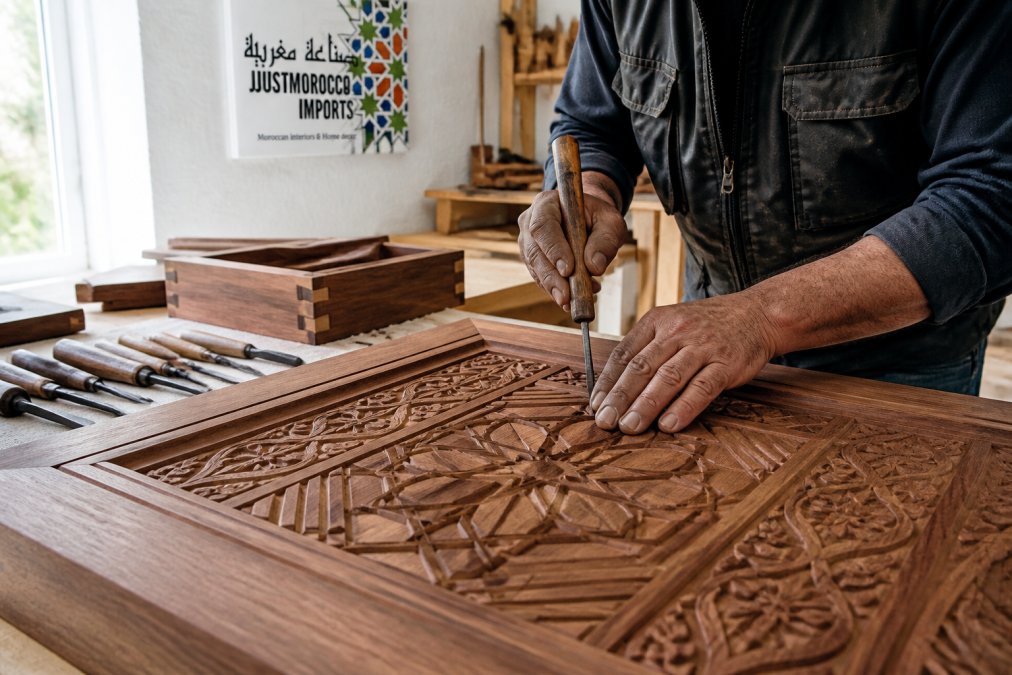
Master craftsmanship transforms custom kitchen cabinetry from functional storage into bespoke design statements. This flexibility allows homeowners to express personal aesthetic while solving practical spatial challenges that prefab solutions simply cannot address.
The soul of bespoke cabinetry lies in its woodwork. Rather than flat panel doors, consider traditional architectural details. Mashrabiya lattice work, intricate, geometric screens, can serve as inserts for upper cabinet doors, allowing airflow while displaying colorful glassware. Carved panels featuring hand-etched floral or star-shaped motifs add visual depth. Arched niches, mimicking traditional doorways, replace rectangular frames for open shelving displays.
In 2026, the design trend has shifted toward "Modern Moroccan", blending traditional hand-carved elements with sleek, high-functionality cabinetry. Dark woods like walnut and mahogany provide sophisticated backdrops for carved details, while lighter finishes create calm, Japandi-influenced palettes.
Two-tone strategies offer another personalization avenue. Dark, carved wood for base cabinets grounds the kitchen visually, while lighter, plastered-look finishes for uppers create visual lightness. This approach breaks the monotony of single-color installations while maintaining cohesive design flow.
Hardware selection represents the easiest path to personalization. Artisan hardware gains patina over time, becoming more beautiful with age. Brass, bronze, and wrought iron develop character that polished chrome cannot match. These details signal that your custom kitchen cabinetry received thoughtful attention throughout.
High-End Kitchen Remodeling Materials and Finishes
Complementary materials elevate custom kitchen cabinetry from impressive to extraordinary. Thoughtful pairing of cabinetry with backsplashes, countertops, and accent surfaces creates unified, luxurious kitchens.
Zellige Tile Backsplashes. Hand-chiseled clay tiles reflect light beautifully against matte wood cabinetry. Their imperfect, glossy finish celebrates artisanal production while providing durable, easy-to-clean surfaces. Zellige's subtle color variations prevent the monotony of uniform tiles.
Tadelakt Plaster Finishes. This waterproof lime plaster creates seamless, organic flows between cabinetry and surrounding walls. Applied to range hoods or accent walls, Tadelakt develops a patina that complements aged wood cabinetry.
Open Shelving Integration. Thick, rustic wooden planks held by ornate wrought-iron brackets create display opportunities within custom kitchen cabinetry layouts. These shelves showcase cookbooks, dishware, or decorative objects while maintaining visual connection between upper and lower cabinetry.
Natural Stone Countertops. Marble, granite, and slate pair naturally with custom wooden cabinetry. The weight and permanence of stone countertops signal quality investment, complementing furniture-grade cabinetry construction.
The principle underlying these choices: every surface should feel intentional and contribute to the overall design narrative. Mass-produced kitchens rely on matching everything uniformly. High-end spaces create visual interest through thoughtful contrast while maintaining cohesive style.
Installation Precision and Furniture-Grade Construction Standards
Installation precision separates investment-grade custom kitchen cabinetry from disappointing outcomes. The craftsmanship evident in construction must extend through the installation process.
Professional installers begin by verifying that walls are plumb and level. They then use shims and adjustment techniques to ensure cabinetry sits perfectly despite imperfect walls. Full-overlay doors align precisely. Drawers extend smoothly without binding. This attention to detail prevents the settling and misalignment that plague budget installations within months.
Furniture-grade construction standards apply specific benchmarks: dovetail joinery on drawers, mortise-and-tenon joinery on frames, and edge banding on all exposed surfaces. These techniques require skilled labor but create joints that withstand decades of use. Budget alternatives use staples and pocket-hole joinery, which fails sooner under stress.
Marrakech riad kitchen cabinets →
The installation timeline reflects this precision. This extended timeline allows for careful adjustment, hardware installation, and finishing touches that ensure everything functions flawlessly.
Post-installation support distinguishes quality craftspeople. They understand that minor tweaks, hinge adjustments, door alignment, hardware tightening, keep cabinetry performing optimally as wood naturally adjusts to humidity changes.
Long-Term Investment Value and Cabinetry Longevity
Custom kitchen cabinetry represents one of the few home improvements that appreciates rather than depreciates. Understanding the financial and practical value proposition explains why luxury homeowners view this as investment rather than expense.
A well-constructed custom kitchen cabinetry installation lasts 20-30 years or longer with proper maintenance. This longevity difference alone justifies the initial premium. Over 30 years, a custom solution becomes more economical than multiple prefab replacements.
Resale value reflects quality perception. Prospective buyers recognize furniture-grade construction and understand its implications. Homes featuring bespoke cabinetry command measurable premiums compared to those with standard installations.
The customization aspect adds value beyond the physical product. A kitchen designed specifically for your space, reflecting your aesthetic preferences and addressing your spatial challenges, feels like a genuine home investment rather than a generic installation.
Maintenance costs favor custom kitchen cabinetry over time. Quality hinges, slides, and finishes require less frequent repair. The solid construction resists damage that would require component replacement in budget alternatives.
Sustainability and Eco-Certification in Custom Cabinetry
Luxury homeowners increasingly prioritize environmental responsibility, making sustainability a legitimate consideration in custom kitchen cabinetry selection. Understanding material sourcing, manufacturing practices, and lifecycle impacts helps align purchases with values.
Responsibly sourced hardwoods represent the foundation of sustainable custom cabinetry. Look for certifications from the Forest Stewardship Council (FSC), which verifies that timber comes from well-managed forests.
Manufacturing processes matter equally. Craftspeople using hand tools and traditional joinery consume less energy than factories producing prefab alternatives. Local production reduces transportation emissions substantially.
Engineered panels offer environmental advantages when sourced responsibly. Quality MDF uses agricultural waste and recycled wood fibers, reducing pressure on virgin timber resources.
The longevity factor creates the strongest sustainability argument. Custom cabinetry lasting 30 years means dramatically fewer resources consumed over time. From a lifecycle perspective, investing in durable custom kitchen cabinetry represents the most environmentally responsible choice available.
Maintenance and Lifecycle Costs of Bespoke Cabinetry
Understanding ongoing maintenance requirements and lifecycle costs helps homeowners make informed decisions about custom kitchen cabinetry investments. Proper care ensures that your bespoke solution maintains its beauty and functionality across decades while revealing the true financial advantage over repeated prefab replacements.
Regular Cleaning and Preventive Care. Simple soap and water suffice for most finishes on custom kitchen cabinetry. Avoid harsh chemicals or abrasive scrubbers that damage protective coatings. Wipe spills promptly to prevent staining or water damage. This basic maintenance takes minimal time but preserves finish quality indefinitely. For conversion varnish and catalyzed lacquer finishes common in quality custom cabinetry, annual polishing with furniture wax maintains luster and provides additional water protection.
Finish Touch-Ups and Minor Repairs. Quality custom kitchen cabinetry finishes resist damage, but minor scratches occasionally occur over decades of use. Small hardware adjustments, tightening hinges, realigning doors, lubricating slides, represent the most common maintenance needs.
Hardware Replacement and Upgrade Cycles. Soft-close hinges rated for 100,000+ cycles typically last 15-20 years in residential kitchens with normal use patterns. Full-extension drawer slides with ball-bearing construction maintain smooth operation for 20+ years. When hardware eventually requires replacement, quality custom cabinetry allows selective component upgrades.
Humidity Management and Wood Movement. Wood naturally expands and contracts with moisture changes. Maintaining consistent humidity levels minimizes these movements and prevents warping or cracking. Quality custom cabinetry built with proper wood movement allowances (gaps behind solid wood panels, floating shelves) accommodates these changes gracefully.
Professional Refinishing and Restoration. After 20-30 years of use, quality custom kitchen cabinetry may benefit from professional refinishing. This process involves careful stripping of existing finish, minor repairs to wood surfaces, and application of new finish coats matching the original specification. This investment restores the cabinetry to near-original condition and extends functional life another 20-30 years.
Lifecycle Cost Analysis: 40-Year Comparison.
Resale Value Retention.
Moroccan-Inspired Custom Cabinetry for Distinctive Luxury Kitchens
Moroccan design brings unparalleled character to luxury kitchens through custom cabinetry that celebrates traditional craftsmanship while supporting modern functionality. At Justmorocco, we specialize in creating bespoke kitchen solutions that blend authentic artistry with contemporary convenience.
Moroccan custom kitchen cabinetry emphasizes hand-carved details and rich materials. Mashrabiya lattice inserts create visual interest while allowing display of glassware. Carved panels featuring geometric or floral motifs add depth that mass production cannot replicate. Arched niches echo traditional Moroccan architecture, transforming functional storage into design statements.
Color palettes in 2026 favor earth tones over traditional vibrant primaries. Deep emerald, sapphire blue, and dusty terracotta provide sophisticated backdrops for carved woodwork. Alternatively, muted sage green and burnt honey yellow create calmer Japandi-influenced aesthetics. Two-tone strategies, dark carved wood bases with lighter plastered-look uppers, balance visual weight while maintaining cohesive design flow.
Complementary materials elevate Moroccan custom kitchen cabinetry beyond cabinetry alone. Zellige tile backsplashes with their hand-chiseled, imperfect surfaces celebrate artisanal production. Tadelakt plaster finishes create seamless transitions between cabinetry and walls. Thick wooden shelves held by ornate wrought-iron brackets provide display opportunities while reinforcing the aesthetic.
Our Marrakech riad kitchen cabinets, Darna kitchen cabinet, Demna royal kitchen cabinet, Queen Souad kitchen cabinet, and Fatima kitchen cabinet collections showcase how authentic Moroccan design principles translate into functional luxury kitchens. Each piece combines traditional hand-carved elements with modern hardware and construction standards, ensuring that your custom kitchen cabinetry delivers both beauty and reliable performance. For homeowners seeking to source distinctive pieces that complement their custom installations, custom furniture imports offer access to authentic artisan-crafted elements that enhance the overall design narrative.
The investment in Moroccan-inspired custom kitchen cabinetry pays dividends through distinctive aesthetic that commands attention and respect. Your kitchen becomes a sanctuary reflecting both personal taste and appreciation for master craftsmanship.
Luxury kitchens demand more than prefabricated alternatives can deliver. Custom kitchen cabinetry provides the precision, personalization, and durability that high-end homes require. At Justmorocco, we understand that your kitchen represents a significant investment in both function and aesthetic. Our custom kitchen remodeling services combine traditional artistry with modern craftsmanship, delivering bespoke solutions that elevate your space while maintaining reliable performance for decades. Explore how our Moroccan-inspired custom cabinetry collections can transform your kitchen into a luxurious sanctuary that reflects your vision and stands the test of time.
Frequently Asked Questions
What are the main differences between custom kitchen cabinetry and mass-produced cabinets?
Custom kitchen cabinetry is built to your exact specifications using furniture-grade construction standards and premium materials like solid wood and engineered panels with high cellular integrity. Mass-produced cabinets use particleboard and MDF with standardized dimensions that rarely fit luxury home layouts perfectly. Custom options offer full-overlay doors, dovetail joinery, and soft-close hardware as standard, while prefab versions often charge extra for these features. The craftsmanship difference is substantial: bespoke cabinetry achieves installation precision that mass production simply cannot match.
Is bespoke kitchen cabinetry benefits worth the investment for luxury homes?
Yes, for luxury homes, custom kitchen cabinetry delivers measurable returns through superior cabinetry durability, storage optimization, and aesthetic customization that mass-produced options cannot achieve. Bespoke cabinetry increases property value, accommodates architectural nuances, and provides 20-30 years of reliable performance. The investment protects your kitchen's functionality and appearance through premium finishes that age gracefully.
What materials are typically used in high-end kitchen remodeling materials for custom cabinetry?
High-end kitchen remodeling materials include solid hardwoods (walnut, mahogany, cherry), engineered panels with high-density substrates for stability, and premium plywood for structural integrity. Finishes range from hand-applied lacquers to natural oils that develop patina over time. Hardware uses brass, bronze, or stainless steel with soft-close mechanisms. Complementary surfaces include hand-chiseled zellige tile backsplashes and Tadelakt waterproof lime plaster. These materials work together to create cabinetry that withstands humidity, temperature fluctuations, and daily wear while maintaining aesthetic appeal for decades.
How long does custom kitchen cabinetry installation typically take compared to prefab options?
Custom kitchen cabinetry typically requires 8-12 weeks from design approval to installation, accounting for precision measurement, craftsmanship, and finishing. The longer timeline for custom work reflects the care required for master craftsmanship and installation precision.
Can custom cabinetry incorporate unique architectural styles like Moroccan design?
Absolutely. Custom kitchen cabinetry excels at incorporating distinctive styles like Moroccan design through bespoke joinery, hand-carved panels, and geometric inlays. Features include mashrabiya lattice work on upper doors, arched niches mimicking traditional doorways, and carved floral or star-shaped motifs. Options like the Marrakech Riad, Darna, and Fatima kitchen cabinets showcase how custom craftsmanship blends traditional artistry with modern functionality. Zellige tile backsplashes and Tadelakt plaster finishes complement the cabinetry, creating cohesive luxury kitchens that mass-produced alternatives simply cannot achieve.