
Table of Contents
- What Makes Bespoke Moroccan Cabinetry Exceptional
- Hand-Carved Moroccan Wood Furniture: Artisanal Heritage and Technique
- Kitchen Cabinetry: Custom Solutions for Culinary Luxury
- Bathroom Vanities and Storage: Spa-Inspired Elegance
- Maintenance and Care of Exotic Woods
- Investment Value and Customization ROI
-
Featured Bespoke Moroccan Cabinet Collections
- 1. Touareg Carved Cabinet: Bold African Craftsmanship
- 2. Moroccan Carved Cabinet: Marrakech Mastery
- 3. Alhambra Cabinet: Moorish Mashrabiya Design
- 4. Harem Cabinet: Large-Scale Statement Piece
- 5. Moroccan Bathroom Vanity: Spa Sanctuary
- 6. Agafay Cabinet: Compact Carved Storage
- 7. African TV Cabinet: Berber Heritage
- 8. Marrakesh Carved Cabinet: Moorish and African Fusion
- How to Choose the Right Bespoke Cabinet for Your Space
- Conclusion
Last Updated: August 16, 2026
What Makes Bespoke Moroccan Cabinetry Exceptional
Bespoke moroccan cabinetry is an investment in artisanal craftsmanship that transforms luxury homes into curated sanctuaries. What separates these pieces from mass-produced alternatives is the intersection of Old World techniques, authentic materials, and custom design responding directly to your space's architecture and aesthetic vision.
Authentic bespoke moroccan cabinetry demands skill that cannot be rushed or outsourced to factories. Each piece begins with hand-selected cedar and exotic woods, moves through geometric pattern design honoring traditional Moorish proportions, and culminates in carving work performed by artisans trained across generations. At Justmorocco, we source directly from craftspeople in regions where these techniques originated, ensuring every cabinet carries genuine heritage rather than superficial ornamentation.
These pieces function as both storage solutions and architectural statements. A bespoke moroccan cabinet anchors a room's design conversation, influences how light moves through a space, and establishes the aesthetic foundation for everything else around it. This is why luxury homes don't treat cabinetry as an afterthought.
Hand-Carved Moroccan Wood Furniture: Artisanal Heritage and Technique
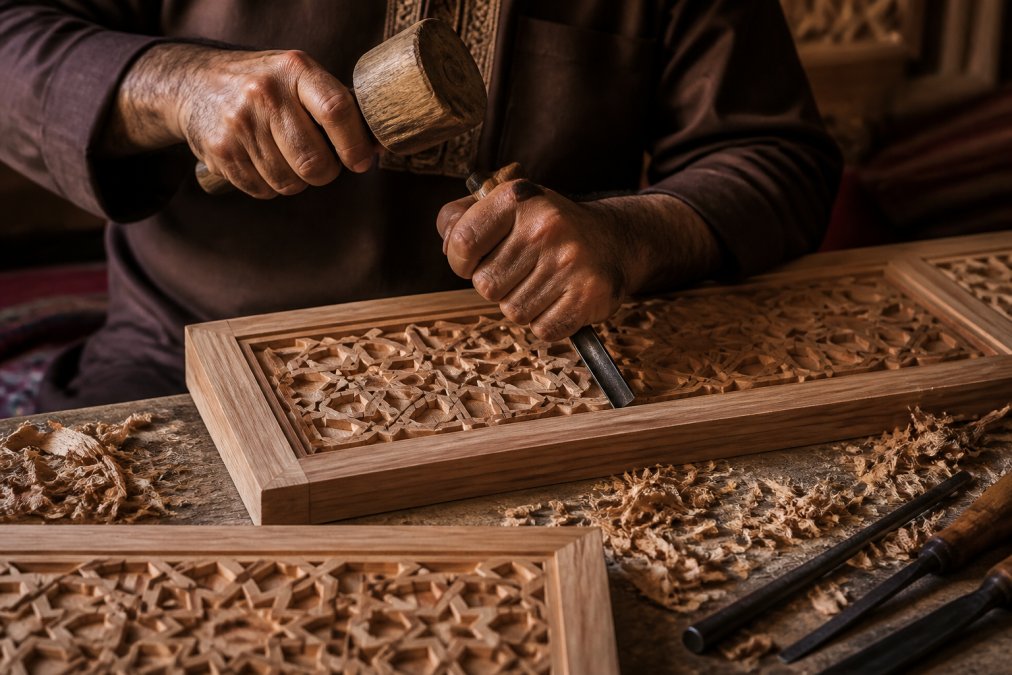
Hand-carved moroccan wood furniture emerges from centuries of joinery tradition where function and ornament were never separate concerns. The geometric patterns carved into doors and panels aren't decorative flourishes, they're structural elements evolved from Islamic architectural principles, where mathematical precision and spiritual symbolism intertwined.
The technique requires understanding both material and mathematics. Artisans study wood grain, select cuts that showcase carving without splitting, then transfer geometric designs based on traditional Moroccan star patterns, interlocking hexagons, and V-shaped zig-zags onto the wood surface. Carving proceeds in layers, with different chisel widths and depths creating shadow and dimension that changes with light throughout the day.
What distinguishes hand-carved moroccan wood furniture from machine-carved imitations is the variation. No two pieces are identical because wood moves differently, grain patterns shift, and each artisan's hand pressure creates subtle depth changes. This inconsistency is proof of authenticity.
Cedar and Exotic Wood Selection
Cedar dominates bespoke moroccan cabinetry for practical and cultural reasons. The wood resists humidity better than many alternatives and was historically abundant in Morocco's Atlas Mountains. Its natural oils provide protection against insects, and it develops deeper patina over decades rather than degrading.
Beyond cedar, authentic pieces incorporate exotic woods sourced from sustainable suppliers. Walnut offers darker tones and tighter grain accepting fine detail carving. At Justmorocco, wood selection prioritizes both aesthetic goals and environmental responsibility.
Geometric Patterns and Ornate Carving
Geometric patterns in bespoke moroccan cabinetry follow mathematical systems predating European Renaissance geometry. Repeating star patterns, interlocking hexagons, and complex tessellations derive from Islamic tile work and architectural traditions, modular systems where one unit repeats, creating harmony across entire surfaces.
Carving depth varies strategically. Relief carving (where patterns project from a flat background) creates shadow play that shifts as light moves. Pierced carving (where the pattern cuts completely through the wood) allows light to pass through, particularly important in mashrabiya-style cabinet doors. Inlay work, embedding contrasting woods, bone, or mother-of-pearl into carved recesses, adds another dimension.
Moroccan Mashrabiya Cabinet Doors: Privacy, Light, and Modern Function
Moroccan mashrabiya cabinet doors represent one of the most sophisticated design solutions in furniture history, solving multiple problems simultaneously. Mashrabiya, the traditional lattice woodwork found in Islamic architecture, originally allowed women to observe public spaces while remaining unseen. In contemporary cabinetry, it provides visual interest while allowing air circulation and filtered light.
The lattice pattern creates privacy without complete opacity. Contents remain largely hidden, yet the cabinet doesn't feel like a sealed box. In open-plan homes, this allows storage that doesn't dominate visually. In media consoles, the lattice pattern allows infrared signals from remotes to pass through. In kitchen cabinetry, mashrabiya doors on upper cabinets provide display space for curated dishware while keeping dust off everyday items.
The construction of mashrabiya doors demands different skills than flat panel carving. Artisans must turn individual wood pieces on a lathe, creating cylindrical elements, then assemble them into geometric grids using traditional joinery, often without nails or screws. Each turned piece must be precisely dimensioned so the assembled pattern remains true and rigid. This joinery skill is increasingly rare, which is why authentic mashrabiya work commands premium pricing.
Kitchen Cabinetry: Custom Solutions for Culinary Luxury
Kitchen cabinetry represents the most practical application of bespoke moroccan design, where traditional aesthetics meet modern functional demands. A custom kitchen cabinet must accommodate appliances, plumbing, electrical work, and ventilation systems while maintaining visual integrity of hand-carved details and geometric patterns.
Justmorocco specializes in kitchen remodeling projects that solve these conflicts through thoughtful design rather than compromise. Upper cabinets featuring mashrabiya doors provide display and ventilation while keeping working surfaces visible. Lower cabinetry incorporates deep drawers for cookware and pantry storage, with carved face frames anchoring the room's design language. Island cabinetry often becomes the centerpiece, a large carved cabinet serving as both storage and visual focal point.
The Touareg carved cabinet ($1,350) works as a standalone piece for wine storage or serving ware. The Moroccan carved cabinet ($8,500) serves as a primary storage solution for luxury kitchens, with six carved door panels and four drawers providing substantial capacity while commanding attention as architectural sculpture.
Sourcing and ethical craftsmanship become critical in kitchen projects. Kitchen cabinetry experiences daily use, doors opening and closing, humidity fluctuations, temperature changes. The wood must be properly seasoned, joinery must be strong, and finish must withstand kitchen environments.
Bathroom Vanities and Storage: Spa-Inspired Elegance
Bathroom cabinetry presents unique challenges that bespoke moroccan design addresses beautifully. Bathrooms demand moisture resistance, easy-to-clean surfaces, and storage that keeps clutter hidden, yet they're also intimate spaces where design transforms daily routines into moments of calm. Moroccan aesthetics, with their emphasis on water features, geometric patterns, and rich materials, align naturally with spa-inspired bathroom design.
The Moroccan bathroom vanity ($2,800) exemplifies this integration. Hand-carved cedar with four carved door panels, it arrives with two Fez pottery sinks, creating a complete vanity solution without requiring sourcing complementary pieces separately. The carved details frame the sink area, drawing attention to the water feature while storage below handles practical bathroom organization.
Moisture management becomes critical in bathroom applications. Cedar's natural oils provide some protection, but bathroom vanities benefit from additional finishing, typically a water-resistant stain or sealant that doesn't obscure wood grain or carving details. Proper bathroom exhaust systems prevent moisture buildup that could compromise wood over years of use.
Maintenance and Care of Exotic Woods
Exotic woods require different care than domestic alternatives. Cedar, walnut, and mahogany each respond differently to humidity, temperature changes, and cleaning products. Understanding these differences separates owners who enjoy their cabinetry for decades from those who watch finishes deteriorate within years.
Temperature and humidity stability matter most. Exotic woods expand and contract with moisture fluctuations. In homes with inconsistent climate control, wood movement can cause joints to loosen, carved details to crack, or finishes to split. This is particularly critical in bathrooms and kitchens, where humidity spikes during showers or cooking. Running exhaust fans during and after moisture-generating activities prevents wood damage that's difficult to repair.
Cleaning routines should be gentle and infrequent. A soft, dry cloth removes dust without introducing moisture. When deeper cleaning is necessary, slightly damp (not wet) cloths work with the wood grain, never against it. Avoid commercial wood cleaners designed for domestic softwoods, which often contain silicones or waxes that build up on hand-carved surfaces and obscure details.
Investment Value and Customization ROI
Bespoke moroccan cabinetry represents a different category of home investment than standard cabinetry. Stock cabinets depreciate as trends shift and materials wear. Authentic hand-carved pieces appreciate in ways that parallel fine furniture and art, their value derives from craftsmanship, rarity, and emotional impact.
Homes featuring authentic bespoke moroccan cabinetry command attention in luxury markets. Designers and architects recognize the work immediately. A kitchen centered on a carved Moroccan cabinet tells a story about the homeowner's taste and commitment to quality that cookie-cutter renovations cannot match.
Durability contributes to ROI. Hand-carved cedar and exotic woods, when properly maintained, outlast laminate and veneer alternatives by decades. A cabinet purchased today could still be functional and beautiful fifty years from now, potentially becoming an heirloom piece. This longevity amortizes the investment across a timeline that makes the annual cost minimal compared to replacing standard cabinetry multiple times.
Living with genuine artisanal pieces affects daily experience. You notice carving details differently in morning light versus evening. The cabinet becomes part of how you move through and feel in your home. This emotional return, the daily pleasure of surrounding yourself with authentic craftsmanship, justifies the investment for homeowners who value design and authenticity.
Featured Bespoke Moroccan Cabinet Collections
| Cabinet | Starting Price | Best For | Key Features |
|---|---|---|---|
| Touareg Carved Cabinet | $1,350 | Bedroom/accent storage | Hand-carved cedar, 4 door panels, 43"W x 36"H |
| Moroccan Carved Cabinet | $8,500 | Primary kitchen/dining storage | 6 carved panels, 4 drawers, Marrakech craftsmanship |
| Alhambra Cabinet | $4,200 | Media console/dining buffet | Mashrabiya lattice design, Moorish styling, geometric patterns |
| Harem Cabinet | $3,500 | Large-scale TV/display | 4 door panels, 3 drawers, 72"W statement piece |
| Moroccan Bathroom Vanity | $2,800 | Spa-inspired bathrooms | 4 carved panels, includes 2 Fez pottery sinks |
| Agafay Cabinet | $1,800 | Compact bedroom/living room | Carved cedar, 2 doors, 1 drawer, unique piece |
| African TV Cabinet | $3,500 | Entertainment center | Berber carving on panels, hand-carved cedar |
| Marrakesh Carved Cabinet | $3,500 | Dining/display furniture | Moorish and African fusion design, carved throughout |
1. Touareg Carved Cabinet: Bold African Craftsmanship
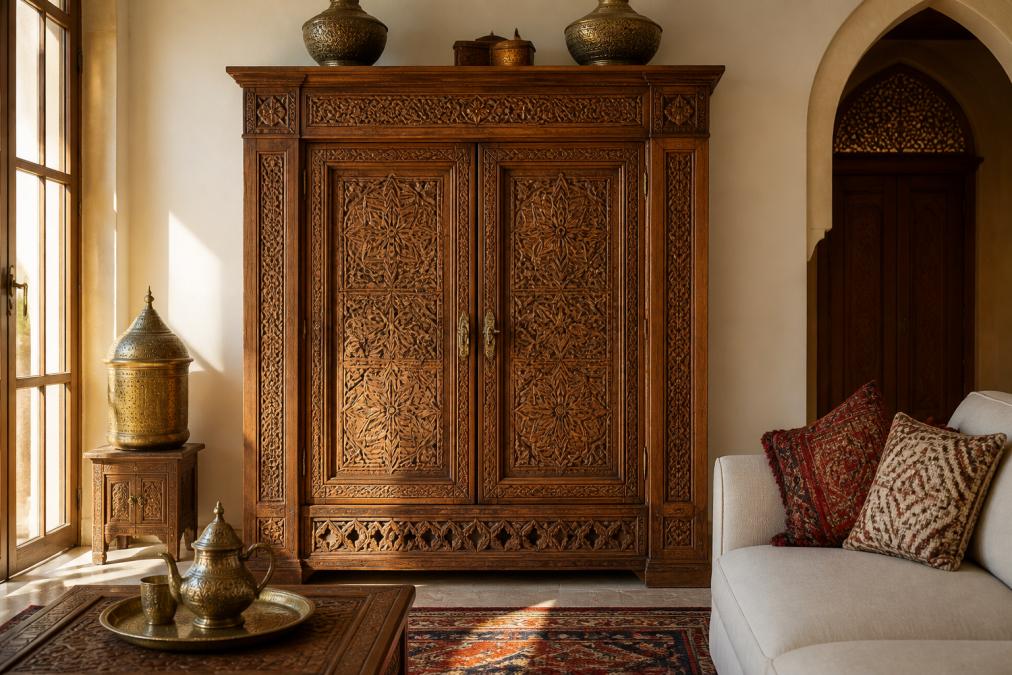
The Touareg carved cabinet at $1,350 serves as an entry point into bespoke moroccan cabinetry. Measuring 43 inches wide by 36 inches tall with 13 inches of depth, it works as a bedroom dresser, entryway console, or accent storage in living spaces. Four fully carved door panels showcase African carving traditions blending with Moroccan aesthetic principles. Hand-carved cedar construction means each piece carries variations proving artisan execution.
2. Moroccan Carved Cabinet: Marrakech Mastery
The Moroccan carved cabinet at $8,500 represents the pinnacle of bespoke moroccan cabinetry for those seeking a primary storage statement piece. Hand-carved in Marrakech by master artisans, it features six fully carved door panels and four internal drawers. Measuring 222 centimeters wide by 114 centimeters tall by 49 centimeters deep, this room-defining piece commands architectural presence. The six carved panels allow for complex geometric patterns across the full width, creating visual rhythm that draws the eye across the entire wall.
3. Alhambra Cabinet: Moorish Mashrabiya Design
The Alhambra cabinet at $4,200 offers a sophisticated middle ground between entry-level and flagship pieces. Based on intricate mashrabiya lattice work and geometric carvings, this cabinet evokes Moorish architectural traditions while functioning as a modern media console, dining buffet, or display furniture. The lattice work allows air circulation and light penetration while maintaining visual interest and partial privacy for stored items.
4. Harem Cabinet: Large-Scale Statement Piece
The Harem cabinet at $3,500 represents extraordinary value for a large-scale statement piece. Measuring approximately 72 inches wide by 27.75 inches tall by 17 inches deep, this hand-carved cabinet functions as a primary TV console, display unit, or substantial bedroom storage. The four door panels and three internal drawers provide organization for items you want hidden while maintaining visual impact of hand-carved detailing.
5. Moroccan Bathroom Vanity: Spa Sanctuary
The Moroccan bathroom vanity at $2,800 transforms bathrooms into spa-inspired sanctuaries through authentic artisanal design. Hand-carved cedar with four carved door panels, this vanity arrives as a complete solution, two Fez pottery sinks are included, eliminating the need to source complementary pieces separately. Measuring 58.5 inches wide by 36 inches tall by 20 inches deep, it positions as a primary bathroom focal point.
The Fez pottery sinks deserve particular attention. Fez, a historic Moroccan city renowned for ceramic traditions, produces vessels with character and authenticity that mass-produced sinks cannot match. Each sink carries variations in glaze and form proving handcrafted execution.
6. Agafay Cabinet: Compact Carved Storage
The Agafay cabinet at $1,800 offers hand-carved moroccan cabinetry for spaces where full-scale statement pieces would overwhelm. Compact dimensions with two carved door panels and one drawer, this cabinet functions as bedroom storage, living room accent, or entryway piece. The name references the Agafay Desert near Marrakech, a landscape of subtle beauty influencing the cabinet's restrained yet detailed design.
7. African TV Cabinet: Berber Heritage
The African TV Cabinet at $3,500 brings Berber carving traditions into contemporary entertainment spaces. Hand-carved cedar with African carving work on each door panel, this cabinet blends African and Moroccan aesthetic traditions. The design particularly suits homes already incorporating global or bohemian design elements, where the cabinet anchors a room's cultural narrative.
8. Marrakesh Carved Cabinet: Moorish and African Fusion
The Marrakesh carved cabinet at $3,500 represents a sophisticated fusion of Moorish and African carving traditions. Hand-carved throughout, panels, sides, and all visible surfaces, this cabinet makes no distinction between front and back. Every angle presents finished, detailed work. This all-around carving represents significant additional labor compared to cabinets where only front-facing surfaces receive detail.
How to Choose the Right Bespoke Cabinet for Your Space
Selecting the right bespoke moroccan cabinetry requires evaluating your space, functional needs, aesthetic preferences, and budget simultaneously.
Start with function. What will the cabinet store? How frequently will you access those items? A bedroom cabinet storing off-season clothing requires different internal organization than a kitchen cabinet holding everyday dishware or a bathroom vanity managing toiletries.
Space analysis comes next. Measure the intended wall carefully, accounting for baseboards, electrical outlets, and architectural features. Consider how the cabinet's scale will relate to surrounding furniture and room proportions. The Moroccan carved cabinet is magnificent but will overwhelm a modest bedroom. The Agafay cabinet might disappear in a vast great room.
Aesthetic integration matters as much as functional fit. How will the cabinet's carved patterns, wood tone, and overall presence align with existing design elements? Does your home lean toward minimalist or maximalist aesthetics?
Budget allocation should account for the cabinet itself, shipping and crating, professional installation, and any finishing work required. A $1,350 cabinet might require $500 in shipping and installation.
Consider climate and maintenance commitment. Exotic woods in humid climates require more vigilant care than in arid regions. Bathrooms and kitchens demand moisture management that other spaces don't.
Finally, work with specialists who understand bespoke moroccan cabinetry. Justmorocco's team can evaluate your space through photos and measurements, recommend appropriate pieces, and coordinate installation logistics.
Bespoke moroccan cabinetry transforms homes through authentic artisanal craftsmanship that cannot be replicated by mass production. Whether you're investing in the Moroccan carved cabinet as a kitchen anchor, the Alhambra cabinet for sophisticated mashrabiya design, or the Moroccan bathroom vanity for spa-inspired elegance, you're acquiring pieces that will deepen in character over decades. Justmorocco specializes in custom kitchen and bathroom remodeling projects, sourcing hand-carved cedar and exotic wood pieces that blend traditional Moroccan artistry with modern functionality. Start your bespoke moroccan cabinetry project by contacting Justmorocco to discuss your space, aesthetic vision, and timeline, authentic craftsmanship demands thoughtful planning, but the result is furniture that elevates your home into a genuine sanctuary.
Frequently Asked Questions
What defines authentic Moroccan-style cabinetry?
Authentic bespoke Moroccan cabinetry is hand-carved from solid cedar or exotic woods using Old World craftsmanship techniques passed down through generations. Each piece features geometric patterns, intricate inlay work with bone or mother-of-pearl, and ornate joinery that reflects Moorish and African influences. True artisanal pieces are one-of-a-kind, carved entirely by hand in Morocco, never mass-produced. The aesthetic combines functional storage with artistic expression, making each cabinet a luxury architectural element rather than mere furniture.
How do I incorporate hand-carved Moroccan wood furniture into a modern luxury home?
Hand-carved Moroccan wood furniture works beautifully in modern interiors when used as statement pieces. Position a carved cabinet in your entryway, bedroom, or living room as a focal point that draws the eye. Pair geometric carved pieces with neutral wall colors and contemporary furnishings to let the craftsmanship stand out. In kitchens and bathrooms, custom Moroccan cabinetry can replace standard vanities or storage, blending functional design with luxury aesthetics. The key is treating bespoke pieces as architectural elements that elevate the entire room's design conversation.
Are bespoke Moroccan cabinets durable for kitchen and bathroom use?
Yes, when properly maintained. Bespoke Moroccan cabinetry is carved from dense cedar and exotic hardwoods naturally resistant to moisture and decay. However, kitchens and bathrooms require protection: apply food-grade sealant to kitchen pieces, use humidity control in bathrooms, and wipe spills immediately. The hand-carved details and inlay work are delicate, so avoid abrasive cleaners. With appropriate care, these cabinets last decades, developing a beautiful patina over time. Climate control is especially important in humid coastal areas, where exotic woods need consistent environmental conditions.
How long does a custom bespoke Moroccan cabinetry project typically take?
Custom bespoke projects usually require 8-16 weeks from design approval to delivery, depending on complexity and scale. Initial design consultation and architectural coordination take 2-4 weeks. Hand-carving and craftsmanship require 6-12 weeks, as each detail is executed by master artisans. Shipping and installation add 1-2 weeks. Large kitchen or bathroom remodels involving multiple custom pieces may extend timelines. Plan ahead if you have seasonal deadlines; spring and fall typically have longer lead times due to demand.
What's the difference between bespoke Moroccan cabinetry and mass-produced alternatives?
Bespoke cabinetry is hand-carved by master artisans using traditional techniques, creating one-of-a-kind pieces with authentic geometric patterns and intricate details. Each cabinet is unique and custom-fitted to your space. Mass-produced alternatives use machine cutting and standardized designs, lacking the artisanal quality and heritage craftsmanship. Bespoke pieces appreciate in value as luxury home investments, while mass-produced items depreciate. The difference shows in wood quality, carving depth, joinery precision, and the overall design conversation the piece brings to your home.