
Table of Contents
- Why Custom Furniture Design Matters
- Perfect Fit for Your Unique Space Dimensions
- Superior Craftsmanship and Construction Quality
- Custom Furniture vs. Mass Produced: Key Differences
- Personalization and Style Customization
- The Bespoke Furniture Design Process Explained
- Custom Cabinetry Benefits for Kitchens and Bathrooms
- Durability, Longevity, and Heirloom Potential
- Investment Value and Resale Appeal
- Sustainability and Material Selection in Bespoke Design
- Frequently Asked Questions
Last Updated: September 29, 2026
Why Custom Furniture Design Matters
Mass-produced furniture often feels interchangeable, proportions don't match your space, styles clash with your aesthetic, and quality feels compromised. Custom furniture design solves these problems by creating pieces built specifically for you. At Justmorocco, we recognize that bespoke furniture design transforms not just how a room looks, but how it functions and feels. Unlike off-the-shelf alternatives, custom furniture design gives you complete control over dimensions, materials, finishes, and craftsmanship, while building durability, investment value, and emotional connection into every piece.
Perfect Fit for Your Unique Space Dimensions
Custom furniture design eliminates the compromise of buying something close enough and hoping it works. Every measurement is taken from your specific room, accounting for walls, windows, architectural features, and traffic flow.
A standard sofa might be 84 inches wide, but your living room alcove is 79 inches. With custom furniture design, the piece is built to exactly 79 inches, fitting perfectly into your layout with precision in height, depth, and every dimension that affects function.
Spatial planning becomes infinitely more flexible when you're not constrained by standard sizes. Awkward corners, sloped ceilings, and unusual room proportions become opportunities for custom solutions, creating rooms that feel intentional rather than squeezed together.
Pros of perfect fit:
- Eliminates wasted floor space from oversized pieces
- Maximizes usable room area through precision sizing
- Reduces the need for filler furniture or workarounds
Cons to consider:
- Requires accurate measurements and professional assessment
Superior Craftsmanship and Construction Quality
Joinery, the way wood pieces connect, reveals everything about quality. Mass-produced furniture relies on staples, screws, and cheap adhesives. Bespoke furniture uses traditional joinery techniques: mortise-and-tenon joints, dovetails, and hand-fitted connections that strengthen over time.
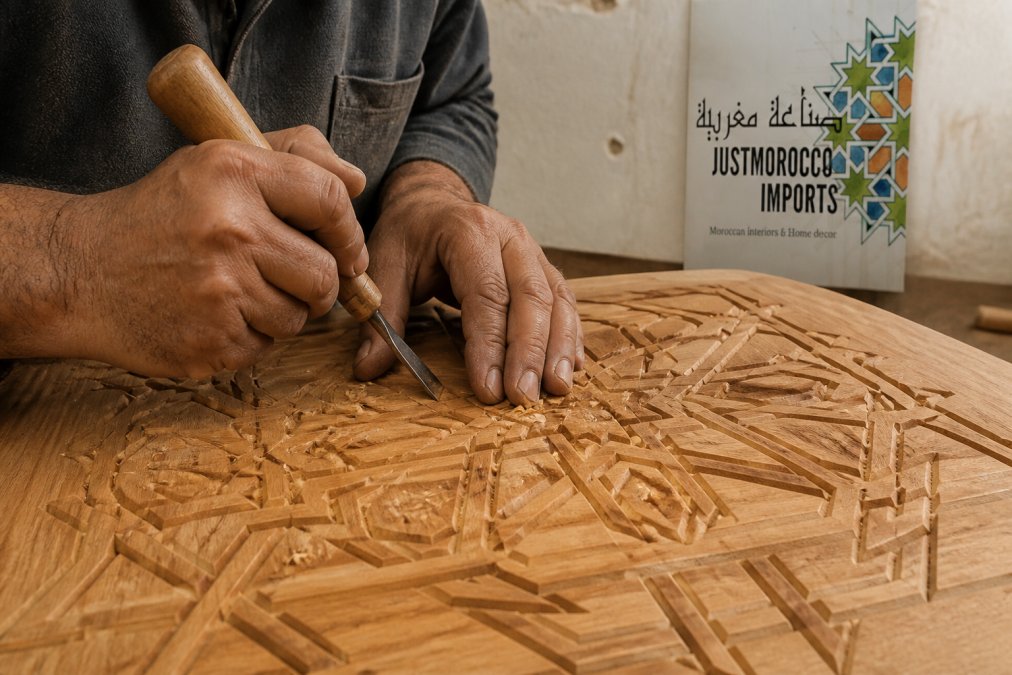
Authentic Moroccan furniture makers select hardwoods like cedarwood from the Atlas Mountains, walnut, or mahogany for durability and grain character. Each board is inspected, with defects avoided or incorporated intentionally. The finish reflects hours of hand-sanding, staining, and sealing, impossible on assembly lines where speed determines profitability.
Handcrafted bespoke furniture allows makers to respond to problems. If a board has unexpected grain movement, the artisan adjusts the approach rather than forcing a predetermined design, producing pieces that perform better than mass-produced counterparts.
Pros of superior craftsmanship:
- Hand-fitted joinery lasts decades longer than stapled construction
- Natural wood selection means no two pieces are identical
- Artisans catch and correct problems during creation
Cons to consider:
- Higher upfront cost reflects skilled labor and material quality
- Longer production timelines due to handwork
Custom Furniture vs. Mass Produced: Key Differences
Custom furniture design optimizes for your specific needs, while mass production optimizes for volume and cost reduction.
| Aspect | Custom Furniture Design | Mass Produced |
|---|---|---|
| Dimensions | Built to your exact measurements | Standard sizes that may not fit |
| Materials | Selected for quality and durability | Often chosen for cost efficiency |
| Joinery | Hand-fitted, traditional techniques | Staples, screws, adhesives |
| Lead Time | 8-16 weeks typical | 2-4 weeks, usually in stock |
| Personalization | Unlimited customization options | Limited finish and style choices |
| Longevity | 20-40+ years with proper care | 5-10 years average |
| Repair | Easily repaired by skilled craftspeople | Often requires replacement parts |
Personalization and Style Customization
Custom furniture design gives you complete creative control over wood species, stain color, hardware style, cushion fabric, and every decorative detail, impossible with mass-produced pieces.
A custom cabinet might feature hand-carved geometric patterns inspired by traditional Moroccan mashrabiya screens, brass hardware that develops patina, aromatic cedarwood interiors, and finishes ranging from deep walnut to light sand tones, every choice reflecting your vision.
Personalization extends beyond aesthetics to functionality. Need drawers with specific interior dividers? Custom dimensions for a particular collection? A finish that complements your existing pieces? These requests are standard in bespoke furniture design. Mass production cannot accommodate them without prohibitive costs.
Pros of customization:
- Express your unique design vision without compromise
- Coordinate perfectly with existing decor and architectural elements
- Create one-of-a-kind pieces that reflect your personality
Cons to consider:
- Decision-making requires more involvement and clarity about your preferences
- More options can feel overwhelming without professional guidance
The Bespoke Furniture Design Process Explained
Understanding the custom furniture design process sets realistic expectations and ensures better outcomes.
Phase 1: Initial Consultation and Needs Assessment
The process begins with a detailed consultation where you discuss needs, aesthetic preferences, spatial constraints, and budget.
Phase 2: Design Development and Material Selection
Materials are selected based on durability, aesthetics, and lifestyle. Hardware options, brass, stainless steel, ceramic, wrought iron, each offer different durability and aesthetic profiles.
Phase 3: Material Sourcing and Production
Production begins after complete approval. Skilled artisans source materials, selecting from multiple boards to match grain character and color. Joinery uses traditional techniques: mortise-and-tenon joints, dovetails, or hand-fitted connections that strengthen over time.
Finish application involves multiple stages: hand-sanding, staining, sealing, and topcoat application, each requiring drying time.
Phase 4: Quality Inspection and Delivery
Common Decision Points and Trade-Offs
Key decision points include wood species (hardwoods offer superior durability but cost more; softwoods are faster and cheaper), joinery method (traditional techniques last longer but take longer), finish complexity (hand-applied finishes create depth but extend timeline), and customization level (more details increase complexity). Timeline, cost, and complexity are interconnected, rushing or cutting corners compromises the longevity that makes custom furniture valuable.
Custom Cabinetry Benefits for Kitchens and Bathrooms
Kitchens and bathrooms benefit dramatically from custom furniture design because these spaces demand both functionality and aesthetic impact. Custom cabinetry solves the fundamental problem with stock cabinets: they're designed for average kitchens, not your specific layout.
A custom kitchen cabinet system accounts for your exact counter dimensions, appliance placements, and storage needs. You might specify hand-carved door fronts featuring traditional Moroccan geometric patterns, paired with soft-close hinges and interior organizers tailored to your cookware and dishware. The result is a kitchen that functions beautifully and looks intentional.
Justmorocco specializes in custom furniture imports and custom kitchen and bathroom remodeling projects that blend traditional artistry with modern functionality. Options like the Marrakech riad kitchen cabinets showcase how bespoke cabinetry combines authentic Moroccan design, mashrabiya lattice work, carved panels, and arched niches with contemporary storage solutions.
Pros of custom cabinetry:
Custom Moroccan arch door panel →
- Perfect fit for your specific space and appliance layout
- Unlimited design options reflecting your aesthetic
- Superior storage organization tailored to your actual items
- Durable construction that withstands daily use for decades
Cons to consider:
- Higher cost than stock cabinetry alternatives
- Longer timeline from design to installation
Durability, Longevity, and Heirloom Potential
This is where custom furniture design reveals its true value. A well-made bespoke piece doesn't degrade; it improves. The wood develops character. Hardware acquires patina. The piece becomes more beautiful with age, not less. But longevity isn't automatic, it requires understanding how to care for your investment.
Why Custom Furniture Lasts Decades
Mass-produced furniture is engineered for planned obsolescence. It's designed to last 5-10 years, then be replaced. The materials and construction methods reflect this timeline: stapled joints, veneered particleboard, and finishes that don't withstand daily wear. Custom furniture design takes the opposite approach. It's built to last 20, 30, or 40 years. Some pieces last generations.
This longevity comes from multiple factors: superior wood selection (hardwoods chosen for grain stability and durability), traditional joinery (mortise-and-tenon joints and dovetails that strengthen over time), quality finishes (hand-applied stains and topcoats that age gracefully), and the maker's reputation. Artisans building pieces they're personally responsible for take different care than factory workers on a production line. When something is handmade and carries the maker's name, quality becomes non-negotiable.
Essential Care and Maintenance for Custom Pieces
To achieve that 30+ year lifespan, custom furniture requires basic but consistent care. Understanding these practices prevents damage and keeps your piece beautiful.
Wood Care: Hardwood furniture benefits from occasional conditioning. Every 6-12 months, apply a quality wood conditioner or furniture oil to maintain moisture balance in the wood. This prevents cracking and keeps the finish supple. Avoid excess water, wipe spills immediately with a dry cloth. Use coasters under glasses and placemats under dishes to prevent water rings and heat marks. Dust regularly with a soft, lint-free cloth; avoid silicone-based dusting sprays, which can build up and dull the finish over time.
Finish Protection: The finish is your wood's shield. Protect it from direct sunlight, which fades stain and can cause uneven color changes. Use curtains or UV-blocking window film in rooms with strong natural light. Avoid placing furniture directly against radiators or heating vents, which cause wood to dry too quickly and crack. Keep humidity levels stable (ideally 30-50% relative humidity); extreme fluctuations cause wood movement and joint stress.
Hardware Maintenance: Brass hardware develops a natural patina over time, which many owners prefer. If you want to maintain shine, polish brass occasionally with a soft cloth and brass cleaner. Wrought iron hardware may rust if exposed to moisture; wipe dry after cleaning. Tighten hardware periodically, hinges, handles, and fasteners can loosen with use and benefit from a quick check every year or two.
Repair and Restoration: One of custom furniture's greatest advantages is repairability. Unlike mass-produced pieces, which often require replacement when damaged, bespoke furniture can be repaired by skilled craftspeople. A scratched finish can be touched up or refinished. A loose joint can be re-glued. A damaged board can be replaced. The maker who built your piece is often the best resource for repairs, though any skilled furniture restorer can handle most issues.
Climate and Environment: Wood responds to its environment. Extreme temperature swings and humidity changes cause expansion and contraction, which stresses joints and finishes. Keep your home climate stable. If you live in a very dry climate, use a humidifier during heating season. If you live in a humid climate, ensure good air circulation to prevent moisture buildup. These environmental factors matter more than most owners realize, they're often the difference between a piece that lasts 20 years and one that lasts 40.
The Economics of Longevity
Yes, bespoke furniture costs more upfront. But spread across 30 years of use, the cost per year becomes reasonable compared to replacing mass-produced pieces multiple times. A custom sofa costing $4,000 that lasts 30 years costs approximately $133 per year. A mass-produced sofa costing $1,500 that lasts 7 years costs approximately $214 per year, and you'll need to buy it four times over the same 30-year period.
More importantly, heirloom quality means your children might inherit the piece. That emotional and practical value cannot be quantified in simple cost comparisons. A well-maintained custom cabinet or dining table becomes a family asset, a connection to the past, and a testament to craftsmanship.
Resale and Heirloom Value
Bespoke furniture design represents an investment, not just an expense. Unlike mass-produced pieces that depreciate immediately, custom furniture often maintains or appreciates in value. Several factors contribute to investment potential: scarcity (there's only one piece exactly like yours), craftsmanship (the quality and artistry command respect in the resale market), and timelessness (well-designed custom pieces don't feel dated because they weren't designed to follow trends).
The resale market for authentic, handcrafted furniture is surprisingly strong. Buyers seeking quality and uniqueness actively search for bespoke pieces. Vintage and antique handcrafted furniture commands premium prices. Contemporary custom pieces are following the same trajectory. A custom Moroccan cabinet made in 2026 will look equally beautiful in 2036, and its value will likely hold or increase if it's well-maintained and made by a respected artisan.
Investment Value and Resale Appeal
Bespoke furniture design represents an investment, not just an expense. Unlike mass-produced pieces that depreciate immediately, custom furniture often maintains or appreciates in value.
Several factors contribute to investment potential. First, scarcity, there's only one piece exactly like yours. Second, craftsmanship, the quality and artistry command respect in the resale market. Third, timelessness, well-designed custom pieces don't feel dated because they weren't designed to follow trends. A custom Moroccan cabinet made in 2026 will look equally beautiful in 2036.
The resale market for authentic, handcrafted furniture is surprisingly strong. Buyers seeking quality and uniqueness actively search for bespoke pieces. Vintage and antique handcrafted furniture commands premium prices. Contemporary custom pieces are following the same trajectory.
This doesn't mean every custom piece appreciates. Poor design choices, outdated aesthetics, or construction flaws can limit resale appeal. However, pieces designed with timeless principles, quality materials, classic proportions, authentic craftsmanship, tend to hold value well.
Sustainability and Material Selection in Bespoke Design
Custom furniture design aligns naturally with sustainability principles because the process encourages thoughtful material selection and eliminates waste. When you're commissioning a single piece, not producing thousands, environmental impact becomes a real consideration.
Bespoke furniture makers often source materials responsibly. They select hardwoods from sustainable forests, choose finishes with lower environmental impact, and minimize waste through careful planning. A mass-production facility discards unusable material as an accepted cost of doing business. A custom workshop uses nearly every piece because waste directly affects profitability and craftsmanship quality.
The longevity of custom furniture also serves sustainability. A piece that lasts 30 years requires far fewer resources than replacing a mass-produced item three times over the same period. From a lifecycle perspective, bespoke furniture design is fundamentally more sustainable.
Material selection in custom projects also reflects your values. You might specify reclaimed wood, low-VOC finishes, or hardware made from recycled metals. These choices are standard options in bespoke design, rarely available in mass production. Justmorocco's commitment to authentic craftsmanship includes sourcing materials that reflect both quality standards and environmental responsibility.
Custom furniture design transforms your space from generic to intentional. The benefits, perfect fit, superior craftsmanship, complete personalization, investment value, and environmental responsibility, justify the investment for anyone serious about their home. Whether you're designing a custom kitchen, commissioning a bespoke cabinet, or creating a signature piece, the result is furniture that serves you for decades. Justmorocco brings this philosophy to life through authentic Moroccan craftsmanship, offering custom design services that blend traditional artistry with modern functionality. Explore our collection of handcrafted pieces and custom remodeling solutions to discover how bespoke furniture design can elevate your home.
Frequently Asked Questions
What are the main advantages of custom furniture design over mass-produced pieces?
Custom furniture design offers tailored solutions that fit your exact space dimensions, superior craftsmanship using quality materials, and personalized aesthetics that reflect your style. Unlike mass-produced furniture, bespoke pieces are built to last decades, often becoming heirloom-quality investments. You control every detail, from wood type and finish to hardware and dimensions, ensuring your furniture integrates seamlessly with your home's architecture and layout.
How does the bespoke furniture design process work from start to finish?
The bespoke furniture design process begins with a consultation where aesthetic preferences and spatial constraints are discussed. Custom specifications are finalized, including materials, finishes, and hardware. Skilled artisans then hand-craft your piece using traditional techniques like joinery and hand-carving. Finally, the finished furniture is carefully packaged and shipped to your home.
Is custom furniture more expensive than buying mass-produced alternatives?
Custom furniture typically costs more upfront than mass-produced options because you're paying for superior materials, skilled artisan labor, and tailored design work. However, the long-term value is significantly higher. Bespoke pieces last 20+ years with proper care, while mass-produced furniture often needs replacement in 5-10 years. When calculated over time, custom furniture represents a better investment, especially when considering durability, aesthetic longevity, and potential resale value for high-end pieces.
What makes custom cabinetry beneficial for kitchen and bathroom remodels?
Custom cabinetry maximizes storage efficiency by fitting your exact space and workflow needs, eliminating wasted corner space common in stock cabinets. Custom designs incorporate architectural features like arched niches and mashrabiya lattice work, creating functional art that enhances your home's value. Tailored dimensions ensure seamless integration with countertops, appliances, and existing architectural details.