

Table of Contents
- 1. Layer Vibrant Colors and Warm Palettes in Moroccan Living Room Ideas
- 2. Choose the Right Moroccan Style Lamp for Ambient Lighting
- 3. Incorporate Patterned Rugs and Textiles Without Overwhelming Space
- 4. Use Moroccan Decor for Small Spaces: Strategic Placement and Scale
- 5. Add Decorative Cushions and Floor Seating for Comfort and Style
- Small Apartment Decorating Ideas: Rental-Friendly and Reversible Updates
- Budget-Conscious Sourcing and Layering Techniques
- Layout and Multifunctional Furniture for Compact Living
- Frequently Asked Questions
Last Updated: October 8, 2026
1. Layer Vibrant Colors and Warm Palettes in Moroccan Living Room Ideas
Creating a Moroccan living room in a small apartment starts with color, and these 5 moroccan decor ideas for small apartments will transform your space. Warm, saturated hues are the foundation of authentic Moroccan interior design, think deep teals, burnt oranges, rich reds, and warm golds. These colors don't shrink a space; they anchor it, making even 200 square feet feel intentional and layered.
The key is restraint. Instead of painting all four walls, choose one accent wall or use color through textiles and accessories. A single jewel-tone wall behind a seating area creates focal-point drama without overwhelming the room. Pair it with neutral walls in cream or soft beige to let the accent breathe.
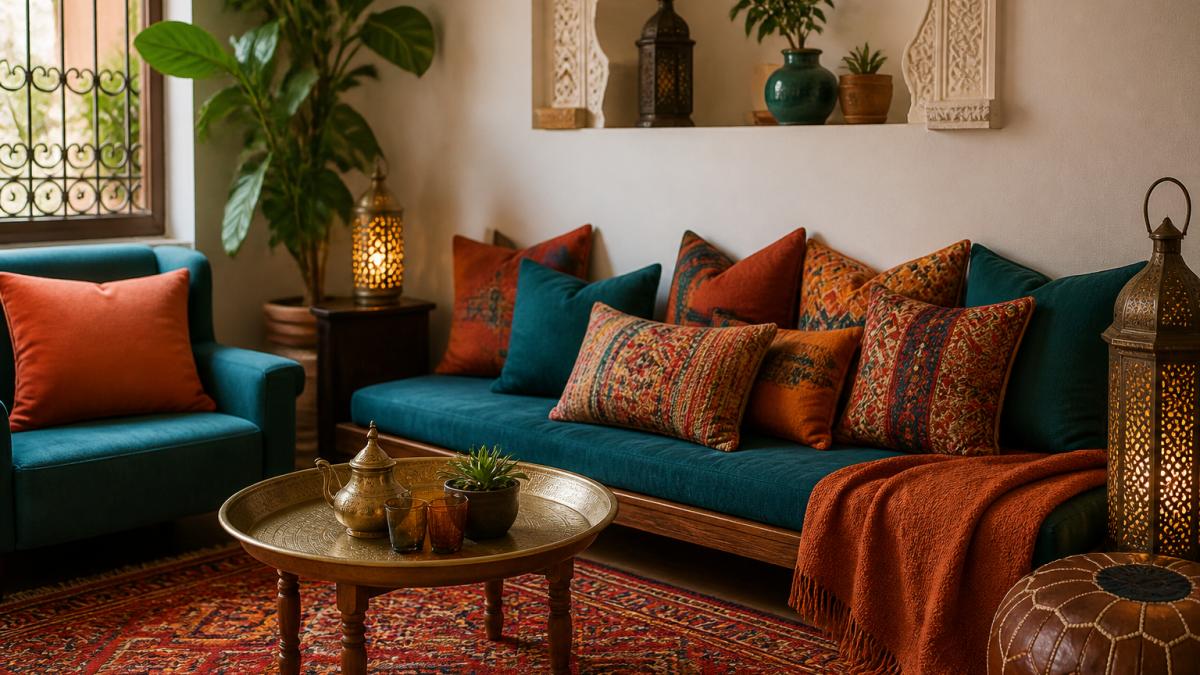
Layer colors through textiles rather than paint. A patterned rug in multiple warm tones, stacked floor cushions, and a throw blanket build richness without permanent commitment, perfect for renters. At Justmorocco, we source handcrafted pieces that bring authentic color palettes directly into your space. The Moroccan kilim bench, for example, combines hand-carved cedar with tight Berber kilim in warm, layered tones that instantly anchor a small living room.
The psychology of warm color palettes matters here. Burnt orange and terracotta create intimacy; deep blues and teals add sophistication. Together, they make a small apartment feel like a curated sanctuary rather than a cramped space. This is the foundation upon which all other Moroccan decor for small spaces is built.
2. Choose the Right Moroccan Style Lamp for Ambient Lighting
Lighting transforms a small Moroccan living room from functional to magical. Moroccan style lamps cast colored light through glass or metal screens, creating geometric shadows that add visual depth without taking up floor or wall space.
For small apartments, hanging lanterns are more practical than floor lamps. They draw the eye upward, making ceilings feel higher. A single statement lantern above a seating area or in a corner creates ambient lighting that doesn't compete for real estate. The Handmade Rustic Moroccan Lanterns from Justmorocco feature multicolor glass in medium to small sizes, ideal for apartments where a massive fixture would dominate the room.
The colored glass matters. Blue and amber cast warm, inviting light; reds and oranges intensify the cozy feeling. Avoid bright white LEDs, they kill the Moroccan aesthetic. Instead, use warm-white bulbs (2700K or lower) inside any lantern. The glass does the coloring; the bulb should support, not fight, that effect.
Placement is critical in small spaces. Hang a lantern in a corner, above a low seating area, or in an entryway where it greets visitors. This prevents the light from competing with functional task lighting in the center of the room. Many small apartments benefit from one statement lantern plus subtle wall sconces or table lamps for reading, a layered approach that maintains ambiance without clutter.
3. Incorporate Patterned Rugs and Textiles Without Overwhelming Space
Patterned rugs anchor Moroccan living rooms, but in small apartments, scale and placement determine whether they unify or overwhelm. A large, heavily patterned rug can make a 12-by-14-foot room feel smaller if it covers too much floor.
The strategy: choose one statement textile and keep others complementary. If you invest in a bold patterned rug with geometric motifs or tribal designs, keep throw pillows and blankets in solid warm tones or subtle secondary patterns. This prevents visual chaos. The rug becomes the hero; everything else supports it.
Size matters. In a small apartment, a 5-by-8-foot rug is often better than a 8-by-10. It defines a seating area without consuming the entire room. Layer it over a neutral base rug or directly on wood flooring, both work. The key is that the patterned textile anchors the seating zone, not the entire space.
Textiles beyond rugs, throw pillows, wall hangings, and blankets, should echo the rug's color palette but vary in pattern density. If the rug has intricate geometric patterns, choose pillows with simpler stripes or solid colors. This creates visual rhythm without sensory overload.
Budget-conscious decorating often means sourcing vintage or handmade rugs. Justmorocco's Moroccan kilim bench combines hand-carved cedar with tight Berber kilim, offering authentic patterned textiles at a curated price point. The bench itself becomes both seating and a textile statement piece, reducing the need for additional layered textiles elsewhere in the room.
4. Use Moroccan Decor for Small Spaces: Strategic Placement and Scale
Small apartments demand intentional placement, which is why these 5 moroccan decor ideas for small apartments prioritize scale, vertical thinking, and multifunctional pieces. Every piece should earn its space by serving both function and aesthetics. This is where Moroccan decor for small spaces diverges from full-size living rooms, scale, vertical thinking, and multifunctional pieces become non-negotiable.
Start with vertical storage. A hand-painted Moroccan shelf from Justmorocco (28 inches wide, 22 inches tall) fits above a sofa, desk, or entryway without consuming floor space. These shelves feature Moorish arches and hand-painted details in warm colors, green, yellow, pink, red, and cream accents. They store books, display tea glasses, or hold decorative objects while adding authentic architectural detail.
The Mazagan room divider offers another space-saving solution. This four-panel wooden screen, handmade in Marrakesh, creates visual zones without permanent walls. In a studio or one-bedroom apartment, it separates a sleeping area from living space, adds decorative interest, and remains portable, critical for renters.
Furniture scale matters enormously. The Moroccan kilim bench (74 inches wide, 31.5 inches high arms) works in small apartments because it's low-profile seating with storage potential. It doesn't block sightlines the way a tall sofa would. Pair it with floor cushions instead of additional chairs to maintain openness.
Think vertically in every corner. Tall, narrow pieces (like a standing mirror or slim shelving unit) draw the eye upward, making ceilings feel higher. Avoid wide, squat furniture that eats floor space. In a 400-square-foot apartment, every piece must justify its footprint.
5. Add Decorative Cushions and Floor Seating for Comfort and Style
Floor seating is quintessentially Moroccan and perfectly suited to small apartments. Instead of a bulky sofa, layer floor cushions and poufs to create flexible, moveable seating that adapts to your space.
Decorative cushions in warm, saturated colors and patterned textiles build comfort and visual richness. Choose covers in coordinating hues, if your rug is deep teal with orange accents, select cushions in solid teal, burnt orange, and cream. This creates cohesion without matching everything exactly.
Stack cushions against a wall or low bench to create a casual seating nook. This approach works especially well in studios or one-bedroom apartments where traditional furniture placement is impossible. Floor seating is also deeply authentic to Moroccan interiors, where low seating and cushioned areas are traditional.
The beauty of floor seating is its flexibility. Cushions can be rearranged, stored, or removed entirely. For renters, this means zero impact on walls or flooring. For small-space dwellers, it means seating that doesn't dominate visually when not in use.
Combine cushions with a low table, like the Handmade Moroccan Mosaic Tile Table (32 inches in diameter), to create an intimate gathering spot. The mosaic tilework and wrought iron base add sculptural interest while the compact footprint suits apartments. This table works in a living area, bedroom corner, or even a small dining space.
Small Apartment Decorating Ideas: Rental-Friendly and Reversible Updates
Renting doesn't mean sacrificing Moroccan style. The best small apartment decorating ideas prioritize reversibility, pieces that add impact without permanent changes. The trick is knowing which updates are genuinely reversible and which quietly cost you a security deposit.
Start by reading your lease for the two clauses that govern almost everything: the alteration clause and the picture-hanging clause. Most leases permit small nail holes for hanging art but prohibit adhesive products that can pull paint or drywall paper. That distinction determines which of the ideas below you can use.
Removable wallpaper. Moroccan geometric patterns, quatrefoil repeats, and zellige-inspired tiles are widely available as peel-and-stick vinyl. It works best on smooth, painted, fully cured walls, not on fresh paint (under about 30 days), textured plaster, or unfinished drywall. On those surfaces, removal can lift the top layer of paint or paper. Test a single square foot in a closet first, wait a week, then peel it back to see how your specific wall behaves. A single accent wall behind a low seating area gives you the pattern payoff without committing the whole room.
Handmade Rustic Moroccan Lanterns, Multicolor Glass, Party Bar Decor →
Textiles as architecture. Rugs, wall hangings, and fabric panels create architectural detail without nails or paint. A few mechanisms worth knowing:
- A tension rod inside a window or doorway frames an opening with a patterned panel and comes down in seconds.
- A fabric panel hung from a ceiling hook (a single small hole, easily patched) can define a sleeping alcove or fake a headboard.
- A large flat-weave rug leaned or hung on a wall reads as a textile mural and adds pattern without adhesive.
Lighting without hardwiring. Hanging lanterns, plug-in wall sconces, and portable lamps create ambiance without an electrician. Two practical constraints: renters can't easily add a ceiling junction box, so choose lanterns that hang from an existing ceiling hook or a swag chain plugged into a wall outlet. Keep cord runs along baseboards and use cord covers so the install looks intentional rather than improvised.
Freestanding furniture. A folding room divider, a low bench, and wall-leaning mirrors all add style without anchoring you to a lease. The advantage over built-ins is that they move with you, and they double as layout tools, since you can reposition them as your needs change.
A simple rule: if undoing an update takes more than an afternoon and a tube of spackle, treat it as permanent and get written permission first.
Budget-Conscious Sourcing and Layering Techniques
Authentic Moroccan decor doesn't require a luxury budget, it requires a spending order and smart layering. The mistake most small-apartment decorators make is buying several mid-priced accent pieces at once and ending up with a room that feels cluttered and generic. A better approach is to spend on one anchor, then fill in around it.
Build a spending order. A workable sequence for a compact room:
- Anchor textile first. A patterned rug or a kilim-upholstered bench sets the palette every other purchase has to match. Buy this before anything else.
- Lighting second. One statement lantern or a pair of small ones changes the mood of the whole room for a modest outlay.
- Seating and surface third. A low bench, floor cushions, or a compact table.
- Accents last. Tea glasses, small ceramics, and throw pillows, the cheapest layer, and the easiest to get wrong if you buy it first.
Layer, don't match. The professional move is to repeat two or three colors at different scales rather than buying a matched set. If your rug is deep teal with burnt-orange accents, pull solid teal and cream cushions, then add one patterned pillow that echoes the rug's motif at a smaller scale. This reads as collected rather than catalog-ordered.
Where the money actually goes. Handmade pieces carry real labor, so the price gap between mass-produced and artisan goods is usually in the construction, not just the label. A hand-knotted or flat-weave wool rug, a hand-carved wood bench, and hand-pierced metal lanterns are the categories where paying more tends to show. Conversely, cushion covers, tea glasses, and small ceramics are categories where an affordable piece can look just as good as an expensive one.
Sourcing channels, ranked by value:
- Estate sales and local marketplaces, best odds of finding older brass lanterns, hand-knotted rugs, and carved wood at below-retail prices. Inspect for moth damage in wool and rust in metal.
- Vintage and consignment shops, curated, so you pay a premium over estate sales but skip the hunting.
- Artisan importers and direct-from-maker sellers, the most reliable route for new handmade goods, and often cheaper than a design retailer for the same construction.
- Fast-furniture "Moroccan-style" lines, the weakest value. Printed patterns on synthetic rugs and stamped metal lanterns rarely hold up, and the savings are smaller than they appear once you replace them.
A worked example. A curated corner for a few hundred dollars: a small hand-knotted or flat-weave rug as the anchor, one mid-size lantern, two solid cushion covers with inserts bought separately, and a stack of vintage tea glasses displayed on a shelf you already own. Nothing here is a statement investment piece, but the palette and materials read as intentional.
What to skip. Resist buying three or more patterned textiles at once, and resist the urge to fill every surface. In a small room, empty space is part of the design, it's what keeps a layered, colorful scheme from tipping into clutter.
The through-line: one genuine anchor piece, a restrained supporting palette, and patience. Buy the anchor when you find the right one, then fill in gradually rather than all at once.
Layout and Multifunctional Furniture for Compact Living
In small apartments, furniture must work harder. Every piece should serve multiple functions, storage, seating, and decor simultaneously.
The Moroccan kilim bench is multifunctional: it's seating for guests, a base for floor cushions, storage inside, and a textile statement piece. In a 300-square-foot apartment, this single piece replaces a sofa, ottoman, and storage bench.
Layer low furniture to maintain sightlines. Instead of a tall sofa (which blocks views and makes rooms feel smaller), use a low bench with floor cushions and a low table. This arrangement keeps the room visually open while providing ample seating.
Shelving should be wall-mounted and narrow. The hand-painted Moroccan shelf (28 inches wide) fits above a sofa or desk without protruding into the room. It stores and displays simultaneously.
The Mazagan room divider creates layout flexibility. In a studio, it separates sleeping and living zones without permanent walls. In a one-bedroom, it can hide clutter, define a workspace, or create an intimate reading nook.
Think of your small apartment layout as a puzzle. Measure doorways, windows, and electrical outlets before buying furniture. A 74-inch-wide bench won't fit if your living area is only 10 feet across. Scale matters, always prioritize fit over aesthetic preference.
Use vertical space aggressively. Tall, narrow shelving, wall-mounted mirrors, and hanging lanterns draw the eye upward, making ceilings feel higher and rooms feel larger. Avoid wide, low furniture that eats floor space.
Creating Moroccan style in a small apartment is about layering color, texture, and light strategically. Start with warm color palettes and statement textiles, add ambient lighting through handcrafted lanterns, and furnish with scaled, multifunctional pieces. At Justmorocco, we specialize in authentic, handcrafted Moroccan furniture and decor designed to transform compact spaces into luxurious sanctuaries. Whether you're sourcing a single investment piece or building an entire room, our collection of bone-inlay mirrors, kilim benches, mosaic tables, and hand-painted shelves brings genuine Moroccan artistry to your home. Explore our custom furniture imports and discover how authentic craftsmanship elevates small-space living.
| Decor Element | Best for Small Spaces | Budget Range | Renter-Friendly |
|---|---|---|---|
| Patterned rugs (5x8 ft) | Anchoring seating zones | $150-$500 | Yes, removable |
| Moroccan lanterns | Ambient lighting, focal points | $65-$4,800 | Yes, hanging |
| Floor cushions & textiles | Flexible seating | $30-$200 per set | Yes, portable |
| Hand-painted shelves | Wall storage & decor | $260-$400 | Yes, wall-mounted |
| Moroccan kilim bench | Seating + storage | $1,700 | Yes, freestanding |
| Room dividers | Space definition | $1,200 | Yes, portable |
| Mosaic tile tables | Focal point furniture | $1,430 | Yes, freestanding |
| Bone inlay mirrors | Statement pieces | $2,500 | Yes, wall-mounted |
For authentic Moroccan decor ideas tailored to small apartments, consider consulting design guides on maximizing small living spaces and exploring sustainable home decor practices to ensure your choices align with both aesthetics and values. Additionally, interior design principles for compact spaces provide expert frameworks for layout and furniture selection that complement Moroccan style beautifully.
Frequently Asked Questions
How can you decorate a small apartment in Moroccan style without making it feel cluttered?
Focus on one or two statement pieces, like a handmade Moroccan mirror or a patterned rug, and build around them. Use vertical space for lanterns and wall-mounted shelves to keep the floor open. Choose a restrained color palette (two to three dominant colors) and layer textures gradually. Moroccan decor for small spaces works best when you prioritize quality over quantity, selecting handcrafted pieces that anchor the room rather than filling every corner.
What colors work well in Moroccan-inspired interiors for compact rooms?
Warm jewel tones create depth in small spaces: deep teals, burnt oranges, rich reds, and warm golds. Pair these with neutral bases like cream, beige, or soft gray to prevent overwhelming the room. Moroccan living room ideas often incorporate these bold accents through textiles, cushions, and wall art rather than painting entire walls. This approach gives you the vibrant Moroccan aesthetic while keeping the space feeling open and breathable.
Are Moroccan style lamps practical for small apartments?
Yes. Handmade Moroccan lanterns cast ambient, mood-setting light that makes compact spaces feel larger and more inviting. Choose hanging or corner-mounted options to save floor space. The multicolor glass in pieces like handmade rustic Moroccan lanterns creates visual interest without bulk. Lanterns work especially well in small apartments because they provide functional lighting while serving as decorative focal points, eliminating the need for additional decor items.
Can renters use Moroccan decor in small apartments?
Absolutely. Small apartment decorating ideas for renters should focus on reversible updates: removable patterned rugs, freestanding room dividers, and portable cushions. Avoid permanent changes like paint or built-ins. Handmade pieces like a hand-painted Moroccan shelf or a Moroccan kilim bench add authentic style without damaging walls or flooring. Layering textiles and using multifunctional furniture lets you embrace Moroccan decor while respecting your lease.